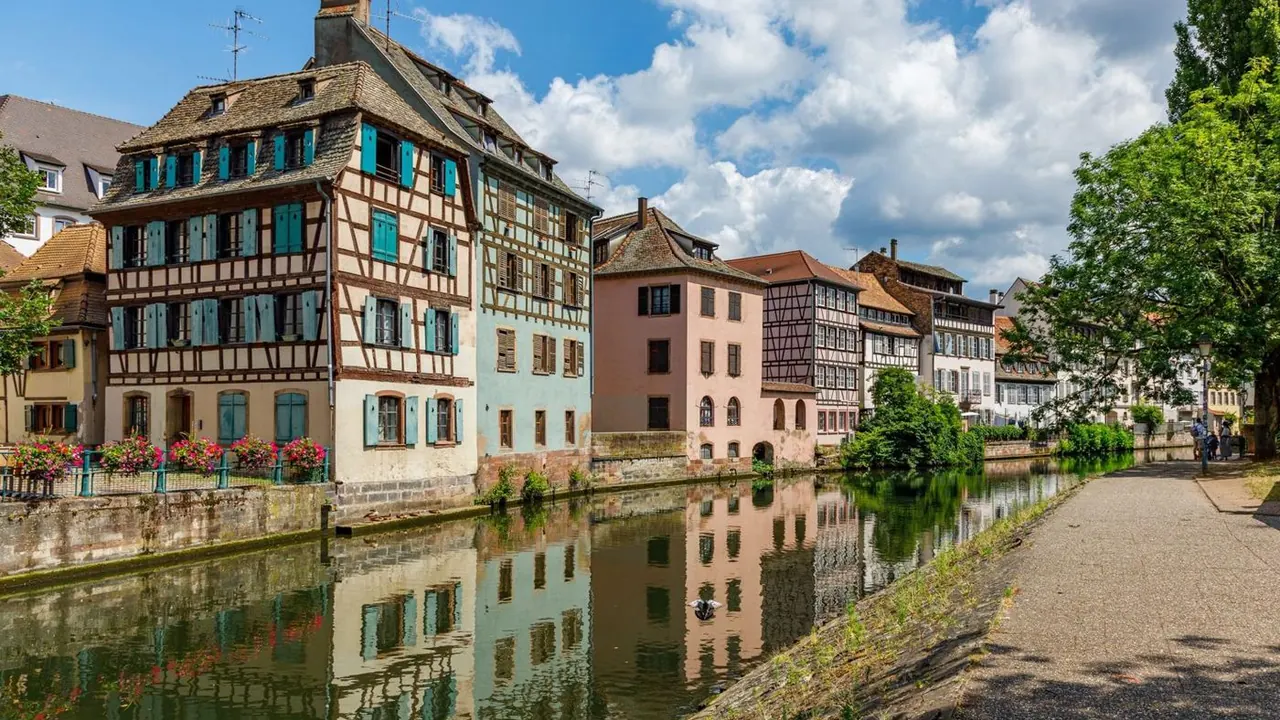
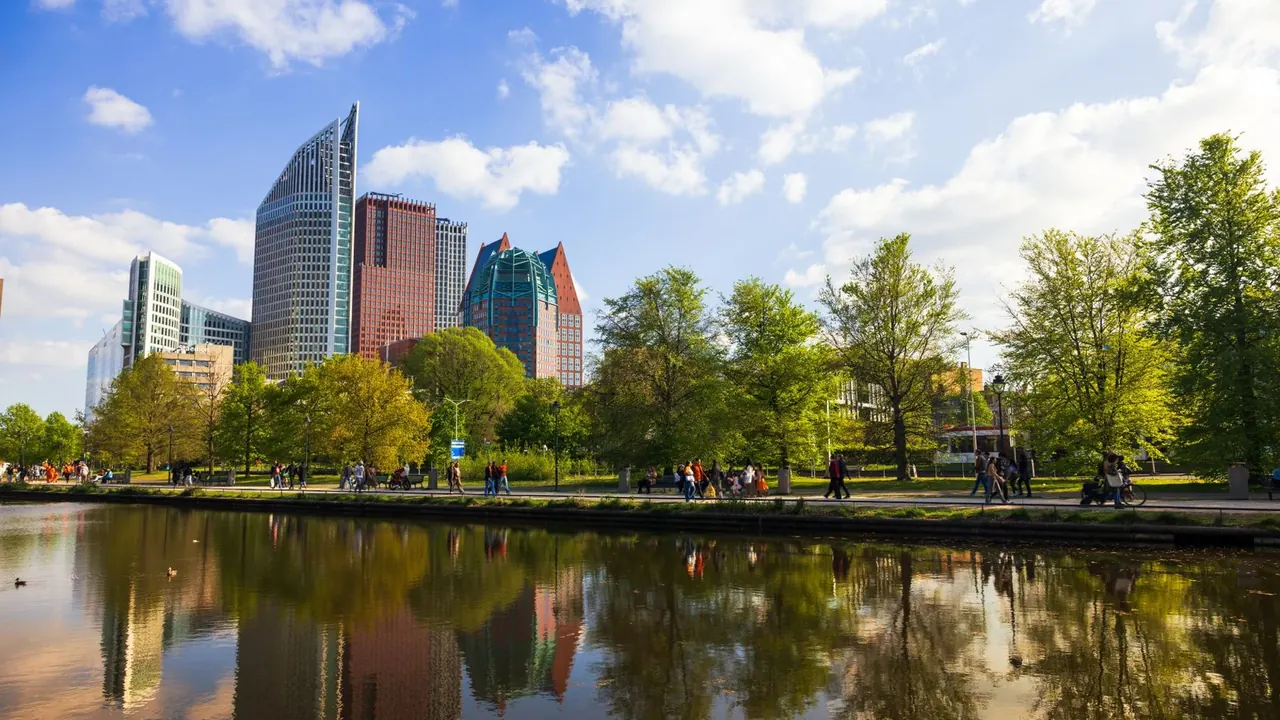
Photos: Strasbourg by Edoardo Colombo, Pexels License; The Hague by Bráulio jardim, Pexels License.
Strasbourg or The Hague?
Our verdict in twelve categories, each scored against the same fixed benchmark cities, and the climate month by month, so you can choose for your trip.
Choose Strasbourg for
- food and drink
- nature and the outdoors
- wellness
Strasbourg suits travellers who plan their days around food and landscape: long dinners in wood-panelled winstubs with Alsace wine, the Vosges and the Black Forest within an hour, and Baden-Baden's thermal baths just across the Rhine. It is also the easier of the two on the wallet, and its warmer summers are good for long, level bike rides along the river.
Choose The Hague for
- beaches
- day trips
- families
Choose The Hague if you want the sea at the end of a tram line and the rest of the Netherlands on your doorstep. Scheveningen gives you a sandy beach for sunny afternoons, Madurodam and the sea aquarium keep children busy, and Delft, Leiden, Rotterdam and Amsterdam are all easy trips by train. Expect higher costs and plainer cooking, with Indonesian food as the great exception.
Scoreboard
Twelve categories on one fixed scale from 0 to 100. The shaded stretch is the gap between the two.
Your match
Pick a travel style or drag the sliders, and both match scores follow your weighting.
Too close to call, 1 point apart
Wins on food and drink and nature and the outdoors with your weighting.
Wins on beaches and day trips with your weighting.
What matters to you?
Category by category
What the scores mean for a trip.
Beaches & swimming
Only one of these cities has a coast. The Hague's Scheveningen is a long, broad sandy beach with a pier and a promenade, a short tram ride from the centre, and Kijkduin further south is calmer, with dunes behind it. The North Sea is cool and choppy, so this is a beach for sunbathing and short dips rather than long swims.
Strasbourg is far inland. In summer people swim in former gravel pits such as the Baggersee, which are lifeguarded lakes with grassy banks. They are fine for a hot afternoon but give no reason to choose the city.
Food & drink
Strasbourg eats far better. Alsatian cooking mixes French and German traditions, with choucroute, baeckeoffe and tarte flambée served in winstubs alongside wine from the vineyards to the south. That alone justifies the trip, and there is also a strong fine-dining tier and markets full of Munster and charcuterie. The food is heavy, though, and suits the cooler months best.
The Hague's strength is narrower but real. Indonesian cooking, brought by families from the former Dutch East Indies, is outstanding here, from a full rijsttafel to simple plates of rendang. Apart from that and the herring carts and fish stalls at Scheveningen, meals are pleasant rather than memorable.
Culture & sights
Both cities fill two or three unhurried days, but in different ways. Strasbourg is a city to look at. The pink sandstone cathedral with its astronomical clock, the timber-framed lanes of the Grande Ile and Petite France, and the imperial Neustadt together form one UNESCO-listed townscape, and the Palais Rohan museums add to it.
In The Hague the treasures are mostly paintings. The Mauritshuis holds Vermeer's Girl with a Pearl Earring and Rembrandt's Anatomy Lesson, the Kunstmuseum has the world's largest Mondrian collection, and there are Escher and the Panorama Mesdag besides. The streets around the Binnenhof and the Peace Palace are stately rather than picturesque.
Nightlife
Neither city does late nights, and in both, anyone after a big night out heads somewhere else. Strasbourg's evenings are driven by its students, in the beer cellars and bars of the Krutenau and around Place Saint-Étienne, and in summer on the riverside terraces. The Hague's are more of an after-work affair on the Plein and the Grote Markt, with one seasonal extra: beach pavilions at Scheveningen, where summer sundowners turn into dancing.
Nature & outdoors
Strasbourg has more within reach. The Vosges rise within an hour to the west, with forest trails, sandstone castle ruins and the ridge walk at Mont Sainte-Odile, and the higher ridges of the Black Forest are about as far to the east. Long, flat cycle routes along the Rhine and the canals start right in the city.
The Hague is completely flat, but its dunes are real. The sand hills, woods and ponds of Meijendel and the old Haagse Bos forest are close to the centre, and the coast is good for beach walks, cycling and kitesurfing. Expect no hills and plenty of wind.
Day trips
Both cities make superb bases, but The Hague has more packed in close by. Delft and Leiden are about fifteen minutes away by train, and Rotterdam and Gouda not much further. Amsterdam, Haarlem and Utrecht are all under an hour, and you can add Kinderdijk's windmills and the spring bulb fields.
Strasbourg's trips spread across two countries. To the south are Colmar and the wine-route villages such as Riquewihr and Eguisheim, and across the Rhine are Baden-Baden, Freiburg and Heidelberg, with Basel also within reach. The cities are easy by rail, but the wine villages are much easier with a car or a bike.
Good for families
The Hague has the edge with children, thanks to outings made for them: Madurodam's miniature Netherlands, the beach and sea aquarium at Scheveningen, Museon, and the Duinrell water park in Wassenaar. Rain is the main thing that spoils the fun.
Strasbourg is easy to manage with a family. Its centre is compact and largely car-free, there are boat trips around the Grande Ile, storks and rowing boats in the Orangerie, and the Le Vaisseau science centre. Its biggest family draw, though, is Europa-Park, an hour away in Germany, and most of its museums are aimed at adults.
Getting around
Both are flat cycling cities with good trams, and in both a car is more trouble than it is worth. The difference is the layout. Strasbourg's sights sit on one island you can cross on foot, while The Hague's are spread between the centre, the Peace Palace and the beach, so you will ride the tram more. The Hague's two main stations make nearby towns feel like suburbs, and in Strasbourg one tram line runs over the Rhine into Kehl.
Shopping & style
Strasbourg's shopping is about what you carry home: Alsace wine, Soufflenheim and Betschdorf pottery, printed linens, kougelhopf moulds and gingerbread from the delicatessens in the lanes near the cathedral. In December the Christmas market adds crafts and decorations, although many stalls sell mass-produced goods. Around Place Kléber you will mostly find chain stores.
The Hague is more for browsing. Antique dealers, galleries and small boutiques line the Denneweg and Noordeinde, the glass-roofed Passage arcade is good on a wet day, and the Haagse Markt is piled high with fabrics and spices. The city has no craft of its own to bring back, though, and neither city offers much in luxury fashion.
Affordability
Strasbourg is the cheaper stay, with the prices of a French regional city. Winstub meals are reasonable and wine by the pichet is good value. Hotel rooms are the main cost, and they climb during the Christmas market and the weeks when the European Parliament sits.
The Hague charges full Northern European prices for rooms, meals and drinks, and seafront hotels cost more in summer. Weekends are easier, once the business travellers have gone, and the Indonesian and Surinamese eateries and the Haagse Markt keep daily spending down.
Live music & performing arts
Strasbourg is the place for opera and drama. The Opéra national du Rhin performs on Place Broglie, the Théâtre National de Strasbourg is one of France's leading stages, and every autumn the Musica festival brings in contemporary music.
The Hague has no resident opera, but it is home to Nederlands Dans Theater, one of the world's leading contemporary dance companies, and seeing it here is the city's great night out. Most of its theatre is in Dutch, so visitors will get more from the dance, the Residentie Orkest's concerts and the early music at the Royal Conservatory, and in summer there are outdoor festivals at the beach.
Wellness & relaxation
Strasbourg has more historic bathing within reach. In the city there is the tiled, early twentieth-century Bains municipaux with its hammam and saunas, and the Friedrichsbad and Caracalla thermal baths of Baden-Baden are under an hour away across the Rhine.
The Hague offers the Dutch sauna instead: large day complexes of saunas, cold plunge pools and gardens, where nudity is usually the rule. Its quiet embassy streets make it easy to unwind, but none of the baths from Scheveningen's resort days is still in use.
When should you go?
Pick your month. The climate figures are measured averages, not a forecast.
Strasbourg in July
The Hague in July
Daytime high, °C
Rainfall in the month, mm
Where the figures come from
The Hague has no rain gauge within 25 km of the centre, so its rainfall comes from a gridded climate dataset read at the city rather than from a gauge further away.
The Hague's sunshine is measured 60 km from the centre, at De Bilt.
Temperature and rainfall are climate normals, averaged over the years shown. Strasbourg: 1991-2020 normals, Strasbourg (9.1 km from centre). The Hague: 1991-2020 normals, Valkenburg (13.6 km from centre).
Strasbourg has the warmer summer by a clear margin. From June to August it reaches about 26°C with long sunny days, good for cycling and riverside terraces, although May to July are also its wettest months. April, May and September are the most comfortable for walking the old town. Winter is cold but fairly dry, at about 35mm in January, with short, dull days.
The Hague stays milder and cooler all year. It peaks at about 21°C in July and August, when the North Sea reaches only around 19°C, which is enough for a quick dip on a warm day. Rain falls through the whole year and gets heavier from July to December, at around 89mm a month at its wettest, so April and May are its driest and sunniest stretch. Its winters are about as chilly as Strasbourg's but much wetter.
Which traveller are you?
On a beach and sun trip, The Hague is the only real choice. Scheveningen's wide sandy beach, with its pavilions and promenade, is a short tram ride from the centre, even if the North Sea stays cool. Strasbourg can offer only lakes in old gravel pits.
For a food and nightlife trip, Strasbourg wins at the table, with Alsatian cooking in winstubs, local Riesling and markets full of cheese. The evenings are much the same in both, early and easy-going, with student bars in the Krutenau and after-work terraces on The Hague's Plein.
On a trip on a tight budget, Strasbourg goes further. Meals, wine and hotel rooms cost less than at The Hague's full Northern European prices, the cathedral and the old town cost nothing to wander, and trams and bike hire are cheap.
Before you go
| Measure | Strasbourg | The Hague |
|---|---|---|
| Official language | French | Dutch |
| Currency | Euro (EUR) | Euro (EUR) |
| Sockets | CE230 V, 50 Hz | CF230 V, 50 Hz |
| Driving side | Right | Right |
| Time zone | UTC+1, UTC+2 in summer | UTC+1, UTC+2 in summer |
| Emergency number | 112 | 112 |
| Elevation | 132 m | 1 m |
| Main airport | Strasbourg Airport (SXB)10 km from centre43 non-stop destinations | Rotterdam The Hague Airport (RTM)16 km from centre53 non-stop destinations |
| Public holidays this year | 11 days | 11 days |
By the numbers
| Measure | Strasbourg | The Hague |
|---|---|---|
| City population | 293,771 | 548,320 |
| People per km² | 3,752 | 5,589 |
| Museums within 10 km | 21 | 54 |
| UNESCO World Heritage sites within 50 km | 1 | 4 |
| Swim season, months above 21 °C | - | None |
Where else could you go?
Every comparison below shares a destination with this one, so you can follow Strasbourg or The Hague somewhere new.