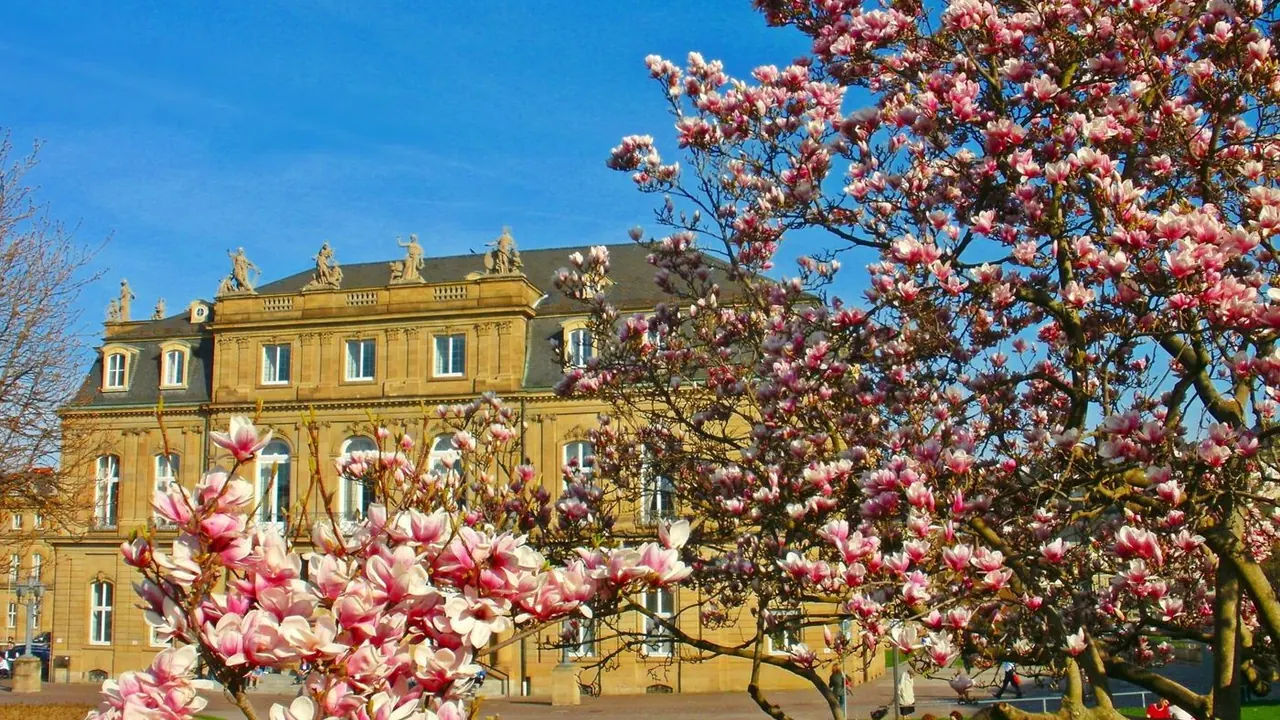
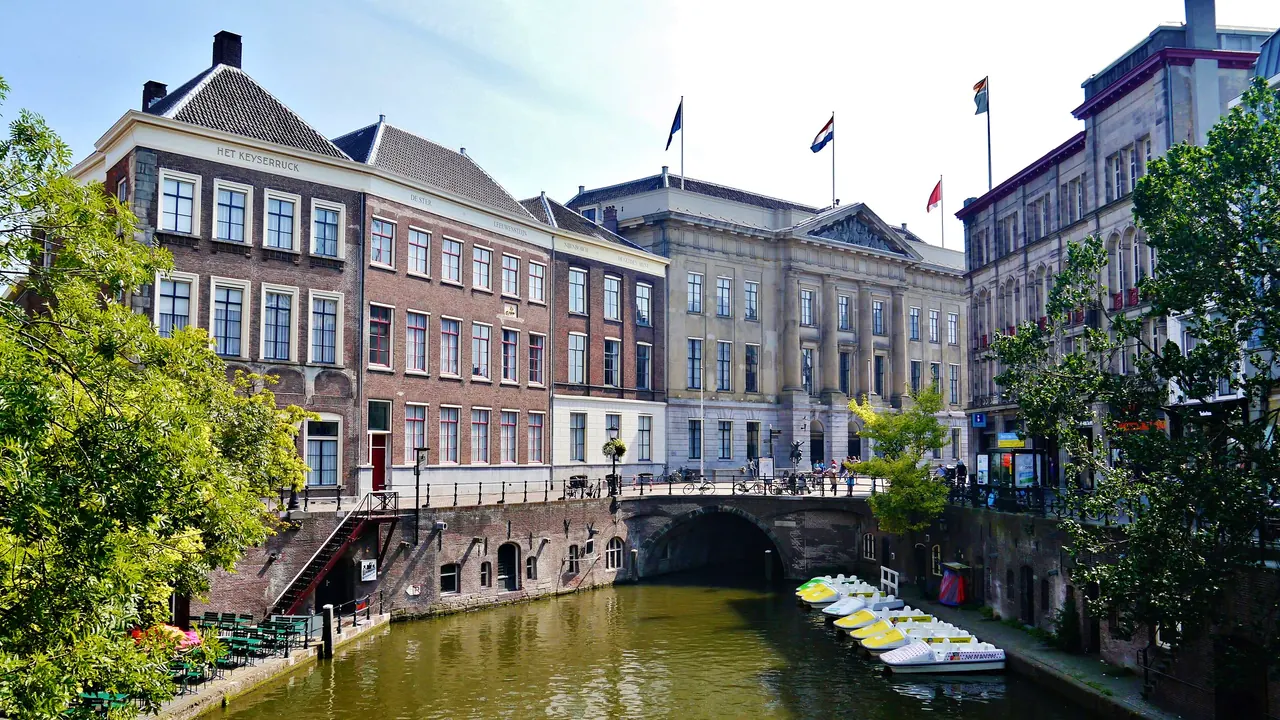
Photos: Stuttgart by Baden de, CC BY 3.0, cropped; Utrecht by Zairon, CC BY-SA 4.0, cropped.
Stuttgart or Utrecht?
Our verdict in twelve categories, each scored against the same fixed benchmark cities, and the climate month by month, so you can choose for your trip.
Choose Stuttgart for
- wellness
- food and drink
- live music and the arts
Stuttgart is the better pick for a trip built around good evenings and slow afternoons. Its stages are a real draw, with the Stuttgart Ballet and a bold opera company in the state theatre. Swabian cooking and the city's own vineyard wines give meals a strong local character, and the carbonated mineral baths at Bad Cannstatt offer a kind of rest Utrecht cannot match. Walkers will also find wooded hills on the city's edge and the Swabian Jura within an hour.
Choose Utrecht for
- getting around
- beaches
- day trips
Utrecht suits travellers who want to see a lot without changing hotels or planning much. The centre is flat and starts at the station door, a bike takes you anywhere, and Amsterdam, Rotterdam, Delft and Haarlem are all short train rides away. Choose it for medieval canal streets, independent shops and student evenings on the wharves, more than for food or spa time.
Scoreboard
Twelve categories on one fixed scale from 0 to 100. The shaded stretch is the gap between the two.
Your match
Pick a travel style or drag the sliders, and both match scores follow your weighting.
Wins on wellness and food and drink with your weighting.
Wins on getting around and beaches with your weighting.
What matters to you?
Category by category
What the scores mean for a trip.
Beaches & swimming
Neither city should be chosen for swimming. Stuttgart has the least to offer: the Neckar is a working river, and the outdoor pools, some fed by the mineral springs, are the only summer option. Lake Constance is more than two hours away.
Utrecht does a bit better. There are lakes on the city's edge, such as the Maarsseveense Plassen, and the North Sea beaches at Zandvoort and Scheveningen are about an hour away by train. Just expect cool water and a short season.
Food & drink
Stuttgart gives you more reason to plan meals. Swabian dishes such as Maultaschen, Käsespätzle and Zwiebelrostbraten are served in traditional wine taverns. Wine from the slopes inside the city limits is poured everywhere, the seasonal Besen taverns open in growers' own houses, and there is a deeper fine-dining tier.
Utrecht has no cuisine of its own, and here the setting matters more than the cooking. You eat on the old canal wharves at water level, in Indonesian and Surinamese kitchens, or in casual student cafés around Lombok and the Twijnstraat. It offers more international variety, but few memorable meals.
Culture & sights
The two are well matched, but they offer different things. Stuttgart's sights come from engineering and modern design. The Mercedes-Benz and Porsche museums, the Staatsgalerie and the Weissenhof Estate stand out, while the bombed old centre survives only in pockets around Schlossplatz.
Utrecht offers the townscape that Stuttgart lost. Its medieval centre survives almost whole, with the free-standing Dom Tower and the two-level Oudegracht wharves. Its museums are smaller. Modern design is a shared thread: Utrecht has the Rietveld Schröder House, and Stuttgart has its Le Corbusier houses.
Nightlife
Neither is a big night out, and the mood is different in each. Stuttgart's evenings centre on the bars and lounges of Theodor-Heuss-Strasse, with clubs in basements and old industrial spaces. It is quiet on weekdays and comes alive during the Cannstatter Volksfest beer tents and the late-summer wine village.
Utrecht is busy all week because of its students. The scene is mostly brown cafés and terraces around the Neude and on the canal edge, and the clubs are few. If you want something larger, Amsterdam is a short train ride away.
Nature & outdoors
Stuttgart has the more varied countryside close to the city. Wooded hills and vineyard trails start at the edge of the centre, and the deer forests of the Rotwildpark and Schönbuch are close by. The cliff edges and caves of the Swabian Jura and the fir ridges of the northern Black Forest are each about an hour away.
Around Utrecht the land is flat, which suits a bike. You can ride along the Vecht past country estates and windmills, through the polders, or into the low heath and woodland of the Utrechtse Heuvelrug. It is pleasant cycling country but offers little real walking.
Day trips
Both make excellent bases, and Utrecht is slightly better. It sits at the centre of the Dutch rail network, so Amsterdam, Rotterdam, The Hague, Delft, Leiden and Gouda are all simple trips. Kinderdijk and the Kröller-Müller Museum are further out but still manageable.
Stuttgart's trips are more spread out and more varied. Ludwigsburg's palace and Esslingen are close by. Tübingen, Heidelberg, Maulbronn's monastery, Hohenzollern Castle and Ulm's great spire are all reachable in a day, and so is Strasbourg across the border.
Good for families
Both cities are easy and calm for children, and the difference is in what they offer. Stuttgart's highlight is Wilhelma, a full day of animals and gardens. The Killesberg park has a miniature railway, and the rack railway is a treat of its own. The hills make pushchairs harder work.
Utrecht suits younger children with the national Railway Museum and the Miffy museum. Its streets are flat, but the constant flow of bikes needs watching.
Getting around
Utrecht is the easier city to get around. You step out of Utrecht Centraal straight into the old town, the main sights sit on flat streets within walking distance, and the bike does the rest.
Stuttgart's centre is also compact and walkable, but the city climbs steeply up the sides of its basin. The car museums and Wilhelma mean using the Stadtbahn or S-Bahn, although one ticket covers everything, including the rack railway and the funicular.
Shopping & style
Shoppers will be equally happy in either city, but the two suit different tastes. Stuttgart is better for brands. Königstrasse is lined with chain stores, Breuninger covers designer fashion, and the outlet village at Metzingen is half an hour away.
Utrecht is better for browsing. Small streets such as the Twijnstraat and the Elisabethstraat are full of independent design and book shops, and there are flower and textile markets. Luxury labels are largely missing.
Affordability
Neither city is cheap, and Stuttgart is only marginally kinder to the budget. Its hotels are aimed at business travellers, so weekends and quiet months are when rooms cost less, and tavern portions are generous.
In Utrecht, the main expense is a bed in the small historic centre. Once that is paid, the day costs little: you walk or cycle instead of paying for transport, and student lunch cafés keep meals cheap.
Live music & performing arts
Stuttgart is the stronger choice for a night at the theatre. The Staatsoper and the internationally known Stuttgart Ballet share the state theatre. The Liederhalle carries a strong Bach tradition, and big musicals run at Möhringen.
Utrecht has a good concert life centred on TivoliVredenburg, where classical, pop and jazz can share one evening, and the Festival Oude Muziek is a major early-music event. There is no opera, though, and most stage drama is in Dutch.
Wellness & relaxation
Stuttgart is far stronger here, because it has a real bathing tradition. The springs of Bad Cannstatt and Berg are among Europe's most productive, and the Mineralbad Cannstatt and Leuze let you soak in naturally carbonated water indoors and out.
Utrecht's sauna complexes are out in the green belt, so a spa afternoon means a trip out of town. Within the city, unwinding comes down to quiet hours in the Pandhof cloister garden and evenings by the wharves.
When should you go?
Pick your month. The climate figures are measured averages, not a forecast.
Stuttgart in July
Utrecht in July
Daytime high, °C
Rainfall in the month, mm
Temperature and rainfall are climate normals, averaged over the years shown. Stuttgart: 1991-2020 normals, Stuttgart / Neckartal (2.8 km from centre). Utrecht: 1991-2020 normals, De Bilt (4.3 km from centre).
Stuttgart has the warmer, sunnier summer. Its basin reaches about 26°C in July and August, warm enough for the outdoor pools and long evenings among the vineyards, and from June to August it gets clearly more sun than Utrecht. Late spring and summer are also its wettest stretch, with May to August each wetter than any other month. Late winter and early spring are fairly dry but cold. From November to February both cities are chilly and grey, better for museums and concerts than for walking the streets.
Utrecht stays fresher, at around 23°C in high summer. That is comfortable for cycling and never too hot for walking. It is also wet for longer. July and August are its rainiest months at about 85mm, and the rain barely lets up from midsummer right through the winter. April, at 42mm, is the only clearly dry month, so spring is the best time for bikes and canal terraces. The North Sea is warmest in August at about 19°C, so a swim on a day trip to the coast is bracing at best.
Which traveller are you?
For a relaxing and wellness trip, Stuttgart is the clear winner. You can spend a whole afternoon soaking in warm, naturally fizzy spring water and finish in the sauna without leaving the city. In Utrecht, resting mostly means slowing down rather than going to a bath.
For a short city break, Utrecht fits more into two days. Without planning any transport, you can climb the Dom Tower, eat on the canal wharves and browse the small shops in one easy loop. Stuttgart's sights are split between the centre and the hillsides, so it suits a longer stay.
On a culture and arts trip, Stuttgart fills both the day and the evening. A morning at the car museums or the Staatsgalerie can end at the ballet or the opera, if you book well ahead. Utrecht suits people who prefer medieval streets and concerts to grand stages.
Before you go
| Measure | Stuttgart | Utrecht |
|---|---|---|
| Official language | German | Dutch |
| Currency | Euro (EUR) | Euro (EUR) |
| Sockets | CF230 V, 50 Hz | CF230 V, 50 Hz |
| Driving side | Right | Right |
| Time zone | UTC+1, UTC+2 in summer | UTC+1, UTC+2 in summer |
| Emergency number | 112 | 112 |
| Elevation | 245 m | 5 m |
| Main airport | Stuttgart Airport (STR)10 km from centre124 non-stop destinations | Amsterdam Airport Schiphol (AMS)34 km from centre287 non-stop destinations |
| Public holidays this year | 12 days | 11 days |
By the numbers
| Measure | Stuttgart | Utrecht |
|---|---|---|
| City population | 609,365 | 359,370 |
| People per km² | 2,938 | 3,619 |
| Museums within 10 km | 42 | 28 |
| UNESCO World Heritage sites within 50 km | 3 | 5 |
| Swim season, months above 21 °C | - | None |
Where else could you go?
Every comparison below shares a destination with this one, so you can follow Stuttgart or Utrecht somewhere new.