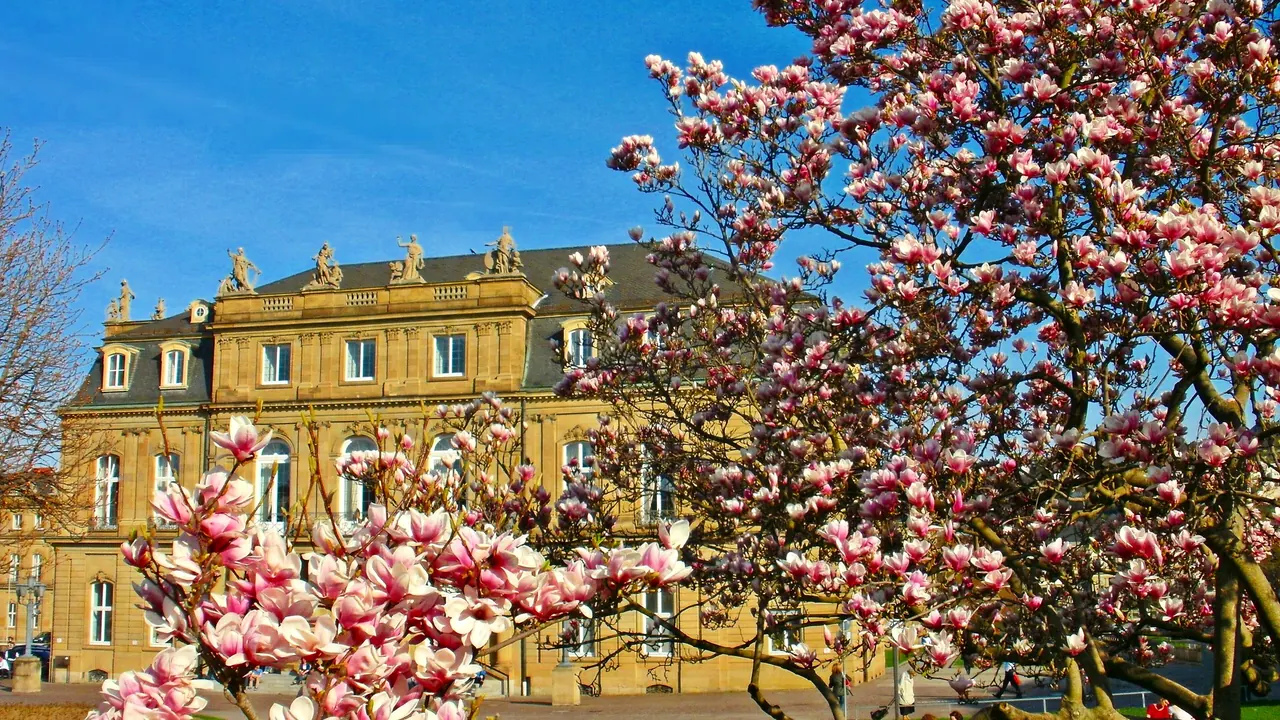
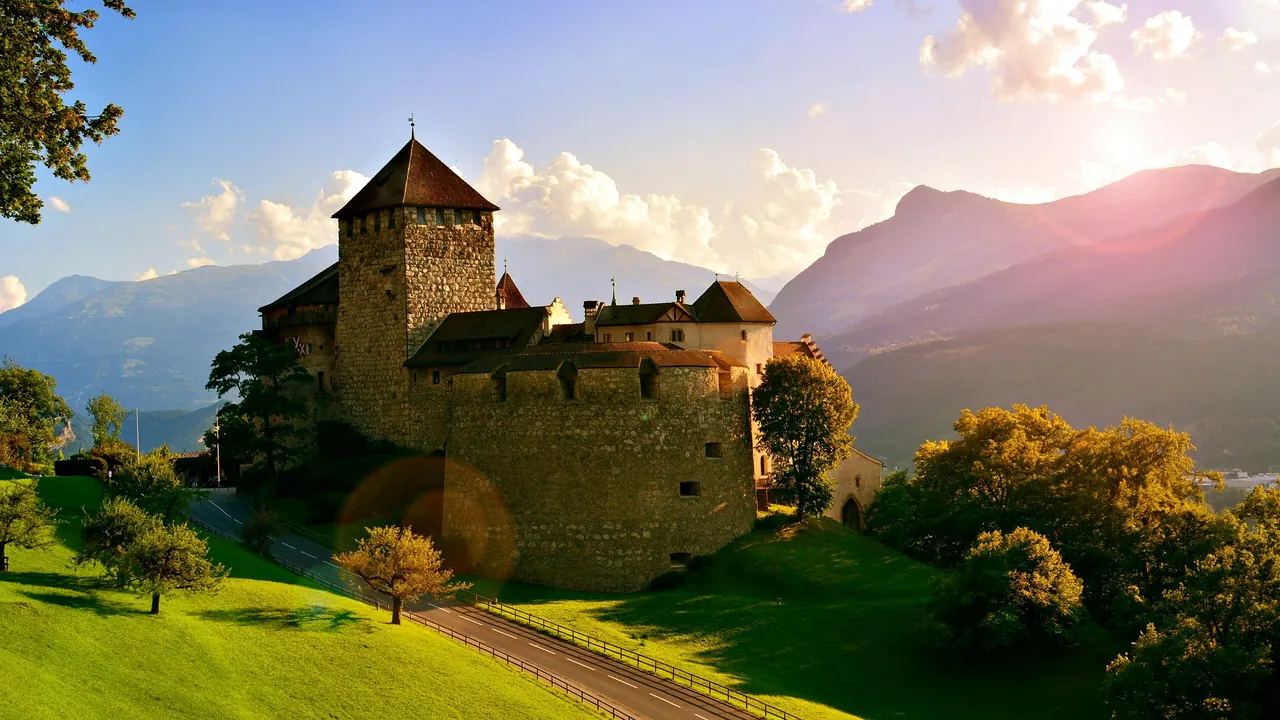
Photos: Stuttgart by Baden de, CC BY 3.0, cropped; Vaduz by Justin LaBerge, CC BY 2.0, cropped.
Stuttgart or Vaduz?
Our verdict in twelve categories, each scored against the same fixed benchmark cities, and the climate month by month, so you can choose for your trip.
Choose Stuttgart for
- live music and the arts
- shopping
- culture and sights
Stuttgart is the pick for a city trip with real substance. It has car museums of international standing, the Staatsgalerie and the Weissenhof Estate, a ballet and opera that people cross Europe to see, and Swabian taverns pouring wine from vineyards inside the city limits. Add an easy integrated transport network, a dense ring of palace and old-town outings, and prices that are high but nowhere near Swiss, and it suits couples, families and culture lovers who want plenty to fill several days.
Choose Vaduz for
- nature and the outdoors
- beaches
Vaduz makes sense when the mountains are the point and the town is simply a tidy place to sleep. Trails start at the edge of the centre, the Rätikon peaks and Malbun's ski slopes are half an hour up the road, and Swiss and Austrian towns are close by. It suits walkers and quiet couples who accept very high prices, early nights and a single day of sights in exchange for Alpine scenery on the doorstep.
Scoreboard
Twelve categories on one fixed scale from 0 to 100. The shaded stretch is the gap between the two.
Your match
Pick a travel style or drag the sliders, and both match scores follow your weighting.
Wins on live music and the arts and shopping with your weighting.
Wins on nature and the outdoors and beaches with your weighting.
What matters to you?
Category by category
What the scores mean for a trip.
Beaches & swimming
Neither city is a place for sand, but Vaduz has the slight edge for a swim. The Walensee, under its steep mountain walls, is about half an hour away and Lake Constance under an hour, so a hot afternoon at a lake is an easy outing.
From Stuttgart, Lake Constance is over two hours south, so summer swimming means the city's outdoor pools, some fed by mineral springs, rather than open water.
Food & drink
Stuttgart is the more rewarding place to eat. Swabian dishes such as Maultaschen and Käsespätzle come in proper wine taverns, the Art Nouveau Markthalle is a pleasure to browse, seasonal Besen taverns open in growers' homes, and there is a serious fine-dining tier on top.
Vaduz offers solid Alpine cooking, Käsknöpfle and rösti in hotel dining rooms and hill inns, but little choice and no market life. Its real pleasure is the prince's own Pinot Noir and Chardonnay, grown on the slopes beneath the castle.
Culture & sights
Stuttgart has much more to see, and its strength is industry and modern design: two car museums of real international standing, the Staatsgalerie with its postmodern wing, and the Le Corbusier houses of the Weissenhof Estate. The baroque Neues Schloss and the Württemberg State Museum in the Altes Schloss add history, and the essentials take two to three days.
Vaduz fits into one unhurried day. The Kunstmuseum and Hilti Art Foundation hold strong modern art for so small a town, and the castle frames every view, but it is the prince's home and stays closed.
Nightlife
Stuttgart at least gives you a night out: bars and lounges along Theodor-Heuss-Strasse at weekends, basement clubs with an electronic following, and quieter wine bars in the Bohnenviertel. The Cannstatter Volksfest beer tents in autumn are its big party.
Vaduz has a few wine bars and hotel lounges on the Städtle and then goes to bed. Young locals cross to Feldkirch or go to Zurich when they want more.
Nature & outdoors
Vaduz is the stronger choice for the outdoors, because the Alps begin at the edge of town. Trails climb through vineyards and beech forest from the centre, the Rätikon offers real high-mountain walking and ridge routes, and in winter there is skiing at Malbun with bigger Swiss resorts within an hour.
Stuttgart's green basin is pleasant rather than dramatic: vineyard paths above the Neckar, deer in the Rotwildpark, and the Swabian Jura cliffs and northern Black Forest about an hour out. It suits walkers and cyclists, not mountaineers.
Day trips
Both make good bases, but Stuttgart's list is longer and easier to reach by train. Ludwigsburg's palace and Esslingen are a short S-Bahn ride, Tübingen and Heidelberg are under an hour, and Maulbronn, Hohenzollern Castle and Ulm's spire are all within range.
Vaduz trades on its border position: medieval Feldkirch is twenty minutes away, and St Gallen's abbey library, Appenzell and Lake Constance about an hour. Connections often need a change at Buchs or Sargans, so a car helps.
Good for families
Stuttgart is much better set up for children. Wilhelma, the zoo and botanical garden among Moorish-style pavilions, fills a whole day, and the Killesberg park railway, the rack railway and Ludwigsburg's fairy-tale garden add more. Hills can be hard work with a pushchair.
Vaduz is very safe and flat in the centre but has nothing built for children. Families spend their time at the pools, on gentle walks above Triesenberg or on Malbun's beginner slopes, which suits older children better than toddlers.
Getting around
Both have a compact, walkable core, but Stuttgart's public transport goes much further. One ticket covers the Stadtbahn, S-Bahn, buses, a rack railway and a funicular, reaching the museums, Wilhelma and the airport without a car.
Vaduz's Städtle takes minutes on foot and buses reach every village and Malbun, but with no train station of its own, onward trips mean changing at Buchs, Sargans or Feldkirch, and many visitors drive.
Shopping & style
Stuttgart is a proper shopping city: Königstrasse is one of Germany's longest pedestrian streets, Breuninger handles luxury fashion, and the outlet village at Metzingen is half an hour away.
Vaduz has a handful of shops on the Städtle selling watches, jewellery and its famous stamps, and a bottle of local wine is the best souvenir. For anything more, people go to Zurich.
Affordability
Neither is cheap, but Stuttgart is far more manageable. Its prices sit above the Western European middle, yet hearty tavern meals are good value, day tickets keep transport affordable and hotel rooms fall on weekends outside trade-fair periods.
Vaduz prices everything at the Swiss level, and with so few hotels there is almost nothing at the budget end. Some visitors save by sleeping across the border in Austria.
Live music & performing arts
This is where the gap is widest. Stuttgart has a ballet among Europe's most respected since John Cranko's time, an opera known for bold productions, the Staatsschauspiel, Bach and symphony concerts at the Liederhalle, and long-running musicals at Möhringen. Ballet tickets need booking early.
Liechtenstein's stage life centres on the national theatre in neighbouring Schaan, a short orchestral season and a summer classical festival in Vaduz. It is enough to find a concert during a week's stay, not to plan a trip around.
Wellness & relaxation
Stuttgart has its own bathing culture, built on some of Europe's most productive mineral springs. The Mineralbad Cannstatt and Mineralbad Leuze offer naturally carbonated warm water indoors and out, with saunas at the larger baths, all within the city.
Vaduz offers calm rather than facilities: quiet streets, mountain views and only hotel spas. For proper thermal bathing you cross to Bad Ragaz, about twenty-five minutes away, where Tamina gorge water feeds a large public bath.
When should you go?
Pick your month. The climate figures are measured averages, not a forecast.
Stuttgart in July
Vaduz in July
Daytime high, °C
Rainfall in the month, mm
Where the figures come from
Vaduz's temperatures are measured 51 km from the centre, at Sigmarszell-Zeisertsweiler.
Vaduz has no rain gauge within 25 km of the centre, so its rainfall comes from a gridded climate dataset read at the destination rather than from a gauge further away.
Temperature and rainfall are climate normals, averaged over the years shown. Stuttgart: 1991-2020 normals, Stuttgart / Neckartal (2.8 km from centre). Vaduz: 1991-2020 normals, Sigmarszell-Zeisertsweiler (51.3 km from centre).
The two share a central European rhythm, but Stuttgart runs a little warmer and much drier. Its summer highs reach about 26°C in July and August, and even its wettest months bring only moderate rain, so late spring through September is comfortable for walking the streets and sitting in beer gardens. Vaduz peaks a couple of degrees cooler, around 24°C, and its summers are distinctly wet, with August the rainiest month at about 126mm against Stuttgart's 79mm in July, often as mountain showers.
Neither is a beach place, and lake or pool swimming only really works in July and August. Both get roughly the same long summer sunshine, with Stuttgart slightly sunnier. Winters are cold in both, with highs around 4°C to 6°C and little sun from November to January; that suits Vaduz if you come for Malbun's ski slopes, while Stuttgart's winter appeal lies indoors, in its museums, theatres and mineral baths.
Which traveller are you?
For a culture and arts trip, Stuttgart wins easily. The Mercedes-Benz and Porsche museums, the Staatsgalerie and the Weissenhof Estate fill days rather than hours, and evenings at the Stuttgart Ballet or Staatsoper are something tiny Vaduz cannot offer.
On an outdoors trip, Vaduz is the better choice. Vineyard and forest trails leave straight from town, the Rätikon peaks and the Fürstensteig path are half an hour away, and winter brings skiing at Malbun, whereas Stuttgart's Jura and Black Forest walks are gentler and further out.
On a trip with a tight budget, Stuttgart is far easier on the wallet. Tavern meals are generous, day tickets keep transport cheap and hotels drop on weekends, while Vaduz follows Swiss prices for rooms and meals with almost no budget choice.
Before you go
| Measure | Stuttgart | Vaduz |
|---|---|---|
| Official language | German | German |
| Currency | Euro (EUR) | Swiss Franc (CHF) |
| Sockets | CF230 V, 50 Hz | CJ230 V, 50 Hz |
| Driving side | Right | Right |
| Time zone | UTC+1, UTC+2 in summer | UTC+1, UTC+2 in summer |
| Emergency number | 112 | 112 |
| Elevation | 245 m | 455 m |
| Main airport | Stuttgart Airport (STR)10 km from centre124 non-stop destinations | Zürich Airport (ZRH)81 km from centre226 non-stop destinations |
| Public holidays this year | 12 days | 21 days |
By the numbers
| Measure | Stuttgart | Vaduz |
|---|---|---|
| Population | 609,365 | 5,668 |
| People per km² | 2,938 | 328 |
| Museums within 10 km | 42 | 7 |
| UNESCO World Heritage sites within 50 km | 3 | 3 |
Where else could you go?
Every comparison below shares a destination with this one, so you can follow Stuttgart or Vaduz somewhere new.
- Baden-Badenvs Stuttgart
- Heidelbergvs Stuttgart
- Zurichvs Vaduz
- Lucernevs Vaduz
- Rothenburg ob der Taubervs Stuttgart
- Strasbourgvs Stuttgart