Dushanbe
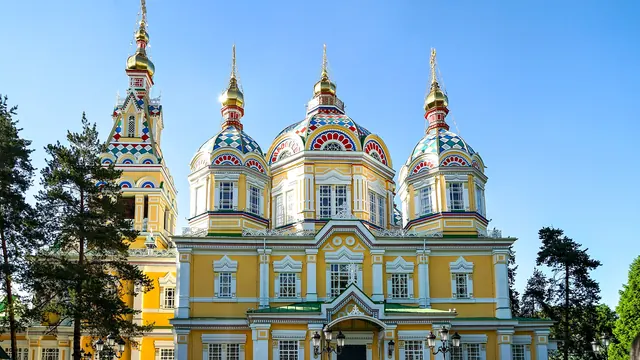
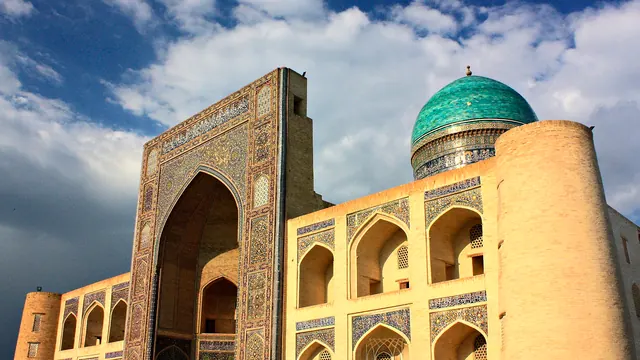
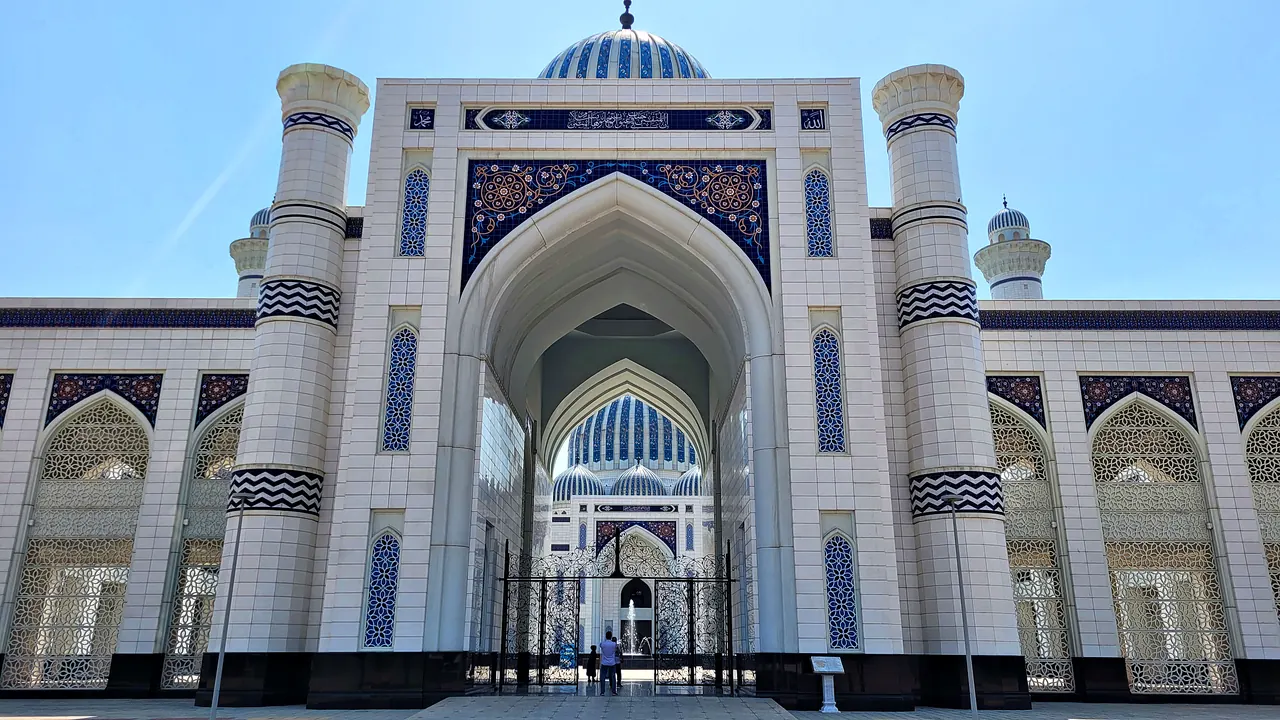
The mosaic entrance portal of the great mosque in Dushanbe
- Affordability88
- Nature & outdoors70
- Getting around45
Photo: Michael Kabus, Pexels License
Match
38
Every category weighted equally
- Beach & sun37
- Culture & arts38
- Food & nightlife36
- Family trip41
- Outdoors42
- Relax & unwind38
- Shopping & style37
- On a budget43
Dushanbe in twelve categories
Our verdict on each, scored 0 to 100 against the same fixed benchmark cities, so a score means the same thing on every page.
Beaches & swimming. Scores 7 out of 100.
Food & drink. Scores 42 out of 100.
Culture & sights. Scores 38 out of 100.
Nightlife. Scores 14 out of 100.
Nature & outdoors. Scores 70 out of 100.
Day trips. Scores 20 out of 100.
Good for families. Scores 32 out of 100.
Getting around. Scores 45 out of 100.
Shopping & style. Scores 33 out of 100.
Affordability. Scores 88 out of 100.
Live music & performing arts. Scores 30 out of 100.
Wellness & relaxation. Scores 33 out of 100.
Dushanbe category by category
Beaches & swimming
7Dushanbe is landlocked and far from any sea, so beach life is not part of a stay. In the hot summer, locals cool off at the artificial lake on the city's edge, in hotel pools and on the cold, fast rivers of the Varzob valley. The turquoise Norak reservoir to the south is the nearest thing to a swimming lake, but it is a full day out for a dip, not a reason to come.
Food & drink
42Tajik food is hearty, built on bread, mutton and dairy. The dish to seek out is qurutob, torn flatbread soaked in a sauce of dried yoghurt and topped with onions and herbs, eaten from a shared wooden platter. Plov (called osh here) is cooked in huge cauldrons, usually at lunchtime. Sambusa come straight from clay tandoor ovens, and shashlik smokes on grills everywhere. Green tea is drunk all day in chaikhana teahouses, where people sit on raised platforms.
The bazaars are the best place to eat and look around, piled with dried apricots, mulberries, walnuts and melons in late summer. Beyond local cooking there are some Russian, Turkish and Persian restaurants, but the choice is narrow and there is no real fine dining or wine culture.
Culture & sights
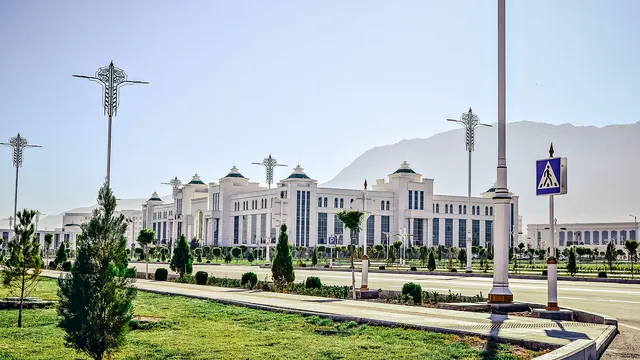
38Dushanbe was a village until the Soviet era, so there is no old town. What a visitor sees is a capital of grand gestures. Along the tree-lined Rudaki Avenue stand monumental state buildings, the gilded statue of Ismoil Somoni and Rudaki Park, and close by are one of the tallest flagpoles anywhere and a vast ceremonial palace. A few neoclassical Soviet facades and the pastel Ayni opera house survive from the earlier city.
The real highlight is the Museum of Antiquities. It holds Buddhist, Greco-Bactrian and Sogdian finds from across the country, including a reclining Buddha about 13m long from Ajina Tepa. The National Museum and a small, charming museum of traditional musical instruments complete a short list that two days cover comfortably.
Nightlife
14Evenings in Dushanbe centre on food and tea, not on going out. There are a few pubs, hookah lounges and karaoke rooms, and some hotel bars and small clubs aimed at expats and the better-off. Their crowds are thin and none of them stays open very late. On summer nights families stroll the lit-up parks and fountains along Rudaki Avenue, which is the closest the city comes to a lively night. A visitor looking for a night scene will find very little.
Nature & outdoors
70The mountains begin almost at the city limits. Half an hour north, the Varzob gorge climbs between steep, poplar-lined walls, with side valleys such as Kondara and Siama for walks among wild walnut and juniper. Further up the same road, the Takob and Safed Dara slopes offer simple winter skiing about an hour from the centre. To the south lie the dry hills and the long, blue Norak reservoir.
The bigger prizes, the Fann Mountains with Iskanderkul lake and the Seven Lakes of Marguzor, are several hours over a high pass and best done as overnight trips. Trails are unmarked and services are basic, so a driver or local guide helps. Spring and autumn are the best seasons, because summers in the valley are very hot.
Day trips
20There is really one classic outing: the Hisor fortress, about 30km west. Its rebuilt gateway stands alongside an old madrasa, a caravanserai and a small museum, and it fills half a day. Beyond that, the places worth seeing are far apart. Penjikent with its Sogdian ruins, Istaravshan and Khujand in the north, and the Buddhist site at Ajina Tepa in the south all need long drives and are better as overnight trips. Most excursions from the city head into the mountains instead.
Good for families
32Tajik culture is warm towards children, and the centre is calm, green and safe to walk. The big parks, with their fountains, small funfairs and playgrounds, fill up with families in the evenings. There is a modest zoo, a botanical garden and the open lawns of Victory Park on its hill. Beyond that, little is made for children. Summers often pass 40°C, comforts such as changing facilities are rare, and mountain trips mean long, winding drives. It suits families who are relaxed about travel more than those looking for organised attractions.
Getting around
45The part of Dushanbe a visitor uses is compact and easy. Most sights, parks and hotels line or sit just off Rudaki Avenue, a long, flat, shaded boulevard that is pleasant to walk outside the summer heat. Trolleybuses, buses and minibuses run the main roads but are not easy to read for a newcomer. Most visitors use taxis booked through apps, which are plentiful. There is no metro or useful rail network, so trips into the valleys and to other towns mean hiring a driver or taking a shared taxi.
Shopping & style
33The shopping worth doing is in the bazaars. The large covered Mehrgon market and the busier Green Bazaar sell dried fruit, nuts, spices and household goods. On their fringes are stalls of embroidered skullcaps, quilted chapan robes and bright atlas silk. Suzani embroideries and hand-woven textiles make the best souvenirs, and some come from small craft shops in the centre. Otherwise there are a few shopping malls with ordinary chain brands, and nothing in the way of designer or independent boutiques.
Affordability
88Day-to-day costs are very low. Bazaar food, teahouse meals, buses and app taxis cost a fraction of Western prices, and museum entry is close to nominal. Hiring a car and driver for a mountain day is also inexpensive. Rooms are where the money goes. Simple guesthouses and hostels are cheap, but there are few good mid-range hotels, and the international-standard ones charge prices out of line with the rest of the city.
Live music & performing arts
30Dushanbe has a small but genuine formal stage. The Ayni Opera and Ballet Theatre, a handsome Soviet-era building, puts on classical ballet and Tajik operas. A philharmonic and several drama theatres perform mostly in Tajik and Russian. The more distinctive sound is traditional: shashmaqom court music and the plaintive mountain falak, heard at concerts, festivals and weddings. Programmes are poorly publicised and rarely aimed at outsiders, so catching a performance takes some asking around.
Wellness & relaxation
33The city's restorative side lies mostly outside it. In the Varzob valley, about an hour north, is Khoja Obi Garm, a hillside sanatorium built around hot radon springs, with treatments and mountain air. In Dushanbe itself there are Russian-style banya saunas and a few hotel spas, but no bathing tradition to build a stay around. The pace helps: long tea sessions on teahouse platforms and slow evening walks under the plane trees make it an unhurried capital.
When should you go?
Pick a month to see what it is like. The climate figures are measured averages, not a forecast.
Dushanbe in July
Daytime high, °C
Rainfall in the month, mm
The whole year
Shaded against this destination’s own year: the deepest cell is its best month for that figure and the palest its weakest.
Temperature and rainfall are climate normals, averaged over the years shown. Dushanbe: 1991-2020 normals, Dushanbe (2.6 km from centre).
Before you go
| Measure | Dushanbe |
|---|---|
| Official language | Tajik |
| Currency | Somoni (TJS) |
| Sockets | CFI220 V, 50 Hz |
| Driving side | Right |
| Time zone | UTC+5 |
| Emergency number | 112 |
| Elevation | 706 m |
| Main airport | Dushanbe International Airport (DYU)5 km from centre44 non-stop destinations |
By the numbers
| Measure | Dushanbe |
|---|---|
| Population | 948,251 |
| People per km² | 7,610 |
| Museums within 10 km | 4 |
| UNESCO World Heritage sites within 50 km | 0 |
Compare Dushanbe with
Every comparison with a written verdict behind it.