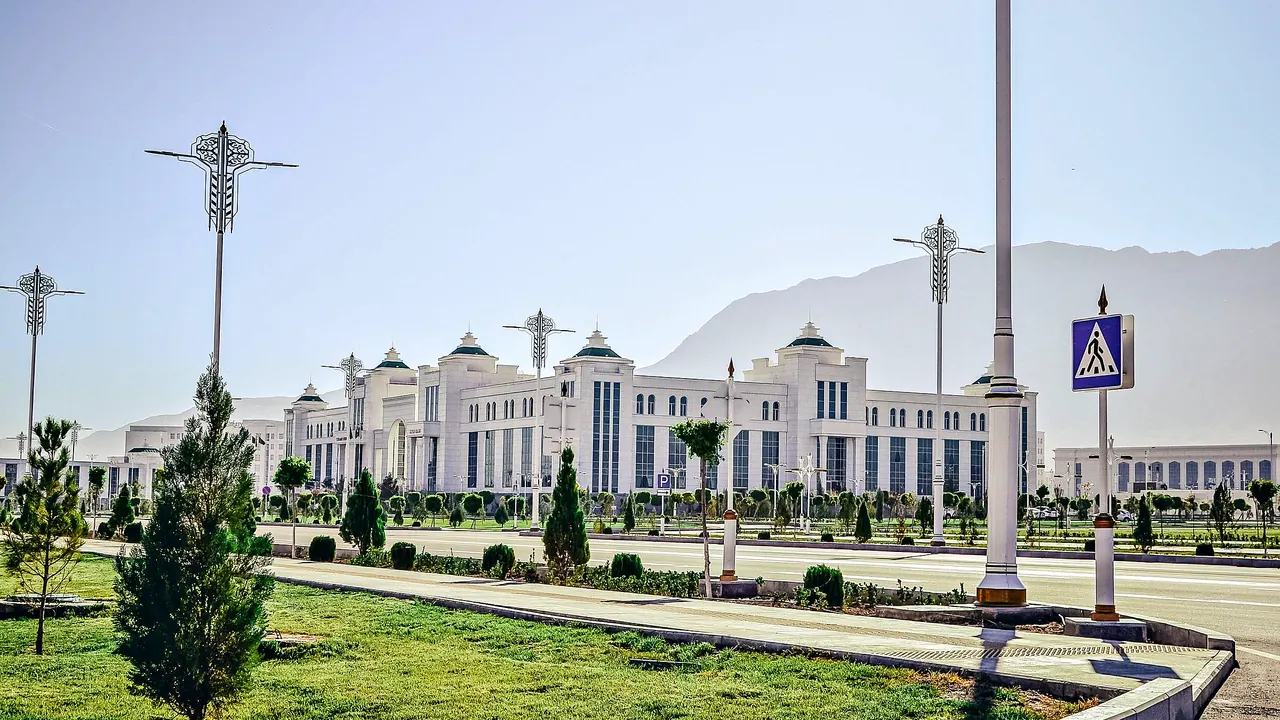
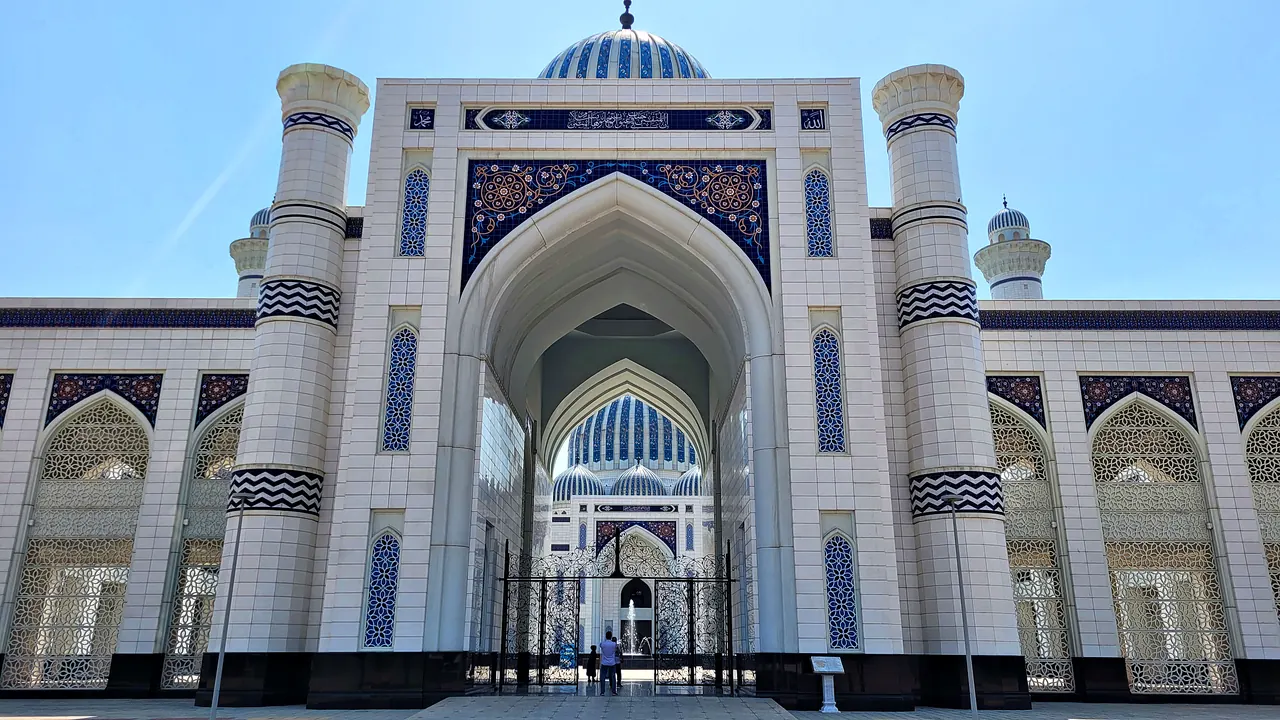
Photos: Ashgabat by IGaragin, Pexels License; Dushanbe by Michael Kabus, Pexels License.
Ashgabat or Dushanbe?
Our verdict in twelve categories, each scored against the same fixed benchmark cities, and the climate month by month, so you can choose for your trip.
Choose Ashgabat for
- day trips
- culture and sights
- families
Ashgabat suits the traveller who is curious about the place itself: a white marble capital of gilded statues and floodlit monuments, with real depth in its carpet and archaeology collections and the Parthian fortress of Old Nisa just outside town. It works best as a short, guided visit, ideally at the start or end of a longer journey across Turkmenistan, and for people willing to pay for hotels and drivers.
Choose Dushanbe for
- prices
- nature and the outdoors
- food and drink
Go to Dushanbe if mountains and a modest budget matter more than monuments. The Varzob gorge starts half an hour from the centre, the Fann Mountains are within an overnight trip, and everyday life, from teahouse meals to a car and driver for the day, costs very little. The centre along Rudaki Avenue is easy to walk, and the food is a little more rewarding, though there are fewer sights in the city.
Scoreboard
Twelve categories on one fixed scale from 0 to 100. The shaded stretch is the gap between the two.
Your match
Pick a travel style or drag the sliders, and both match scores follow your weighting.
Wins on day trips and culture and sights with your weighting.
Wins on prices and nature and the outdoors with your weighting.
What matters to you?
Category by category
What the scores mean for a trip.
Beaches & swimming
Neither city is a beach destination, since both are landlocked deep in Central Asia. What differs is how you cool off. In Ashgabat it means a hotel pool, plus the warm sulphurous lake in the Kow Ata cave, which feels more like a soak than a swim. Dushanbe has an artificial lake on its edge, cold mountain rivers in the Varzob valley and the turquoise Norak reservoir, a full day out for open-water swimming.
Food & drink
Both cities cook the hearty mutton, bread and plov of Central Asia, but Dushanbe makes more of it. Qurutob shared from a wooden platter, sambusa from the tandoor and osh cooked in great cauldrons at lunch are worth seeking out. The chaikhana teahouses, with their raised platforms, give eating there a social setting that Ashgabat lacks.
In Ashgabat the best food experience is the Russian Bazaar, with its melons, dried fruit and smoked fish, along with ishlekli and gutap pastries. Restaurants sit mostly in hotels and lean towards generic menus, and there is no café culture to fill the gaps between meals.
Culture & sights
Ashgabat has the stronger set of sights. The city itself, rebuilt in white marble after the 1948 earthquake and lit in colour at night, is strange enough to be the main reason to come. It also has serious collections, with Central Asia's finest carpets at the Carpet Museum and Parthian ivory rhytons and Margiana finds at the National Museum. The vast Turkmenbashy Ruhy Mosque adds one more major monument.
Dushanbe has the same young-capital style of grand state buildings, the gilded Somoni statue and a giant flagpole along Rudaki Avenue, but on a smaller scale. Its standout is the Museum of Antiquities and its 13m reclining Buddha from Ajina Tepa, and two days cover the city comfortably.
Nightlife
Both capitals are quiet after dark, and neither will suit a night out. The difference is in the details. Ashgabat offers hotel bars, beer restaurants and a few discreet clubs that close before midnight, with the boulevards almost empty. Dushanbe has pubs, hookah lounges and karaoke rooms, and on summer evenings families crowd its parks along Rudaki Avenue, which gives the streets more life even if the bars are just as thin.
Nature & outdoors
Here Dushanbe is in another league. The Varzob gorge, lined with poplars, starts half an hour north, with side valleys such as Kondara and Siama for walks among wild walnut and juniper, and simple skiing at Takob and Safed Dara in winter. Further off, the Fann Mountains, Iskanderkul and the Seven Lakes of Marguzor make some of the finest overnight trips in the region.
Ashgabat has the bare ridges of the Kopet Dag on its doorstep, good for short walks, picnics at Gökdere and spring poppies, with Nokhur further along the range. Trails are few and border permits limit access, and its famous outing, the Darvaza gas crater, is a long drive into the Karakum with a night's camping.
Day trips
Ashgabat has more within easy reach. Old Nisa, the Parthian royal fortress, is a short drive west, and the ruined Anau mosque and the battlefield fortress of Geok Depe make further half-day trips. Merv and Kunya-Urgench, however, are too far for a day.
Dushanbe has one classic cultural excursion, the Hisor fortress about 30km west, with its madrasa and caravanserai. Penjikent, Khujand and Ajina Tepa all need overnight stays, so most days out from Dushanbe head into the mountains instead.
Good for families
Both are calm, clean places where children can run around in parks and fountain squares, and both become hard work in summers that pass 40°C. Ashgabat has more built for children, with its fairy-tale amusement park, a circus and malls with play areas, but the long distances between sights tire young legs. Dushanbe has smaller funfairs, a zoo and a botanical garden, plus a warmth towards children in everyday life that makes up for the lack of attractions.
Getting around
Neither city has a metro, and in both most visitors end up in taxis, but the scale is very different. Ashgabat's marble districts sprawl along ceremonial avenues with long gaps between monuments, so a driver or guided vehicle is close to essential. In Dushanbe, the sights, parks and hotels cluster along the shaded, flat Rudaki Avenue, which you can walk, with plentiful app taxis for the rest and a hired driver for the valleys.
Shopping & style
The two are evenly matched, and in both the bazaar is the place to shop rather than any boutique street. Ashgabat's strength is carpets. The weekend carpet section at Tolkuchka on the desert edge is a serious place to buy hand-knotted rugs, along with telpek hats and silver jewellery, though export takes paperwork. Dushanbe's best buys are textiles, such as suzani embroideries, atlas silk and quilted chapan robes from the fringes of the Mehrgon and Green bazaars, which are easier to carry home.
Affordability
Dushanbe is much the cheaper trip. Food, transport and museums cost very little, a car and driver for a mountain day is inexpensive, and simple guesthouses and hostels keep rooms cheap, as long as you skip the overpriced international hotels.
Ashgabat looks cheap at street level, but a foreign visitor rarely lives at that level. High hotel rates for uneven rooms and trips built around guides and agencies push the total well above what bazaar prices suggest, and independent budget travel is hard to arrange.
Live music & performing arts
Both have a small state-run stage, poorly publicised and rarely aimed at visitors, with Dushanbe a little easier to enjoy. Its Ayni Opera and Ballet Theatre is a handsome Soviet-era house for ballet and Tajik opera, and its traditional sound, shashmaqom court music and mountain falak, turns up at concerts and festivals.
Ashgabat stages opera, ballet and Turkmen musical drama at the Magtymguly theatre, with a Pushkin drama theatre and a philharmonic alongside. Its most distinctive tradition is the bagshy singing epic poetry to the dutar, which you are more likely to meet at folk events than on a regular programme.
Wellness & relaxation
Neither city has a bathing culture of its own, so in both relaxation means going out of town. Dushanbe has a slight edge. Khoja Obi Garm, an hour up the Varzob valley, is a proper sanatorium with radon springs, treatments and mountain air, and the city has banya saunas and long teahouse afternoons that slow the pace. Ashgabat's answer is the underground lake at Kow Ata, two hours west and around 33°C all year, a striking soak but without much around it, while the city itself is quiet rather than restorative.
When should you go?
Pick your month. The climate figures are measured averages, not a forecast.
Ashgabat in July
Dushanbe in July
Daytime high, °C
Rainfall in the month, mm
Temperature and rainfall are climate normals, averaged over the years shown. Ashgabat: 1991-2020 normals, Ashgabat Keshi (4.8 km from centre). Dushanbe: 1991-2020 normals, Dushanbe (2.6 km from centre).
The two cities have a similar temperature curve, with mild winters around 10°C and fierce summers, but they differ sharply in rain. Ashgabat is a desert city and stays dry almost all year, with only light showers from late autumn to spring and long sunny days. Dushanbe sits against the mountains and is properly wet from November to May, peaking at about 154mm in April, then turns almost completely dry from June to September.
July is too hot for walking the streets in either, reaching 39°C in Ashgabat and 37°C in Dushanbe. For Ashgabat, April and October, both around 24°C, are the sweet spot, with spring adding green slopes in the Kopet Dag. For Dushanbe, late September and October are the safest choice, dry and comfortably warm, while spring is greener but brings frequent rain. Neither city has a sea, so there is no beach season to plan around.
Which traveller are you?
On a trip on a tight budget, Dushanbe is far easier. Teahouse meals, app taxis and museum entry cost little, and simple guesthouses keep rooms cheap, whereas in Ashgabat high hotel rates and guided arrangements push costs up.
For an outdoors trip, Dushanbe wins clearly. The Varzob gorge and its walnut valleys begin half an hour away, there is simple winter skiing nearby, and Iskanderkul and the Seven Lakes lie within reach. Ashgabat offers mainly short walks in the Kopet Dag foothills.
On a culture and arts trip, Ashgabat gives more. Its marble cityscape is one of a kind, the Carpet Museum and the Nisa finds in the National Museum have real depth, and Old Nisa is close. Dushanbe's Museum of Antiquities is excellent but stands almost alone.
Before you go
| Measure | Ashgabat | Dushanbe |
|---|---|---|
| Official language | Turkmen | Tajik |
| Currency | Turkmenistan New Manat (TMT) | Somoni (TJS) |
| Sockets | BCF220 V, 50 Hz | CFI220 V, 50 Hz |
| Driving side | Right | Right |
| Time zone | UTC+5 | UTC+5 |
| Emergency number | 112 | 112 |
| Elevation | 219 m | 706 m |
| Main airport | Ashgabat International Airport (ASB)5 km from centre19 non-stop destinations | Dushanbe International Airport (DYU)5 km from centre44 non-stop destinations |
By the numbers
| Measure | Ashgabat | Dushanbe |
|---|---|---|
| Population | 1,030,063 | 948,251 |
| People per km² | 1,346 | 7,610 |
| Museums within 10 km | 3 | 4 |
| UNESCO World Heritage sites within 50 km | 1 | 0 |
Where else could you go?
Every comparison below shares a destination with this one, so you can follow Ashgabat or Dushanbe somewhere new.
- Samarkandvs Dushanbe
- Tashkentvs Dushanbe
- Bukharavs Dushanbe
- Khivavs Ashgabat
- Bukharavs Ashgabat
- Bishkekvs Dushanbe