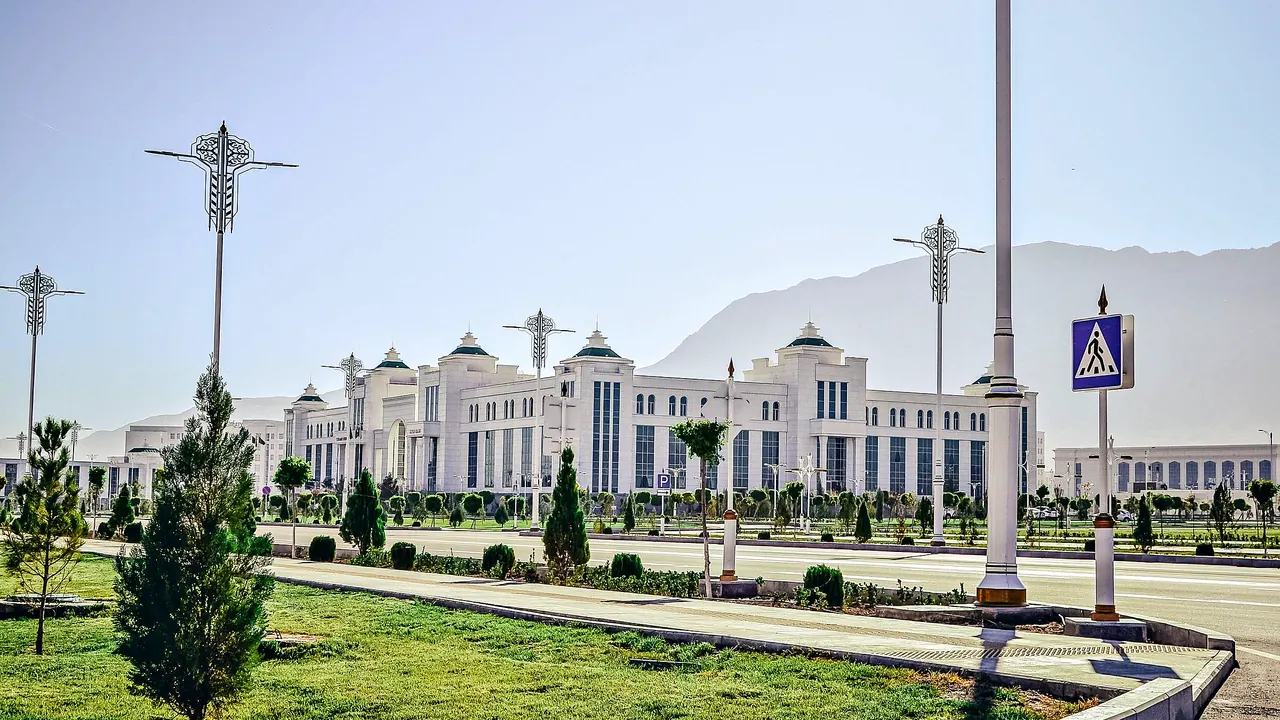
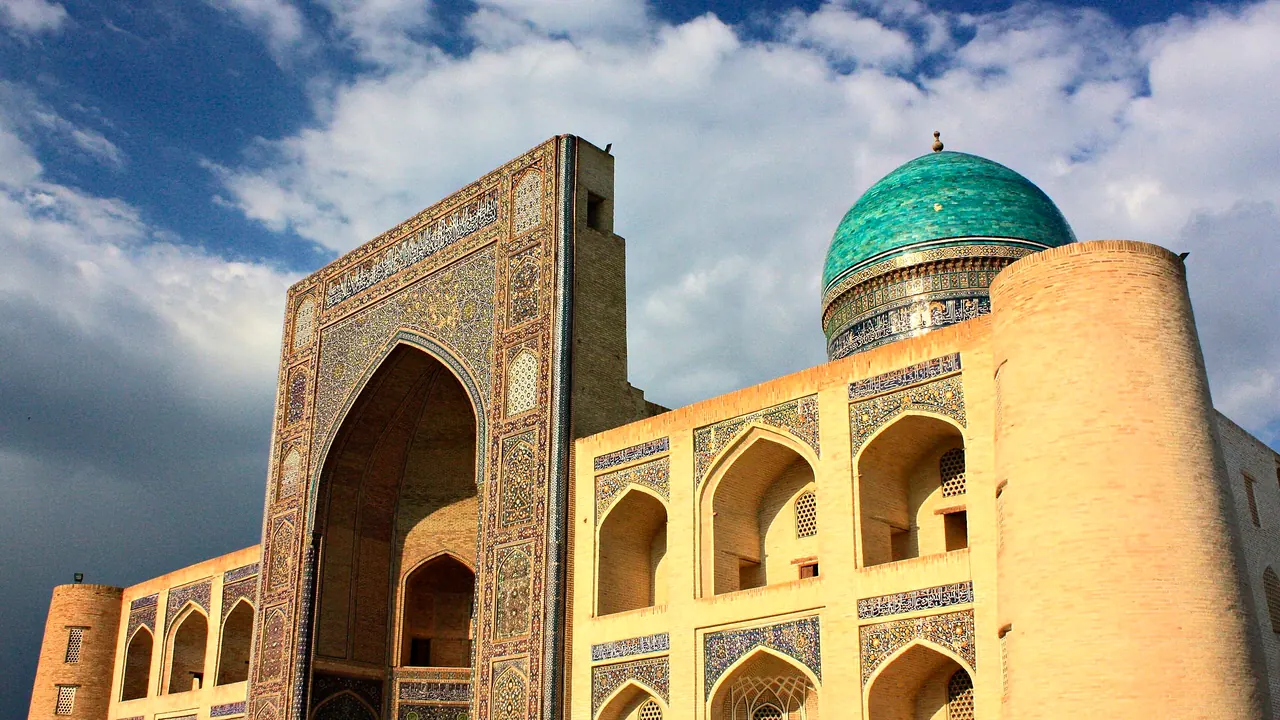
Photos: Ashgabat by IGaragin, Pexels License; Bukhara by RK, CC BY-SA 4.0, cropped.
Ashgabat or Bukhara?
Our verdict in twelve categories, each scored against the same fixed benchmark cities, and the climate month by month, so you can choose for your trip.
Choose Ashgabat for
- nature and the outdoors
- live music and the arts
For a traveller curious about one of the strangest capitals anywhere, Ashgabat is the pick. It is a city of white marble, gilded statues and empty boulevards under coloured floodlights, with a Carpet Museum and Parthian finds from Nisa of real weight, and the bare Kopet Dag ridges rising at its edge. Expect a trip arranged around a guide and driver, and hotel bills far above what the streets suggest.
Choose Bukhara for
- prices
- culture and sights
- wellness
Bukhara rewards anyone who wants Silk Road architecture to explore on foot for days at a time, with domes, madrasas and minarets packed into a compact, largely car-free old town. Courtyard guesthouses in old merchant houses keep costs low, the old bathhouses still steam, and Samarkand is a short train ride away. Of the two, it is the easier and more independent trip.
Scoreboard
Twelve categories on one fixed scale from 0 to 100. The shaded stretch is the gap between the two.
Your match
Pick a travel style or drag the sliders, and both match scores follow your weighting.
Wins on nature and the outdoors and live music and the arts with your weighting.
Wins on prices and culture and sights with your weighting.
What matters to you?
Category by category
What the scores mean for a trip.
Beaches & swimming
Neither city is a place to swim. In both, a hotel pool is the only option, so it is worth booking one for the summer heat. Ashgabat does have something Bukhara lacks: the warm sulphurous lake in the Kow Ata cave, two hours away, which makes a good soak. Bukhara's old pools such as Lyabi-Hauz are only for sitting beside.
Food & drink
Both cities serve the same core dishes: plov of mutton and carrots, shashlik over coals, bread from clay ovens and endless green tea. Bukhara has the slight edge because of where you eat. Its teahouse platforms and the tables under the mulberry trees round the old pools make a plain lunch feel like an occasion.
In Ashgabat the best food experience is the Russian Bazaar, along with pastries such as gutap and ishlekli. Restaurants tend to sit inside hotels and serve Turkish or Russian menus, and there is no teahouse life to match Bukhara's.
Culture & sights
The two places offer almost opposite kinds of sightseeing. Ashgabat is a spectacle of modern marble, monuments and ministries, rebuilt after the 1948 earthquake. Its real substance lies in the museums: the Carpet Museum and the ivory rhytons from Nisa at the National Museum.
Bukhara is far richer on the ground. The Poi Kalon ensemble, the Ark, the Samanid Mausoleum, Chor Minor and the lived-in lanes form one of the great historic centres of the Islamic world. Its museums are modest, but the buildings themselves are the reason to come, and they would fill many more days than Ashgabat's two or three.
Nightlife
Both cities go to bed early, but their evenings feel different. Ashgabat's night out is a drive past monuments lit in colour along almost empty avenues, a hotel bar, or one of a few discreet clubs that close before midnight. Bukhara has no clubs at all, but there are more people out. Families and visitors gather over tea and dinner at Lyabi-Hauz beneath the floodlit madrasas.
Nature & outdoors
Ashgabat has real landscape on its doorstep. The folded Kopet Dag rises just south of the city, with short walks and picnics in valleys such as Gökdere, and further along the range lie Nokhur's gorges and walnut groves. The Darvaza gas crater in the Karakum makes a memorable overnight trip, although trails are few and parts of the range near the border need permits.
Bukhara has little to offer here. It sits in a flat oasis of cotton fields and canals, and the desert yurt camps towards Nurata are a long drive away.
Day trips
Bukhara is the better base for day trips, mainly because Samarkand's Registan and Shah-i-Zinda are under two hours away by high-speed train. Closer to town are the pottery workshops of Gijduvon, the minaret at Vabkent and the walled tombs of Chor Bakr.
Ashgabat has one fine short outing in Old Nisa, the Parthian fortress just west of the city, plus the ruined Anau mosque and the battlefield at Geok Depe. Merv and Kunya-Urgench, the country's great sites, need flights or long drives.
Good for families
Neither city is built for children, and both get too hot in summer, so spring and autumn are the times to go. Ashgabat has the facilities: a big amusement park themed on Turkmen fairy tales, a circus and malls with play areas. The trade-off is long distances between everything. Bukhara has almost no attractions for children, but its flat, pedestrian old town suits pushchairs, and local families fill the evenings and make a fuss of small children.
Getting around
Bukhara is far easier to get around. The Kalon Minaret, the Ark, Bolo Hauz and Lyabi-Hauz are all within about 20 minutes' walk of each other through car-free lanes. Cheap taxis and ride-hailing apps cover the summer palace and the distant railway station.
Ashgabat was laid out for motorcades, and its monuments are kilometres apart along wide avenues. Buses are hard to use without Russian or Turkmen, so most visitors rely on taxis or a hired driver, which costs them some of their independence.
Shopping & style
In Bukhara, shopping is part of sightseeing. The sixteenth-century trading domes and madrasa courtyards are full of suzani, ikat, copper and the stork-shaped scissors, often made in a workshop next door. You do need a sharp eye to separate the fine pieces from the printed souvenirs.
Ashgabat has one great shopping event, the weekend carpet section at Tolkuchka on the desert edge of town, where you can also find telpek hats and camel-wool shawls. Buying a carpet means paperwork to export it, and the marble malls in the centre have few brands worth the trip.
Affordability
Bukhara is much cheaper for a visitor. Courtyard guesthouses in old merchant houses come with generous breakfasts, and meals, taxis and monument tickets cost little. Even the restored-mansion hotels are reasonable.
Ashgabat's low local prices rarely reach foreigners. Hotels charge high rates for rooms of uneven quality, and the guide, driver and agency arrangements most visits depend on push the total well above what a week in Bukhara costs.
Live music & performing arts
Ashgabat has more formal culture on stage. The Magtymguly theatre stages opera, ballet and Turkmen musical drama, and there is also a philharmonic hall, a Pushkin drama theatre and a state circus. Programmes are hard to find in advance, and hearing bagshy singers with the dutar depends on catching a folk event.
Bukhara's offer is smaller but easier to find. Folk music and costume shows take place on many evenings in a madrasa courtyard by Lyabi-Hauz, alongside puppet plays, although they are put on for visitors rather than locals.
Wellness & relaxation
Wellness in Ashgabat means a few hotel spas and saunas, and one outing to the Kow Ata cave to the west. There a long stairway leads down into the dark to a sulphurous lake that stays around 33°C in every season, and local families go down to bathe. The city is calm and uncrowded, but nothing in it is designed around slowing down.
Bukhara has a bathing tradition that is still alive. A few bathhouses under brick domes near the trading halls, some of them centuries old, still offer a steam, a scrub and a vigorous herbal massage, and some keep separate hours for men and women. Add slow mornings in tiled guesthouse courtyards and the long midday rest that the summer heat imposes, and the town is a place to unwind properly.
When should you go?
Pick your month. The climate figures are measured averages, not a forecast.
Ashgabat in July
Bukhara in July
Daytime high, °C
Rainfall in the month, mm
Temperature and rainfall are climate normals, averaged over the years shown. Ashgabat: 1991-2020 normals, Ashgabat Keshi (4.8 km from centre). Bukhara: 2004-2020 (rainfall 1991-2020) normals, Bukhara / Tsyplan (3.4 km from centre).
The two cities follow the same desert calendar. April and October are the best months in both, with daytime highs around 24°C, ideal for walking among monuments. From June to August the heat climbs towards 39°C in Ashgabat and not much less in Bukhara, so sightseeing shrinks to early mornings and evenings. Neither has any beach season. Winters are cool rather than harsh, and Bukhara is the slightly colder of the two from December to February.
Rain is scarce in both and falls mainly in late winter and spring. Ashgabat is the wetter city, with around 41mm in March, which is also when the Kopet Dag foothills turn green. Bukhara is almost completely dry from May to October. In summer Ashgabat has long, almost cloudless days, while its winter months are noticeably greyer.
Which traveller are you?
On a culture and arts trip, choose Bukhara. The Kalon Minaret, the Ark, the Samanid Mausoleum and the trading domes form an intact historic centre you can walk in a day. Ashgabat has better museums but almost nothing older than 1948.
For a trip on a tight budget, Bukhara is clearly the better choice. Courtyard guesthouses, cheap plov and taxis keep costs low. In Ashgabat, pricey hotels and guide-and-driver arrangements make budget travel hard, even though local life is cheap.
On an outdoors trip, choose Ashgabat. The Kopet Dag ridges begin just south of the city, with picnic valleys, the walnut groves of Nokhur and a night camping at the Darvaza crater. Bukhara sits in a flat oasis of cotton fields.
Before you go
| Measure | Ashgabat | Bukhara |
|---|---|---|
| Official language | Turkmen | Uzbek |
| Currency | Turkmenistan New Manat (TMT) | Uzbekistan Sum (UZS) |
| Sockets | BCF220 V, 50 Hz | CFI220 V, 50 Hz |
| Driving side | Right | Right |
| Time zone | UTC+5 | UTC+5 |
| Emergency number | 112 | 112 |
| Elevation | 219 m | 225 m |
| Main airport | Ashgabat International Airport (ASB)5 km from centre19 non-stop destinations | Bukhara International Airport (BHK)5 km from centre11 non-stop destinations |
By the numbers
| Measure | Ashgabat | Bukhara |
|---|---|---|
| Population | 1,030,063 | 280,187 |
| People per km² | 1,346 | 7,111 |
| Museums within 10 km | 3 | 2 |
| UNESCO World Heritage sites within 50 km | 1 | 1 |
Where else could you go?
Every comparison below shares a destination with this one, so you can follow Ashgabat or Bukhara somewhere new.
- Samarkandvs Bukhara
- Khivavs Bukhara
- Dushanbevs Bukhara
- Khivavs Ashgabat
- Tashkentvs Bukhara
- Samarkandvs Ashgabat