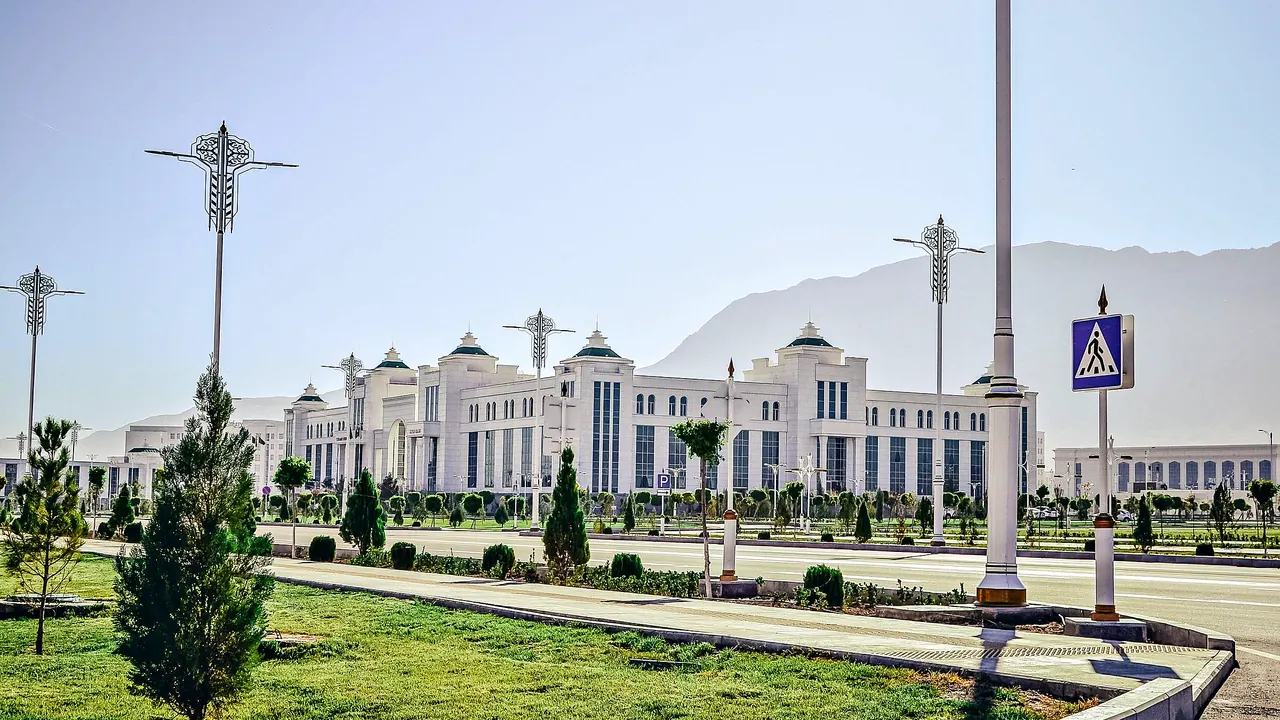
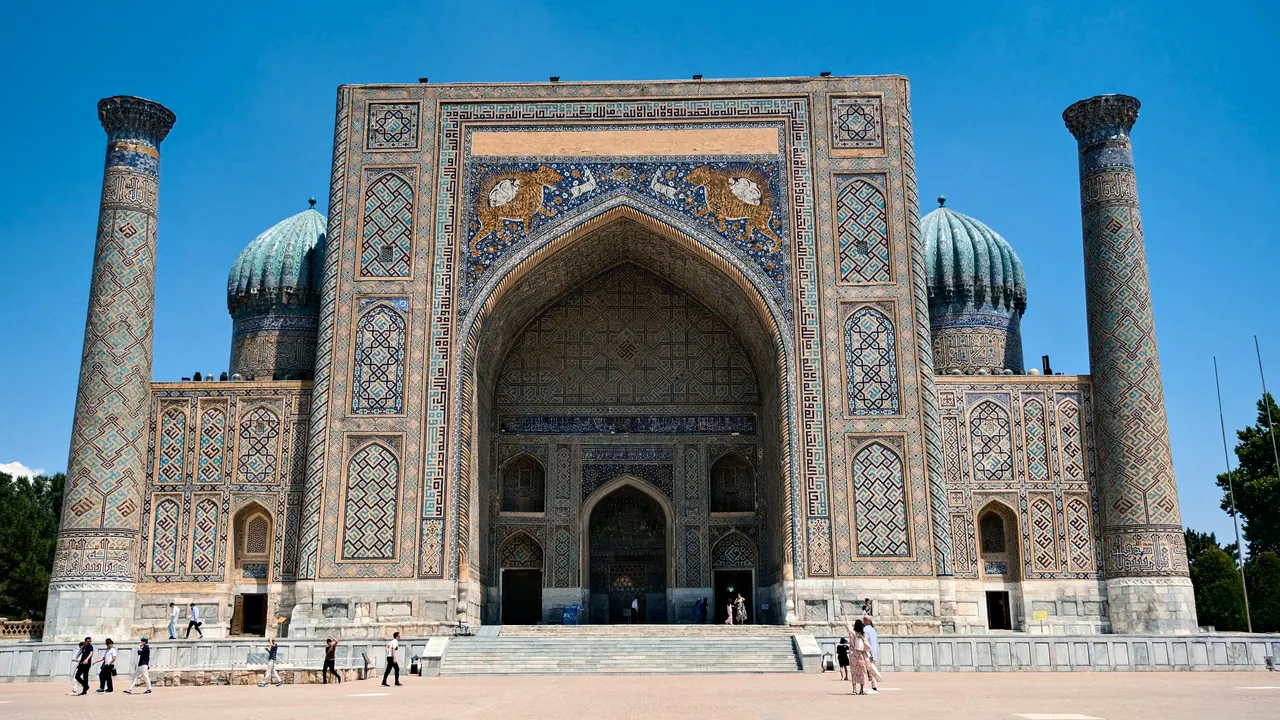
Photos: Ashgabat by IGaragin, Pexels License; Samarkand by Yaşar Başkurt, Pexels License.
Ashgabat or Samarkand?
Our verdict in twelve categories, each scored against the same fixed benchmark cities, and the climate month by month, so you can choose for your trip.
Choose Ashgabat for
- families
- live music and the arts
Ashgabat suits the curious traveller who wants to see somewhere unlike anywhere else: a white marble capital of empty boulevards and gilded monuments, lit up in colour at night. It rewards people who care about carpets, through the Carpet Museum and the weekend rug section at Tolkuchka, and who accept that a visit runs through a guide, a driver and agency paperwork. It's a strange and memorable two or three days rather than a comfortable or cheap one.
Choose Samarkand for
- prices
- culture and sights
- day trips
For most travellers to Central Asia, Samarkand is the easier and richer choice. The Registan, Shah-i-Zinda and Gur-e-Amir are some of the great Islamic monuments anywhere, and they sit close enough together to walk between. Guesthouses and food cost little, and Bukhara is an easy train ride away. Choose it if you want to travel independently, eat well on a small budget and spend your days among tilework rather than marble.
Scoreboard
Twelve categories on one fixed scale from 0 to 100. The shaded stretch is the gap between the two.
Your match
Pick a travel style or drag the sliders, and both match scores follow your weighting.
Wins on families and live music and the arts with your weighting.
Wins on prices and culture and sights with your weighting.
What matters to you?
Category by category
What the scores mean for a trip.
Beaches & swimming
Neither city has any swimming to plan around, since both lie deep inland, so in either one a hotel pool is the answer on a hot day. They differ only in what lies nearby. Ashgabat has the warm underground lake at Kow Ata, about two hours away, which is more a soak than a swim. Around Samarkand, locals wade in the shallow Zarafshan river.
Food & drink
Both cities cook the same broad Central Asian table of plov, shashlik and bread from clay ovens, but Samarkand eats better. Its layered lunchtime plov and its famous glazed non give the city dishes of its own. Siab Bazaar, the chaikhanas and the tandoor somsa make eating part of the day out, and a local winery adds a tasting.
Ashgabat's best food is at the Russian Bazaar, among melons, dried fruit and smoked fish, and in its fried gutap and ishlekli pastries. Away from the bazaar, meals tend to be Turkish, Russian or international menus in hotel restaurants, with no café or street-food life to fill the gaps.
Culture & sights
These are two very different kinds of sightseeing. Samarkand is one of the great architectural destinations of the Islamic world. The Registan's three madrasas, the climbing avenue of tiled tombs at Shah-i-Zinda and Timur's gilded tomb have centuries behind them, and Ulugh Beg's observatory and the Afrasiyab murals add depth.
Ashgabat lost almost everything old in the 1948 earthquake, so its sight is the marble city that replaced it, which is extraordinary under its night floodlights. Its real substance is in the museums: the Carpet Museum and the Parthian ivory rhytons from Nisa at the National Museum. That makes for a fascinating short visit, but Samarkand has far more to see.
Nightlife
Both go quiet well before midnight, so neither is a place to go out late. The difference is in the kind of evening. Ashgabat offers a hotel bar or a beer restaurant on deserted, floodlit boulevards. In Samarkand you might find yourself in a big restaurant beside a wedding party dancing to a loud live band, which at least gives the night some noise and company.
Nature & outdoors
The outdoors are much the same in each: pleasant, best in spring and too hot in summer. In Ashgabat the mountains are closer. The bare Kopet Dag ridges rise right at the edge of the city, with picnic valleys like Gökdere, walnut-shaded Nokhur further along and the burning Darvaza crater as an overnight desert camp. Permits limit access near the border, though.
Samarkand's walking is gentler and better set up. Juniper woods and streams in Aman-Kutan and above Urgut are about an hour away, and the Nuratau mountains have village homestay treks for anyone wanting several days.
Day trips
From Ashgabat the short outings are few but worthwhile: the Parthian mud-brick fortress of Old Nisa just west of town, the Anau mosque toppled by the 1948 earthquake, and the 1881 battlefield at Geok Depe. The country's great sites, Merv and Kunya-Urgench, are too far for a day and need an itinerary of their own.
Samarkand is the stronger base. Bukhara's intact old town is about an hour and a half away by high-speed train, Shakhrisabz lies over a mountain pass, and the Sunday bazaar at Urgut is close by. That is a handful of excellent outings rather than a long list, but Bukhara alone outweighs anything within a day of Ashgabat.
Good for families
Neither is really built for children, and both are only comfortable in spring and autumn. Ashgabat has a little more aimed at children, with its fairy-tale amusement park, a circus and malls with play areas. Samarkand has a warmer welcome for children and car-free streets around the Registan, and it suits older children who enjoy history more than toddlers.
Getting around
Samarkand is far easier to explore on foot. A pedestrian street links the Registan, Bibi-Khanym, Siab Bazaar and Shah-i-Zinda, and app taxis at fixed fares cover the outlying sights.
Ashgabat was laid out for motorcades. Monuments sit kilometres apart along wide avenues, the buses are hard to use without Russian or Turkmen, and most visitors end up with a guide and a car, which is easy but leaves you little freedom.
Shopping & style
For a serious carpet, Ashgabat's Tolkuchka bazaar on a weekend is hard to beat, with acres of hand-knotted rugs, camel-wool shawls and telpek hats, though export takes paperwork. Beyond that the city offers marble malls with few brands.
Samarkand gives you more to browse day to day. Workshops inside madrasa cells sell suzani, ikat silk, ceramics and miniatures, Konigil still makes mulberry paper, and Siab Bazaar has spices and bread to take home. Quality at the stalls varies, so it pays to look carefully.
Affordability
Samarkand is much the cheaper city in practice. Guesthouses, bazaar meals, taxis and entry fees all cost little, and only the smarter hotels near the Registan at busy times raise the bill.
Ashgabat is cheap on the street but expensive for a foreign visitor. High hotel rates for uneven rooms and the guide, driver and agency arrangements most trips require put it out of reach of ordinary budget travel.
Live music & performing arts
Ashgabat's stage belongs to the state: opera and ballet at the Magtymguly National Music and Drama Theatre, Russian drama at the Pushkin theatre, a philharmonic hall, and bagshy singers performing epics to the dutar at folk events. It is a real repertoire, but schedules are hard to find in advance.
Samarkand puts on its performances for visitors instead, with evening costume and folk dance shows and sound-and-light displays on the Registan. Its high point is the Sharq Taronalari festival in the years it fills the square, and classical maqom is easier to come across by chance than in a concert hall.
Wellness & relaxation
A cave lake against an old domed bathhouse sums up the difference. Ashgabat's soak lies two hours west at Kow Ata, down a long stairway to a sulphurous lake that stays around 33°C all year, while the city itself has only hotel spas and saunas.
Samarkand keeps its bathing in town, with steam and massage at the hammam near Bibi-Khanym. It also has the slower pace: long afternoons on a shaded topchan with green tea, and quiet courtyards in the old quarter once the tour groups have gone.
When should you go?
Pick your month. The climate figures are measured averages, not a forecast.
Ashgabat in July
Samarkand in July
Daytime high, °C
Rainfall in the month, mm
Temperature and rainfall are climate normals, averaged over the years shown. Ashgabat: 1991-2020 normals, Ashgabat Keshi (4.8 km from centre). Samarkand: 1991-2020 normals, Samarkand (10 km from centre).
Both cities are at their best in April and October, when Ashgabat reaches about 24°C and Samarkand is slightly cooler. Late May and September also work well in Samarkand, which stays milder through the year. Summer is hard in both, but harder in Ashgabat, where July highs average 39°C against 34°C in Samarkand. Either way, summer afternoons are for staying indoors, and with no sea at either city, heat is never a reason to go.
Rain falls mostly between late autumn and spring, and Samarkand gets clearly more of it, about 69mm in March. That spring rain is what turns its hills green. Ashgabat's spring is drier and its green slopes and poppies fade sooner. Both get little sun in midwinter and reach the low teens or below, cold for slow sightseeing, while from June to August both are dry and almost cloudless.
Which traveller are you?
On a culture and arts trip, choose Samarkand. The Registan, Shah-i-Zinda and Gur-e-Amir outclass anything in Ashgabat, and Bukhara and Shakhrisabz add more Timurid and Silk Road architecture within a day's reach.
On a trip on a tight budget, Samarkand wins easily. Family guesthouses, plov and app taxis cost little and you can travel without a guide. In Ashgabat, hotel rates and the driver and agency arrangements most visits need push costs high.
On a family trip with children, Ashgabat has a slight edge despite its heat. Its fairy-tale amusement park, circus, mall play areas and open fountain squares give children more to do than Samarkand's madrasas. Go in spring or autumn either way.
Before you go
| Measure | Ashgabat | Samarkand |
|---|---|---|
| Official language | Turkmen | Uzbek |
| Currency | Turkmenistan New Manat (TMT) | Uzbekistan Sum (UZS) |
| Sockets | BCF220 V, 50 Hz | CFI220 V, 50 Hz |
| Driving side | Right | Right |
| Time zone | UTC+5 | UTC+5 |
| Emergency number | 112 | 112 |
| Elevation | 219 m | 702 m |
| Main airport | Ashgabat International Airport (ASB)5 km from centre19 non-stop destinations | Samarkand International Airport (SKD)5 km from centre30 non-stop destinations |
By the numbers
| Measure | Ashgabat | Samarkand |
|---|---|---|
| Population | 1,030,063 | 546,303 |
| People per km² | 1,346 | 5,058 |
| Museums within 10 km | 3 | 11 |
| UNESCO World Heritage sites within 50 km | 1 | 1 |
Where else could you go?
Every comparison below shares a destination with this one, so you can follow Ashgabat or Samarkand somewhere new.
- Dushanbevs Samarkand
- Bukharavs Samarkand
- Tashkentvs Samarkand
- Khivavs Ashgabat
- Bukharavs Ashgabat
- Khivavs Samarkand