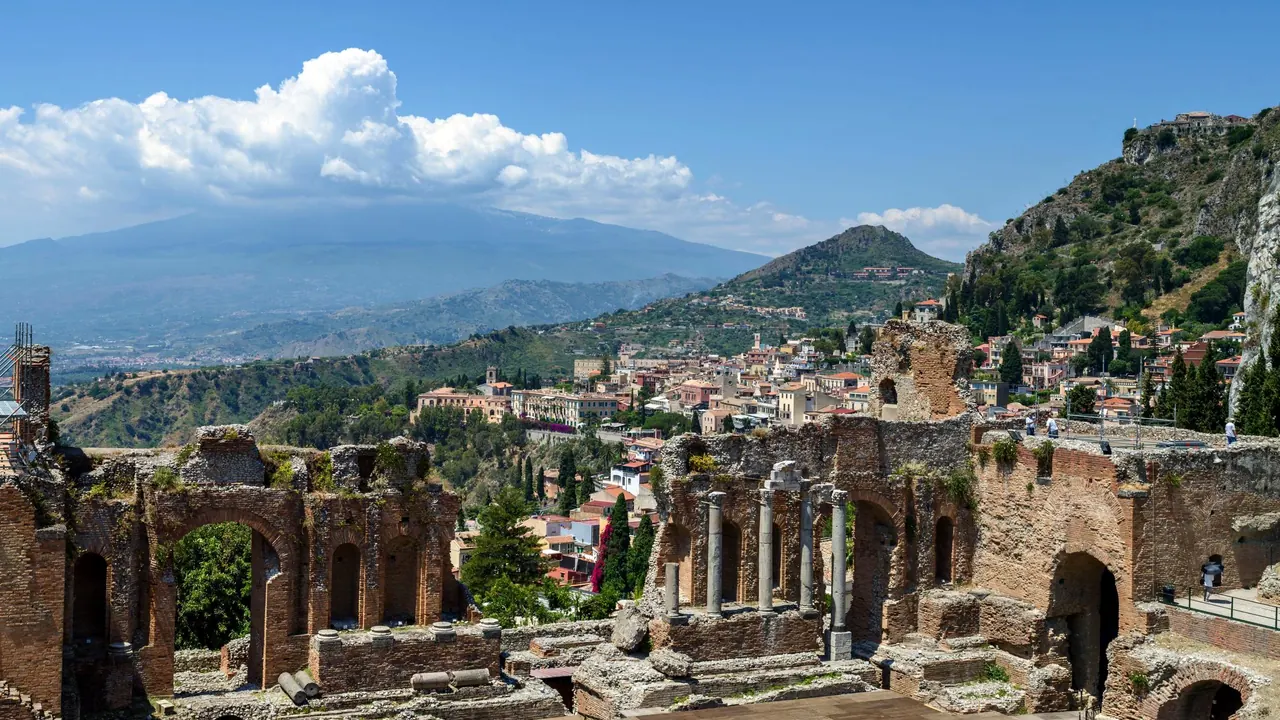
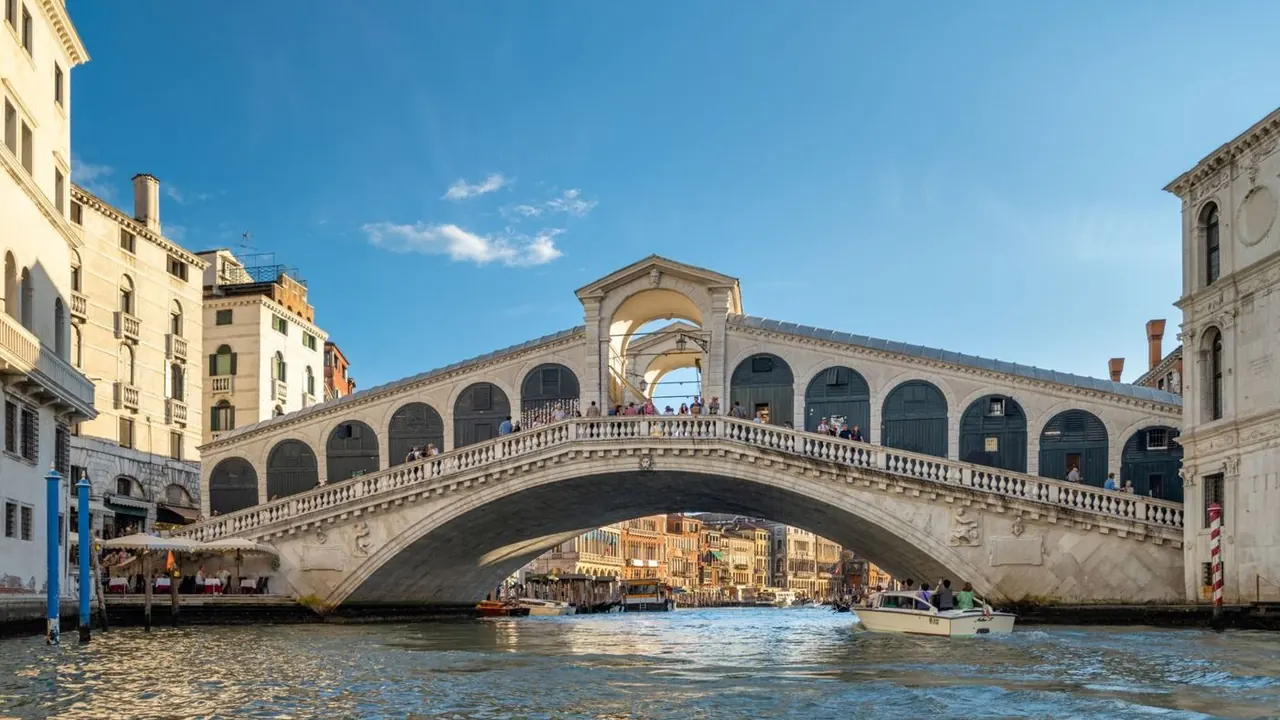
Photos: Taormina by Reinhard Bruckner, Pexels License; Venice by David Vives, Pexels License.
Taormina or Venice?
Our verdict in twelve categories, each scored against the same fixed benchmark cities, and the climate month by month, so you can choose for your trip.
Choose Taormina for
- nature and the outdoors
- beaches
- prices
Taormina suits a slower, sunnier trip built around the sea and the volcano: mornings in clear water below the town, a guided day on Etna's lava fields, evenings over an aperitivo on a terrace. Its sights fit into a day of walking, so it works best for travellers who want landscape and swimming more than galleries. It is also somewhat cheaper to stay in than Venice, though neither is a cheap place.
Choose Venice for
- culture and sights
- live music and the arts
- shopping
For anyone who travels to look at art and architecture, Venice is the clear pick. The whole city is the sight, the painting in the Accademia, the Frari and San Rocco goes very deep, and La Fenice fills evenings in seasons when Taormina's stage is dark. Fast trains to Padua, Verona and Vicenza add even more. What it gives up is serious swimming and wild country, since the Lido makes a pleasant afternoon rather than a reason to come.
Scoreboard
Twelve categories on one fixed scale from 0 to 100. The shaded stretch is the gap between the two.
Your match
Pick a travel style or drag the sliders, and both match scores follow your weighting.
Wins on nature and the outdoors and beaches with your weighting.
Wins on culture and sights and live music and the arts with your weighting.
What matters to you?
Category by category
What the scores mean for a trip.
Beaches & swimming
Taormina is the better place for a swim. The coves at Mazzarò and Isola Bella have clear, glassy water good for snorkelling, though the beaches are narrow pebble strips that fill early in summer. Longer sandy stretches at Giardini Naxos and Letojanni make up for it.
Venice's Lido has the opposite qualities: kilometres of fine sand, shallow and gentle water that suits small children, but a greenish sea and long rows of private cabanas. It is a pleasant break from sightseeing rather than a beach trip.
Food & drink
The two eat about equally well, in very different ways. Taormina offers Sicilian cooking at the table: pasta alla Norma, swordfish, raw red prawns, cannoli from the pastry shops, granita with brioche for breakfast and Etna wines on most lists. A refined upper tier comes with sea views, but the choice is shallow in a town this size.
Venice is best eaten standing up, with cicchetti and a spritz at the bacari around the Rialto and in Cannaregio, and lagoon dishes such as cuttlefish risotto and moeche from the Rialto market. Both have their tourist traps, along Corso Umberto in Taormina and around San Marco in Venice.
Culture & sights
The gap here is wide. Taormina has one great sight, the Greek theatre with Etna framed through its broken stage, plus the medieval Corso, the Duomo and Palazzo Corvaja, and a curious visitor covers it in a day. It has no major museums.
Venice is a whole city of palaces and churches on water, with the Basilica of San Marco, the Doge's Palace, the Accademia, the Guggenheim and the Biennale on top. A week there still leaves things unseen.
Nightlife
Neither is a place for a big night out, and both are at their best at aperitivo hour. Taormina's evenings move from Piazza IX Aprile to wine and piano bars over the sea, with a few lounge bars and beach clubs at Mazzarò staying open late in summer for a mostly older, couples crowd.
Venice gathers around the bacari of the Rialto and the Fondamenta della Misericordia, with students keeping Campo Santa Margherita going a little later. After that the canals go silent, which makes a fine setting for a late walk.
Nature & outdoors
Taormina has far more to offer outdoors. Etna is within about an hour for walks over lava flows and the Silvestri craters, guided trips towards the summit and winter skiing, and the Alcantara gorges and the paths to Castelmola and Monte Tauro are closer still. The Isola Bella reserve adds diving and kayaking.
Venice's nature is the flat lagoon, with herons, egrets and flamingos around Torcello, kayaking and Venetian rowing lessons, and cycling along the Pellestrina sea walls. Real hills mean gentle walks in the Euganean or Prosecco country, and the Dolomites are more than two hours away.
Day trips
Both are excellent bases, and Venice has the edge mainly because the trips are so easy. Fast trains reach Padua in half an hour and Verona and Vicenza soon after, and Murano, Burano and Torcello need only a boat.
From Taormina the outings are just as rewarding but longer: Catania in an hour, Ortigia and the Neapolis theatre at Syracuse in two, the baroque towns of the Val di Noto with an early start. Closer in, the hill villages of Savoca and Forza d'Agrò and the wine towns on Etna's northern slopes are best reached by car.
Good for families
Both are workable with older children and awkward with toddlers, for different reasons. In Taormina it is the steep slope, the steps and the pebbly, crowded coves, so families often base themselves at Giardini Naxos, while snorkelling and lava fields on Etna excite school-age children.
Venice has no cars and plenty of boats, and its shallow, sandy Lido is the gentler beach for little ones. Its hundreds of stepped bridges make pushchairs a constant struggle, though, and summer crowds and humidity tire children quickly.
Getting around
Venice is easier to get around. Nearly everything lies within a forty-minute walk, vaporettos run to the Lido and the islands, and trains end right at Santa Lucia. Its bridges and slow, crowded boats are the price.
Taormina's centre is tiny and pedestrian, but it clings to a slope, so every outing means stairs. A cable car runs down to Mazzarò and buses link the nearby towns, but Etna and the inland villages realistically need a tour or a hire car.
Shopping & style
Venice gives the better shopping, because its crafts are made on the spot: glass on Murano, lace on Burano, papier-mâché masks, marbled paper and furlane slippers from workshops in Dorsoduro and Castello. Big fashion names sit along the Mercerie as well, though imported fakes crowd the main routes.
Taormina's shopping is one street, Corso Umberto, with coral, cameos, linen and Caltagirone ceramics. Its best buys are the edible ones, such as Bronte pistachio cream, almond sweets and Etna wine.
Affordability
Both are among the costliest places to stay in Italy, but Venice is harder on a budget. Rooms in the historic centre, water transport and church and museum entries all add up, and savings depend on sleeping in Mestre and eating cicchetti at the counter.
Taormina is expensive mainly for its hotels and restaurants on the Corso. Buses, bakery snacks and granita stay cheap, and staying down in Giardini Naxos or Letojanni cuts the cost noticeably.
Live music & performing arts
Venice has a proper year-round programme. La Fenice and the Teatro Malibran stage opera, ballet and symphony seasons, the Goldoni puts on drama, the Biennale adds contemporary festivals, and Vivaldi is played in churches most evenings.
Taormina's moment is the summer, when concerts, opera and big pop acts fill the Greek theatre with Etna behind the stage. Outside those months there is little beyond piano bars, and serious opera means a trip to Catania.
Wellness & relaxation
The two are fairly level, with spa culture in both limited to hotels. Taormina's best spas have terrace pools above the sea and treatments with volcanic mud and citrus, and its calm comes from long lunches and the shade of the Villa Comunale, though August crowds break it.
Venice has the better reach to real thermal bathing, at Abano Terme and Montegrotto about an hour away. In the city, peace means early mornings and the residential lanes of Castello, Cannaregio and Giudecca, away from San Marco.
When should you go?
Pick your month. The climate figures are measured averages, not a forecast.
Taormina in July
Venice in July
Daytime high, °C
Rainfall in the month, mm
Where the figures come from
Taormina's temperatures are measured 45 km from the centre, at Messina.
Taormina has no rain gauge within 25 km of the centre, so its rainfall comes from a gridded climate dataset read at the city rather than from a gauge further away.
Temperature and rainfall are climate normals, averaged over the years shown. Taormina: 1991-2020 normals, Messina (45.1 km from centre). Venice: 1991-2020 (sunshine 1971-2000, rainfall 1981-2010) normals, Venezia / Tessera (6.7 km from centre).
Taormina has the longer and steadier warm season. The sea is warm enough for swimming from June to October and reaches 26°C in August, and summers are almost rainless and very sunny. July and August reach 31°C, though, which makes the town's steep stairways and any hiking on Etna hard going, so May, June and late September are the most comfortable months. The rain comes back in October and stays through the winter at around 100mm a month. Winter days are still mild enough for walking the streets, just often wet.
Venice has a much sharper swing between the seasons. Winters are cold and grey, with January highs of about 7°C, while July and August are hot and humid. Rain is spread through the whole year rather than falling in one season, and June and October are among the wettest months at about 96mm, so Venice has no reliable dry summer like Taormina's. The Lido is pleasant for swimming from June to September. For walking the city, April, May and September strike the best balance.
Which traveller are you?
On a culture and arts trip, Venice is far ahead. The Doge's Palace, Titian in the Frari, Tintoretto at San Rocco and a full season at La Fenice fill a week, while Taormina's Greek theatre and short list of palazzi take a day.
On a beach and sun trip, Taormina wins. The Ionian water around Isola Bella is clear enough for snorkelling, summers are drier and sunnier, and sandier stretches at Giardini Naxos are a short bus ride away. Venice's Lido is greenish and better for one afternoon.
For an outdoors trip, choose Taormina. Etna's craters and lava flows, the basalt Alcantara gorges, paths up to Castelmola and Monte Tauro and diving in the marine reserve all lie close by. Venice offers flat lagoon kayaking and birdwatching, and its mountains are hours away.
Before you go
| Measure | Taormina | Venice |
|---|---|---|
| Official language | Italian | Italian |
| Currency | Euro (EUR) | Euro (EUR) |
| Sockets | CFL230 V, 50 Hz | CFL230 V, 50 Hz |
| Driving side | Right | Right |
| Time zone | UTC+1, UTC+2 in summer | UTC+1, UTC+2 in summer |
| Emergency number | 112 | 112 |
| Elevation | 204 m | 2 m |
| Main airport | Catania-Fontanarossa Airport (CTA)47 km from centre96 non-stop destinations | Venice Marco Polo Airport (VCE)7 km from centre103 non-stop destinations |
| Public holidays this year | 13 days | 13 days |
By the numbers
| Measure | Taormina | Venice |
|---|---|---|
| City population | 10,471 | 250,369 |
| People per km² | 799 | 602 |
| Museums within 10 km | 5 | 52 |
| UNESCO World Heritage sites within 50 km | 2 | 5 |
| Swim season, months above 21 °C | 5 months | 4 months |
Where else could you go?
Every comparison below shares a destination with this one, so you can follow Taormina or Venice somewhere new.
- Paduavs Venice
- Cataniavs Taormina
- Syracuse, Sicilyvs Taormina
- Piranvs Venice
- Veronavs Venice
- Rovinjvs Venice