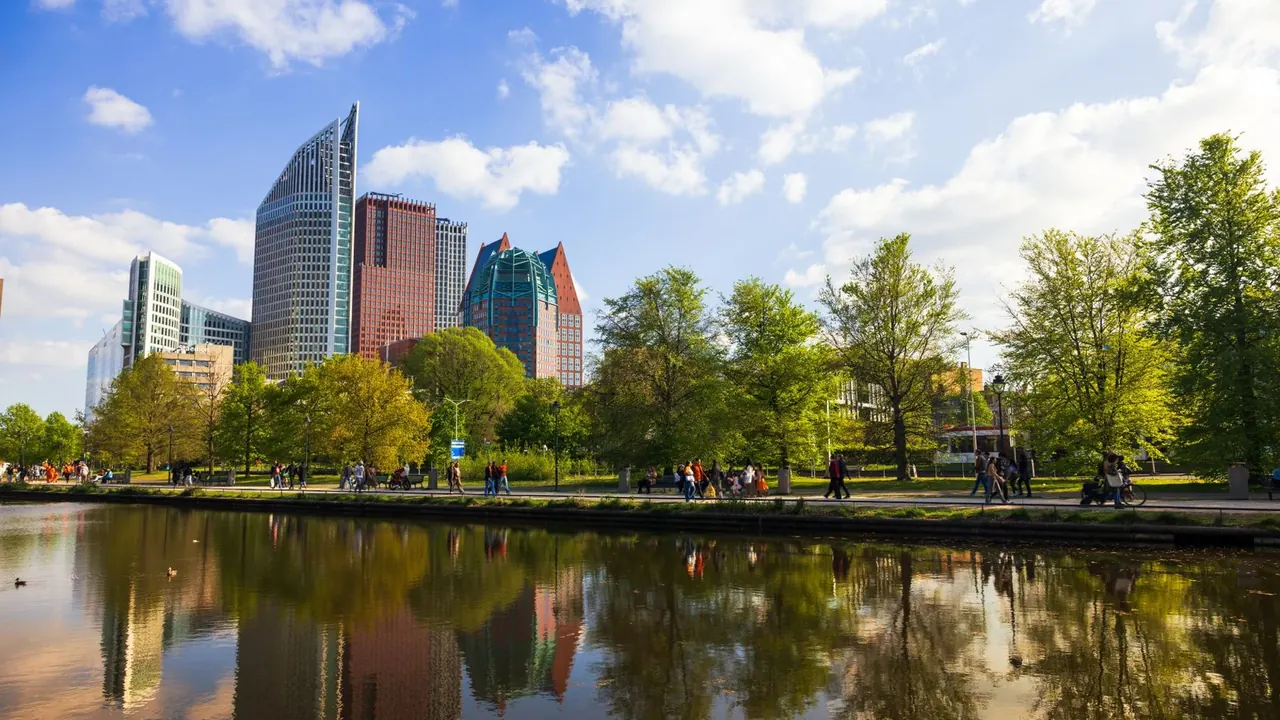
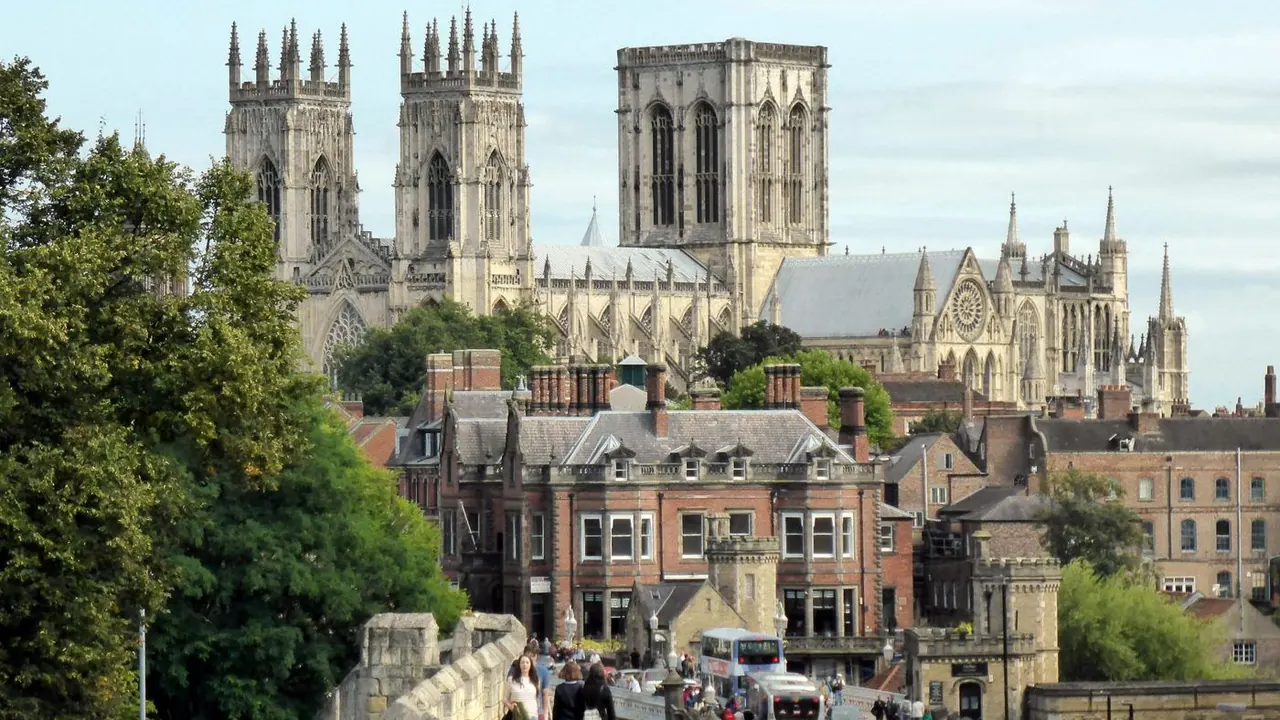
Photos: The Hague by Bráulio jardim, Pexels License; York by PAUL FARMER, CC BY-SA 2.0, cropped.
The Hague or York?
Our verdict in twelve categories, each scored against the same fixed benchmark cities, and the climate month by month, so you can choose for your trip.
Choose The Hague for
- beaches
- live music and the arts
- families
The Hague suits travellers who want a calm, orderly base with a sandy beach on the tram line and most of the Netherlands within an hour by train. Its Golden Age paintings, its contemporary dance and its Indonesian cooking give it more to do indoors and in the evenings than its size suggests. Families get Madurodam, the seaside and a flat city that is easy to move around.
Choose York for
- nature and the outdoors
- culture and sights
- prices
York is the better pick if you want two thousand years of history packed inside a ring of medieval walls you can walk across, with old pubs and tearooms between the sights. It also opens onto bigger country, with the moors and the Dales for walkers and cyclists, though you will reach those more easily with a hire car than by train.
Scoreboard
Twelve categories on one fixed scale from 0 to 100. The shaded stretch is the gap between the two.
Your match
Pick a travel style or drag the sliders, and both match scores follow your weighting.
Wins on beaches and live music and the arts with your weighting.
Wins on nature and the outdoors and culture and sights with your weighting.
What matters to you?
Category by category
What the scores mean for a trip.
Beaches & swimming
The Hague has its own coast. Scheveningen's long sandy beach, with its pier and promenade, is a short tram ride from the centre, and Kijkduin is a quieter stretch backed by dunes. The water is cold North Sea, though, so it suits sunbathing and short swims rather than a swimming vacation.
York has nothing to swim in. A trip to the sea means a day out to Scarborough, Filey or Whitby, an hour or more away, on the same chilly water.
Food & drink
The Hague's edge comes from its Indonesian cooking, a legacy of the former Dutch East Indies. It runs from a full rijsttafel to simple plates of rendang and sate, and the Chinatown noodle shops and summer herring carts add variety. Beyond that, its bistros and brown cafés are pleasant rather than memorable.
York's food is more traditional: afternoon tea with fat rascals, Sunday roasts, local cheese and pies at the Shambles Market, and real ale in old pubs. There is good modern British cooking with Yorkshire game, but little international choice.
Culture & sights
Each city rewards two or three unhurried days, but they offer different things. The Hague is a city of government and great paintings: the Binnenhof on its pond, Vermeer and Rembrandt in the Mauritshuis, Mondrian at the Kunstmuseum, and the Peace Palace.
York is about layers of the past you can walk through: the Gothic Minster and its medieval glass, the city walls, timber-framed streets like the Shambles, an excavated Viking street at Jorvik, and the National Railway Museum. Choose The Hague for art and York for its Roman, Viking and medieval past.
Nightlife
Neither city is made for a big night out, and both send serious clubbers elsewhere: from The Hague to Rotterdam or Amsterdam, from York to Leeds. The difference is in style. The Hague's evenings happen on café terraces at the Plein and the Grote Markt and, in summer, at the Scheveningen beach pavilions. York's centre on centuries-old inns along Micklegate and Stonegate, which make a good pub crawl, with stag parties and race-day crowds at weekends.
Nature & outdoors
York has the better outdoors, though most of it lies beyond the city. The North York Moors turn purple with heather in late summer and end in sea cliffs at Robin Hood's Bay, and the limestone Dales give you real hill walking. Both are best reached by car.
The Hague stays flat, but it has more nature close at hand: the Meijendel dunes, the Westduinpark and the old Haagse Bos, along with beach walks, dune cycling and kitesurfing when the wind is up.
Day trips
The Hague has the edge because so much is so close by train. Delft and Leiden are about a quarter of an hour away, Rotterdam and Gouda not much further, and Amsterdam, Haarlem and Utrecht within an hour. The windmills of Kinderdijk and the spring bulbs at Keukenhof are also in reach.
York is a fine base too, with Harrogate, Leeds, Durham and Scarborough on direct trains. Its best trips, though, are abbeys and country houses such as Castle Howard and Fountains Abbey, which are easier by car or coach tour than by rail.
Good for families
The Hague gives children more variety: the miniature Netherlands at Madurodam, the beach, pier and sea aquarium at Scheveningen, Museon for school-age children and the Duinrell water park just outside the city. Flat streets, easy trams and plenty of playgrounds keep things simple, although rain sends everyone indoors.
York's highlights are the locomotives you can walk around at the National Railway Museum, the Jorvik Viking Centre and walking the walls, with ghost tours for older children. The city is compact and safe but you will see it in a couple of days, and its theme park, zoo and seaside are about an hour away.
Getting around
The Hague covers more ground with less effort. Around the compact centre at the Binnenhof, frequent trams run out to the beach, Madurodam and the Peace Palace, there are cycle lanes almost everywhere, and two stations link the city to a dense national rail network.
York is a city for walking, with nearly every sight inside or just outside the walls and the Minster a short stroll from the station. Its fast trains serve the bigger towns, but rural buses to the moors and country houses are sparse, so those trips often need a car or a tour.
Shopping & style
The Hague has more range. There are antique dealers, galleries and boutiques on the Denneweg and Noordeinde, upmarket labels around the Hoogstraat, the 1880s Passage arcade and a large department store. Its best stop is the Haagse Markt, a huge open-air market of fabrics, spices and produce.
York's appeal is mostly the setting: independent bookshops, jewellers and antiques dealers along Stonegate and Petergate, though the Shambles leans towards souvenirs. Its Christmas markets are the one time shopping becomes a reason to go.
Affordability
Neither city is cheap, and costs are much the same. The two run on opposite timings, though. The Hague's central hotels are easier to find at a fair rate at weekends, when government travellers leave. York's rooms cost most at weekends, on race days and at Christmas, so a midweek stay pays off there.
The ways to save also differ. In The Hague they are Indonesian and Surinamese plates, market picnics and a hired bicycle. In York they are pub meals, the free National Railway Museum and free walks on the walls.
Live music & performing arts
The Hague has the stronger stage, mainly because Nederlands Dans Theater, one of the world's leading contemporary dance companies, is based here. The Residentie Orkest and the Royal Conservatory add a full concert season, though much of the theatre is in Dutch.
York's programme is smaller and more local: the historic Theatre Royal and its pantomime, touring shows at the Grand Opera House, early music in a medieval church and free choral evensong at the Minster. It has no orchestra of note.
Wellness & relaxation
The Hague offers whole-day wellness in its large Dutch sauna complexes, with steam rooms, cold plunge pools, gardens and massage, where nudity is usually the rule. The city's quiet, orderly pace does the rest.
York has only hotel and day spas. Its calm comes from early mornings on the walls, the riverside paths and long afternoon teas rather than from any facilities. For proper bathing, the Victorian Turkish bath in Harrogate's Royal Baths is half an hour away by train.
When should you go?
Pick your month. The climate figures are measured averages, not a forecast.
The Hague in July
York in July
Daytime high, °C
Rainfall in the month, mm
Where the figures come from
The Hague has no rain gauge within 25 km of the centre, so its rainfall comes from a gridded climate dataset read at the city rather than from a gauge further away.
The Hague's sunshine is measured 60 km from the centre, at De Bilt.
York has no rain gauge within 25 km of the centre, so its rainfall comes from a gridded climate dataset read at the city rather than from a gauge further away.
York's sunshine is measured 48 km from the centre, at Leeming.
Temperature and rainfall are climate normals, averaged over the years shown. The Hague: 1991-2020 normals, Valkenburg (13.6 km from centre). York: 1991-2020 normals, Linton-On-Ouse (14.9 km from centre).
The two cities have almost the same temperatures all year. Summers are mild, peaking around 21°C in July and August, and winter days are raw and short. Late May to early September is the comfortable time to walk either centre, and neither ever gets too hot for sightseeing. The Hague's sea is at its warmest from July to September but only reaches about 19°C in August, so a beach day there means sunbathing and a quick dip in high summer.
The real difference is rain and light. The Hague is the sunnier of the two all year, with May to July the brightest months, but it is also wetter, with July, August and December each at around 89mm. York is drier in most months, at about 62mm in July, though April is the exception. It is also greyer. Its driest stretch runs from late winter through May, which makes spring a good time for long walks on the walls and out on the moors. From November to February both cities are dull, damp and cold, and the indoor sights carry the trip.
Which traveller are you?
On a beach and sun trip, The Hague is the only real choice of the two. Scheveningen's wide sand, pier and pavilions are a short tram ride from the centre. York's nearest beach is an hour away by train in Scarborough, and the North Sea is cold off both.
For an outdoors trip, York has the edge. The North York Moors, the Yorkshire Dales and the Howardian Hills give you real walking and cycling country with hills and sea cliffs. The Hague's dunes and old forest are pleasant but entirely flat.
On a family trip with children, The Hague has more to fill the days: Madurodam, the beach and sea aquarium at Scheveningen, Museon and the Duinrell water park nearby. York's railway museum and Viking centre are excellent, but two or three days covers them.
Before you go
| Measure | The Hague | York |
|---|---|---|
| Official language | Dutch | English |
| Currency | Euro (EUR) | Pound Sterling (GBP) |
| Sockets | CF230 V, 50 Hz | G230 V, 50 Hz |
| Driving side | Right | Left |
| Time zone | UTC+1, UTC+2 in summer | UTC, UTC+1 in summer |
| Emergency number | 112 | 112 or 999 |
| Elevation | 1 m | 25 m |
| Main airport | Rotterdam The Hague Airport (RTM)16 km from centre53 non-stop destinations | Leeds Bradford Airport (LBA)39 km from centre69 non-stop destinations |
| Public holidays this year | 11 days | 8 days |
By the numbers
| Measure | The Hague | York |
|---|---|---|
| City population | 548,320 | 208,400 |
| People per km² | 5,589 | 766 |
| Museums within 10 km | 54 | 24 |
| UNESCO World Heritage sites within 50 km | 4 | 2 |
| Swim season, months above 21 °C | None | - |
Where else could you go?
Every comparison below shares a destination with this one, so you can follow The Hague or York somewhere new.