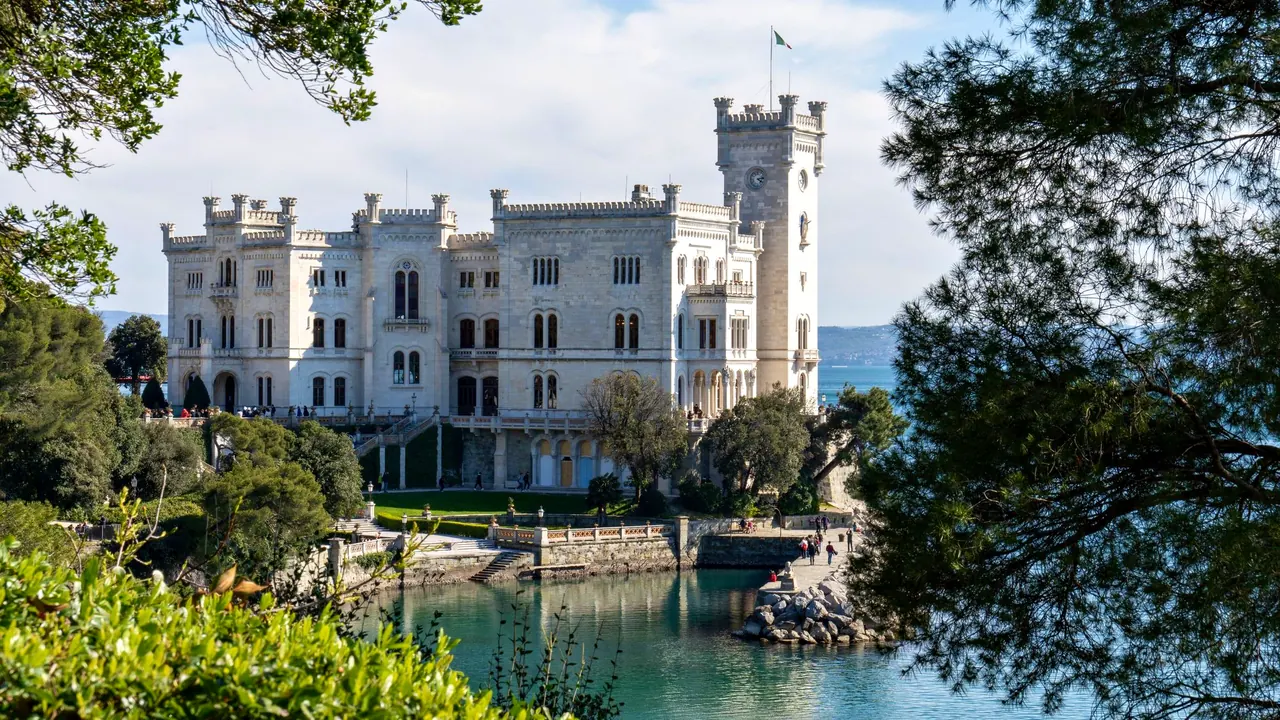
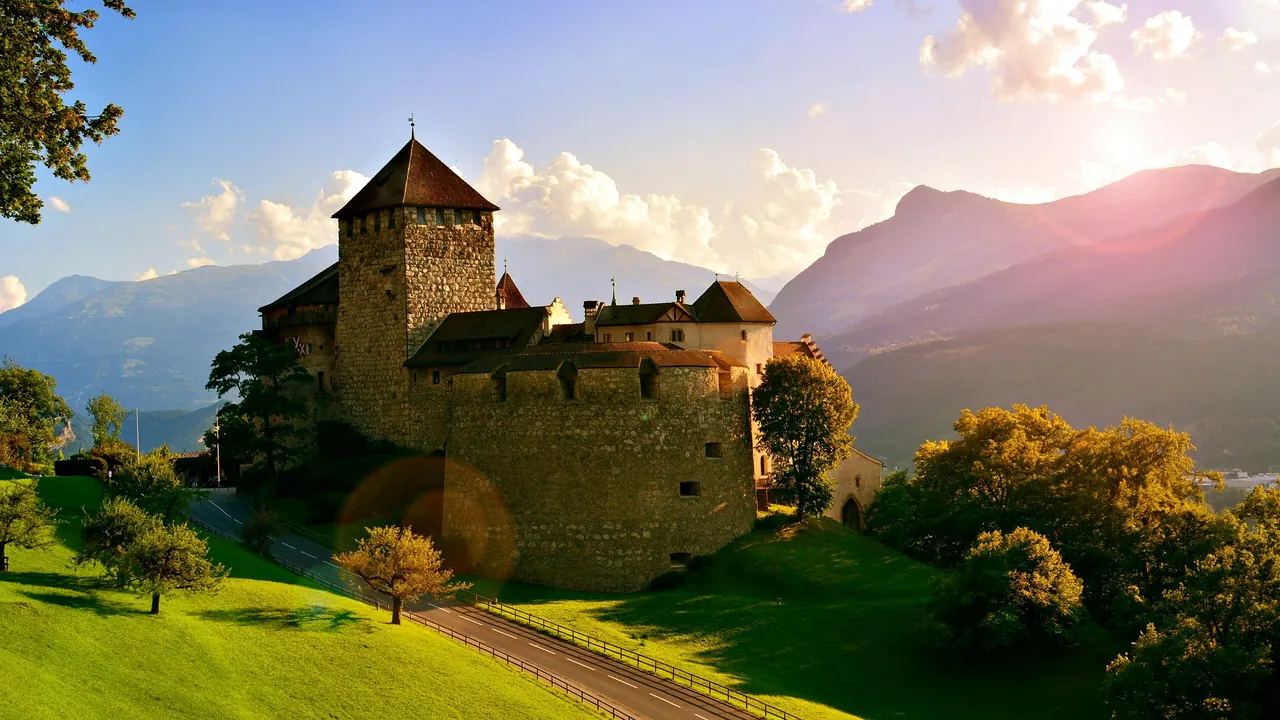
Photos: Trieste by Tibor Szabo, Pexels License; Vaduz by Justin LaBerge, CC BY 2.0, cropped.
Trieste or Vaduz?
Our verdict in twelve categories, each scored against the same fixed benchmark cities, and the climate month by month, so you can choose for your trip.
Choose Trieste for
- beaches
- prices
- food and drink
Trieste is the better choice for most trips. It is a real city by the sea, with Habsburg squares and palaces, coffee houses and boiled-meat buffets, summer swimming off the Barcola promenade, and three countries of day trips within reach. It also costs far less than Vaduz, so it suits anyone who wants culture, food and the Adriatic on a sensible budget, plus enough evening life for a long dinner and a spritz by the water.
Choose Vaduz for
- nature and the outdoors
- wellness
Vaduz makes sense for a specific kind of traveller: someone who comes for the mountains. Trails start at the edge of town, the Rätikon peaks and the ski slopes at Malbun are half an hour up the road, and the thermal baths at Bad Ragaz are close by for tired legs. Expect to pay Swiss prices and to have quiet evenings, and treat the town as a tidy base for walking, cycling and skiing rather than a place to sightsee.
Scoreboard
Twelve categories on one fixed scale from 0 to 100. The shaded stretch is the gap between the two.
Your match
Pick a travel style or drag the sliders, and both match scores follow your weighting.
Wins on beaches and prices with your weighting.
Wins on nature and the outdoors and wellness with your weighting.
What matters to you?
Category by category
What the scores mean for a trip.
Beaches & swimming
Trieste lives with the sea all summer. Locals spread towels on the concrete steps and pine-shaded lawns at Barcola, try the old bathing establishments near the centre, and go to the prettier pebble coves at Sistiana, Duino and Grignano. Swimming is mostly off rocks and ladders, so anyone hoping for sand will be disappointed.
Vaduz has no sea and no swimmable river. A hot day there means the open-air pools, or a drive to the Walensee or Lake Constance for a short season of lake swimming. It works as an afternoon out, not as the reason to go.
Food & drink
Trieste has much more to eat and a stronger identity. Its buffets carve boiled pork and sausages with horseradish and sauerkraut, jota and fried sardoni share the menu with strudel and presnitz, and the coffee culture has a vocabulary of its own. Up on the Karst, the seasonal osmize sell farmhouse wine and cured meats.
Vaduz is limited to hotel dining rooms, a few places on the Städtle and hill inns serving Käsknöpfle and rösti. The food is solid, but there is little choice. Its best moment is a glass of Pinot Noir from the prince's own estate, while Trieste pours Vitovska and Terrano.
Culture & sights
Trieste gives you several days of sightseeing. There is Piazza Unità opening onto the sea, the Canal Grande and San Spiridione in the Borgo Teresiano, the cathedral, castle and Roman theatre on San Giusto, and Miramare Castle on the shore. The large synagogue and the Risiera di San Sabba memorial add weight to the history.
Vaduz fits into one easy day. Its strong point is modern and contemporary art in the twin cubes of the Kunstmuseum and the Hilti Art Foundation, plus the National Museum and the stamp museum. The castle, though always in view, is the prince's home and you can't go inside.
Nightlife
Neither town is made for a big night out, but Trieste at least has evenings. Aperitivo crowds fill the tables around Piazza Unità and the Canal Grande, students keep the lanes of Cavana busy, and in summer the bars along Barcola stay open late. Vaduz winds down after dinner with a few wine bars and hotel lounges, and its young people cross to Feldkirch or go to Zurich when they want to go out.
Nature & outdoors
Vaduz has the bigger landscape. Vineyard and beech-forest trails climb straight out of town, and from Triesenberg and Malbun the Rätikon offers ridge walks and the airy Fürstensteig. Add skiing in winter, cycling on the Rhine dam path and the Säntis and Walensee nearby.
Trieste's outdoors is on a smaller scale but has water. You get the Strada Napoleonica above the gulf, the Rilke Path at Duino, Val Rosandra for climbing, the Grotta Gigante and Škocjan caves, and sailing and snorkelling off Miramare. The Julian Alps are there for a proper mountain day.
Day trips
Both are well placed, but Trieste reaches further and offers more. Within about an hour you can see the mosaics of Aquileia, star-shaped Palmanova, Cividale and the Grado lagoon, and Piran is just across the Slovenian border. Ljubljana and Postojna are a little further, and Venice by train makes a long but doable day.
From Vaduz the outings are mostly Swiss and Austrian. There is medieval Feldkirch, the abbey library at St Gallen, painted Appenzell, old Chur and Lindau on Lake Constance. Because you often have to change trains at Buchs or Sargans, a car makes them much easier.
Good for families
Trieste gives children more to do. The Grotta Gigante impresses older kids, and there are the gardens at Miramare, a small aquarium, a hands-on science centre and summer days on the Barcola seafront. The weak points are steep stepped streets and swimming off rocks rather than shallow sand.
Vaduz is very safe and its flat centre is easy with a pushchair, but nothing there is built for children. Families spend their time on gentle walks above Triesenberg, at the pools in summer or on the beginner slopes at Malbun in winter, which suits active older children best.
Getting around
Trieste is a little easier to get around. The waterfront, Piazza Unità and the Borgo Teresiano are flat and close together, a dense bus network runs out to Miramare and up onto the Karst, and boats cross the bay to Muggia. The real effort is the climb up the steps to San Giusto.
Central Vaduz is just one short pedestrian street, and its buses reach every village and Malbun. The town has no railway station, though, so going further means a change at Buchs, Sargans or Feldkirch, and many visitors end up hiring a car.
Shopping & style
Neither is a shopping trip, but Trieste offers more browsing. Its old-town lanes are full of antique and second-hand shops, Corso Italia has the usual high-street chains, and you can take home coffee from local roasters, Karst honey and presnitz. In Vaduz the Städtle has a handful of watch, jewellery and souvenir shops. Collectable stamps or a bottle of local wine are the best souvenirs, and serious shoppers head to Zurich.
Affordability
This is where the two differ most. Trieste is fairly priced for northern Italy: buffets and bar coffee are cheap, rooms are reasonable outside the regatta and high summer, and the best things, from Barcola to the Karst walks, are free.
Vaduz charges Swiss prices for everything and has few hotels, so you can't really do it cheaply. Even a short stay adds up quickly, and some visitors save by sleeping across the border in Austria.
Live music & performing arts
Trieste has a real season. The Teatro Verdi on the waterfront stages opera and ballet, the city keeps up the Habsburg taste for operetta, the Politeama Rossetti has theatre and musicals, and in summer there are concerts in the castle courtyard on San Giusto.
Liechtenstein's calendar is respectable for its size but small. There is the national stage in neighbouring Schaan, a short orchestral season, a summer classical festival in Vaduz and the odd church concert. Over a week you'll find something, but not every night.
Wellness & relaxation
The two are level here, but the kind of rest is different. Trieste's calm is urban and literary: long mornings in old coffee houses, a swim in the sea and a sunset walk on the Molo Audace, with only hotel spas to add to it. Vaduz offers mountain quiet and early nights, and has a real thermal bath at Bad Ragaz, about twenty-five minutes away, that you can combine with a day of walking.
When should you go?
Pick your month. The climate figures are measured averages, not a forecast.
Trieste in July
Vaduz in July
Daytime high, °C
Rainfall in the month, mm
Where the figures come from
Vaduz's temperatures are measured 51 km from the centre, at Sigmarszell-Zeisertsweiler.
Vaduz has no rain gauge within 25 km of the centre, so its rainfall comes from a gridded climate dataset read at the destination rather than from a gauge further away.
Temperature and rainfall are climate normals, averaged over the years shown. Trieste: 1991-2020 normals, Trieste (1.6 km from centre). Vaduz: 1991-2020 normals, Sigmarszell-Zeisertsweiler (51.3 km from centre).
Trieste has a proper summer. From June to September the Adriatic is warm enough for daily swimming, peaking around 25°C in July and August, when afternoons reach 29°C and the sun shines for long hours. That heat can make the climb up San Giusto hard going in the middle of the day, so May, June and September are the most comfortable months for walking the city. The rain arrives in autumn, and from September to November it is the wettest time of year, at around 125mm in November. Winters are cool, grey and windy rather than freezing.
Vaduz runs cooler all year and its pattern is the opposite. Summer highs settle around 24°C, which is good weather for hiking, but June to August are also its wettest months, with about 126mm in August, so mountain days often have to dodge afternoon showers. Late spring and early autumn are calmer for walking. Winters are cold and dull in the valley, which is when the action moves up to the ski slopes at Malbun. If you want sun and sea, Trieste in summer is the clear pick; if you want cool mountain air, Vaduz from June to September works better.
Which traveller are you?
For a beach and sun trip, Trieste is the only real option. You won't find sand, but from June to September you can swim in the clear Adriatic off Barcola and in the coves at Sistiana. Landlocked Vaduz has only municipal pools and lakes a drive away.
On an outdoors trip, Vaduz wins. High-mountain paths in the Rätikon, the exposed Fürstensteig, a trail across the whole country and winter skiing at Malbun are all within half an hour of town. Trieste's Karst walks and sailing are gentler.
On a tight budget, choose Trieste. Coffee at the bar, a plate at a buffet, cheap buses and free swimming and Karst walks keep costs down. Vaduz charges Swiss prices for rooms and meals and has few cheaper hotels.
Before you go
| Measure | Trieste | Vaduz |
|---|---|---|
| Official language | Italian | German |
| Currency | Euro (EUR) | Swiss Franc (CHF) |
| Sockets | CFL230 V, 50 Hz | CJ230 V, 50 Hz |
| Driving side | Right | Right |
| Time zone | UTC+1, UTC+2 in summer | UTC+1, UTC+2 in summer |
| Emergency number | 112 | 112 |
| Elevation | 2 m | 455 m |
| Main airport | Trieste Airport (TRS)31 km from centre32 non-stop destinations | Zürich Airport (ZRH)81 km from centre226 non-stop destinations |
| Public holidays this year | 13 days | 21 days |
By the numbers
| Measure | Trieste | Vaduz |
|---|---|---|
| Population | 198,417 | 5,668 |
| People per km² | 2,332 | 328 |
| Museums within 10 km | 33 | 7 |
| UNESCO World Heritage sites within 50 km | 5 | 3 |
| Swim season, months above 21 °C | 4 months | - |
Where else could you go?
Every comparison below shares a destination with this one, so you can follow Trieste or Vaduz somewhere new.