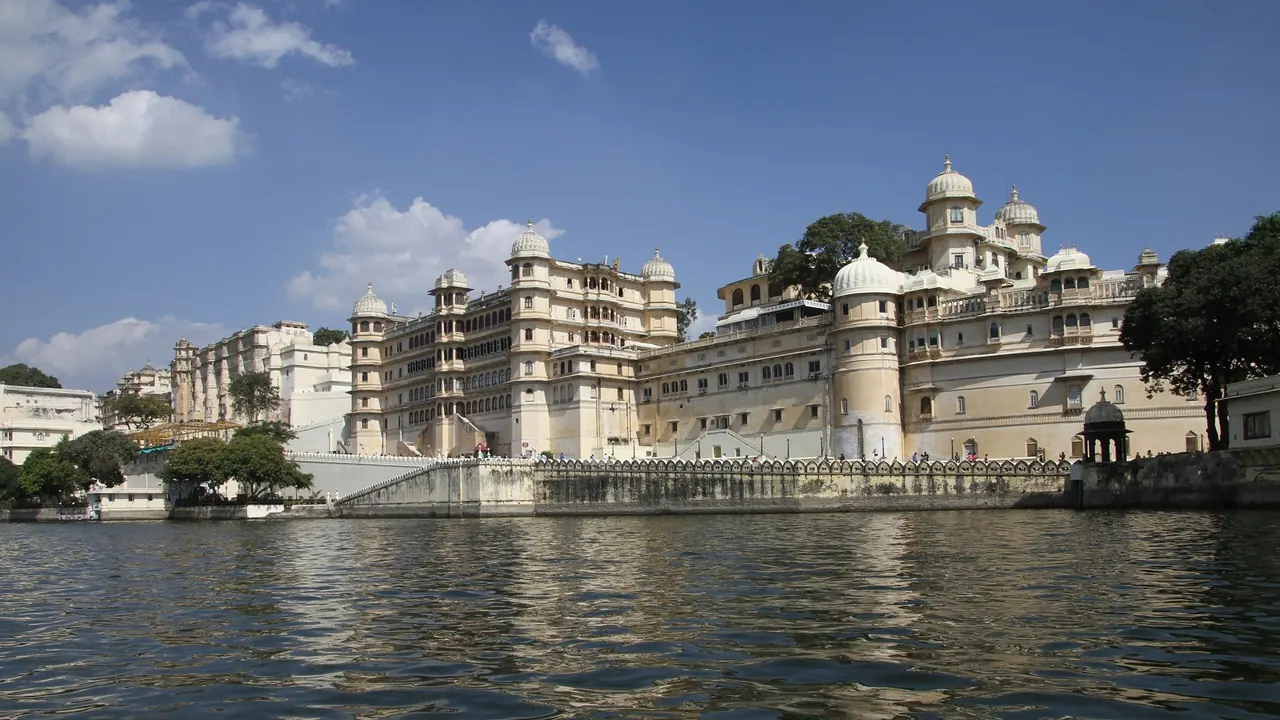
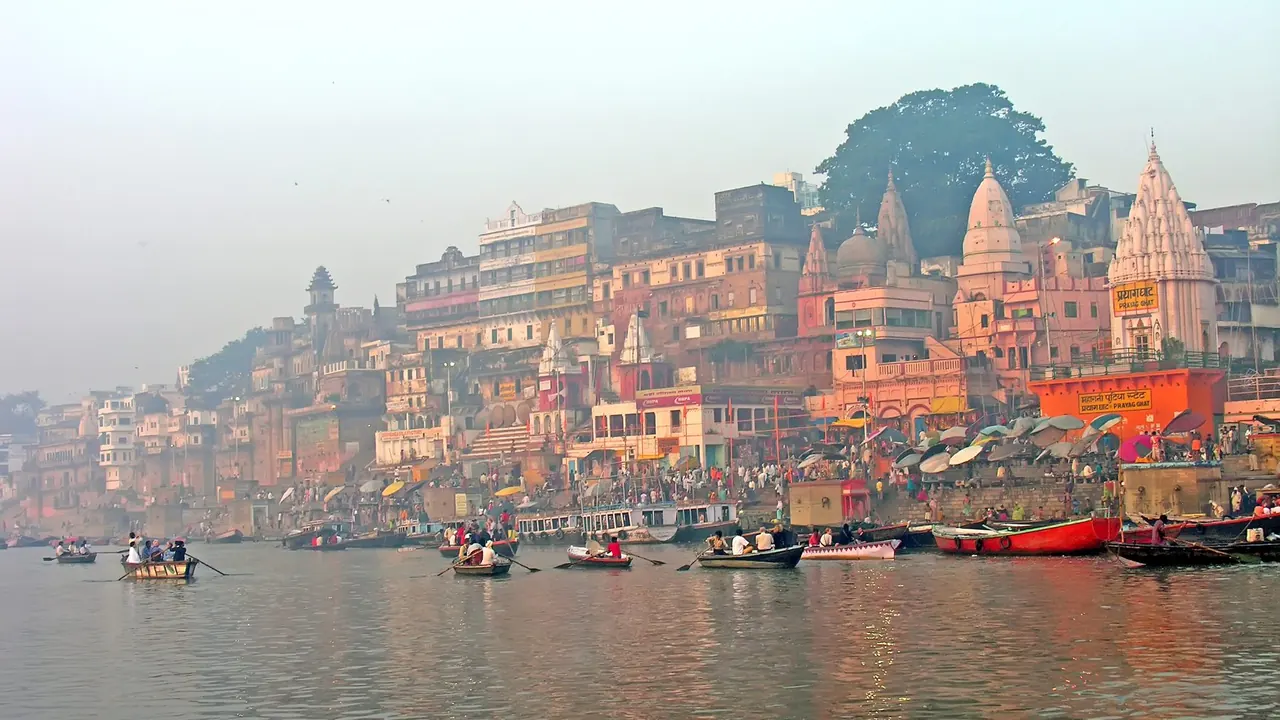
Photos: Udaipur by Gerd Eichmann, CC BY-SA 4.0, cropped; Varanasi by Dennis G. Jarvis, CC BY-SA 2.0, cropped.
Udaipur or Varanasi?
Our verdict in twelve categories, each scored against the same fixed benchmark cities, and the climate month by month, so you can choose for your trip.
Choose Udaipur for
- families
- nature and the outdoors
- day trips
Udaipur is the gentler, more scenic choice. It is a lake city of palaces ringed by low hills, with terraces for watching the sunset and spa hotels to retreat to. Kumbhalgarh, Ranakpur and Chittorgarh are all within a day's drive. It suits couples on a romantic trip, families with older children and anyone who wants comfort and calm between sights.
Choose Varanasi for
- live music and the arts
- culture and sights
- food and drink
Travellers who want to be moved, and are ready to be unsettled, should go to Varanasi. Life and death play out in public on the ghats, classical music runs deep in the city, and both its street food and its silk beat Udaipur's. It is cheaper still, but it is intense, tiring and hard with children. It is best for adults who will get up before dawn and accept the city as it is.
Scoreboard
Twelve categories on one fixed scale from 0 to 100. The shaded stretch is the gap between the two.
Your match
Pick a travel style or drag the sliders, and both match scores follow your weighting.
Wins on families and nature and the outdoors with your weighting.
Wins on live music and the arts and culture and sights with your weighting.
What matters to you?
Category by category
What the scores mean for a trip.
Beaches & swimming
Neither city is a place to swim, and the difference lies in what the water is for. Udaipur's lakes are scenery and boat rides, and many heritage hotels around Lake Pichola have a pool that looks out over them.
In Varanasi the Ganges is a sacred river of ritual dips, polluted and fast-flowing. The few hotel pools are in larger hotels away from the old city, so a swim means staying away from the ghats.
Food & drink
Varanasi is the better place to eat on the street. Dawn kachori and jalebi in the old city lanes, lassi in clay cups, malaiyo in winter and paan rolled to order around Godowlia make a run of genuinely local food rituals. Near the ghats, though, nearly everything is vegetarian and alcohol is hard to find.
Udaipur's Mewari thalis and dal baati are good, and meat eaters get laal maas. Its lakefront rooftops, however, sell the view more than the cooking, and the best local flavour is in the bazaars away from the water. Neither is a food destination, but Varanasi gives the more memorable mouthfuls.
Culture & sights
Varanasi offers the more profound experience. Kilometres of ghats line the Ganges, where bathing, rites and open-air cremation at Manikarnika go on all day, and behind them a maze of lanes leads to Kashi Vishwanath. It is a living religious city more than a set of monuments.
Udaipur is more composed and easier to take in. The City Palace rising from Lake Pichola, the white island palaces, Jagdish Temple and the havelis form a romantic whole that two or three days cover. It is beautiful rather than overwhelming, and nothing in it matches the daily ritual on the Ganges.
Nightlife
Both cities go to bed early, but Udaipur at least offers a drink: a sunset cocktail on a rooftop above Lake Pichola, hotel bars and a few lounges with music at weekends. In Varanasi the evening means the aarti and then chai and music in the Assi Ghat cafés. Alcohol is scarce and frowned upon in the holy centre, and finding a bar means going to a hotel in the cantonment.
Nature & outdoors
Udaipur has a real landscape around it. Aravalli hills ring a chain of lakes, the forested Sajjangarh sanctuary lies below the Monsoon Palace, there are cycling and walking routes through the hill villages, and further out are Kumbhalgarh's jungle trails.
Varanasi sits on the flat, farmed Gangetic plain. There, being outdoors mostly means a dawn boat along the ghats or a walk on the sandbank opposite. The nearest hills and waterfalls, at Chandraprabha, are about two hours away.
Day trips
Udaipur is the better base for days out, with a whole region of Rajput heritage within about two hours. There are the temples of Eklingji and Nagda, Nathdwara, the long walls of Kumbhalgarh paired with Ranakpur's marble Jain temple, and Chittorgarh. These are long days in a hired car.
Varanasi has one outstanding outing in Sarnath, half an hour away, where the Buddha first preached, plus Chunar Fort and the mosques of Jaunpur. After those, places like Prayagraj are a long haul and the bigger pilgrimage sites are out of reach in a day.
Good for families
Neither city is easy with young children, but Udaipur is manageable and Varanasi rarely is. Udaipur has boat rides, palaces, puppet shows and the cable car, with lakeside pool hotels to retreat to. It works well in winter with older children who like history.
In Varanasi, children face crowded lanes, open drains and cremations in full view. There are no parks or attractions aimed at them, and families who go usually keep the stay short.
Getting around
Both are hard work beyond a walkable core, but the cores are shaped differently. In Varanasi the ghats themselves are the route, a continuous riverside walk of several kilometres from Assi to Raj Ghat, with boats covering the same stretch. Udaipur's centre is a compact knot of steep, motorbike-filled lanes around the City Palace and Gangaur Ghat.
Further out, Varanasi relies on cycle rickshaws, e-rickshaws and autos through heavy traffic. In Udaipur, the hill sights and every day trip mean hiring a driver.
Shopping & style
Varanasi has the one prize purchase: Banarasi silk brocade, bought from weavers' workshops or the silk houses around Godowlia. Brass ritual ware and painted wooden toys are sold alongside it.
Udaipur offers a wider spread of smaller crafts. You can watch miniature paintings being made, and buy block prints, bandhani, silver and leather-bound notebooks, with the Shilpgram fair each December. In both towns the shops nearest the sights push hard for commission, and neither has fashion streets.
Affordability
Both are very cheap day to day, and Varanasi is slightly cheaper because its main sights, the ghats and the aarti, cost nothing. The costs that add up differ. In Udaipur it is the room, since a lake palace or haveli with a view costs as much as international luxury hotels. In Varanasi it is silk, where haggling is expected.
Live music & performing arts
Varanasi is one of the great homes of Hindustani classical music, and a visitor can hear it in small evening recitals and at festivals. The best known is the all-night Sankat Mochan festival in spring, and the Dhrupad Mela is held on Tulsi Ghat. On top of that come the nightly aarti and the month-long Ramlila at Ramnagar.
Udaipur's offer is folk rather than classical: the dance show at Bagore ki Haveli, puppetry kept alive by Lok Kala Mandal, and musicians at the winter fair at Shilpgram. It makes an enjoyable evening, but there is no regular programme to follow.
Wellness & relaxation
Udaipur is the easier place to rest. There are palace and resort spas around the lakes, Ayurvedic massage and yoga throughout the old city, and the sunset over Pichola from a terrace. Varanasi has yoga and meditation teachers around Assi Ghat, and a dawn boat can be deeply calming. But spas are few and the city is emotionally intense, so you have to plan rest into the day.
When should you go?
Pick your month. The climate figures are measured averages, not a forecast.
Udaipur in July
Varanasi in July
Daytime high, °C
Rainfall in the month, mm
Where the figures come from
Udaipur has no rain gauge within 25 km of the centre, so its rainfall comes from a gridded climate dataset read at the city rather than from a gauge further away.
Varanasi has no weather station within reach, so its figures come from a gridded climate model rather than a measured record, and read a broad area rather than the city itself.
Temperature and rainfall are climate normals, averaged over the years shown. Udaipur: 1978-2025 (rainfall 1991-2020) normals, Udaipur Dabok (20.6 km from centre). Varanasi: 2001-2020 normals, NASA POWER reanalysis grid, no weather station within 90 km.
Both cities are at their best from November to February, when very little rain falls and days are warm but comfortable for walking. They are mildest in December and January, around 24°C in each, and a few degrees warmer at either end of the window. Spring heats both up fast. Udaipur peaks near 39°C in May, but Varanasi is harsher at 43°C, too hot for walking the ghats or the old lanes after early morning.
The monsoon reaches both in June and is heaviest in July, with roughly 250mm in each. In Udaipur, September is still late monsoon and wet, but the lakes are filling and the hills turning green. Dry weather returns only in October, so October and November show the city at its fullest. Varanasi's rains ease on a similar timetable, but it stays slightly damper into October and gets a few more showers in January and February, so its dry window is a little narrower.
Which traveller are you?
On a family trip with children, choose Udaipur. Boat rides, palaces, puppet shows and the cable car hold children's attention, and lakeside hotel pools give a break from the heat. Varanasi's crowded lanes and open cremations make it very hard with young ones.
For a culture and arts trip, Varanasi goes deeper. The ghats show daily ritual on an enormous scale, and Kashi Vishwanath anchors the old city. Evenings bring the aarti and Hindustani classical recitals, where Udaipur offers its palaces and a folk dance show.
On a relaxing and wellness trip, Udaipur is far easier going. Palace spas, Ayurvedic treatments, yoga and sunset terraces over Lake Pichola make rest simple to arrange. Varanasi has calm dawns on the river, but the city is loud, crowded and emotionally draining.
Before you go
| Measure | Udaipur | Varanasi |
|---|---|---|
| Official language | Hindi, English | Hindi, English |
| Currency | Indian Rupee (INR) | Indian Rupee (INR) |
| Sockets | CM230 V, 50 Hz | CM230 V, 50 Hz |
| Driving side | Left | Left |
| Time zone | UTC+5:30 | UTC+5:30 |
| Emergency number | 108 or 112 | 108 or 112 |
| Elevation | 578 m | 76 m |
| Main airport | Maharana Pratap Airport (UDR)22 km from centre11 non-stop destinations | Lal Bahadur Shastri International Airport (VNS)21 km from centre16 non-stop destinations |
By the numbers
| Measure | Udaipur | Varanasi |
|---|---|---|
| City population | 451,100 | 1,198,491 |
| People per km² | 12,192 | 14,598 |
| Museums within 10 km | 3 | 2 |
| UNESCO World Heritage sites within 50 km | 0 | 1 |
Where else could you go?
Every comparison below shares a destination with this one, so you can follow Udaipur or Varanasi somewhere new.