Uruguay
Colonia del Sacramento
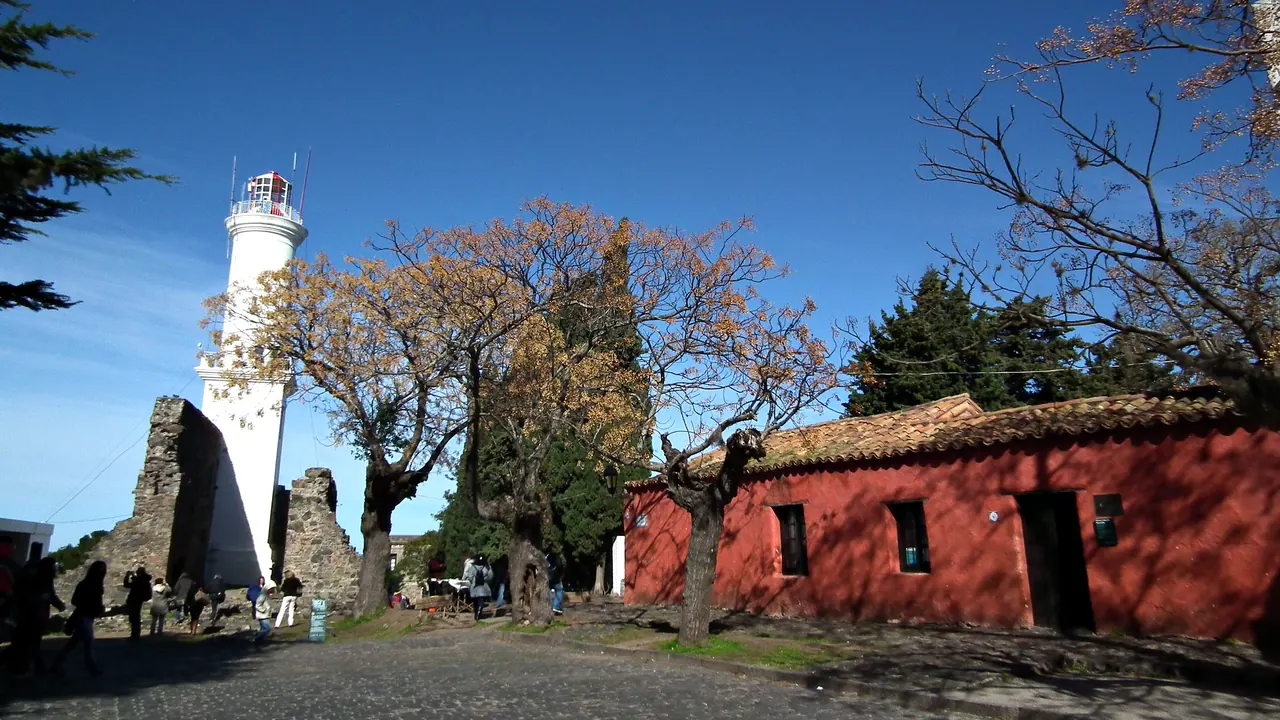
The lighthouse from the Plaza 25 de Mayo
- Getting around62
- Day trips55
- Culture & sights50
Photo: Fulviusbsas, CC BY-SA 3.0, cropped
Match
37
Every category weighted equally
- Beach & sun37
- Culture & arts39
- Food & nightlife34
- Family trip41
- Outdoors40
- Relax & unwind38
- Shopping & style36
- On a budget37
Colonia del Sacramento in twelve categories
Our verdict on each, scored 0 to 100 against the same fixed benchmark cities, so a score means the same thing on every page.
Beaches & swimming. Scores 36 out of 100.
Food & drink. Scores 36 out of 100.
Culture & sights. Scores 50 out of 100.
Nightlife. Scores 12 out of 100.
Nature & outdoors. Scores 30 out of 100.
Day trips. Scores 55 out of 100.
Good for families. Scores 42 out of 100.
Getting around. Scores 62 out of 100.
Shopping & style. Scores 24 out of 100.
Affordability. Scores 40 out of 100.
Live music & performing arts. Scores 14 out of 100.
Wellness & relaxation. Scores 42 out of 100.
Colonia del Sacramento category by category
Beaches & swimming
36Colonia sits on the Río de la Plata, a vast estuary of fresh and brackish water, not the open sea. A string of sandy river beaches runs along the shore either side of town, from small strips near the historic quarter to longer stretches out towards Real de San Carlos and Playa Ferrando. In January and February the water is warm, around 24°C, and families wade in on summer afternoons.
The water is brown with river silt, though, there are no waves, and in hot spells algae can make swimming inadvisable. Locals come for the sand and the sunsets as much as the swim. A visitor who wants clear sea and proper surf has to go to Uruguay's Atlantic coast, well beyond a day out.
Food & drink
36Eating here means Uruguayan staples done in a small-town setting: parrillas grilling beef and sausages over wood embers, the chivito steak sandwich, milanesas, homemade pasta and dulce de leche desserts. Many restaurants in the historic quarter have courtyard or street tables under the plane trees, and dinner with a view of the river at sunset is the main evening ritual.
The wine is the real local strength, with Tannat and other reds from the vineyards around Carmelo and the department of Colonia on most lists. Beyond that the range is narrow: a few dozen places, many aimed at day-trippers, and little street food or market culture. It is pleasant rather than a reason to come.
Culture & sights
50The reason to come is the Barrio Histórico, a UNESCO-listed old town founded by the Portuguese in 1680 and fought over with Spain for a century. Its cobbled lanes, low colonial houses with tiled roofs, the sloping Calle de los Suspiros, the rebuilt Portón de Campo town gate and the remains of the walls show the mixed Portuguese and Spanish layout more clearly than anywhere else in the region. The lighthouse, built over the ruins of a convent, gives a view across the rooftops to the river.
Around the main squares sits a cluster of small museums on the Portuguese and Spanish periods, tiles and local history, along with the Basílica del Santísimo Sacramento. Outside town at Real de San Carlos stands a Moorish-style bullring from the early 20th century. Bullfighting was banned soon after it was built, and it serves as a venue for concerts and cultural events. It is all compact, and a day covers it well.
Nightlife
12Evenings revolve around a long dinner and a glass of wine as the sun sets over the river. A few wine bars and small pubs in and around the historic quarter keep going after that, and summer weekends bring more people out, but there are no clubs of note and the town is quiet well before late. Visitors after a real night out take the ferry back to the city across the water.
Nature & outdoors
30The landscape is gentle and flat: the wide brown expanse of the Río de la Plata on one side and rolling cattle pasture on the other. The best of it is the riverside rambla, which runs for several kilometres past beaches and small headlands and is ideal for walking or cycling, with the sunset over the water as the daily event.
Beyond that there is little to seek out. Some visitors kayak or sail on calm days, and the countryside inland suits gentle rides, but there are no hills, serious trails or wildlife destinations within easy reach.
Day trips
55The great day trip is an unusual one. Buenos Aires lies directly across the river, about an hour away by fast ferry, so a visitor can spend a day in one of South America's major capitals and be back for dinner. The border is simple to cross: Argentine and Uruguayan officers check passports together at the departure terminal, so you clear immigration once per crossing and walk straight off on arrival.
On the Uruguayan side the choices are quieter. Carmelo, about an hour away by road, is the centre of a wine region of small family estates and boutique wineries. Nueva Helvecia, founded by Swiss settlers, makes a pleasant stop for cheese and farmhouse character, and the old mining village of Conchillas has a curious British-built core. Montevideo is a longer outing, nearly three hours by bus.
Good for families
42Colonia is calm, safe and small, which makes it easy with children: short distances, little traffic in the old town and a relaxed attitude to families in restaurants. Hiring a golf cart or bicycles to ride along the river is a hit with most children, the shallow river beaches suit paddling in summer, and climbing the lighthouse fills an hour.
There is little built for children, though: no zoo, aquarium or theme park, and the museums are small and aimed at adults. Uneven cobbles make pushchairs hard work in the historic quarter. It suits a short, quiet stay rather than a week of family activities.
Getting around
62The historic quarter is tiny and everything in it is a short walk apart, though the cobbles are rough and uneven underfoot. The ferry terminal and bus station sit next to each other a few minutes' walk from the old town, so arriving without a car is simple.
For the beaches and Real de San Carlos, a few kilometres out, most visitors hire bicycles, scooters or the golf carts that are a local fixture; the flat riverside road makes this easy. Local buses exist but are of limited use to a visitor, and wine estates and towns further out need a car, a taxi or a tour.
Shopping & style
24Shopping is a small-town browse. The historic quarter has craft shops selling leather goods, mate gourds and silver bombillas, wool knitwear, local art and ceramics, alongside a few antique and bric-a-brac shops and plenty of souvenirs. Weekend craft stalls appear near the main squares in season. There is no fashion or department store shopping to speak of; it is a place to pick up a mate set, not to shop.
Affordability
40Colonia is not a cheap place by South American standards. Uruguay as a whole is costly for the region, and the boutique hotels and restaurants of the historic quarter price themselves for visitors, so a meal or a night in the old town costs about what it would in a Southern European resort. Wine is good value, sights are mostly cheap or free, and guesthouses a few streets out cost noticeably less. Weekends and summer bring the highest room rates.
Live music & performing arts
14There is little formal performance life. A small theatre and cultural centre in a restored riverside bastion hosts occasional concerts, plays and festival events, and some restaurants have a guitarist or a candombe or tango set on summer nights. Anyone wanting real theatre, opera or a tango show crosses the river to the city.
Wellness & relaxation
42Colonia's strength here is its pace. Once the day-trippers leave in the late afternoon the old town goes very quiet, and the routine of slow lunches, siestas, cycling by the river and watching the sun go down is restorative in itself. A handful of hotels have spas, and a few resort and winery stays in the surrounding countryside add treatments and pools.
There is no bathing culture, thermal water or hammam tradition, though, so it suits a visitor who wants to slow down rather than one looking for a spa break.
When should you go?
Pick a month to see what it is like. The climate figures are measured averages, not a forecast.
Colonia del Sacramento in July
Daytime high, °C
Rainfall in the month, mm
The whole year
Shaded against this city’s own year: the deepest cell is its best month for that figure and the palest its weakest.
Temperature and rainfall are climate normals, averaged over the years shown. Colonia del Sacramento: 1991-2020 (sunshine 1961-1990) normals, Colonia (2.4 km from centre).
Before you go
| Measure | Colonia del Sacramento |
|---|---|
| Currency | Peso Uruguayo (UYU) |
| Sockets | CFIL230 V, 50 Hz |
| Driving side | Right |
| Time zone | UTC-3 |
| Emergency number | 911 |
| Elevation | 27 m |
| Main airport | Carrasco General Cesáreo L. Berisso International Airport (MVD)171 km from centre15 non-stop destinations |
| Public holidays this year | 15 days |
By the numbers
| Measure | Colonia del Sacramento |
|---|---|
| City population | 31,720 |
| People per km² | 1,385 |
| Museums within 10 km | 7 |
| UNESCO World Heritage sites within 50 km | 2 |
| Swim season, months above 21 °C | 4 months |
Compare Colonia del Sacramento with
Every comparison with a written verdict behind it.