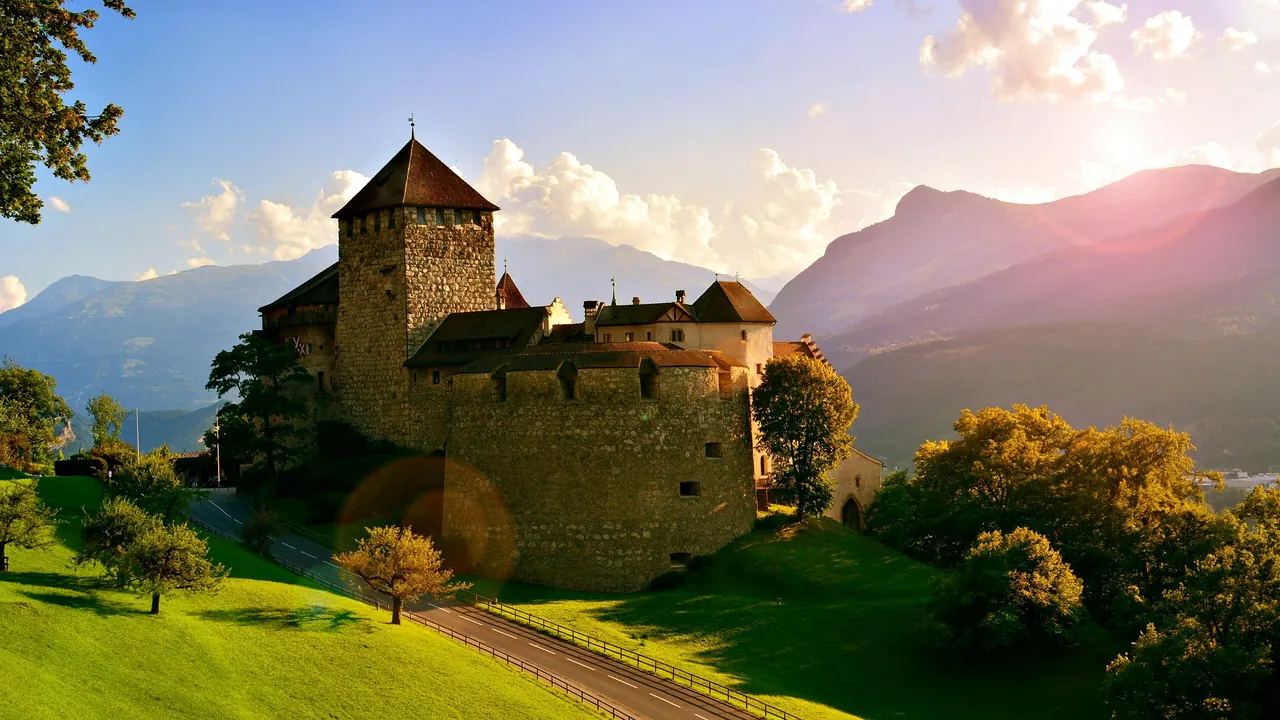
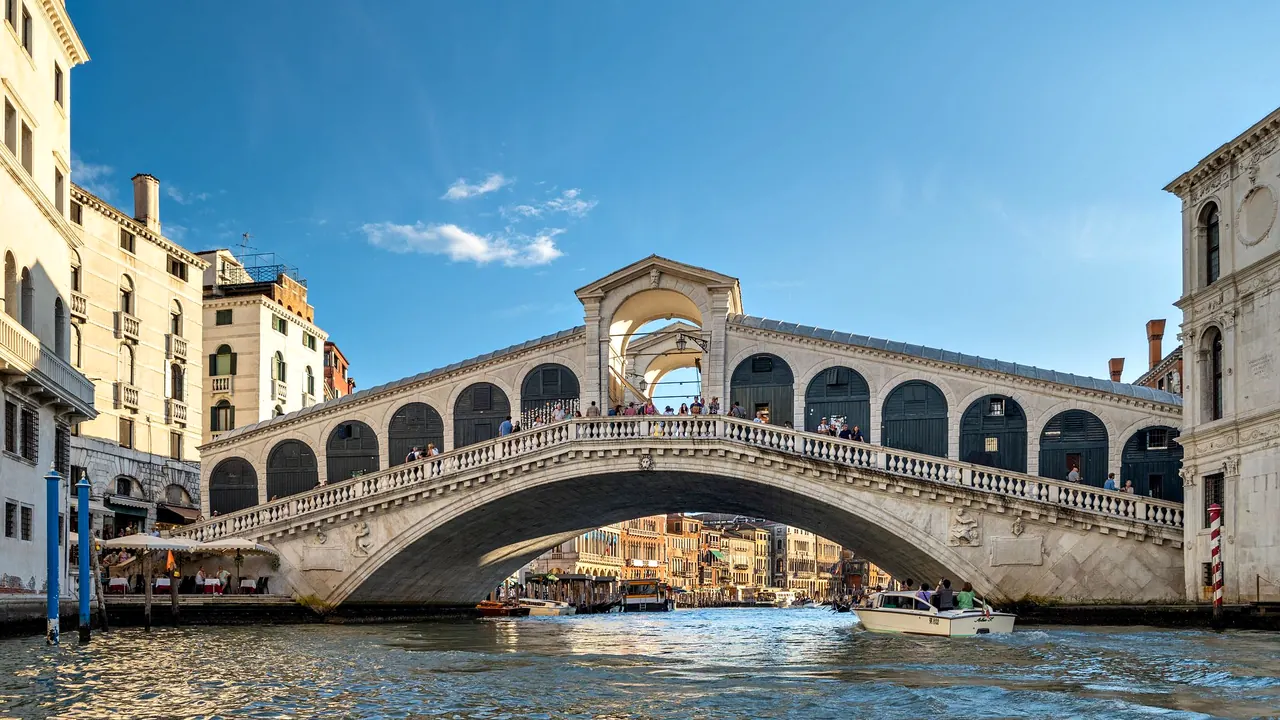
Photos: Vaduz by Justin LaBerge, CC BY 2.0, cropped; Venice by David Vives, Pexels License.
Vaduz or Venice?
Our verdict in twelve categories, each scored against the same fixed benchmark cities, and the climate month by month, so you can choose for your trip.
Choose Vaduz for
- nature and the outdoors
- wellness
Vaduz is for travellers who want the mountains first and the town second. Trails leave from the edge of the centre, Malbun and the Rätikon peaks are a short drive up, and the evenings are quiet enough to make an early start easy. It suits walkers, cyclists and anyone after a calm, orderly base where Switzerland meets Austria. Just accept that eating out, shopping and nightlife are thin, and that the stay will cost a great deal.
Choose Venice for
- culture and sights
- shopping
- beaches
Pick Venice if the trip is about seeing things. Palaces on water, Titian and Tintoretto in the churches where they still hang, opera at La Fenice and cicchetti at the counter of a Rialto bacaro give it a depth of culture and city life that Vaduz cannot offer. Fast trains to Padua and Verona add to it. The price is crowds on the main routes, endless stepped bridges and very little open country nearby.
Scoreboard
Twelve categories on one fixed scale from 0 to 100. The shaded stretch is the gap between the two.
Your match
Pick a travel style or drag the sliders, and both match scores follow your weighting.
Wins on nature and the outdoors and wellness with your weighting.
Wins on culture and sights and shopping with your weighting.
What matters to you?
Category by category
What the scores mean for a trip.
Beaches & swimming
Neither is a beach destination, but only Venice has a seaside at all. In Vaduz, swimming means the municipal open-air pools or a drive to the Walensee or Lake Constance, where the water reaches about 20°C to 22°C for a short summer season.
Venice has the Lido a short boat ride away, with kilometres of fine sand on the open Adriatic. Its shallow water is warmer and suits children well, though it is greenish rather than clear and much of the beach is taken up by rows of cabanas. Pellestrina is wilder, and the Jesolo resort strip is within reach for a full beach day.
Food & drink
Vaduz serves solid Alpine cooking in hotel dining rooms and hillside inns: Käsknöpfle with fried onions, rösti, and game in autumn. Its real strength is the wine from the prince's estate below the castle, but there is little variety and no market.
Venice is a far better place to eat, if you choose carefully. Standing at a bacaro counter in Cannaregio or Castello with sarde in saor and a spritz is a meal in itself, and the Rialto market supplies the cuttlefish risotto and lagoon shellfish. Avoid the picture-menu places around San Marco and you will eat much more interesting food than anywhere in Vaduz.
Culture & sights
Here the gap is widest. Vaduz has a single tidy day of sights: the black cube of the Kunstmuseum and the white Hilti Art Foundation beside it, the National Museum, the Postage Stamp Museum and the walk up to a castle you cannot enter.
In Venice the whole city is the exhibit. San Marco and the Doge's Palace, the Grand Canal palazzi, Titian at the Frari, Tintoretto at San Rocco and the Biennale at the Arsenale could not be covered in a week. Modern art lovers will find that the Guggenheim and Punta della Dogana outrank even Vaduz's best museums.
Nightlife
In Vaduz the evening more or less ends with dinner. A few wine bars and hotel lounges on the Städtle stay open a while longer, and anyone wanting a real night out crosses to Feldkirch or goes on to Zurich.
Venice has more going on, though it is still not a late city. The aperitivo hour fills the bacari on the Fondamenta della Misericordia with people holding spritzes, and students keep a few bars on Campo Santa Margherita busy after that. There is no club district. The best of a Venetian night is a late walk beside canals that have gone completely silent.
Nature & outdoors
Vaduz is a mountain base. Trails climb from the centre through vines and beech woods, and the road to Triesenberg and Malbun opens up high Rätikon walks, the exposed Fürstensteig and a path running the length of the country. Add the Rhine dam cycle path, the Säntis and winter skiing, and the outdoors is the main reason to come.
Venice's nature is lagoon nature: salt marshes around Torcello and Sant'Erasmo with egrets and flamingos, explored by kayak or by learning to row standing up. The land around it is flat, and the Dolomites are more than two hours away, so walkers will get far more out of Vaduz.
Day trips
Both make good bases, but Venice's outings are richer and easier to reach. Fast trains from Santa Lucia reach Padua's Scrovegni Chapel in half an hour and Verona's arena in little more than an hour. Murano, Burano and Torcello make a day out across the lagoon without any train.
From Vaduz the choice spans three countries: Feldkirch's arcaded lanes, the abbey library at St Gallen, painted Appenzell, and Lindau on Lake Constance. Connections often mean changing at Buchs or Sargans, though, so a car makes much more difference here than in Venice.
Good for families
Venice has the edge, mostly because children are delighted by it: vaporetto rides, glass-blowing on Murano, a sandy beach at the Lido and dinosaurs at the natural history museum. The price is hundreds of stepped bridges with a pushchair, summer crowds and heat.
Vaduz is the reverse. It is flat, safe and easy to manage, but there is nothing put on for children, so family days are spent at the pools, on gentle walks above Triesenberg or on Malbun's beginner slopes. It suits older children who like hiking better than toddlers.
Getting around
Vaduz's centre is one short, flat pedestrian street, and the museums and cathedral are only minutes apart. Buses reach every village and run up to Malbun. The town has no train station of its own, though, so going further afield means changing at Buchs, Sargans or Feldkirch.
Venice is easier to get around overall. It is a car-free maze where almost everything is within a long walk, and vaporetti run along the Grand Canal and out to the Lido and the islands, with trains arriving right at Santa Lucia. The alleys get people lost, however, and the stepped bridges are hard going with luggage or a pushchair.
Shopping & style
Vaduz offers a short street of watches, jewellery, souvenirs and collectable stamps, and a bottle of local Pinot Noir is the best thing to take home.
Venice is a city of crafts with centuries behind them: Murano glass, Burano lace, papier-mâché masks, marbled paper and velvet furlane, along with designer names on Calle Larga XXII Marzo. The catch is the imported fakes on the main routes, so look for workshops where the work is done on site.
Affordability
Neither is cheap, but Vaduz is harder on the wallet. It has Swiss prices for everything from a room to a plain lunch, and so few hotels that budget choices hardly exist. Some visitors stay across the border in Austria instead.
Venice is very expensive around San Marco and in summer and carnival, and boats and church entries add up. It does offer more ways to save: cicchetti at the counter, rooms in quieter sestieri or in Mestre, and visits in late autumn or winter.
Live music & performing arts
Vaduz has a small but respectable calendar for a tiny country: the national stage in nearby Schaan, a short orchestral season, a summer classical festival and the odd church concert. It is something to attend if it happens to be on.
Venice has La Fenice, where Verdi and Rossini premiered works, with a full season of opera, ballet and symphony concerts, plus the Goldoni theatre and the Biennale's festivals. Vivaldi concerts in churches and scuole are on almost every night. Quality varies, but none of this exists in Vaduz.
Wellness & relaxation
From Vaduz, real thermal water is only twenty-five minutes away, at Bad Ragaz, where spring water from the Tamina gorge feeds a large public bath. The town itself is calm wherever you are, and a few slow days of walking in the hills fit it well.
Venice's nearest thermal towns, Abano Terme and Montegrotto Terme with their Roman-era mud and pools, are about an hour away. Here you have to look for the calm: early mornings, the residential lanes of Castello and Cannaregio, or Giudecca, away from the daytime crowds at San Marco. In return, its hotel spas in old palazzi and on the Lido are grander than anything in Vaduz.
When should you go?
Pick your month. The climate figures are measured averages, not a forecast.
Vaduz in July
Venice in July
Daytime high, °C
Rainfall in the month, mm
Where the figures come from
Vaduz's temperatures are measured 51 km from the centre, at Sigmarszell-Zeisertsweiler.
Vaduz has no rain gauge within 25 km of the centre, so its rainfall comes from a gridded climate dataset read at the destination rather than from a gauge further away.
Temperature and rainfall are climate normals, averaged over the years shown. Vaduz: 1991-2020 normals, Sigmarszell-Zeisertsweiler (51.3 km from centre). Venice: 1991-2020 (sunshine 1971-2000, rainfall 1981-2010) normals, Venezia / Tessera (6.7 km from centre).
Vaduz has a short warm season. Days turn mild in May and peak at about 24°C in July and August, which is good weather for walking in the hills, and July is the sunniest month. Summer is also the wettest time, with about 126mm falling in August, so expect showers and afternoon storms. Winter days are cold, and in late autumn the valley can sit under fog while the heights above stay sunny. Snow then brings Malbun into its own. For the mountains, June to September is the best window.
Venice is several degrees warmer all year. July reaches about 29°C and can feel heavy in the narrow alleys, but it is also the sunniest month, and the Adriatic at the Lido is warm enough for swimming from June to September, at its warmest near 26°C in August. June and October bring the most rain. The best months for walking the streets are April, May and September, and winter is cool and grey but rarely harsh.
Which traveller are you?
On an outdoors trip, Vaduz is the clear choice. Vineyard and forest trails start in town, the Rätikon ridges and the Fürstensteig are half an hour up the road, and in winter there are ski slopes at Malbun. Venice offers lagoon kayaking and flat cycling at most.
For a culture and arts trip, choose Venice without hesitation. The Accademia, the Frari, San Rocco, the Doge's Palace and the Biennale could fill a week. Vaduz has a strong modern art pair of museums and little else, which makes one good day.
On a shopping trip, Venice wins. You can watch glass being blown on Murano, buy lace on Burano, find marbled paper in Dorsoduro and walk the fashion streets near San Marco. In Vaduz the Städtle has watches, stamps and local wine, and serious shoppers go to Zurich.
Before you go
| Measure | Vaduz | Venice |
|---|---|---|
| Official language | German | Italian |
| Currency | Swiss Franc (CHF) | Euro (EUR) |
| Sockets | CJ230 V, 50 Hz | CFL230 V, 50 Hz |
| Driving side | Right | Right |
| Time zone | UTC+1, UTC+2 in summer | UTC+1, UTC+2 in summer |
| Emergency number | 112 | 112 |
| Elevation | 455 m | 2 m |
| Main airport | Zürich Airport (ZRH)81 km from centre226 non-stop destinations | Venice Marco Polo Airport (VCE)7 km from centre103 non-stop destinations |
| Public holidays this year | 21 days | 13 days |
By the numbers
| Measure | Vaduz | Venice |
|---|---|---|
| Population | 5,668 | 250,369 |
| People per km² | 328 | 602 |
| Museums within 10 km | 7 | 52 |
| UNESCO World Heritage sites within 50 km | 3 | 5 |
| Swim season, months above 21 °C | - | 4 months |
Where else could you go?
Every comparison below shares a destination with this one, so you can follow Vaduz or Venice somewhere new.