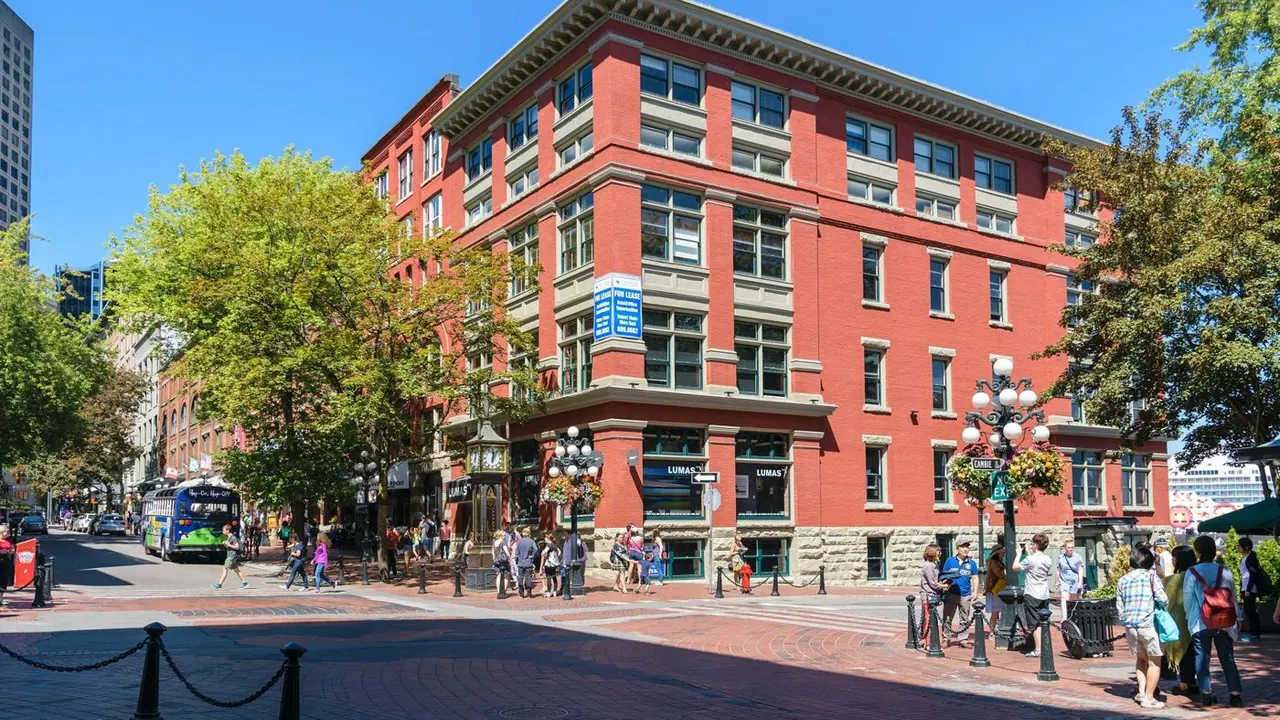
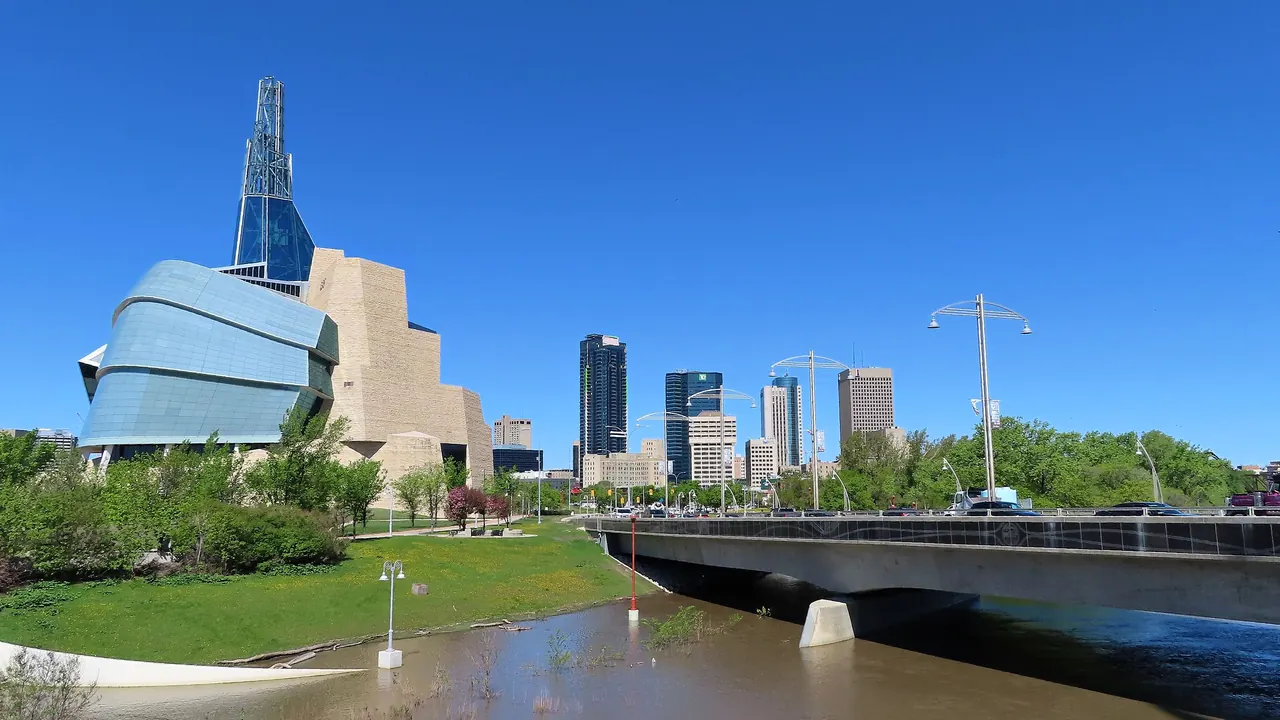
Photos: Vancouver by Xicotencatl, CC BY-SA 4.0, cropped; Winnipeg by Dennis Sylvester Hurd, CC BY 2.0, cropped.
Vancouver or Winnipeg?
Our verdict in twelve categories, each scored against the same fixed benchmark cities, and the climate month by month, so you can choose for your trip.
Choose Vancouver for
- nature and the outdoors
- getting around
- food and drink
Vancouver suits travellers who want the landscape to be the main event. Mountains, rainforest and sea all lie within easy reach of downtown, the Asian cooking ranks with the best outside Asia, and a compact centre with the SkyTrain and the seawall makes it easy to manage without a car. It is the stronger pick for an active trip, a trip built around food, or a family that wants plenty to do, as long as the budget can stretch.
Choose Winnipeg for
- prices
- culture and sights
- live music and the arts
Winnipeg rewards a curious, unhurried visitor who would rather spend less and look closely at a place most people pass over. Its museums on human rights, Inuit art and the fur trade give it more to see indoors than Vancouver has, its ballet and festival stages are strong for a city its size, and rooms cost noticeably less. Plan on a car for anything outside the centre, and choose the season with care.
Scoreboard
Twelve categories on one fixed scale from 0 to 100. The shaded stretch is the gap between the two.
Your match
Pick a travel style or drag the sliders, and both match scores follow your weighting.
Wins on nature and the outdoors and getting around with your weighting.
Wins on prices and culture and sights with your weighting.
What matters to you?
Category by category
What the scores mean for a trip.
Beaches & swimming
Vancouver's beaches are part of the city: English Bay and Sunset Beach in the West End, and the long sands of Kitsilano, Jericho and Spanish Banks looking across to the mountains, all an easy bus or bike ride away for a summer afternoon and a sunset. The sea there is cold, so a swim is a quick dip, and the Kitsilano saltwater pool is the warmer option.
Winnipeg's water is actually milder in midsummer, because shallow Lake Winnipeg warms up well, and Grand Beach has fine white sand and dunes. But it is more than an hour's drive away, the season lasts barely two months and algae can spoil it late in summer, so Vancouver's everyday beaches come out ahead.
Food & drink
Vancouver is well ahead. Cantonese dim sum and seafood in the city and in Richmond, endless ramen and sushi counters, and local salmon, spot prawns and Dungeness crab make eating one of the real reasons to go.
Winnipeg eats honestly rather than memorably. Its Ukrainian and Mennonite settlers left perogies, cabbage rolls and farmer sausage, the city has its own honey dill sauce, and the suburbs have Filipino and Punjabi cooking. The Forks Market is a good place to graze, but the range is narrow next to Vancouver's.
Culture & sights
Winnipeg has more sights. The Canadian Museum for Human Rights, the world's largest public collection of contemporary Inuit art at the Winnipeg Art Gallery, the replica ship Nonsuch at the Manitoba Museum and the terracotta warehouses of the Exchange District give a visitor two or three solid days.
Vancouver's strengths are fewer. The Museum of Anthropology, with its Northwest Coast totem poles and canoes, is outstanding, and Gastown and the Dr Sun Yat-Sen Garden are pleasant, but most visitors come for the setting rather than the sights.
Nightlife
Neither city is a reason to go out, but Vancouver offers more choice: cocktail bars in Gastown, taprooms around Main Street, summer patios in Yaletown and Kitsilano, the Granville Street clubs at weekends, and the gay scene of the Davie Village. Winnipeg has a handful of Exchange District bars and Osborne Village pubs that go quiet early, and in deep winter going out shrinks to a single warm bar.
Nature & outdoors
This is where Vancouver has its biggest advantage. Ski runs and forest trails on Grouse, Cypress and Seymour are under half an hour from downtown, Stanley Park and the seawall are inside the city, and the Sea-to-Sky Highway leads to the granite walls at Squamish and Whistler's alpine country, with orcas and humpbacks in the waters offshore.
Winnipeg's outdoors is gentler and depends more on the season: riverbank paths, the bison herd at FortWhyte Alive, migrating geese at Oak Hammock Marsh and skating trails on the frozen rivers. The lakes and granite of Whiteshell make good canoeing country, but they are a long drive east, and summer brings fierce mosquitoes.
Day trips
Neither city has many places to visit nearby, but Vancouver's are better. Victoria, with its harbour and Parliament Buildings, is worth the long day with a ferry crossing, and Steveston, Fort Langley, Bowen Island and Whistler's village make shorter outings.
From Winnipeg the choices are the stone fur-trade post at Lower Fort Garry, the Icelandic fishing town of Gimli and the Mennonite Heritage Village at Steinbach. All are pleasant in summer, all need a car, and none is a reason to travel.
Good for families
Family days are easier in Vancouver. Stanley Park alone has the aquarium, a miniature train, a water park and the flat seawall, and Science World, the little ferries to Granville Island and the suspension bridges over the North Shore canyons add plenty more without a car.
Winnipeg has something Vancouver lacks close to the centre: the Assiniboine Park Zoo, where polar bears swim over an underwater tunnel. The children's museum at The Forks is good too, but in winter most days become drives from one indoor stop to the next.
Getting around
Vancouver is far easier without a car. The SkyTrain runs from the airport to downtown, the SeaBus crosses to North Vancouver, one card covers both, and the downtown peninsula and the seawall are a pleasure to walk or cycle.
Winnipeg's walkable core of downtown, the Exchange District and The Forks is small, and in winter skywalks link many of its buildings. Beyond it there are only buses, which are slow across town, and FortWhyte, the beaches and every day trip mean renting a car.
Shopping & style
Vancouver has more shopping: chains and flagships on Robson Street, luxury houses on Alberni, outdoor and athleisure clothing as a local speciality, plus Granville Island's studios and Richmond's Asian malls. Winnipeg is mostly malls and chain stores, with independent clothing and record shops in the Exchange District and Osborne Village.
The best thing to take home is the same in both cities: Indigenous art. Vancouver has Northwest Coast prints and carvings, and Winnipeg's specialist galleries add Inuit work.
Affordability
Winnipeg is the cheaper stay. Downtown hotels cost noticeably less than in Vancouver, the main sights are moderately priced, and only the need for a car or taxis beyond the centre pushes the bill up.
Vancouver is expensive to sleep in, especially in summer, and meals get steep once tax and tip are added. There are real savings, though: the seawall, the beaches and Stanley Park are free, dim sum and noodles are cheap, transit is fairly priced and rooms cost less outside summer.
Live music & performing arts
The two cities are about level, and both hold a Fringe and a folk festival in summer. Winnipeg's strength is its resident companies. The Royal Winnipeg Ballet, the oldest in the country, shares the Centennial Concert Hall with the symphony and the opera, and a long-established company in St Boniface performs in French.
Vancouver's evenings depend more on the setting and on visiting shows: the symphony in the ornate 1927 Orpheum, Shakespeare in tents at Bard on the Beach with the mountains behind, a big jazz festival, and touring concerts passing along the West Coast.
Wellness & relaxation
Vancouver is the more restful city overall, because calm is part of daily life there: yoga studios, good hotel day spas, massage and reflexology in Chinatown and Richmond, and the seawall and the forest for slow walks. Its large Nordic-style spas, though, are a drive away near Whistler.
Winnipeg has one thing in town that Vancouver lacks, an outdoor Nordic spa in the south of the city, where sitting in hot pools in deep frost makes a memorable afternoon. Apart from that it offers hotel spas, quiet streets and the English garden in Assiniboine Park, but little else built around rest.
When should you go?
Pick your month. The climate figures are measured averages, not a forecast.
Vancouver in July
Winnipeg in July
Daytime high, °C
Rainfall in the month, mm
Temperature and rainfall are climate normals, averaged over the years shown. Vancouver: 1991-2020 normals, Vancouver Harbour CS (4.4 km from centre). Winnipeg: 1991-2020 normals, Winnipeg The Forks (0.9 km from centre).
Vancouver is mild all year, so the real difference is between wet and dry. From May to September it is dry and bright, with long sunny days. July and August are the warm months, with highs around 23°C and the beaches at their best, though even then the sea reaches only about 16°C. From October the rain sets in hard and peaks at around 245mm in November. It rarely gets truly cold, so winter is grey and damp rather than harsh, and it is the ski season on the North Shore.
Winnipeg swings much further. January highs sit around -10°C, and the cold lasts from November to March. Walking the streets then means short dashes and the skywalks, though the cold suits skating on the rivers and the outdoor spa. Summer is warmer than Vancouver's, reaching about 27°C in July, but the lake beaches only come into their own from early July to late August. June to August is also Winnipeg's wettest stretch, the reverse of Vancouver's pattern. Late May and September are mild and pleasant in both cities.
Which traveller are you?
On an outdoors trip, Vancouver wins easily. The North Shore mountains, the cedar forest of Stanley Park, kayaking at Deep Cove and the Sea-to-Sky drive to Squamish and Whistler are all close at hand, while Winnipeg's wild country begins an hour and a half away.
For a culture and arts trip, Winnipeg gives more. The Canadian Museum for Human Rights, the Inuit collection at the art gallery and the warehouses of the Exchange District go further than Vancouver's short list, and the Royal Winnipeg Ballet fills the evenings.
On a trip on a tight budget, Winnipeg goes further, with cheaper hotel rooms and moderately priced sights, though a car is needed beyond the centre. In Vancouver the free seawall and cheap noodle shops help, but beds there are steep.
Before you go
| Measure | Vancouver | Winnipeg |
|---|---|---|
| Official language | French, English | French, English |
| Currency | Canadian Dollar (CAD) | Canadian Dollar (CAD) |
| Sockets | AB120 V, 60 Hz | AB120 V, 60 Hz |
| Driving side | Right | Right |
| Time zone | UTC-8, UTC-7 in summer | UTC-6, UTC-5 in summer |
| Emergency number | 911 | 911 |
| Elevation | 2 m | 238 m |
| Main airport | Vancouver International Airport (YVR)9 km from centre109 non-stop destinations | Winnipeg / James Armstrong Richardson International Airport (YWG)7 km from centre41 non-stop destinations |
| Public holidays this year | 11 days | 10 days |
By the numbers
| Measure | Vancouver | Winnipeg |
|---|---|---|
| City population | 662,248 | 749,607 |
| People per km² | 5,759 | 1,670 |
| Museums within 10 km | 26 | 30 |
| UNESCO World Heritage sites within 50 km | 0 | 0 |
| Swim season, months above 21 °C | None | - |
Where else could you go?
Every comparison below shares a destination with this one, so you can follow Vancouver or Winnipeg somewhere new.