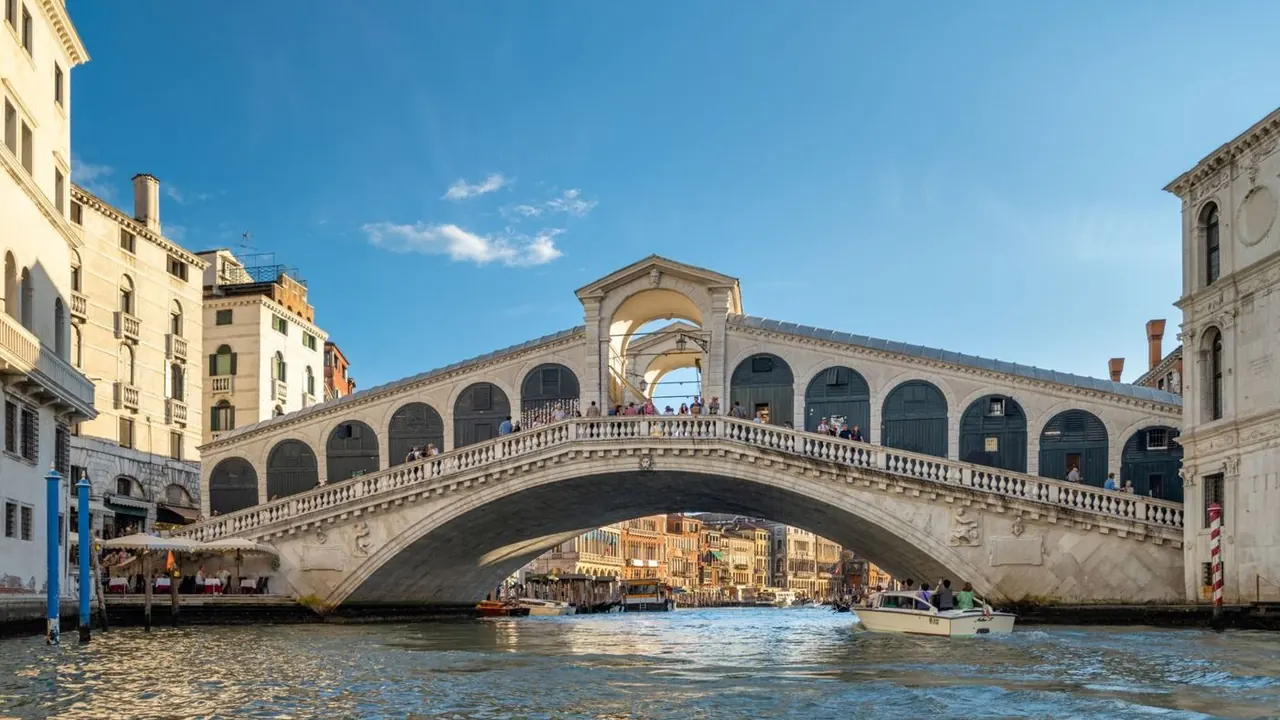
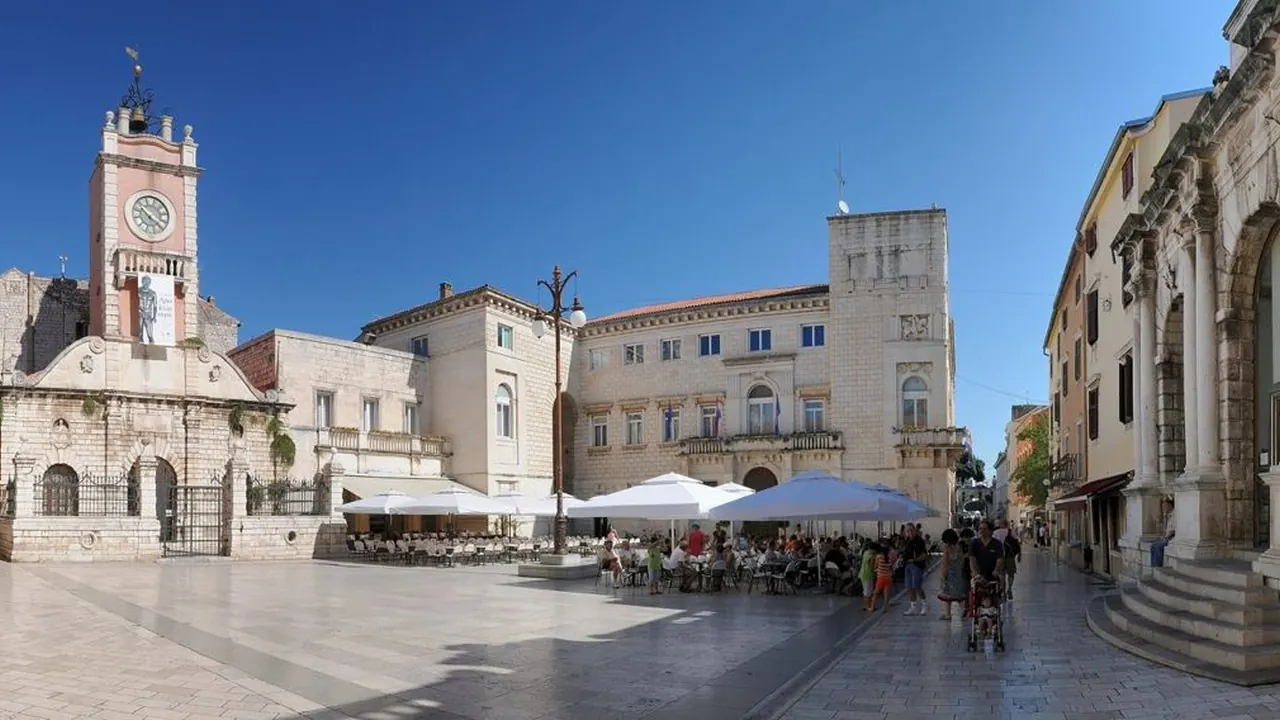
Photos: Venice by David Vives, Pexels License; Zadar by Böhringer Friedrich, CC BY-SA 2.5, cropped.
Venice or Zadar?
Our verdict in twelve categories, each scored against the same fixed benchmark cities, and the climate month by month, so you can choose for your trip.
Choose Venice for
- culture and sights
- live music and the arts
- shopping
Venice is the choice when the trip is about looking: palaces on water, Titian and Tintoretto in the churches they were painted for, an evening at La Fenice, and fast trains to Padua and Verona. It suits travellers who will walk all day, accept high costs and an early night, and treat an afternoon at the Lido as a side note.
Choose Zadar for
- nature and the outdoors
- prices
- beaches
Zadar is for people who want the sea and the landscape behind it. Clear water off the promenade, ferries to quiet islands, the gorges of Paklenica and boat trips to the Kornati make it an active, unhurried summer base. It costs much less than Venice, and its compact Roman and medieval old town takes about two days to see.
Scoreboard
Twelve categories on one fixed scale from 0 to 100. The shaded stretch is the gap between the two.
Your match
Pick a travel style or drag the sliders, and both match scores follow your weighting.
Wins on culture and sights and live music and the arts with your weighting.
Wins on nature and the outdoors and prices with your weighting.
What matters to you?
Category by category
What the scores mean for a trip.
Beaches & swimming
Zadar is the better place to swim. The water is clear, people swim straight off the stone promenade, and Nin's shallow sand and the pale beach at Sakarun on Dugi Otok are easy to reach. The city beaches themselves are pebble and concrete.
Venice's sea is at the Lido, with kilometres of fine sand and shallow, warm water. But the water is greenish and much of the beach is set out in rows of cabanas. It works for a hot afternoon with children, not for a beach vacation.
Food & drink
Venice eats better, as long as you avoid the picture menus around San Marco. Cicchetti and a spritz at a bacaro counter, then cuttlefish risotto or bigoli in salsa made with produce from the Rialto market, give more variety than anything in Zadar.
Zadar's Dalmatian cooking is good and honest: grilled fish, octopus or lamb cooked under the peka, Pag cheese and a glass of Maraschino. The trouble is that most konobas serve the same menu, so after a week the dinners start to repeat.
Culture & sights
This is where the two cities differ most. All of Venice is palaces and churches on water. It has the Basilica of San Marco, the Doge's Palace and the Accademia, Titian in the Frari and Tintoretto at San Rocco, plus the Biennale, and a week does not exhaust it.
Zadar has a fine, compact old town, with the Roman forum, the round church of St Donatus and the Sea Organ, and good small museums such as the Museum of Ancient Glass. It makes a rewarding two days, but it adds interest to a coastal stay rather than filling one.
Nightlife
Neither city is for a big night out, but Zadar stays out later. In summer, evenings start at sunset by the Sea Organ and move on to terrace bars on the walls, and the clubs at Zrće on Pag are about an hour away.
Venice is liveliest at aperitivo time, in the bacari around the Rialto and along the Fondamenta della Misericordia, and Campo Santa Margherita keeps a few students out later. By midnight the canals are silent, which is lovely for a walk but not for much else.
Nature & outdoors
Zadar wins easily. Paklenica's limestone gorges and climbing walls are about 45 minutes away, boats go out to the Kornati and Telašćica, and Krka's waterfalls and Plitvice Lakes make day trips inland.
In Venice the outdoors means the lagoon. You can kayak or row among the marshes around Torcello to watch egrets and flamingos, and cycle the sea walls of Pellestrina. It is gentle and flat, and the mountains are a long way off.
Day trips
Venice is the better base for day trips, mainly because of the trains. Padua, Vicenza and Verona are each an easy day out without a car, and Murano, Burano and Torcello are a short boat ride away.
Zadar has good choices too: Šibenik's cathedral, medieval Nin and the islands by ferry, with Split and Trogir further off. Most of them, though, are much easier with a hire car or an organised excursion.
Good for families
Zadar is easier with children. The old town is flat, the waterfront promenade suits pushchairs and scooters, the Greeting to the Sun lights up at dusk, and Nin's shallow sandy beaches are ideal for small children.
Children love Venice's boats and the absence of cars, and the glass furnaces on Murano and the beach at the Lido help. But the stepped bridges, packed summer alleys and lack of parks make it harder work, and it is best as a short stay with older children.
Getting around
Neither centre has cars and both are walkable, but Venice has the fuller transport network. Vaporetti run along the Grand Canal and out to the Lido and the islands, and trains arrive right in the city at Santa Lucia. The many stepped bridges make luggage and pushchairs hard going.
You can walk across Zadar's flat peninsula in a quarter of an hour, and the island ferries leave from its edge. Beyond that the buses are basic, so for the national parks and nearby towns you really need a car or an organised tour.
Shopping & style
Venice has much more to buy. Its crafts go back centuries: Murano glass, Burano lace, papier-mâché masks, marbled paper and furlane slippers. The big fashion names line Calle Larga XXII Marzo, but the main routes are full of cheap imitations to avoid.
In Zadar, shopping means Kalelarga and the market by the walls. The best things to take home are food and drink, such as Pag cheese, figs, olive oil and Maraschino, and Pag lace is the one craft worth looking for.
Affordability
A stay in Venice costs far more than one in Zadar. Rooms in the historic centre are expensive, especially in summer and at carnival, the water buses are priced for visitors and most churches and sights charge for entry. Cicchetti at a bar counter and a bed in Mestre or a quieter sestiere bring costs down, but not to Zadar's level.
In Zadar the usual stay is a private apartment, which is good value outside July and August. Konoba meals are fair, and ferries and local buses cost little. The extras are what add up: national park tickets and boat trips out to the islands.
Live music & performing arts
Venice has a full season of performances. La Fenice, where Verdi and Rossini premiered works, stages opera, ballet and concerts, the Biennale adds festivals of contemporary music, theatre and dance, and church concerts of Vivaldi run most evenings.
Zadar's highlight is the summer series of Musical Evenings in St Donatus, with early music in a ninth-century church, and in July and August you may hear klapa singing in the squares. Outside summer there is little on.
Wellness & relaxation
Neither city has a bathing tradition of its own, so both rely on hotel spas, in grand palazzi in Venice and in the resort area at Borik in Zadar. The alternatives differ. From Venice, the thermal pools and hot mud of Abano Terme are about an hour away, while Zadar has the mud lagoon at Nin.
The calm is different too. In Venice it means quiet early mornings in Castello or on Giudecca, away from the crowds. In Zadar it means a slow day with a siesta and the sunset from the steps of the Sea Organ.
When should you go?
Pick your month. The climate figures are measured averages, not a forecast.
Venice in July
Zadar in July
Daytime high, °C
Rainfall in the month, mm
Where the figures come from
Venice has no rain gauge within 25 km of the centre, so its rainfall comes from a gridded climate dataset read at the city rather than from a gauge further away.
Venice's sunshine is measured 26 km from the centre, at Treviso / S. Angelo.
Zadar has no rain gauge within 25 km of the centre, so its rainfall comes from a gridded climate dataset read at the city rather than from a gauge further away.
Temperature and rainfall are climate normals, averaged over the years shown. Venice: 1991-2020 normals, Venezia / Tessera (6.7 km from centre). Zadar: 1999-2020 (rainfall 1991-2020) normals, Zadar / Zemunik (9.9 km from centre).
Both cities have a sea warm enough to swim in from June to September, reaching about 25°C in August. Both also get to around 29°C at midday in July and August, which makes long walks hot work. The real difference is rain. High summer is Zadar's driest time, with only 29mm in July, so a beach trip there is very reliable. Venice has plenty of sunshine in July but gets steady showers right through the summer, and October is its wettest month.
For sightseeing, Venice is at its best in May and early October, when it is warm enough to walk without the summer heat. Zadar's winters are a little milder, but from late autumn it turns wet, and November is its wettest month with 113mm. Its best months outside high summer are late May, June and September.
Which traveller are you?
On a culture and arts trip, Venice is the clear choice. The whole city is the exhibit, the great paintings still hang where they were made, and an evening can end at the opera. Zadar's old town fills a good weekend but not a week.
For an outdoors trip, Venice offers little beyond paddling its flat lagoon. Zadar puts mountains, national parks and a sea full of islands within easy reach, so you can hike one day and sail the next. Spring and autumn suit walking best.
On a trip on a tight budget, Venice is hard going. Even careful travellers pay heavily for a bed near the canals and for getting around by water. In Zadar your money goes further, as long as you ration the park and boat excursions.
Before you go
| Measure | Venice | Zadar |
|---|---|---|
| Official language | Italian | Croatian |
| Currency | Euro (EUR) | Euro (EUR) |
| Sockets | CFL230 V, 50 Hz | CF230 V, 50 Hz |
| Driving side | Right | Right |
| Time zone | UTC+1, UTC+2 in summer | UTC+1, UTC+2 in summer |
| Emergency number | 112 | 112 |
| Elevation | 2 m | 5 m |
| Main airport | Venice Marco Polo Airport (VCE)7 km from centre103 non-stop destinations | Zadar Airport (ZAD)10 km from centre66 non-stop destinations |
| Public holidays this year | 13 days | 14 days |
By the numbers
| Measure | Venice | Zadar |
|---|---|---|
| City population | 250,369 | 70,779 |
| People per km² | 602 | - |
| Museums within 10 km | 52 | 1 |
| UNESCO World Heritage sites within 50 km | 5 | 2 |
| Swim season, months above 21 °C | 4 months | 4 months |
Where else could you go?
Every comparison below shares a destination with this one, so you can follow Venice or Zadar somewhere new.