Vietnam
Hue
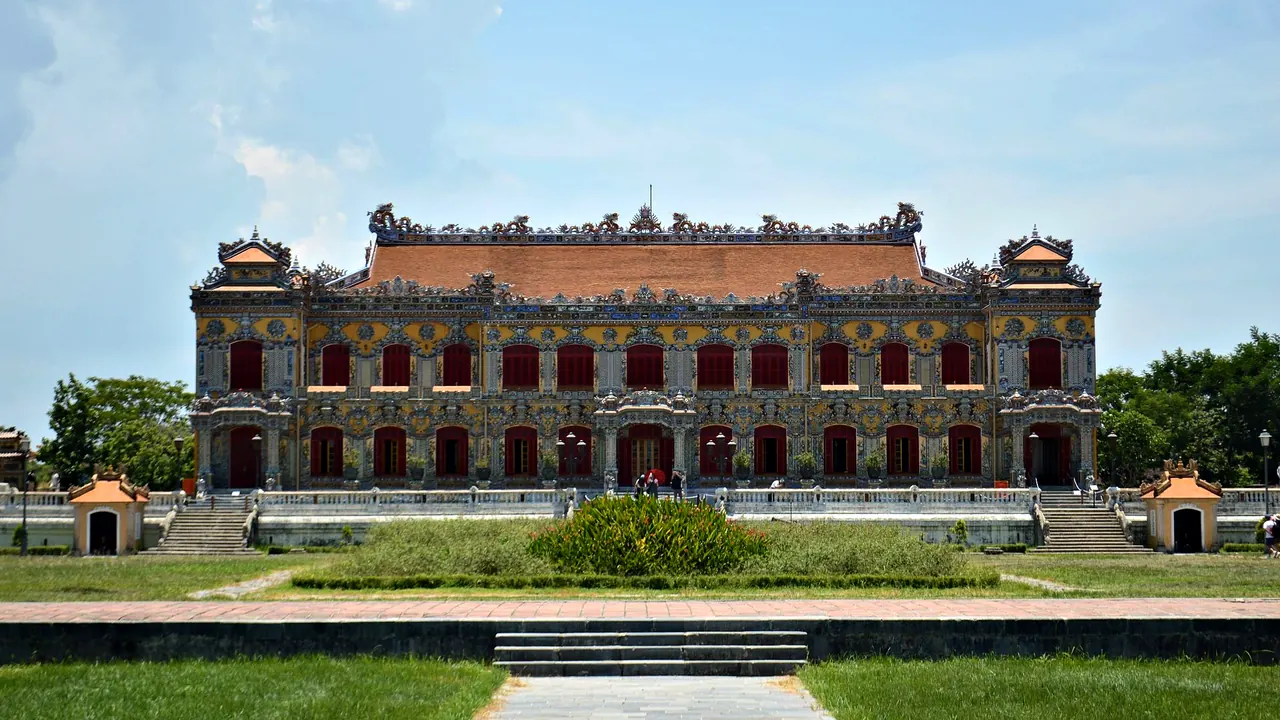
The Kiến Trung Palace in the Imperial City
- Affordable cities97
- Culture & sights78
- Food & drink66
Photo: Valeria Drozdova, Pexels License
Match
50
Every category weighted equally
- Beach & sun52
- Culture & arts53
- Food & nightlife49
- Family trip54
- Outdoors55
- Relax & unwind52
- Shopping & style48
- On a budget56
Hue in twelve categories
Our verdict on each, scored 0 to 100 against the same fixed benchmark cities, so a score means the same thing on every page.
Beaches & swimming. Scores 44 out of 100.
Food & drink. Scores 66 out of 100.
Culture & sights. Scores 78 out of 100.
Nightlife. Scores 26 out of 100.
Nature & outdoors. Scores 56 out of 100.
Day trips. Scores 55 out of 100.
Good for families. Scores 34 out of 100.
Getting around. Scores 42 out of 100.
Shopping & style. Scores 30 out of 100.
Affordability. Scores 97 out of 100.
Live music & performing arts. Scores 32 out of 100.
Wellness & relaxation. Scores 45 out of 100.
Hue category by category
Beaches & swimming
44Hue sits a little inland on the Perfume River, so the beach is an outing rather than part of daily life. Thuan An, about 15km away where the river meets the sea, is a long, plain strip of sand used mostly by local families, with simple seafood shacks behind it. Further south, Lang Co spreads along a curve of sand between a lagoon and the sea, about an hour and a quarter's drive, and makes a much prettier day out.
From roughly April to August the sea is warm, around 28°C, and calm enough to swim. From September to December the rainy season makes the water rough and grey, and swimming mostly stops. Travellers who want beach days usually go on to the coast further south.
Food & drink
66Hue cooks differently from the rest of Vietnam. It is spicier and saltier, and it grew up in the old royal kitchens, which liked many small, careful dishes. Bun bo Hue, a lemongrass beef noodle soup with a chilli kick, is the dish to start with. After that come small rice cakes: banh beo steamed in saucers, banh nam in banana leaf, and crisp banh khoai pancakes. Com hen, rice with baby clams from the river, is a local habit too. Most of it is eaten on low plastic stools at stalls that make one thing well.
The city's many pagodas have given it a strong Buddhist vegetarian tradition, and meat-free restaurants are common. Dong Ba market is good for snacks and sweet che desserts. Beyond that the range is narrow: there is little foreign food and almost no fine dining apart from staged royal banquets.
Culture & sights
78Hue was the capital of the Nguyen emperors from 1802 to 1945, and their city is still there. A moated citadel with walls about 10km round encloses the Imperial City, where the Ngo Mon gate, the Thai Hoa throne hall and the Forbidden Purple City stand among courtyards, lotus ponds and wide empty ground left by the fighting of 1968. Parts are restored and parts are still ruins, which makes the place more moving.
The royal tombs lie upriver among the hills, each with its own character: Tu Duc's lakeside pavilions, Minh Mang's formal axis of gates and terraces, and Khai Dinh's dark concrete and glittering mosaic interior. The seven-storey Thien Mu pagoda on the river bank, the garden houses of Kim Long and a fine royal antiquities museum fill out two or three full days.
Nightlife
26Evenings in Hue are quiet. Going out mostly happens in a few streets on the south bank near the river, where backpacker bars play loud music, sell cheap beer and run happy hours. Away from them, locals drink at street-side beer places with ice in the glass and grilled snacks, and families walk the riverside gardens and the night market by the Truong Tien bridge. There are almost no clubs, and most of the city is asleep well before midnight.
Nature & outdoors
56The Perfume River gives Hue a green, gentle setting. Pine-covered hills hold the royal tombs, and cycling out past the rice fields, villages and garden houses is easy and rewarding. To the east, the Tam Giang lagoon is one of the largest in South-East Asia: fish traps, stilt huts and sunsets over flat water, best seen by boat or bicycle.
About an hour south, Bach Ma National Park climbs to 1,450m through wet forest to waterfalls and old French villa ruins, a cool escape from summer heat. The Hai Van Pass, where the mountains drop straight to the sea, makes a famous ride by motorbike or jeep. From September to December heavy rain and floods put most of this out of reach, and high summer is hot.
Day trips
55Day trips from Hue mostly run north or south along the coast. North of the city lies the former Demilitarised Zone: the Vinh Moc tunnels where villagers lived underground, the Hien Luong bridge on the old dividing line, and the Khe Sanh combat base. Each is about two hours away, and they are usually combined on a long guided day.
South, the road over the Hai Van Pass runs past the fishing village of Lang Co to Da Nang, about two hours by car or by a scenic coastal train. Hoi An's old trading town is a stretch further, and many travellers move on to it rather than going there and back. Closer in, the tiled Thanh Toan bridge and the incense and conical-hat craft villages make easy half-day rides.
Good for families
34Hue is gentle by Vietnamese standards: traffic is lighter, the riverside parks are pleasant, and Vietnamese people make a fuss of children. Dragon boat rides on the Perfume River, cyclo trips, the wide Citadel grounds and cycling through villages work well with older children. But nothing here is built for kids. There are no zoos, aquariums or play attractions, the tombs and palaces are heritage sites, and summer heat or months of autumn rain can wear a young family out quickly. It suits a short stop on a longer trip rather than a family base.
Getting around
42Central Hue is small and flat. The south-bank hotel area, the riverside and the Citadel across the Truong Tien bridge are all within walking or easy cycling distance, though pavements are often taken over by parked motorbikes and food stalls. Bicycles and cyclos suit the town well.
The royal tombs are spread several kilometres upriver, and there is no city transport a visitor would use to reach them. People hire a taxi, a ride-hailing car, a motorbike with driver or a boat, or join a tour. Traffic is calmer than in Vietnam's big cities, but crossing streets still takes some nerve.
Shopping & style
30Shopping in Hue is local and practical. Dong Ba market by the river is the centre of it: a large, crowded hall of fabric, dried goods, kitchenware and snacks, with conical hats and souvenirs at the edges. Hue's own specialities are the thin conical hats with poems hidden in the layers of leaf, sesame candy and pressed rice cakes, and incense from the craft village of Thuy Xuan, where the drying sticks make bright fans of colour. Tailors and a few silk and art shops sit in the hotel streets. There is no fashion or design shopping to speak of.
Affordability
97Hue is one of the cheapest places to stay in Vietnam. Comfortable guesthouses and good mid-range hotels cost very little, and a bowl of noodles or a plate of rice cakes at a stall costs next to nothing. Taxis, cyclos and bicycle hire are cheap. The main extra costs are the entry tickets to the Imperial City and the tombs, staged royal dinners, and the handful of upscale riverside resorts. Even so, a visitor's money goes a very long way here.
Live music & performing arts
32Hue's performing arts come from its royal past. Nha nhac, the court music of the Nguyen emperors, is performed for visitors in the Citadel, sometimes in the old royal theatre. In the evenings, ca Hue singers perform folk and court songs on small dragon boats drifting along the Perfume River, with lanterns floated on the water. Both are lovely, if made for tourists. The long-running Hue Festival brings a broader programme of performances to the city in its season. Otherwise there is no regular theatre, classical or live-music scene.
Wellness & relaxation
45Hue has a slow, inward-looking pace that suits unwinding. The city has many pagodas and quiet garden houses in Kim Long, morning tai chi by the river, and evenings without much noise. Massage and foot-reflexology places are everywhere and inexpensive, and the riverside resorts have proper spas. In the hills north-west of the city, the mineral hot springs at Thanh Tan, about an hour away, have pools and mud baths for a day of soaking. There is no bathing tradition in the city itself, so the restful side of Hue comes more from its calm than from its spas.
When should you go?
Pick a month to see what it is like. The climate figures are measured averages, not a forecast.
Hue in July
Daytime high, °C
Rainfall in the month, mm
The whole year
Shaded against this city’s own year: the deepest cell is its best month for that figure and the palest its weakest.
Temperature and rainfall are climate normals, averaged over the years shown. Hue: 1991-2020 normals, Hue (13 km from centre).
Before you go
| Measure | Hue |
|---|---|
| Official language | Vietnamese |
| Currency | Dong (VND) |
| Sockets | ACFG220 V, 50 Hz |
| Driving side | Right |
| Time zone | UTC+7 |
| Emergency number | Police 113, ambulance 115, fire 114 |
| Elevation | 12 m |
| Main airport | Phu Bai International Airport (HUI)15 km from centre3 non-stop destinations |
By the numbers
| Measure | Hue |
|---|---|
| City population | 652,572 |
| People per km² | 2,453 |
| Museums within 10 km | 2 |
| UNESCO World Heritage sites within 50 km | 1 |
| Swim season, months above 21 °C | 12 months |
Compare Hue with
Every comparison with a written verdict behind it.