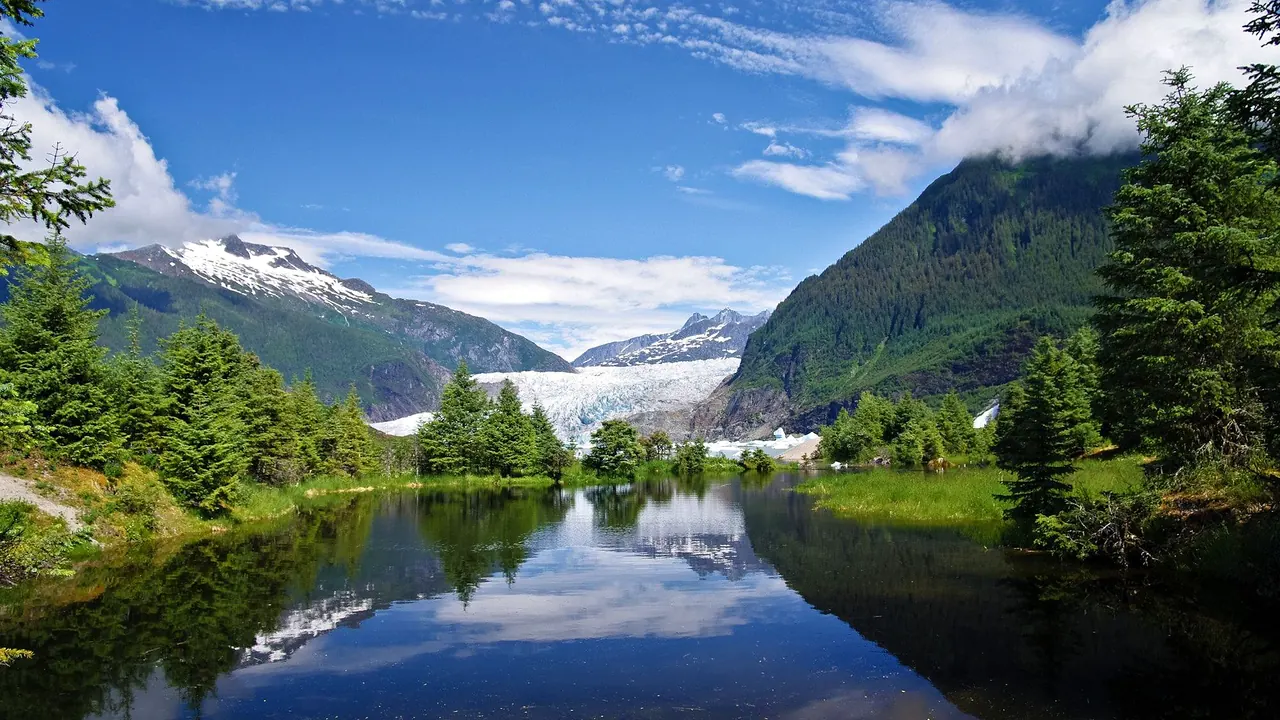
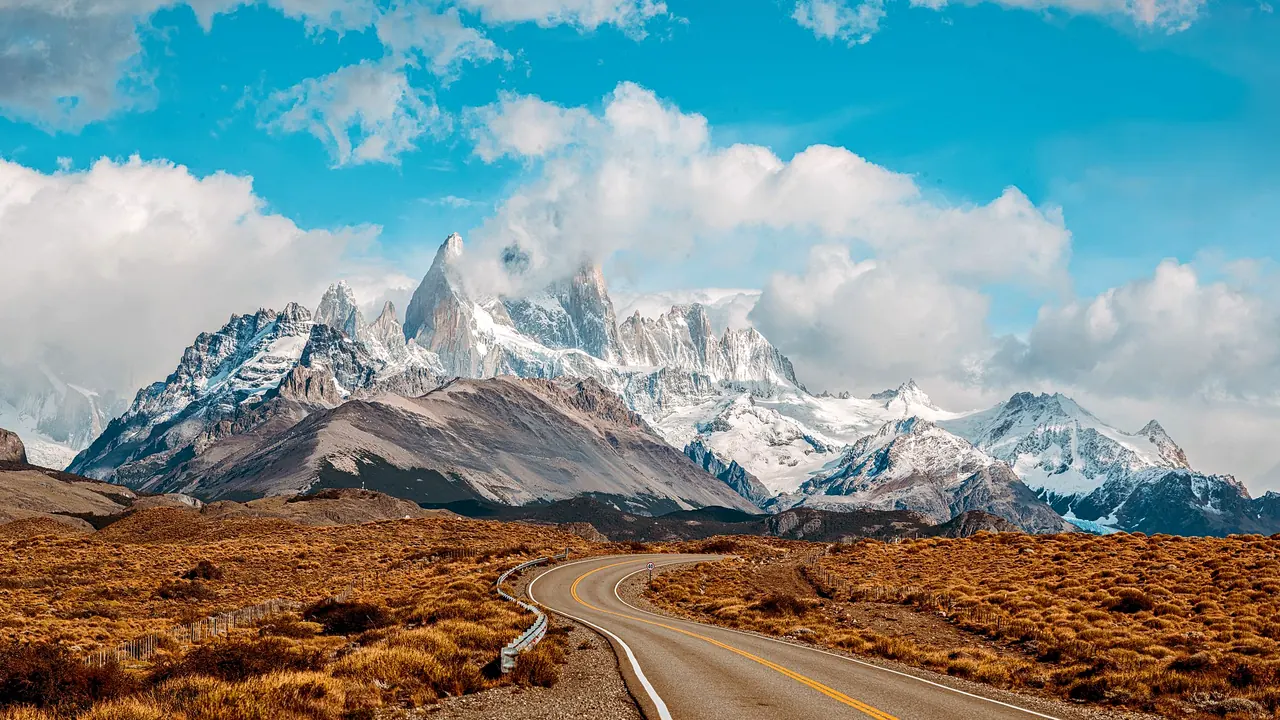
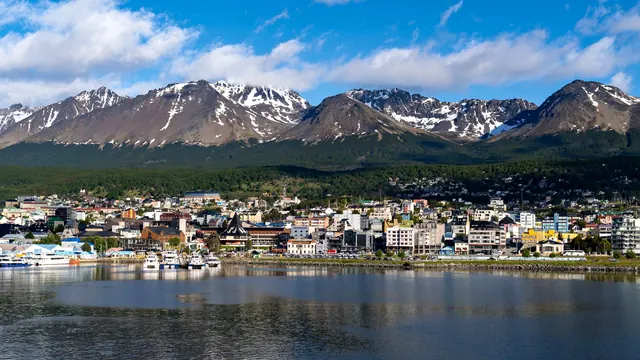
Photos: Alaska by Spoorthy Vemula, CC BY 3.0, cropped; Patagonia by Ema Reynares, Pexels License.
Alaska or Patagonia?
Our verdict in twelve categories, each scored against the same fixed benchmark cities, and the climate month by month, so you can choose for your trip.
Choose Alaska for
- live music and the arts
- culture and sights
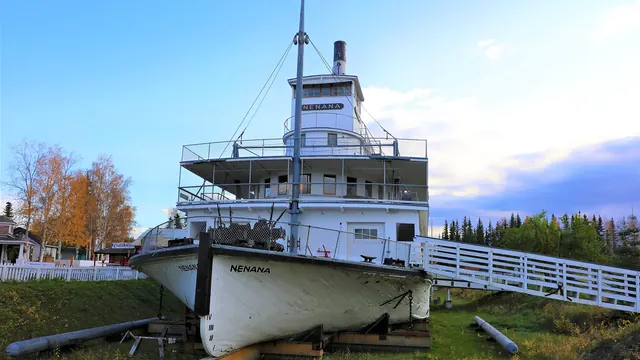
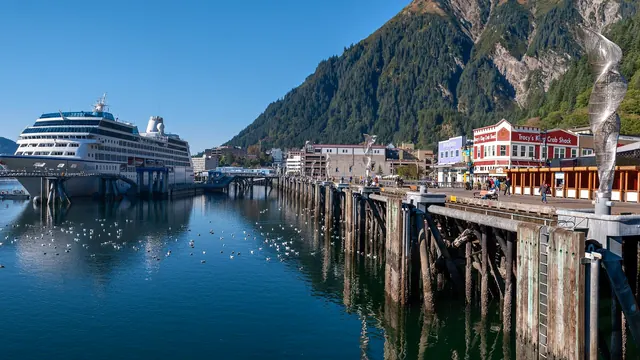
Alaska suits travellers who want bears, whales and tidewater glaciers in a northern summer and have the budget for it. Its Indigenous, Russian and gold rush heritage in Anchorage, Sitka and Skagway, and the Native drumming and dancing staged in summer, give you a little more to do off the trail. A cruise along the Inside Passage lets you see a lot with little planning. Alaska is also a winter destination, with the aurora, dog sledding and hot springs.
Choose Patagonia for
- prices
- beaches
- nightlife
Pick Patagonia if your money is tighter or your free time falls in the southern summer. A comparable trip costs clearly less, the El Chaltén trails are free to walk, and Bariloche has brewpubs, clubs and long Argentine dinners that Alaska's small towns cannot match. Families do a little better here too, with penguins and whales around Puerto Madryn and easy lake trips from Bariloche.
Scoreboard
Twelve categories on one fixed scale from 0 to 100. The shaded stretch is the gap between the two.
Your match
Pick a travel style or drag the sliders, and both match scores follow your weighting.
Wins on live music and the arts and culture and sights with your weighting.
Wins on prices and beaches with your weighting.
What matters to you?
Category by category
What the scores mean for a trip.
Beaches & swimming
Neither is a place to swim, but Patagonia has the one real exception. Alaska's sea stays cold even in late summer, and its shores are rock, glacial silt and mudflat, good for beachcombing and watching sea otters but not for a day in the water.
Patagonia's Andean lakes around Bariloche are bracing too. Las Grutas on the Gulf of San Matías, though, warms up in high summer and fills with Argentine families. It is a long way from the mountains, so treat it as a detour rather than a plan.
Food & drink
Both regions eat best from the wild: Alaska from the sea, Patagonia from the land. Alaska's highlights are wild salmon, halibut and king crab at harbour smokehouses in Homer or Sitka. Outside Anchorage the choice thins out quickly, and many places close out of season.
Patagonia has a little more range. There is lamb slow-roasted over an open fire, Andean trout and venison, and Bariloche's chocolate makers and craft beer. On top of that come Welsh afternoon teas in Gaiman and cool-climate wine from the Neuquén valley.
Culture & sights
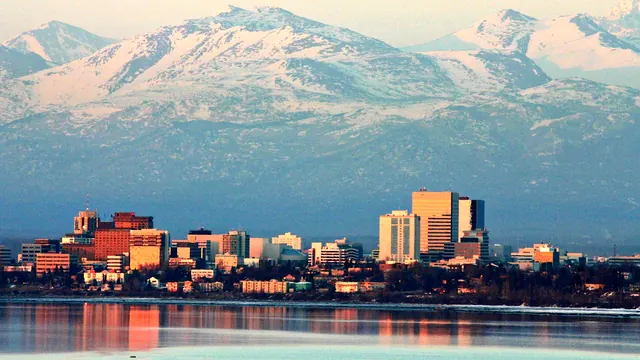
Alaska has slightly more to see. Anchorage holds two serious collections on Arctic art and Native cultures. Sitka and Ketchikan add Russian domes and totem poles, and Skagway keeps its Klondike-era main street.
Patagonia's heritage is older but more spread out. It includes the stencilled hands of the Cueva de las Manos, far off the usual routes, the dinosaur museums of Trelew and Neuquén, and the Welsh chapels of the Chubut valley. In both regions a sight fills an hour or two, not a day.
Nightlife
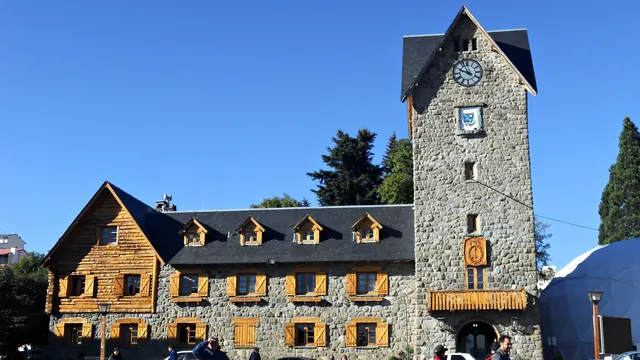
Patagonia has the only real night out of the two, in Bariloche, where brewpubs, wine bars and large clubs stay open into the early hours, with an après crowd in ski season. An evening in Alaska means a brewpub or an old frontier saloon with sawdust on the floor, worth a drink but not a late night. Away from Bariloche, both regions come down to hikers' beer bars and an early night before a dawn boat.
Nature & outdoors
The two are level here, and the choice comes down to what you want to see. Alaska is about bears, whales and ice: grizzlies on Denali's tundra, Kenai Fjords cruises, bears fishing at Katmai, the tidewater glaciers of Glacier Bay, and the aurora in winter.
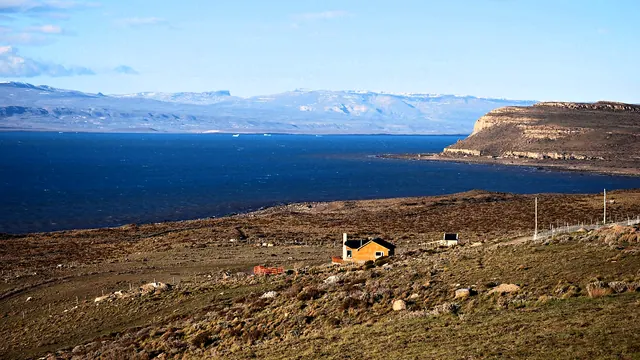
Patagonia is about rock, wind and coast: the granite spires of Fitz Roy, the Perito Moreno glacier collapsing into its lake, the forested Lakes District and right whales and penguins on Península Valdés. In Alaska you mostly see the wilderness by boat and floatplane. Patagonia rewards long days on foot.
Day trips
Neither has many towns worth a day out, but Patagonia has a little more choice. From Bariloche you can easily reach lakeside Villa La Angostura, Colonia Suiza and El Bolsón's craft market, and from Puerto Madryn the Welsh teas of Gaiman make a pleasant half day.
Alaska's outings from Anchorage, to Girdwood, Seward or Talkeetna with its log cabins, are mostly gateways to glaciers and wildlife. Skagway's gold rush streets need a boat from Juneau.
Good for families
Both suit outdoor families rather than those wanting theme parks, and Patagonia is slightly the easier of the two. Around Puerto Madryn children can watch whales from the shore and walk among penguins. Bariloche adds chairlifts, chocolate shops and gentle ski slopes, and Argentine restaurants welcome children at late dinners.
Alaska has the SeaLife Center in Seward, gold panning and moose by the roadside. Its wildlife tours run long, though, and summer is cool and often wet, and the bright nights make blackout curtains worth packing.
Getting around
Both are huge and slow to cross, but they are crossed in different ways. In Alaska you choose between the sea route along the Inside Passage, where the towns have no road link, and the road and rail corridor from Anchorage to Denali and Fairbanks. The Alaska Railroad along that corridor is a highlight in its own right.
Patagonia's main areas are a domestic flight apart, so the usual plan is to stay a few nights each in Bariloche, El Calafate or Puerto Madryn and use tours and local buses from there. Drivers in both regions meet long gravel stretches, and in Patagonia strong crosswinds as well.
Shopping & style
Neither is a shopping destination. In Alaska the buys worth having are Native baskets, carvings and qiviut knitwear, bought from named makers in Anchorage, while the shops in the cruise ports all sell much the same.
Patagonia is slightly better for browsing. Bariloche has chocolate and wool knitwear along its main street, and El Bolsón's craft fair sells handmade woodwork, ceramics and weaving.
Affordability
This is where the two differ most. Alaska has a short summer season, food and fuel are shipped in, and a typical trip is built on paid glacier cruises, flightseeing and floatplane bear viewing. Together these make it costly even compared with the rest of the United States.
Patagonia is the expensive corner of Argentina, and domestic flights and glacier boat trips add up quickly, but overall it still costs clearly less. With free trails around El Chaltén and hostels and parrillas in every town, a lean trip is realistic there in a way Alaska rarely allows.
Live music & performing arts
Live performance is thin in both, though Alaska has a little more. Anchorage's performing arts centre hosts a symphony and a small opera company in winter, Juneau has a long-standing theatre and Sitka holds a chamber music festival in June. In summer, several towns stage Native drumming and dancing.
Patagonia offers summer chamber concerts in Bariloche, the occasional chacarera folk night and Welsh choirs in Chubut. Most evenings there simply end at dinner.
Wellness & relaxation
Patagonia is slightly the calmer trip. Lakeside lodge spas near Villa La Angostura and slow estancia stays, with horse rides and almost no phone signal, fit rest into an ordinary itinerary. Remote Copahue adds thermal pools and mud treatments.
Alaska's draw is its hot springs, above all an outdoor soak at Chena under the winter aurora, along with a Nordic-style spa in Girdwood. A summer itinerary of early boats and long drives, though, leaves less room to unwind.
When should you go?
Pick your month. The climate figures are measured averages, not a forecast.
Alaska in July
Patagonia in July
Daytime high, °C
Rainfall in the month, mm
Temperature and rainfall are climate normals, averaged over the years shown. Alaska: 1991-2020 (sunshine 1981-2010, rainfall 1981-2010) normals, Anchorage Air Force Base (7.2 km from centre). Patagonia: 1991-2020 normals, Bariloche Aerodrome (12.2 km from centre).
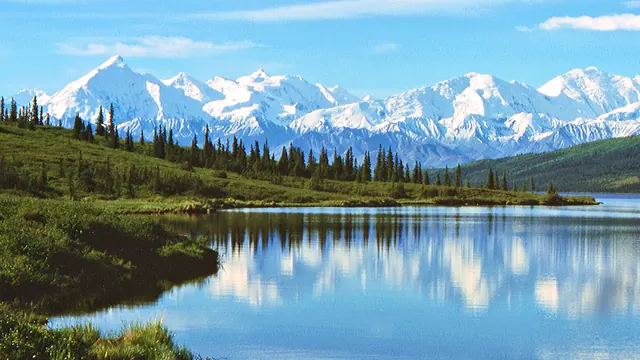
Alaska's season is short and northern. Where most visitors stay, July reaches about 20°C. June is the sunniest month, with very long days for hiking and boat trips. From August the rain builds to 82mm, and by October the days are cold enough for a hat and gloves. The sea peaks at about 14°C in August, so a swim is a dare rather than a plan. Winter is dark and well below freezing, and that is the season for the aurora and dog sledding.
Patagonia runs on the opposite calendar. Around Bariloche and the Lakes District, where its figures are measured, December to February are warm, dry and very sunny, with highs around 23°C. March is still good for walking. From May the rain sets in hard and peaks at 172mm in June, and the cold months belong to the ski slopes. Further south, around El Calafate, El Chaltén and Ushuaia, summers are cooler and the wind rarely drops, so pack layers even in January. The two seasons barely overlap: go to Alaska in the northern summer and to Patagonia in the southern one.
Which traveller are you?
On a trip on a tight budget, Patagonia goes further. Base yourself in one area, arrive by long-distance bus and spend your days on foot, saving up for a single glacier boat. In Alaska, even camping, self-catering and the shoulder months still leave a large bill.
For a culture and arts trip, Alaska comes out a little ahead, though neither is really a culture destination. The Anchorage Museum, the Alaska Native Heritage Center, Sitka's Russian buildings and totem trail, and the Native dancing staged in summer give you more than Patagonia's scattered chapels and fossils.
On a food and nightlife trip, Patagonia is the better choice. Lamb roasted over a fire at a ranch, Pinot Noir from Neuquén and Bariloche's brewpubs and late clubs add up to a proper evening out. Alaska serves superb salmon and crab, but after dinner there is little beyond a saloon.
Before you go
| Measure | Alaska | Patagonia |
|---|---|---|
| Official language | - | Spanish |
| Currency | US Dollar (USD) | Argentine Peso (ARS) |
| Sockets | AB120 V, 60 Hz | CI220 V, 50 Hz |
| Driving side | Right | Left |
| Time zone | UTC-9, UTC-8 in summer | UTC-3 |
| Emergency number | 911 | 117 or 911 |
| Main airport | Ted Stevens Anchorage International Airport (ANC)49 non-stop destinations | Teniente Luis Candelaria International Airport (BRC)17 non-stop destinations |
| Public holidays this year | 12 days | 16 days |
By the numbers
| Measure | Alaska | Patagonia |
|---|---|---|
| Population | 733,391 | - |
| Swim season, months above 21 °C | None | - |
Where else could you go?
Every comparison below shares a destination with this one, so you can follow Alaska or Patagonia somewhere new.
- Canadian Rockiesvs Alaska
- Hawaiivs Alaska
- Norwegian Fjordsvs Alaska
- South Islandvs Patagonia
- Canadian Rockiesvs Patagonia
- Swiss Alpsvs Patagonia