Argentina
Ushuaia
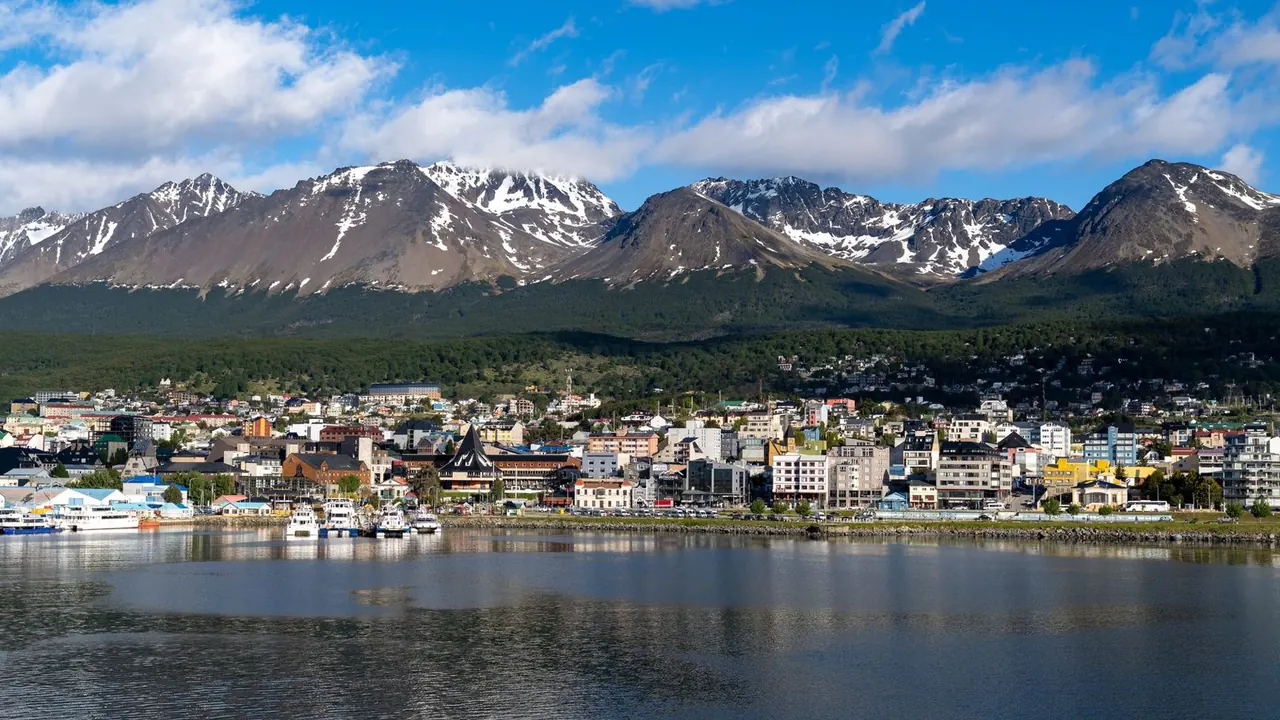
Ushuaia below snow-capped mountains
- Nature & outdoors88
- Getting around45
- Affordable cities42
Photo: Jan Tang, Pexels License
Match
31
Every category weighted equally
- Beach & sun30
- Culture & arts28
- Food & nightlife27
- Family trip35
- Outdoors37
- Relax & unwind32
- Shopping & style29
- On a budget32
Ushuaia in twelve categories
Our verdict on each, scored 0 to 100 against the same fixed benchmark cities, so a score means the same thing on every page.
Beaches & swimming. Scores 3 out of 100.
Food & drink. Scores 40 out of 100.
Culture & sights. Scores 22 out of 100.
Nightlife. Scores 18 out of 100.
Nature & outdoors. Scores 88 out of 100.
Day trips. Scores 14 out of 100.
Good for families. Scores 40 out of 100.
Getting around. Scores 45 out of 100.
Shopping & style. Scores 22 out of 100.
Affordability. Scores 42 out of 100.
Live music & performing arts. Scores 10 out of 100.
Wellness & relaxation. Scores 26 out of 100.
Ushuaia category by category
Beaches & swimming
3Ushuaia sits on the sea, but swimming is not part of a stay here. The Beagle Channel stays at about 5-9°C even in midsummer, the shore is rock, shingle and kelp, and the wind off the channel rarely drops. Anyone who goes in is doing a polar plunge, not having a swim. If water matters to you, plan to see it from the deck of a boat.
Food & drink
40The reason to eat well here is the cold sea. Southern king crab, called centolla, is the local signature, served plain, au gratin or in chowder, alongside Patagonian toothfish, mussels from the channel and lamb roasted whole on iron crosses over an open fire. The main streets of the small centre have a cluster of seafood restaurants and parrillas that cater to visitors. Cafés with cakes and hot chocolate do steady trade on cold afternoons.
Beyond those specialities the range is narrow. There is little street food and no real market culture, and many menus repeat each other. Dinner keeps the late Argentine hours, which makes for long, unhurried evenings.
Culture & sights
22The one major sight is the old penal colony. The prison, built in the early twentieth century to hold convicts at the edge of the country, now houses the Maritime Museum, with radial cell blocks, displays on prison life and exhibits on navigation and Antarctic exploration. Smaller museums cover the Yámana and other peoples of Tierra del Fuego and the town's frontier history. In the streets, wooden and corrugated-iron houses from the pioneer era sit among plain modern buildings. A curious visitor can see it all in a day. People come here for the setting, not for the sights.
Nightlife
18Evenings here mean a long dinner and then a drink in one of a few pubs or brewpubs pouring local craft beer. There's a casino and the odd late bar, and Argentine habits keep things going later than you might expect this far south. But most visitors have boat trips or treks the next morning, and there's no club scene worth crossing town for.
Nature & outdoors
88This is the real reason to come. The town is squeezed between the Martial mountains and the Beagle Channel, and wild country starts at its back door. Tierra del Fuego National Park, a short drive west, has trails through southern beech forest to lakes, peat bogs and the channel shore. Hikes from the edge of town climb to the Martial Glacier and to the turquoise Laguna Esmeralda. Boat trips on the channel pass sea lion and cormorant colonies and the lighthouse on its rocky islet, and some go on to a penguin colony.
In winter the same valleys turn to snow. There's downhill skiing at Cerro Castor and cross-country trails and dog-sledding in the valleys near town. The weather can bring four seasons in an afternoon, and summer days are long but rarely warm. The town is also the main port for ships to Antarctica.
Day trips
14There are few other places to visit. Estancia Harberton, the island's oldest ranch, founded by a missionary family in the nineteenth century, makes a good day out by road or boat, with its original buildings and a marine mammal museum. Tolhuin, a small lakeside village to the north, is a common stop on the way to Lago Fagnano, and you can cross the channel by boat to Puerto Williams in Chile. Beyond those, the excursions here are into landscape rather than towns.
Good for families
40Children tend to love the wildlife: sea lions and penguins seen from a boat, snow in winter and the small steam train that runs into the national park along an old convict railway line. The town is small, safe and easy to manage. Otherwise there is little made for children, with no zoo, aquarium or theme park, and the cold, wind and sudden rain make long outdoor days hard on young ones. Families who like walking and wildlife do well here. Families who need entertainment laid on will run out of things to do.
Getting around
45The centre is a compact grid along the waterfront, easy to walk, though streets climb steeply up the hillside behind it and can be icy in winter. Local buses run, but they're not much use to a visitor. Trips to the national park, the glacier trailhead or the ski area mean shuttles, taxis, tours or a hire car, all of which are easy to arrange. Boat excursions leave from the pier in the centre of town.
Shopping & style
22Most of the shopping is on the main street running parallel to the waterfront. It's mainly souvenir shops selling penguin trinkets, chocolate and wool, plus outdoor shops that are handy for a forgotten fleece or a pair of gloves. Tierra del Fuego has a special tax regime, so some goods cost less than elsewhere in Argentina, but there's no fashion, design or market scene to speak of.
Affordability
42For Argentina, Ushuaia is expensive. Everything comes a long way, the summer season is short, and many visitors are on cruises or on their way to Antarctica, which pushes up prices for rooms and excursions. Boat trips, guided treks and park entry add up quickly, and so do the taxis needed to reach trailheads. Meals at casual places and hostels stay reasonable. Visiting in spring or autumn, outside the peak summer months, eases the cost of a room.
Live music & performing arts
10There is little to attend. The town has a cultural centre with occasional concerts and local productions, and the odd pub has live music. But there's no regular theatre, classical or music programme for a visitor to plan around.
Wellness & relaxation
26There's no bathing tradition here, and wellness means the spas in the larger hotels, some of them in the forest above town with views over the channel. The pace helps more than the facilities: once the cruise passengers have gone, the town is quiet, and a long walk followed by an afternoon by a window watching the weather over the mountains is a fair description of rest here.
When should you go?
Pick a month to see what it is like. The climate figures are measured averages, not a forecast.
Ushuaia in July
Daytime high, °C
Rainfall in the month, mm
The whole year
Shaded against this city’s own year: the deepest cell is its best month for that figure and the palest its weakest.
Temperature and rainfall are climate normals, averaged over the years shown. Ushuaia: 1991-2020 normals, Ushuaia Aerodrome (1 km from centre).
Before you go
| Measure | Ushuaia |
|---|---|
| Official language | Spanish |
| Currency | Argentine Peso (ARS) |
| Sockets | CI220 V, 50 Hz |
| Driving side | Left |
| Time zone | UTC-3 |
| Emergency number | 117 or 911 |
| Elevation | 23 m |
| Main airport | Ushuaia - Malvinas Argentinas International Airport (USH)4 km from centre9 non-stop destinations |
| Public holidays this year | 16 days |
By the numbers
| Measure | Ushuaia |
|---|---|
| City population | 82,615 |
| People per km² | 3,592 |
| Museums within 10 km | 5 |
| UNESCO World Heritage sites within 50 km | 0 |
Compare Ushuaia with
Every comparison with a written verdict behind it.