Argentina
Bariloche
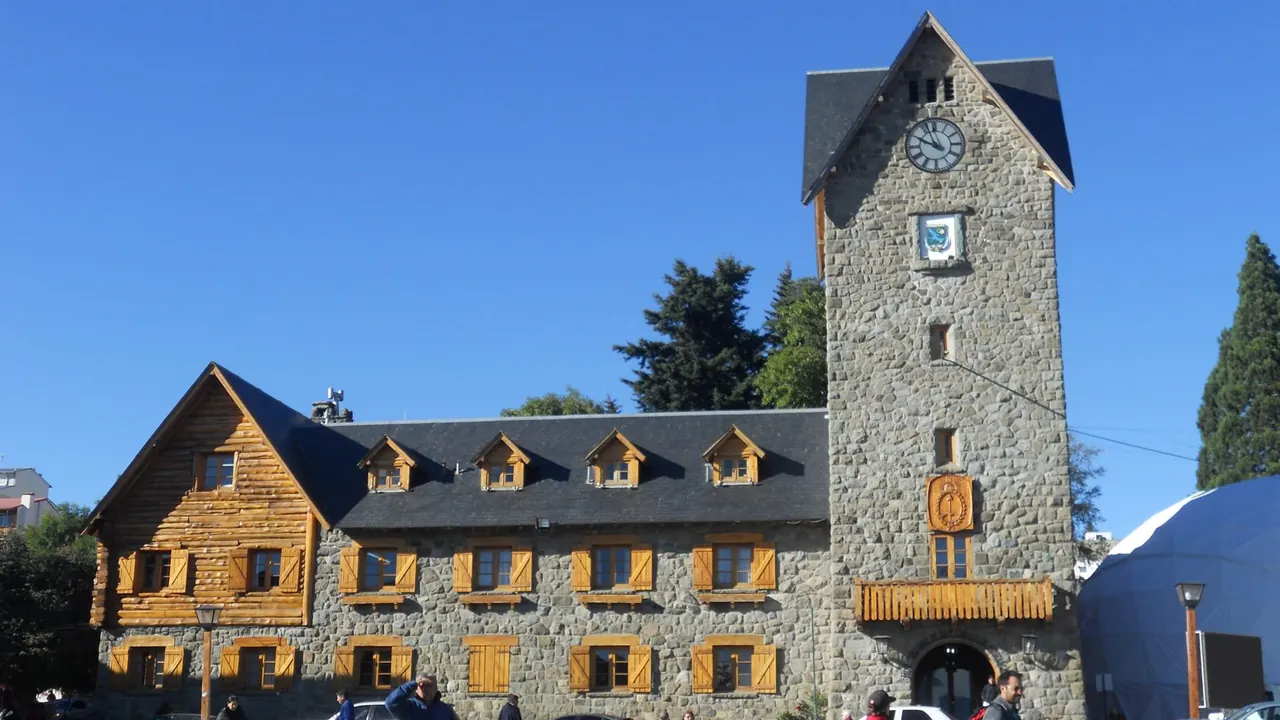
The Centro Civico and its clock tower
- Nature & outdoors94
- Families55
- Affordable cities46
Photo: Maclemo, CC BY-SA 3.0, cropped
Match
42
Every category weighted equally
- Beach & sun43
- Culture & arts38
- Food & nightlife38
- Family trip46
- Outdoors49
- Relax & unwind44
- Shopping & style39
- On a budget43
Bariloche in twelve categories
Our verdict on each, scored 0 to 100 against the same fixed benchmark cities, so a score means the same thing on every page.
Beaches & swimming. Scores 27 out of 100.
Food & drink. Scores 44 out of 100.
Culture & sights. Scores 27 out of 100.
Nightlife. Scores 33 out of 100.
Nature & outdoors. Scores 94 out of 100.
Day trips. Scores 38 out of 100.
Good for families. Scores 55 out of 100.
Getting around. Scores 44 out of 100.
Shopping & style. Scores 33 out of 100.
Affordability. Scores 46 out of 100.
Live music & performing arts. Scores 27 out of 100.
Wellness & relaxation. Scores 40 out of 100.
Bariloche category by category
Beaches & swimming
27Bariloche sits on a lake, not a sea, and its beaches are pebble and sand strips along Nahuel Huapi and the smaller lakes around it. Playa Bonita and Villa Tacul on the main lake, and the shores of Lago Gutiérrez and Lago Moreno, are lovely places to sit in the sun in January and February, with snow-streaked peaks across the water.
Swimming is another matter. The water comes off glaciers and stays cold even in high summer, rarely much above 15°C, so most visitors manage a quick, bracing dip rather than a long swim. The smaller, shallower lakes warm slightly more than Nahuel Huapi. Treat the shore as a picnic spot, not the purpose of the trip.
Food & drink
44Eating in Bariloche follows the mountain-town script with a Patagonian accent. Lamb roasted slowly on an iron cross over an open fire, lake trout, wild boar, smoked meats and cheeses, and venison feature on most menus, alongside fondue and the Argentine parrilla. Chocolate is the town's emblem: Calle Mitre is lined with chocolatiers selling slabs, branches of rough chocolate and hot chocolate, a tradition carried in by Central European settlers.
The other strength is beer. Small breweries dot the road towards Cerro Catedral and the Circuito Chico, many with lake-view gardens for an afternoon pint. Beyond that the range is narrow, the centre leans on tourist menus, and fine dining is limited to a few lodge and hotel kitchens.
Culture & sights
27The town's main sight is its architecture. The Centro Cívico, a square of grey stone and dark timber buildings designed in the 1930s by Ernesto de Estrada and Alejandro Bustillo, gave Bariloche its alpine look, and the Museo de la Patagonia beside it covers the Mapuche peoples, settlers and natural history of the region. The neo-Gothic cathedral stands above the lake a short walk east.
Out along the Circuito Chico, the Llao Llao hotel and its little wooden chapel of San Eduardo are Bustillo's other landmarks. That is about the list. Visitors come for what surrounds the town, and a morning covers its sights.
Nightlife
33Bariloche has a peculiar night-time reputation in Argentina: it is the classic destination for school-leavers' graduation trips, and big dance clubs in the centre fill with groups of teenagers through the winter and spring, running until dawn in the Argentine way. For adult visitors that scene is mostly something to avoid.
What remains is relaxed. Evenings revolve around late dinners, brewpubs and a few bars around Calle Mitre and the lakefront, busier in the ski season and in January. It is a place where a good night means a long meal and a beer by the fire after a day outdoors.
Nature & outdoors
94This is the reason to come. Bariloche lies inside Nahuel Huapi National Park, on a vast glacial lake ringed by Andean peaks, forests of coihue and lenga, and smaller lakes in every fold of the land. Cerro Catedral, the largest ski area in South America, is about half an hour away, and in summer its slopes lead into a network of trails linking mountain refuges such as Frey and Jakob, with granite spires and high lakes.
Closer in, chairlifts and cable cars climb Cerro Campanario and Cerro Otto for wide lake views, the Circuito Chico loop is a classic by bike, and there is kayaking, fly fishing for trout, horse riding and boat trips. Further out, Cerro Tronador's hanging glaciers make a long day. Winter means snow; summer, from December to March, is hiking season.
Day trips
38Most outings from Bariloche are into scenery rather than to other places. Of the towns, Villa La Angostura, a quiet lakeside village of wooden houses and gardens about an hour and a half away along the north shore, is the most rewarding. Colonia Suiza, a settlers' hamlet a short drive west, is known for its weekend craft fair and curanto, a meal cooked in an earth pit.
South, about two hours away, El Bolsón has a hippie-leaning craft market and hop farms in a warmer valley. San Martín de los Andes and the Seven Lakes road are too far for a comfortable return day. There are no heritage sites or wine regions within reach.
Good for families
55Bariloche works well for families who like being outdoors. In winter Cerro Catedral has ski schools and gentle slopes, and Cerro Otto has a snow park for sledging; in summer there are lake shores for paddling, easy forest walks, boat trips to Isla Victoria and cable cars with big views. The chocolate shops on Calle Mitre, some with displays and workshops, are a reliable treat, and the St Bernard dogs posing in the Centro Cívico are a local fixture.
The town is safe and Argentine culture welcomes children at the table late into the evening. What it lacks is anything built purely for children: no zoo, aquarium or theme park, and a rainy day can drag.
Getting around
44The centre is small and walkable, though steep streets climb from the lakefront. The problem is that Bariloche stretches for about 25km along the lake, along Avenida Bustillo, and most lodgings, viewpoints and trailheads lie out along that road or up the side valleys.
City buses on a rechargeable card run along Bustillo to Llao Llao and up to Cerro Catedral, and they are usable, if crowded in ski season. Beyond those lines, for Circuito Chico at your own pace, Villa La Angostura or Cerro Tronador, most visitors rent a car, cycle part of the way or join tours. Winter snow and ice can make driving demanding.
Shopping & style
33Shopping in Bariloche happens on and around Calle Mitre, the main street, and it is mostly about two things: chocolate in every form, and mountain wear. Alongside them are shops selling Patagonian wool knitwear, leather, smoked trout and preserves, and outdoor and ski gear.
The craft fair near the Centro Cívico and the weekend market at Colonia Suiza add woodwork, ceramics and Mapuche-style textiles. There is no luxury fashion, little in the way of design boutiques and no real department store. Buy chocolate and a good sweater, and leave it there.
Affordability
46Bariloche is one of Argentina's most expensive places to visit. It is the country's main mountain resort, and hotels, cabins and restaurants charge resort prices, highest during the July winter school break and in January. Ski passes and rental at Cerro Catedral add up quickly, and organised excursions are not cheap.
There are ways to keep it moderate. Hostels and cabins in the side valleys, self-catering, city buses and free hiking in the national park cut costs a lot, and spring and autumn are noticeably cheaper than the peak weeks.
Live music & performing arts
27For a mountain town, Bariloche has a respectable classical connection. The Camerata Bariloche, a chamber orchestra that grew out of a music festival held here in the 1960s, carries the town's name, and the Semana Musical Llao Llao is a yearly week of chamber concerts at the Llao Llao hotel above the lake. A small municipal theatre and cultural centres host local theatre and concerts.
That said, most evenings offer little to attend beyond occasional folk music in a bar or a touring show. A visitor who wants performances will mostly find them by chance.
Wellness & relaxation
40Bariloche has no bathing culture of its own and no thermal springs close by. Wellness here means the spas of the larger lakeside hotels and lodges, the grand old Llao Llao among them, with indoor pools, saunas and treatments after a day on the slopes or trails.
The restorative part is the setting. Stay out along the lake or in the wooded valleys towards Llao Llao and Colonia Suiza, and the days settle into a slow rhythm of lake views, fires and long dinners. The town centre is less soothing, with traffic and busloads of student groups in season, so choose your base away from it if rest is the aim.
When should you go?
Pick a month to see what it is like. The climate figures are measured averages, not a forecast.
Bariloche in July
Daytime high, °C
Rainfall in the month, mm
The whole year
Shaded against this city’s own year: the deepest cell is its best month for that figure and the palest its weakest.
Temperature and rainfall are climate normals, averaged over the years shown. Bariloche: 1991-2020 normals, Bariloche Aerodrome (11.2 km from centre).
Before you go
| Measure | Bariloche |
|---|---|
| Official language | Spanish |
| Currency | Argentine Peso (ARS) |
| Sockets | CI220 V, 50 Hz |
| Driving side | Left |
| Time zone | UTC-3 |
| Emergency number | 117 or 911 |
| Elevation | 794 m |
| Main airport | Teniente Luis Candelaria International Airport (BRC)12 km from centre17 non-stop destinations |
| Public holidays this year | 16 days |
By the numbers
| Measure | Bariloche |
|---|---|
| City population | 136,381 |
| People per km² | 619 |
| Museums within 10 km | 3 |
| UNESCO World Heritage sites within 50 km | 0 |
Compare Bariloche with
Every comparison with a written verdict behind it.