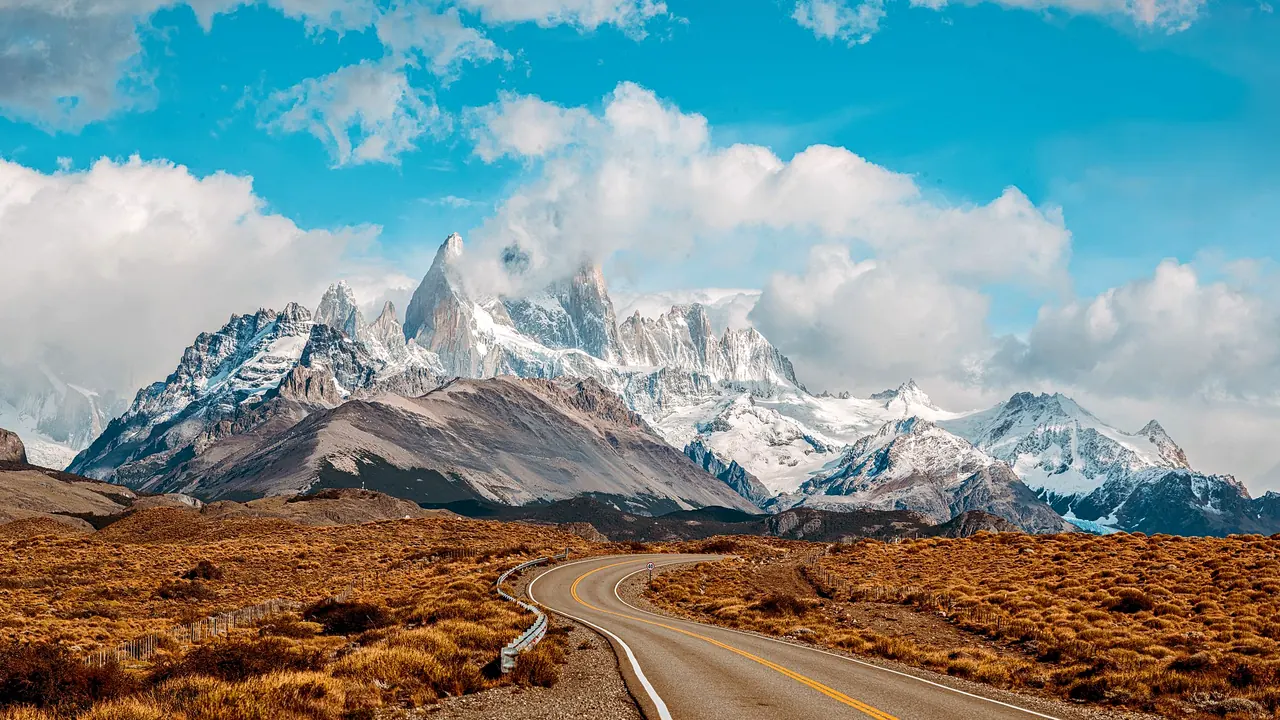
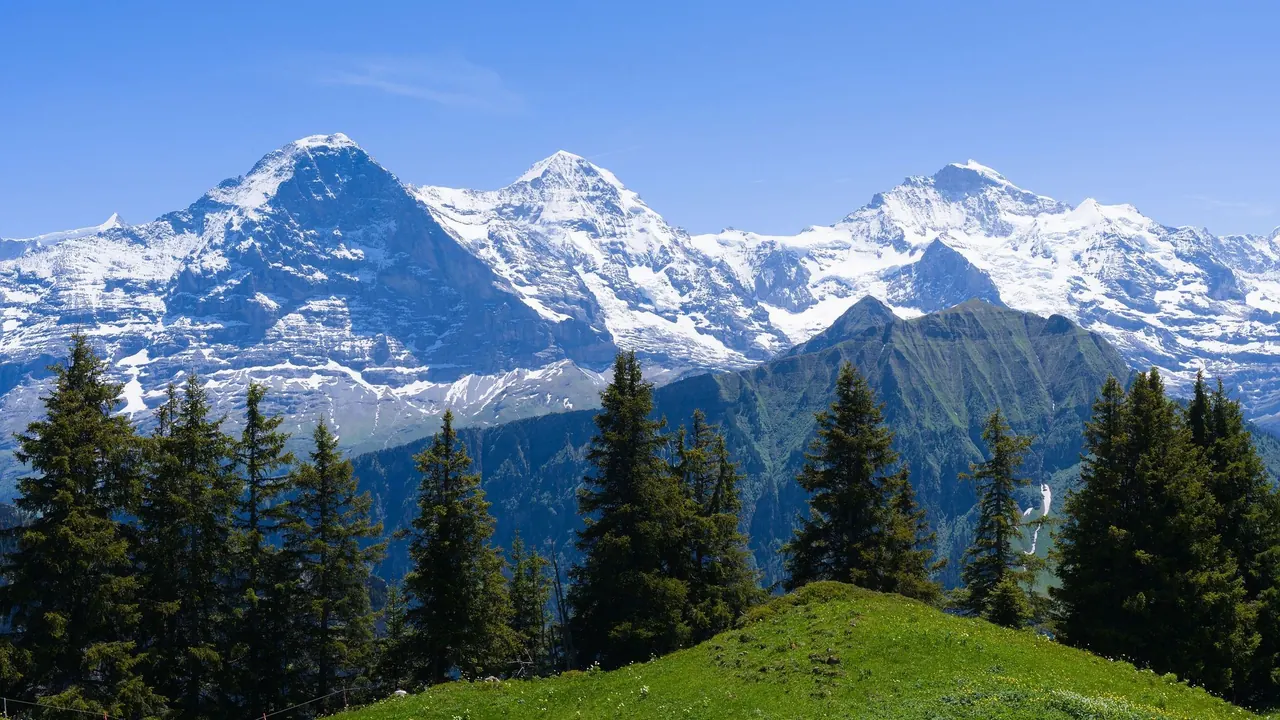
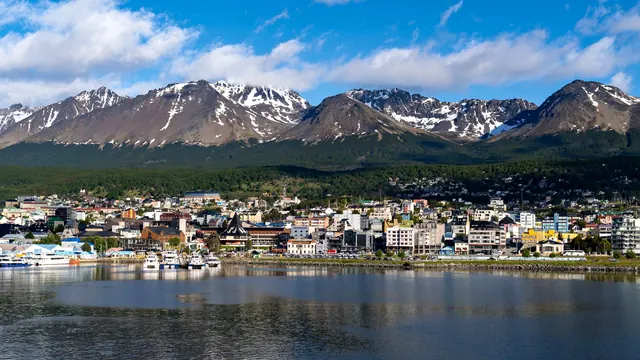
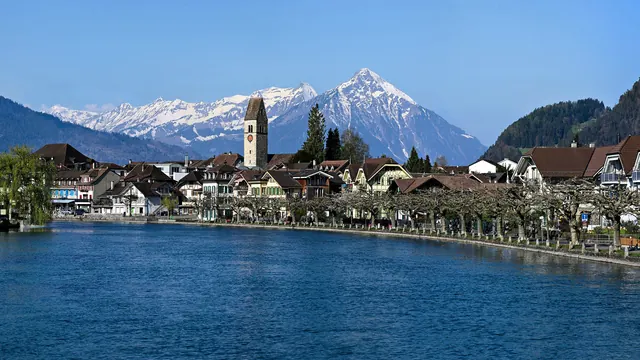
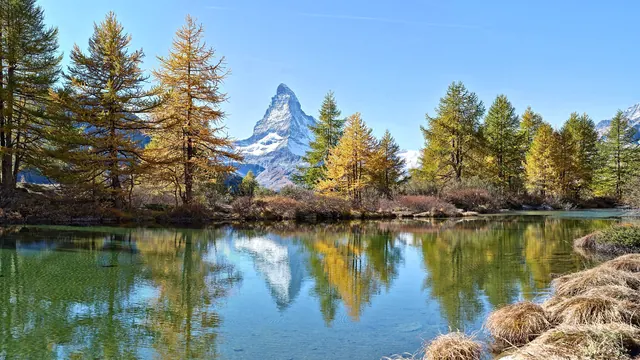
Photos: Patagonia by Ema Reynares, Pexels License; Swiss Alps by Jean-Paul Wettstein, Pexels License.
Patagonia or Swiss Alps?
Our verdict in twelve categories, each scored against the same fixed benchmark cities, and the climate month by month, so you can choose for your trip.
Choose Patagonia for
- prices
Patagonia is for travellers who want wilderness on a vast scale and will cross long distances to reach it. That means the granite spires above El Chaltén, ice falling from the Perito Moreno glacier, and whales and penguins on the Atlantic coast. It rewards a long trip with one base in each area and a flight between them. It also costs much less than the Alps, especially for hikers who sleep in hostels and walk the free trails.
Choose Swiss Alps for
- getting around
- wellness
- day trips
Choose the Swiss Alps if you want mountains that are easy to reach without a car. Trains and cable cars do the climbing, and a thermal bath waits at the end of the day. The region suits families, first-time mountain travellers and anyone who values comfort, easy day trips to Bern or Lucerne and summer music festivals. The catch is cost, since the Alps are among the most expensive places in the world to travel.
Scoreboard
Twelve categories on one fixed scale from 0 to 100. The shaded stretch is the gap between the two.
Your match
Pick a travel style or drag the sliders, and both match scores follow your weighting.
Wins on prices with your weighting.
Wins on getting around and wellness with your weighting.
What matters to you?
Category by category
What the scores mean for a trip.
Beaches & swimming
Neither region is a place for a swimming vacation, and each falls short in its own way. Patagonia's Atlantic is cold and its Andean lakes are chilly even in January. The one real beach is Las Grutas, where tidal flats warm the water, but it lies far from the mountains.
In the Alps, a swim is easier to fit in. Tidy lidos with jetties and diving boards line Lake Thun and Lake Brienz, and Ticino's Lake Lugano and Lake Maggiore are warmer still in high summer.
Food & drink
Both kitchens are hearty and narrow, built on what the land produces. Patagonia's signature is lamb roasted slowly over an open fire. Add Andean trout and venison, king crab in Ushuaia, Bariloche's chocolate and craft beer, and Welsh afternoon tea in Gaiman.
The Alps answer with cheese: fondue, Valais raclette and Graubünden air-dried beef, eaten on hut terraces with Petite Arvine or Cornalin from the Rhône vineyards. Zermatt and St Moritz add a layer of ambitious fine dining that Patagonia does not have. Patagonia's fire-roasted lamb is the more distinctive meal.
Culture & sights
Patagonia's heritage is thin and spread over huge distances. The stencilled hands of the Cueva de las Manos and the dinosaur museums of Trelew and Neuquén are remarkable, but reaching them takes real planning. The Welsh chapels of Gaiman are charming but small.
The Alps fit far more into a short trip: sgraffito houses in Guarda, the castles of Sion and Bellinzona, Carolingian frescoes at Müstair and the World Heritage Albula and Bernina railway lines. It is still sightseeing to fit between walks rather than a culture trip in its own right.
Nightlife
In Patagonia, nights out mostly mean Bariloche, where brewpubs and late clubs fill up with school-leaver groups. Elsewhere, hikers in El Chaltén have a beer and go to bed early.
The Alps offer more choice, but only in winter. Après-ski fills the terraces in Verbier and the bars in Zermatt, and St Moritz and Gstaad add a glossier evening of hotel bars. Outside ski season, both regions go quiet early.
Nature & outdoors
Both rank among the world's great mountain landscapes, so the choice is about what kind of mountains you want. Patagonia is wilder and emptier, with the spires of Fitz Roy, the collapsing face of Perito Moreno and the forested Lakes District. It also has an Atlantic wildlife coast that has no Alpine equivalent.
The Alps trade remoteness for ease. Cable cars lift hikers onto marked trails between huts below the Eiger and the Matterhorn, the Aletsch glacier is a short trip away, and the winter skiing at Zermatt or Verbier has far more depth.
Day trips
In Patagonia, most outings go into the landscape rather than to other towns. Bariloche is the exception, with Villa La Angostura, Colonia Suiza and El Bolsón within reach, and Puerto Madryn manages a half day in Gaiman. Elsewhere the towns are simply too far apart for a day out.
From a base in the Bernese Oberland, the Alps put Bern, Thun, Lucerne and hilltop Gruyères within easy train range, with Chillon and the Lavaux vineyards beyond. None of these trips needs a car.
Good for families
Patagonia can be thrilling for children, who can watch whales, swim with sea lions and walk among penguins around Puerto Madryn. Long transfers, cold wind and few attractions built for children make it harder work, though.
The Alps are the easier family trip. Ski schools with nursery slopes, summer toboggan runs, cogwheel trains and lake steamers keep children busy, and car-free Wengen and Zermatt let them roam safely.
Getting around
Patagonia works as a series of separate trips linked by domestic flights. Bariloche, El Calafate, Ushuaia and the Valdés coast are days apart by road. Within each area you rely on tours, a few buses or a hire car pushed about by crosswinds on empty roads.
The Alps are the opposite. Trains, postbuses, lake steamers and cable cars connect on shared timetables, and Zermatt and Mürren ban private cars altogether. Only the crossings between the big regions take a long day.
Shopping & style
Shopping is a minor part of either trip. Patagonia offers chocolate and knitwear in Bariloche, El Bolsón's craft fair and duty-free in Ushuaia. The Alps have a little more to browse, with luxury boutiques in St Moritz and Gstaad, watch shops in Interlaken, cheese from the dairy and Brienz woodcarving.
Affordability
Patagonia is expensive by Argentine standards, because domestic flights, glacier boats and lodges add up quickly. Even so, an independent hiker can get by on hostels, campsites and free trails.
The Alps offer no such way out. Hotels in Zermatt or Gstaad, meals at mountain restaurants and lift tickets cost far more, and self-catering and travel passes only soften the bill. The same budget buys a much longer trip in Patagonia.
Live music & performing arts
Patagonia rarely has anything on in the evening. There are summer chamber concerts in Bariloche, the odd folk night with chacarera, and Welsh choirs and an eisteddfod in Chubut.
The Alps give music lovers a real reason to visit in summer. The Verbier Festival in July and the Menuhin Festival in the churches around Gstaad bring leading soloists. Neither region has resident opera or theatre.
Wellness & relaxation
Patagonia restores you mainly through space and silence: a lakeside lodge spa at Villa La Angostura, or an estancia stay with horses and no phone signal. Its one bathing village, Copahue, lies far off the usual routes.
In the Alps, wellness can be the whole point of the trip. Choose from Leukerbad's outdoor thermal pools under the cliffs, the stone bath at Vals, the old springs of Bad Ragaz and Scuol, and grand hotel spas in quiet, car-free villages.
When should you go?
Pick your month. The climate figures are measured averages, not a forecast.
Patagonia in July
Swiss Alps in July
Daytime high, °C
Rainfall in the month, mm
Where the figures come from
Swiss Alps has no rain gauge within 25 km of the centre, so its rainfall comes from a gridded climate dataset read at the destination rather than from a gauge further away.
Swiss Alps's sunshine is measured 66 km from the centre, at Sion.
Temperature and rainfall are climate normals, averaged over the years shown. Patagonia: 1991-2020 normals, Bariloche Aerodrome (12.2 km from centre). Swiss Alps: 2005-2020 (sunshine 1961-1990, rainfall 1991-2020) normals, Meiringen / Unterbach (19.5 km from centre).
The two regions have opposite seasons. The Patagonia figures describe the Lakes District around Bariloche in the north. There, December to February is the time to go, with highs around 23°C, little rain and long sunny days for hiking and boat trips on the lakes, though the water stays bracing. From May the wet season sets in and peaks in June at about 172mm, and the slopes of Cerro Catedral take over for skiing. Further south, around El Calafate, El Chaltén and Ushuaia, summer is noticeably cooler and windier than these numbers suggest, so pack for cold days even in January.
The Alps figures come from the valleys where most visitors stay. July and August are best for walking, with highs about 24°C, the high passes open and a short lido season on the lakes. Summer is also the wettest stretch, at around 125mm a month, so expect to lose some days to cloud and showers. In January highs hover near 3°C and the region belongs to skiers. With the seasons reversed, Patagonia fits the northern winter and the Alps the northern summer.
Which traveller are you?
On a trip on a tight budget, Patagonia makes the money last longer. Choose one area, go overland by bus rather than flying between regions, eat simply and avoid December to February, when prices peak. In the Alps, the lifts that make the mountains so easy to reach use up a modest budget within days.
For a relaxing and wellness trip, the Swiss Alps are the easier choice. You can plan whole days around soaking and gentle walks, and the train takes you between bath and village without a car. Patagonia relaxes you through isolation, which suits travellers who will trade treatments for wind and silence.
For wildlife watchers, Patagonia is the clear pick. Plan a coastal stay between June and December, base yourself in Puerto Madryn, and spend your days on boats and shore walks with animals as the main event. In the Alps, wildlife is a bonus you might glimpse on a hike, not a reason to go.
Before you go
| Measure | Patagonia | Swiss Alps |
|---|---|---|
| Official language | Spanish | French, German, Italian, Romansh |
| Currency | Argentine Peso (ARS) | Swiss Franc (CHF) |
| Sockets | CI220 V, 50 Hz | CJ230 V, 50 Hz |
| Driving side | Left | Right |
| Time zone | UTC-3 | UTC+1, UTC+2 in summer |
| Emergency number | 117 or 911 | 112 |
| Main airport | Teniente Luis Candelaria International Airport (BRC)17 non-stop destinations | Zürich Airport (ZRH)226 non-stop destinations |
| Public holidays this year | 16 days | 10 days |
Where else could you go?
Every comparison below shares a destination with this one, so you can follow Patagonia or Swiss Alps somewhere new.
- Lake Maggiorevs Swiss Alps
- French Alpsvs Swiss Alps
- Lake Comovs Swiss Alps
- Black Forestvs Swiss Alps
- Lake Gardavs Swiss Alps
- Austrian Alpsvs Swiss Alps