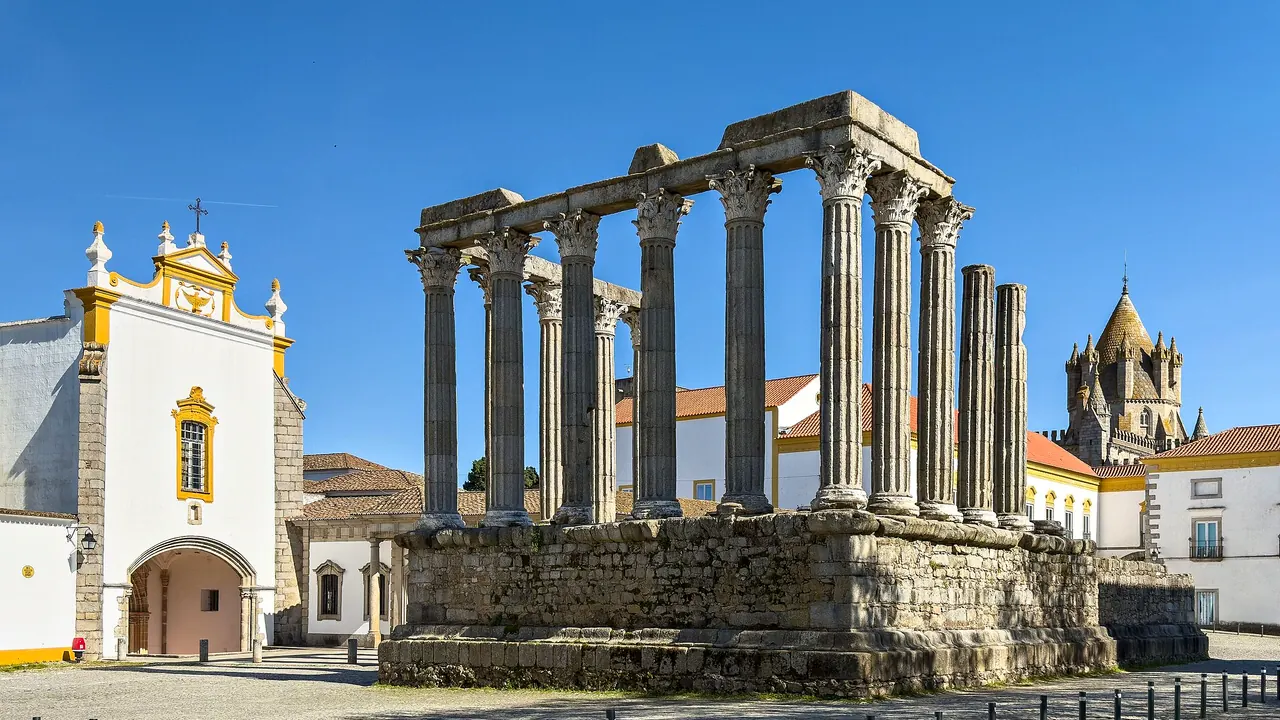
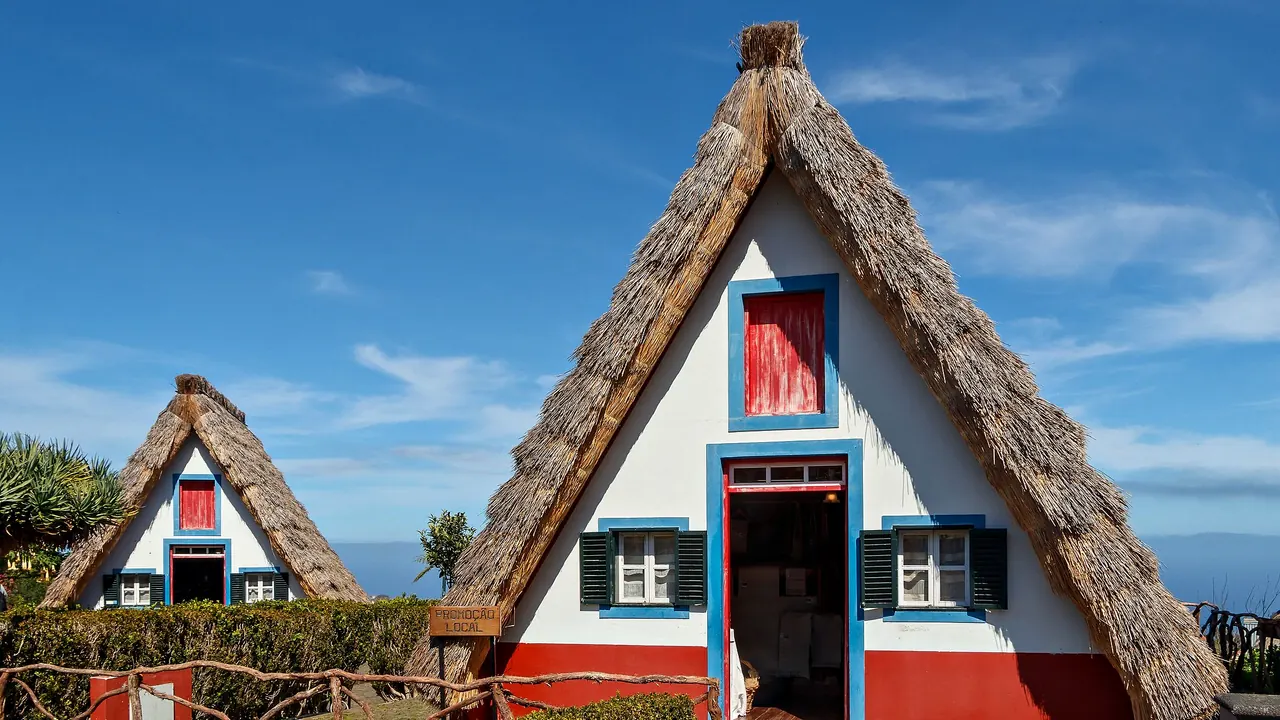
Photos: Alentejo by Kent Wang, CC BY 4.0, cropped; Madeira by H. Zell, CC BY-SA 3.0, cropped.
Alentejo or Madeira?
Our verdict in twelve categories, each scored against the same fixed benchmark cities, and the climate month by month, so you can choose for your trip.
Choose Alentejo for
- day trips
- culture and sights
- beaches
Choose the Alentejo for a slow road trip through history, wine and quiet countryside. Évora's Roman temple and whitewashed lanes, the marble towns and walled hilltop villages, long rural lunches and an empty Atlantic coast to finish on all make a richer, cheaper trip for sightseers and eaters. The price is a lot of driving, two bases rather than one, and very little to do after dinner.
Choose Madeira for
- nature and the outdoors
- nightlife
Madeira is the pick for walkers and anyone who wants a landscape to spend their days in: ridge paths above the clouds, levadas through laurel forest, whale watching and canyoning, all within reach of one base in Funchal. You give up sandy beaches and much serious sightseeing. In return you get mild weather in every month, which the Alentejo, with its fierce inland summers and cool winters, cannot offer.
Scoreboard
Twelve categories on one fixed scale from 0 to 100. The shaded stretch is the gap between the two.
Your match
Pick a travel style or drag the sliders, and both match scores follow your weighting.
Wins on day trips and culture and sights with your weighting.
Wins on nature and the outdoors and nightlife with your weighting.
What matters to you?
Category by category
What the scores mean for a trip.
Beaches & swimming
The Alentejo has real beaches: long dune sand at Comporta and Melides, schist coves below Porto Covo and Zambujeira do Mar, and plenty of space even in August. The Atlantic stays cool and the swell is strong on the open beaches, so for calm swimming people go to the Mira estuary at Milfontes or to the warm river beaches on the Alqueva lake inland.
On Madeira you swim from rocks instead of sand: the lidos with sea ladders in Funchal, the lava pools at Porto Moniz, and imported sand at Calheta and Machico. Its sea is a few degrees warmer in late summer, but for a proper beach you need to add a few nights on Porto Santo.
Food & drink
Both kitchens are regional and simple, but the Alentejo's goes deeper. It has acorn-fed black pork, açorda and migas, sheep's cheese from Serpa, sweets from the old convents, and big reds from Reguengos and Vidigueira, some still fermented in clay amphorae. Évora adds the more ambitious restaurants.
Madeira's choice is narrower but very much its own: espetada grilled on bay-wood skewers, scabbardfish with banana, bolo do caco, and poncha drunk standing at village bars. Its standout is the fortified wine aged in Funchal's old lodges, a tasting the Alentejo has nothing to match.
Culture & sights
For sightseeing the Alentejo is much richer. Évora alone, with its Roman temple, the Chapel of Bones and the Almendres stones outside town, has more than all of Madeira. Beyond it are the UNESCO-listed walls of Elvas, the Bragança palace at Vila Viçosa, the mosque-church at Mértola and the walled villages of Marvão and Monsaraz.
Madeira's history is mostly in Funchal: the carved cedar ceiling of the Sé, the merchant families' collections at Quinta das Cruzes, the wine lodges and the church at Monte. Add the thatched houses of Santana and most visitors have seen it all in a day or two.
Nightlife
Neither is a place for a big night out, but Madeira has more going on after dark. The small bars and poncha counters of Funchal's Zona Velha spill onto the lanes until late at weekends, and there are a few clubs and lounge bars along the seafront.
In the Alentejo an evening means dinner and a bottle of local red. Évora's student bars get lively on term-time weekends, and Zambujeira and Milfontes stay up later in July and August. For a real night out, people drive to Lisbon.
Nature & outdoors
Madeira is the stronger choice for the outdoors, and its scenery is far more dramatic. It has the high walk along the peaks from Pico do Arieiro to Pico Ruivo, levadas into the laurel forest, waterfalls at Caldeirão Verde and the 25 Fontes, the bare Ponta de São Lourenço, and canyoning, diving and whale watching. You can walk in any month, although the high paths turn wet and cold in winter.
The Alentejo's outdoors is gentler and depends more on the season. There is the Fishermen's Trail on the Rota Vicentina cliffs, surf and kayaking on the Mira, wildflowers across the plains in spring, great bustards on the Castro Verde steppe and dark skies over Alqueva. Inland, the midsummer heat rules out long walks.
Day trips
From Évora the Alentejo gives you a different town each day. There is the marble triangle of Estremoz, Borba and Vila Viçosa, the rug makers of Arraiolos, the potters of São Pedro do Corval and tastings at the wine estates. Roman Mérida over the Spanish border and Lisbon are both within reach for a day.
On Madeira, days out are drives through scenery to small places such as Câmara de Lobos, Santana and Porto Moniz, easy to combine in one loop of the island. The only trip to somewhere really different is Porto Santo, and that works better with a night or two there.
Good for families
Both are calm, safe places without big attractions, and each offers something different instead. The Alentejo is about space: farm stays with pools and animals, a safari park near Santiago do Cacém and calm water at Milfontes and Alqueva. Against that, there are long drives and fierce summer heat inland.
Madeira has more small outings: the cable car to Monte and the wicker toboggan ride back down, dolphin trips and the aquarium at Porto Moniz. Its weather is mild all year, but there is little sand and the steep streets are hard work with a pushchair.
Getting around
In both places you will want a car, and in both the parts you can explore on foot are small. In the Alentejo the problem is distance. The roads across the plains are quiet and easy, but it is about two hours from the coast to Évora, so most people split their stay between two bases. Trains from Lisbon do reach Évora and Beja.
Madeira is compact, and its tunnels put most of the island within an hour of Funchal. The roads up to the trailheads, though, are steep and full of hairpins. If you would rather not drive, taxis and guided tours with transfers will get you to the walks.
Shopping & style
The Alentejo's crafts are made in the towns you drive through, and buying them is part of the tour. You can watch rugs being hand-stitched in Arraiolos, browse painted clay figurines at the Saturday market in Estremoz, and walk the potters' workshops of São Pedro do Corval. Wine and cheese come straight from the estates, and Comporta adds a few chic boutiques.
Madeira's list is shorter and most of it is in Funchal: linen embroidery, bottles from the old wine lodges and exotic fruit from the Mercado dos Lavradores, with wickerwork a short drive up at Camacha. For everyday clothes there are Funchal's pedestrian streets.
Affordability
The Alentejo is the cheaper trip, as long as you stay inland. There you will find generous set lunches in the villages, estate wine at low prices and well-priced guesthouses in Évora, Estremoz and Mértola. Comporta, and the rest of the coast in August, cost noticeably more, and a hire car is hard to avoid.
Madeira's prices sit in the middle. Grill houses, poncha and free mountain trails keep daily costs down, but clifftop resort hotels, car hire and guided canyoning or boat trips soon add up. Rooms also cost more around New Year and Easter.
Live music & performing arts
The Alentejo has the more distinctive sound: cante alentejano, slow polyphonic singing on UNESCO's heritage list, with its own centre in Serpa. Hearing it live depends on catching a festival or a tavern choir, though. Beyond that, Marvão's hilltop classical festival and early music in churches give the summer its main events.
Madeira's stage is more a matter of what you happen upon in Funchal. There are fado evenings in the old town and the regional orchestra at the Teatro Baltazar Dias. Bailinho dancers in red-striped costumes turn up at the Flower Festival, carnival and village feasts.
Wellness & relaxation
Both restore you through their slow pace more than through treatments, and neither has a bathing culture. In the Alentejo that means silence: a wine or olive estate with a pool among the cork oaks, long lunches and very dark nights, with the Roman-era springs at Cabeço de Vide and Moura nearby.
Madeira's version is gardens and sea air. It has spa hotels with seawater pools on Funchal's western cliffs, old quintas set in gardens, and afternoons in the botanical and Monte gardens, under the mild climate that has drawn people here to recover since the nineteenth century.
When should you go?
Pick your month. The climate figures are measured averages, not a forecast.
Alentejo in July
Madeira in July
Daytime high, °C
Rainfall in the month, mm
Temperature and rainfall are climate normals, averaged over the years shown. Alentejo: 1991-2020 normals, Evora / C. Coord (4.3 km from centre). Madeira: 1991-2020 normals, Funchal (2 km from centre).
The Alentejo swings hard between seasons, and its figures read like the interior. July and August reach 33°C with almost no rain and long, cloudless days. That is too hot for walking the towns in the afternoon, though the coast suits beach days from June to September. The best months for touring and walking are May and late September, warm and mostly dry. In October the rain arrives in earnest, at around 91mm, making it the wettest month, and winter days stay cool, with highs in the mid-teens.
Madeira barely changes through the year. Around Funchal, highs run from about 20°C in winter to 27°C in late summer, so walking and sightseeing work in any month. Summer is dry, and the wet season runs from October to February, wettest in December. The sea is warmest in September at about 24°C, so late summer and early autumn are best for swimming. Because Madeira's summer never gets anywhere near the Alentejo's inland heat, it stays comfortable for long walks just when the plains become too hot for them.
Which traveller are you?
For a culture and arts trip, the Alentejo is the clear choice. Évora, the Almendres standing stones, the star-shaped walls of Elvas and walled Monsaraz and Marvão are worth a week of touring. Madeira's heritage fits into a day or two in Funchal.
On an outdoors trip, Madeira wins. The walk along the peaks from Pico do Arieiro to Pico Ruivo, the levadas through UNESCO laurel forest, plus canyoning, diving and whale watching, give it far more than the Alentejo's gentler coast path and plains, which are too hot inland in midsummer.
On a trip with a tight budget, the Alentejo goes further, as long as you stay inland. It has set lunches in the villages, cheap wine from the estates and good-value guesthouses in Évora or Mértola. On Madeira, resort hotels and guided trips quickly push up the cost of a stay.
Before you go
| Measure | Alentejo | Madeira |
|---|---|---|
| Official language | Portuguese | Portuguese |
| Currency | Euro (EUR) | Euro (EUR) |
| Sockets | CF230 V, 50 Hz | CF230 V, 50 Hz |
| Driving side | Right | Right |
| Time zone | UTC, UTC+1 in summer | UTC, UTC+1 in summer |
| Emergency number | 112 | 112 |
| Main airport | Lisbon Humberto Delgado Airport (LIS)157 non-stop destinations | Cristiano Ronaldo International Airport (FNC)46 non-stop destinations |
| Public holidays this year | 14 days | 16 days |
By the numbers
| Measure | Alentejo | Madeira |
|---|---|---|
| Population | 705,478 | 254,368 |
| People per km² | - | 343 |
| Swim season, months above 21 °C | - | 5 months |
Where else could you go?
Every comparison below shares a destination with this one, so you can follow Alentejo or Madeira somewhere new.
- Algarvevs Alentejo
- Andalusiavs Alentejo
- Douro Valleyvs Alentejo
- Costa del Solvs Alentejo
- La Palmavs Madeira
- Canary Islandsvs Madeira