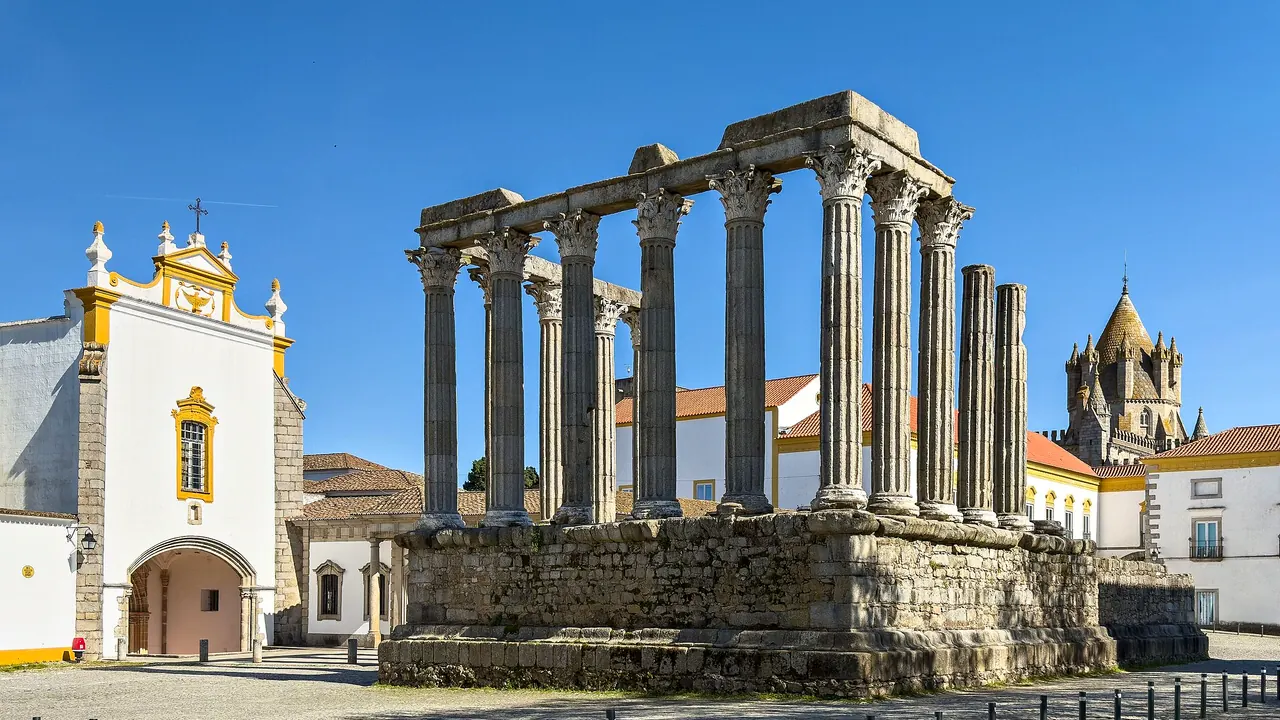
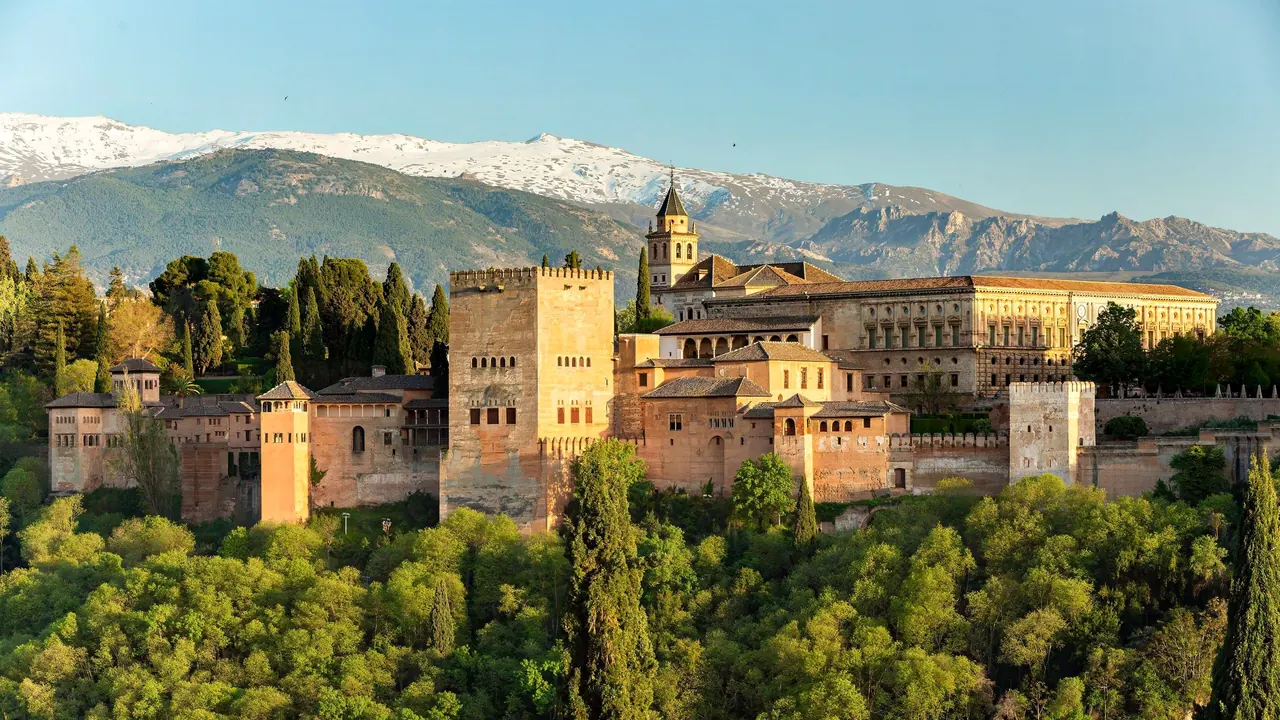
Photos: Alentejo by Kent Wang, CC BY 4.0, cropped; Andalusia by Diego Delso, CC BY-SA 4.0, cropped.
Alentejo or Andalusia?
Our verdict in twelve categories, each scored against the same fixed benchmark cities, and the climate month by month, so you can choose for your trip.
Choose Alentejo for
- prices
The Alentejo is for travellers who want Portugal slowed right down: long lunches with a bottle of estate red, whitewashed hill villages such as Monsaraz and Marvão, and an Atlantic coast where you can still find an empty stretch of sand in August. It asks for a car and usually two bases. In return it gives silence, dark skies and the clifftop paths of the Rota Vicentina rather than famous monuments or late nights.
Choose Andalusia for
- nightlife
- live music and the arts
- beaches
Choose Andalusia if you want more of everything in a single trip. The Alhambra, the Mezquita and Seville's cathedral, flamenco on most nights, tapas bars that fill after ten and two coasts with warmer water all sit within reach of each other. High-speed trains join the main cities, so a car-free trip is possible. The price is more heat inland and a Costa del Sol that is far more built up than anything on the Alentejo shore.
Scoreboard
Twelve categories on one fixed scale from 0 to 100. The shaded stretch is the gap between the two.
Your match
Pick a travel style or drag the sliders, and both match scores follow your weighting.
Wins on prices with your weighting.
Wins on nightlife and live music and the arts with your weighting.
What matters to you?
Category by category
What the scores mean for a trip.
Beaches & swimming
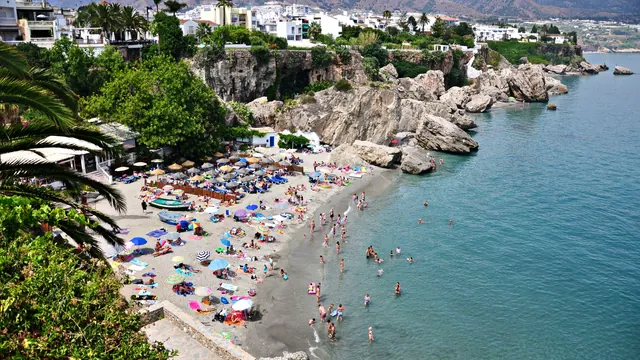
Andalusia gives you more choice and warmer water. The Mediterranean coves of Cabo de Gata are calm and clear, the Costa del Sol has promenades and beach bars, and the Costa de la Luz around Bolonia and Zahara has wide golden sand backed by dunes.
The Alentejo's strength is emptiness. The dune beaches at Comporta and the schist coves below Zambujeira stay quiet even in August, but the Atlantic here is cool and often rough. Calm swimming is found mainly in the Mira estuary or at the Alqueva river beaches.
Food & drink
The Alentejo is a place for sitting down to eat: migas, acorn-fed black pork and coriander-scented dogfish soup in village tascas, with Serpa cheese and reds from Reguengos or Vidigueira, some of them made in clay amphorae. It is excellent, but it is almost entirely one cuisine.
Andalusia has the more varied table and a livelier way of eating. You stand at tapas counters in Seville and Granada, eat fried fish and shellfish on the coast and visit sherry bodegas in Jerez and Sanlúcar. Its covered markets in Cádiz and Málaga give you a morning's eating on top.
Culture & sights
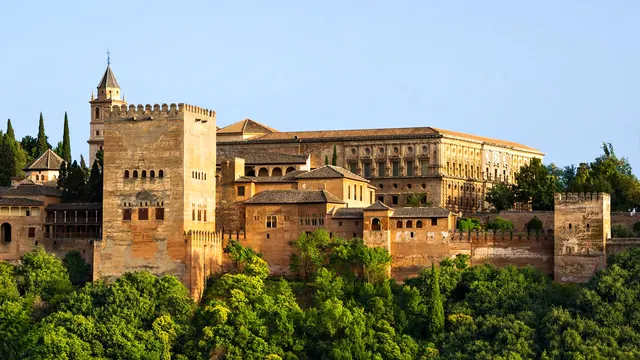
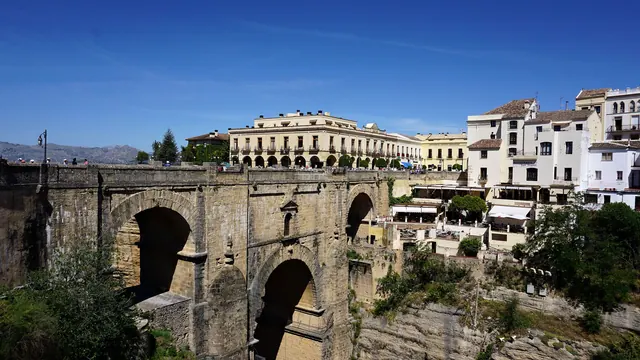
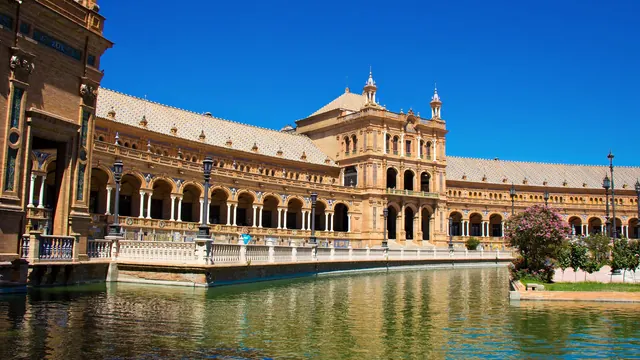
Andalusia is in another league here. The Alhambra, Córdoba's Mezquita and Seville's cathedral and Real Alcázar are among the great sights of Europe, and Ronda, Úbeda and Cádiz add depth beyond them.
The Alentejo has real treasures on a smaller scale. Walled Évora has its Roman temple and Chapel of Bones, the Almendres standing stones are older than anything in Seville, and Elvas has its star-shaped fortifications. In both regions the heritage is spread across several towns, so plan for more than one base.
Nightlife
The gap is wide. In the Alentejo an evening is dinner and an early night, with only Évora's student bars in term time and summer beach bars at Milfontes keeping later hours.
Andalusia lives after dark. Its nights start late on the Alameda de Hércules and in Triana, Granada's bars below the Albaicín are full, and in summer the Costa del Sol adds clubs in Marbella and Puerto Banús and Torremolinos's long-running gay scene.
Nature & outdoors
Both regions are best walked in spring and autumn, but Andalusia's landscapes reach further. It has the high Sierra Nevada with skiing in winter, the gorge walkway of the Caminito del Rey, the Doñana wetlands with their lynx, and kitesurfing and whale trips off Tarifa.
The Alentejo is gentler and quieter. The Fishermen's Trail runs along the clifftops of the southwest coast, the cork-oak plains flower in spring, the Castro Verde steppe draws birdwatchers looking for great bustards, and the skies over the Alqueva lake are among the darkest around.
Day trips
From Évora, the Alentejo offers a week of small-town outings: the marble towns of Estremoz and Vila Viçosa, the rug-makers of Arraiolos, wine estates, and Roman Mérida across the Spanish border. The towns are alike, though, and the variety thins out after a few days.
Andalusia's options are bigger and more varied. You can visit Itálica and Carmona from Seville, Ronda and the dolmens of Antequera from Málaga, and the white villages of the Cádiz hills. You can also cross to Gibraltar, or take the ferry from Tarifa to Tangier in Morocco.
Good for families
Andalusia has far more aimed at children: gentle beaches on the Costa del Sol, water parks, the Benalmádena aquarium, Granada's hands-on science museum and the Western film sets near Almería.
The Alentejo offers space instead. Farm stays with pools and animals, safe villages and the calm Mira estuary suit families who are happy to keep things simple, but drives are long and the safari park near Santiago do Cacém is about the only attraction made for children. In both regions the interior is too hot for small children in midsummer.
Getting around
Andalusia is much easier without a car. High-speed trains link Seville, Córdoba, Málaga and Granada, and Seville and Málaga have trams and metro lines. A car still helps for the white villages and the Costa de la Luz.
In the Alentejo a car is close to essential. Apart from the trains to Évora and Beja, the wine estates, hill villages and beaches are hard to reach, and the coast is about two hours from Évora.
Shopping & style
In both regions the best buys are things made locally, but Andalusia has a wider range and proper shopping streets. Its options include Triana ceramics, flamenco shawls and fans, Ubrique leather, Calle Sierpes and Calle Larios, and luxury boutiques in Marbella.
The Alentejo is mostly a place for crafts and produce. Look for Arraiolos rugs, Estremoz clay figurines and its Saturday market, the potteries of São Pedro do Corval, and cork, cheese and wine bought at the estates.
Affordability
Both regions are among the cheaper parts of Western Europe, and the costs fall in different places. In the Alentejo, set lunches in the villages and estate wine are cheap and so are guesthouses inland. Car hire is hard to avoid, though, and Comporta and Melides are expensive in summer.
Andalusia saves you money at the bar, especially in Granada and Jaén where a tapa comes free with each drink, and its buses and trains are inexpensive. Rooms in Seville during Holy Week and on the Costa del Sol in high summer are the costly exception.
Live music & performing arts
Andalusia is the home of flamenco, and you can see it on most nights in Santa Cruz and Triana, in the peñas of Jerez and in the cave houses of Sacromonte. Seville's Maestranza and the summer festival at the Alhambra add opera and concerts.
The Alentejo's cante alentejano is moving and on UNESCO's intangible heritage list, but you only hear it at a festival or by luck in a village tavern. Évora's small theatre and the classical festival in Marvão are the main formal stages.
Wellness & relaxation
The two are broadly level, and they relax you in different ways. The Alentejo works through stillness: a country estate with a pool, silent plains and old spring towns such as Cabeço de Vide.
Andalusia has more actual facilities. There are Moorish-style bathhouses with warm pools in Granada, Córdoba and Seville, the thermal waters of Lanjarón, and the large resort spas around Marbella.
When should you go?
Pick your month. The climate figures are measured averages, not a forecast.
Alentejo in July
Andalusia in July
Daytime high, °C
Rainfall in the month, mm
Temperature and rainfall are climate normals, averaged over the years shown. Alentejo: 1991-2020 normals, Evora / C. Coord (4.3 km from centre). Andalusia: 1991-2020 (sunshine 1981-2010, rainfall 1981-2010) normals, Sevilla / San Pablo (8.1 km from centre).
Spring and autumn suit both for walking and sightseeing, but Andalusia warms up earlier and runs hotter. By July the interior of the Alentejo reaches about 33°C and inland Andalusia about 36°C, too hot for long afternoons in Évora or Seville. In both regions high summer is better spent on the coast, and swimming weather runs from June to September, a little longer in Andalusia. Both regions get the most sunshine in July, and Andalusia stays sunnier through the winter months.
Both are almost dry from June to August. The rains come back in autumn: in the Alentejo October is the wettest month at around 91mm, while Andalusia's wettest is November with about 122mm. Winters are mild in both and slightly warmer in Andalusia, which makes either one a reasonable choice for a quiet off-season trip built around towns and food rather than beaches.
Which traveller are you?
On a culture and arts trip, Andalusia is the clear pick. The Alhambra, Córdoba's Mezquita and Seville's Alcázar are monuments of the first rank, and flamenco gives your evenings a living art form, whereas the Alentejo's choral cante is rarely performed on a schedule.
For a food and nightlife trip, Andalusia again. You can move from bar to bar in Triana or among Granada's free tapas, then stay out on Seville's terraces or at the Marbella beach clubs. The Alentejo eats superbly but goes to bed early, and a real night out means driving to Lisbon.
On a relaxing and wellness trip, the Alentejo is the better place to switch off. Stay on a wine or olive estate among cork oaks, linger over lunch and enjoy dark, silent nights. Andalusia has its Moorish-style bathhouses, but its cities and coast pull you back into activity.
Before you go
| Measure | Alentejo | Andalusia |
|---|---|---|
| Official language | Portuguese | Spanish |
| Currency | Euro (EUR) | Euro (EUR) |
| Sockets | CF230 V, 50 Hz | CF230 V, 50 Hz |
| Driving side | Right | Right |
| Time zone | UTC, UTC+1 in summer | UTC+1, UTC+2 in summer |
| Emergency number | 112 | 112 |
| Main airport | Lisbon Humberto Delgado Airport (LIS)157 non-stop destinations | Seville Airport (SVQ)96 non-stop destinations |
| Public holidays this year | 14 days | 12 days |
By the numbers
| Measure | Alentejo | Andalusia |
|---|---|---|
| Population | 705,478 | 8,619,616 |
Where else could you go?
Every comparison below shares a destination with this one, so you can follow Alentejo or Andalusia somewhere new.
- Algarvevs Alentejo
- Algarvevs Andalusia
- Douro Valleyvs Alentejo
- Costa del Solvs Alentejo
- Douro Valleyvs Andalusia
- Costa Blancavs Andalusia