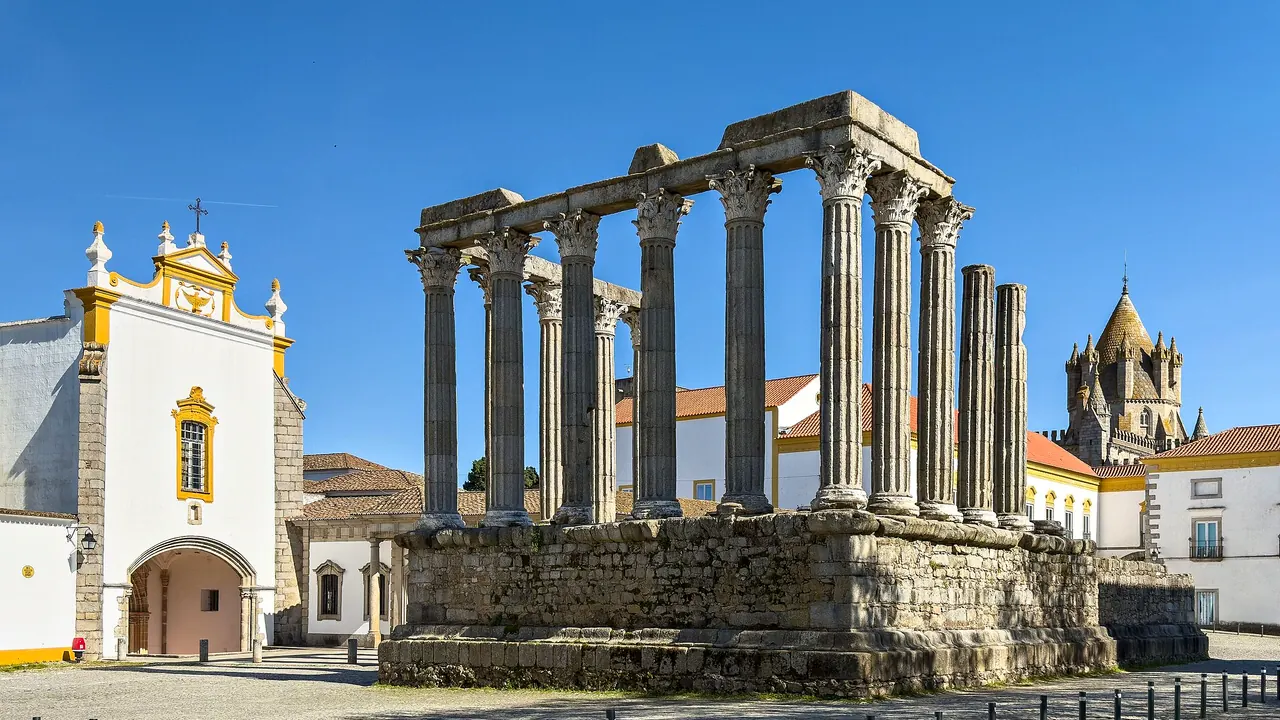
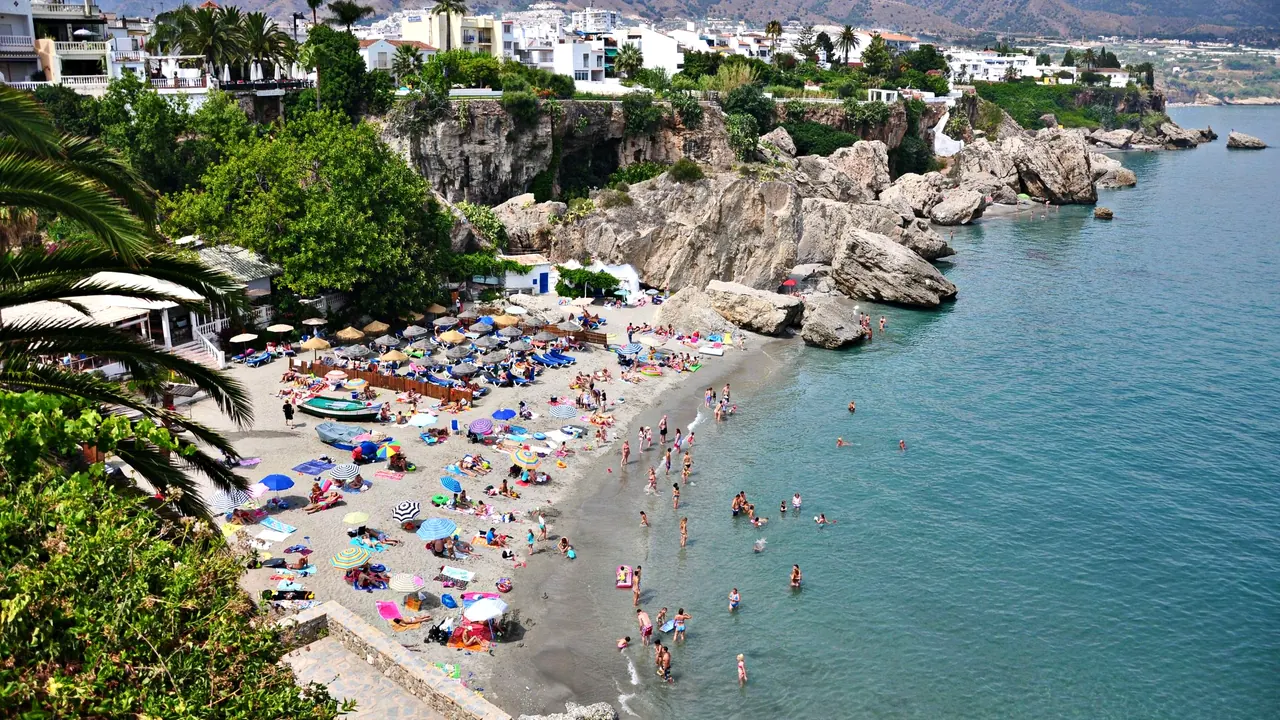
Photos: Alentejo by Kent Wang, CC BY 4.0, cropped; Costa del Sol by Rober Martinez, CC0.
Alentejo or Costa del Sol?
Our verdict in twelve categories, each scored against the same fixed benchmark cities, and the climate month by month, so you can choose for your trip.
Choose Alentejo for
- prices
- culture and sights
Choose the Alentejo if you want quiet, space and old stone more than amenities. It suits travellers happy to drive between walled hilltop towns, spend afternoons at wine estates and long lunches, and find a beach with almost nobody on it. Évora and the scattered monuments give it more history on the ground, and the interior costs noticeably less. In return there is very little going on after dinner, and nothing works without a car.
Choose Costa del Sol for
- nightlife
- families
- shopping
The Costa del Sol is the easier, warmer and livelier choice. Its long sandy beaches and warmer sea, its pools and family attractions, and its nights out from Málaga's tapas bars to Puerto Banús make a sun vacation simple to organise. Málaga also puts Granada, Córdoba and Seville within reach for days out. What you give up is solitude: the central resorts are built-up and crowded in high summer.
Scoreboard
Twelve categories on one fixed scale from 0 to 100. The shaded stretch is the gap between the two.
Your match
Pick a travel style or drag the sliders, and both match scores follow your weighting.
Wins on prices and culture and sights with your weighting.
Wins on nightlife and families with your weighting.
What matters to you?
Category by category
What the scores mean for a trip.
Beaches & swimming
The Costa del Sol is the stronger beach destination. Sand runs almost unbroken from Nerja to Estepona, with chiringuitos and sunbeds all along it, and the Mediterranean is several degrees warmer and usually calmer for swimming. The catch is crowding at Torremolinos, Benalmádena and Fuengirola in midsummer. The clearer coves at Maro, or the quieter beaches around Estepona, are the escape.
The Alentejo offers the opposite: wild Atlantic dunes at Comporta and Melides and schist-cliff coves at Zambujeira, often half-empty even in August. The water stays cool and the swell needs respect, so families tend to use the Mira estuary at Milfontes or the warm Alqueva river beaches instead.
Food & drink
The two eat about equally well, but from opposite ends of the land. The Alentejo cooks from the interior: bread-based açorda and migas, acorn-fed black pork, Serpa sheep's cheese and convent sweets, with big reds from Reguengos and Borba, some made in clay amphorae. It is at its best in village tascas and Évora, and there is little else on offer.
The Costa del Sol eats from the sea, with espetos of sardines grilled on beach fires, fried fish and Málaga's sweet wines. It has more range, including fine dining around Marbella, but in the big resorts you have to look past menus written for foreign visitors.
Culture & sights
The Alentejo has more to see, and more of it is ancient. Évora alone has a Roman temple, its cathedral and the Chapel of Bones inside UNESCO-listed walls, and the Almendres standing stones lie just outside. Beyond Évora come the star fortress of Elvas, the walled villages of Marvão and Monsaraz, and the ducal palace at Vila Viçosa. Seeing it all takes days of driving.
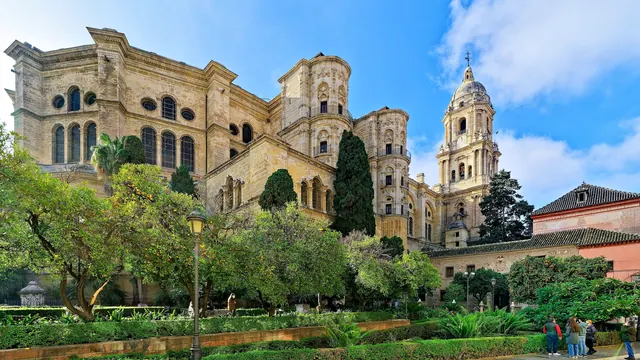
On the Costa del Sol nearly everything is in Málaga: the Alcazaba, the Roman theatre and the Gibralfaro. Málaga does have something the Alentejo lacks, a cluster of art museums led by the Picasso Museum and the Pompidou branch. Away from the city, the resorts are mostly modern beach towns.
Nightlife
This is the widest gap between the two. The Costa del Sol has several distinct scenes: yachts and dawn clubs in Puerto Banús, the long-established gay quarter of Torremolinos, cheap loud bar strips in Fuengirola, and Málaga's late tapas terraces, which keep going all year.
In the Alentejo an evening is dinner and a bottle of red. Évora's student bars and summer beach bars in Zambujeira and Milfontes are the only exceptions.
Nature & outdoors
Both are equally good for the outdoors, but the land is very different. The Alentejo is mostly horizontal. There are cliff walks on the Fishermen's Trail, steady surf, kayaking on the Mira, great bustards on the Castro Verde steppe and dark skies over Alqueva, all in gently rolling cork-oak country.
The Costa del Sol goes vertical. Steep sierras rise straight behind the beaches, with the wade up the Río Chíllar gorge, the climb up La Concha, the Caminito del Rey and the rocks of El Torcal. Golf and boating fill the coast itself.
Day trips
The Costa del Sol has the better day trips by some way. From Málaga, high-speed trains reach Córdoba's Mezquita and Seville, Granada's Alhambra is a drive away, and Ronda and Gibraltar are easy from the western end. White villages such as Frigiliana and Casares fill shorter half-days.
From Évora, the Alentejo has a pleasant round of marble towns, Arraiolos rugs, potters at São Pedro do Corval and wine tastings. The towns are rather alike, though, and the big names are Mérida across the border and Lisbon.
Good for families
The Costa del Sol is built for families. Its calm, gently shelving sand, apartment pools and a run of attractions between Torremolinos and Fuengirola make each day easy: the forest-style zoo, the marine park, water parks and the Calamorro cable car. Málaga's car-free centre works with a pushchair.
The Alentejo suits a different kind of family trip, built around farm stays, safe quiet villages and the calm water of Milfontes or Alqueva. Expect long drives, very few attractions aimed at children and fierce inland heat in high summer.
Getting around
The Costa del Sol is simpler without a car. A commuter train links Málaga, the airport and the busiest resorts, and Málaga's centre is flat and pedestrian. Beyond Fuengirola it gets slower, with buses or the toll motorway.
In the Alentejo a car is close to essential. Trains reach only Évora and Beja, and with about two hours between the coast and the interior, most visitors split their stay between two bases.
Shopping & style
The Costa del Sol has much more to browse: luxury fashion at Puerto Banús, boutiques in Marbella's old town, Spanish chains along Málaga's Calle Larios, weekly street markets and the malls by the motorway.
The Alentejo is for buying things made there. Look for hand-stitched rugs in Arraiolos, Estremoz figurines and its Saturday market, a whole village of potteries near Monsaraz, and cork, cheese and wine from the estates. For crafts it beats the coast, but there is little else.
Affordability
The Alentejo is the cheaper of the two, at least inland, where generous set lunches, inexpensive estate wine and modest guesthouses keep costs down. Comporta and the coast in August break the pattern, and a hire car is an unavoidable extra.
The Costa del Sol varies by resort. Marbella and the Golden Mile are expensive, Málaga's summer rooms are dear, and the package resorts are mid-range. Fish grills and cheap trains help, and the months either side of summer cost less.
Live music & performing arts
The Costa del Sol has more to see on stage, almost all of it in Málaga. The Teatro Cervantes hosts the city orchestra, opera and dance, and the flamenco peñas put on weekend performances for real aficionados. Big open-air concerts fill Marbella's summers.
The Alentejo's treasure is cante alentejano, the UNESCO-listed polyphonic singing heard in Serpa and village taverns. You usually hear it by luck at a feast day rather than by booking. Beyond that, there are summer early-music concerts and the Marvão festival.
Wellness & relaxation
Resort spas against country quiet is the real choice here. In the Alentejo, the rest comes from the pace: a wine or olive estate with a pool among the cork oaks, long lunches, silent plains and very dark nights. The springs at Cabeço de Vide and Moura go back to Roman times, but treatments are few and mostly inside hotels.
For anyone who wants pampering as well as peace, the Costa del Sol goes further. Large spa hotels and residential fasting and detox clinics sit in the hills between Marbella and Estepona, golf resorts with spas line the coast, and Málaga has Arab-style bathhouses near the old town. Its mild, sunny winters suit long, slow stays, and Nerja is the calmest end.
When should you go?
Pick your month. The climate figures are measured averages, not a forecast.
Alentejo in July
Costa del Sol in July
Daytime high, °C
Rainfall in the month, mm
Temperature and rainfall are climate normals, averaged over the years shown. Alentejo: 1991-2020 normals, Evora / C. Coord (4.3 km from centre). Costa del Sol: 1991-2020 normals, Malaga / Aeropuerto (5.4 km from centre).
Both are dry, sunny and hot in summer, with almost no rain from June to August, and both are best for walking and sightseeing in spring and autumn. Where the Alentejo's figures are measured, highs reach 33°C in July and August, too hot for walking town streets at midday, and the interior can get hotter still. That makes high summer a season for the coast or a pool. The rains come back hard in October, at around 91mm, and stay through the winter.
The Costa del Sol has the warmer sea, reaching about 23°C in August and swimmable from June into October. Its winters are milder and much sunnier, with highs around 17°C in January, which is why people come out of season to walk the promenades. Rain there also peaks in late autumn and winter, but May and September stay drier than in the Alentejo.
Which traveller are you?
On a family trip with children, the Costa del Sol is far easier. It has gently sloping sandy beaches, pool-centred hotels, a zoo, aquarium, water parks and a cable car, with a train linking the main resorts. In the Alentejo you get farm stays and long drives.
For a trip on a tight budget, the Alentejo goes further. Village set lunches, cheap estate wine and well-priced guesthouses in Évora or Mértola keep costs low inland, as long as you avoid Comporta and the coast in August and allow for car hire.
On a food and nightlife trip, the Costa del Sol wins. Málaga's old taverns, the fish grills at Pedregalejo and late tapas crawls run into clubs, gay bars and beach clubs along the coast. The Alentejo eats superbly but goes to bed early.
Before you go
| Measure | Alentejo | Costa del Sol |
|---|---|---|
| Official language | Portuguese | Spanish |
| Currency | Euro (EUR) | Euro (EUR) |
| Sockets | CF230 V, 50 Hz | CF230 V, 50 Hz |
| Driving side | Right | Right |
| Time zone | UTC, UTC+1 in summer | UTC+1, UTC+2 in summer |
| Emergency number | 112 | 112 |
| Main airport | Lisbon Humberto Delgado Airport (LIS)157 non-stop destinations | Málaga-Costa del Sol Airport (AGP)165 non-stop destinations |
| Public holidays this year | 14 days | 12 days |
By the numbers
| Measure | Alentejo | Costa del Sol |
|---|---|---|
| Population | 705,478 | 1,364,837 |
| Swim season, months above 21 °C | - | 3 months |
Where else could you go?
Every comparison below shares a destination with this one, so you can follow Alentejo or Costa del Sol somewhere new.
- Algarvevs Alentejo
- Andalusiavs Alentejo
- Douro Valleyvs Alentejo
- Algarvevs Costa del Sol
- Costa Blancavs Costa del Sol
- Formenteravs Costa del Sol