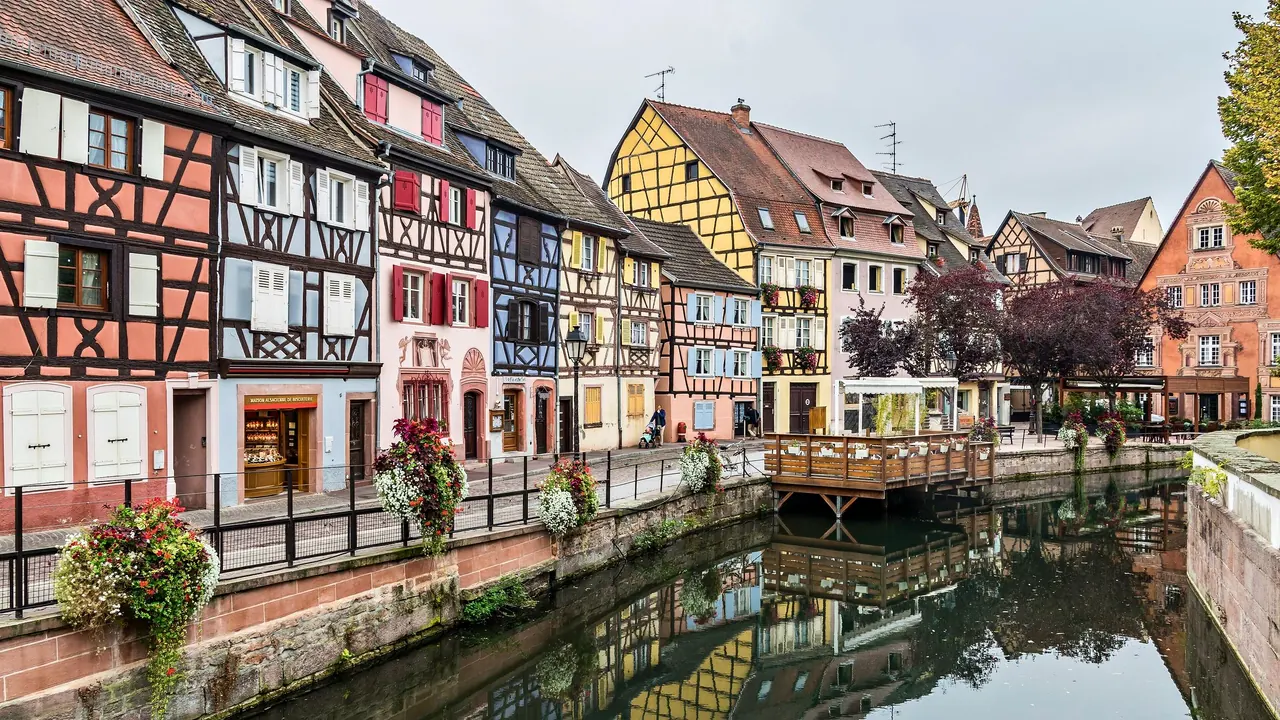
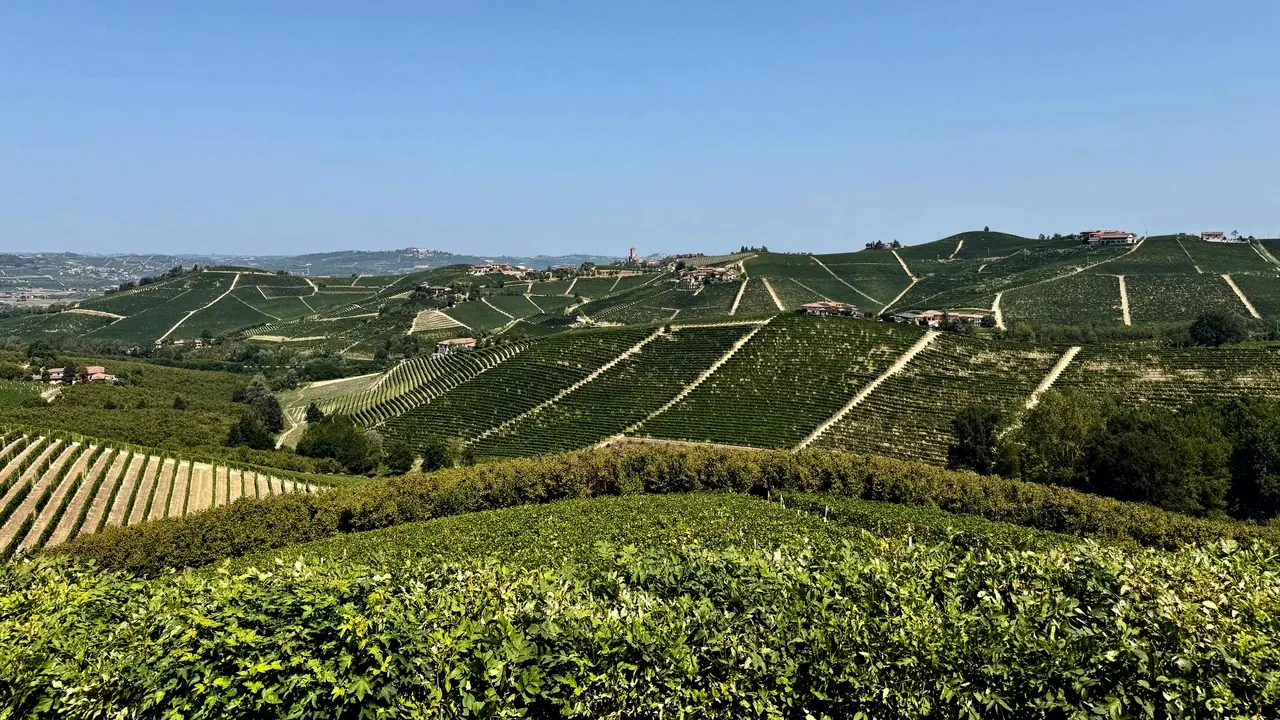
Photos: Alsace by Krzysztof Golik, CC BY-SA 4.0, cropped; Piedmont by Martina Amaro, Pexels License.
Alsace or Piedmont?
Our verdict in twelve categories, each scored against the same fixed benchmark cities, and the climate month by month, so you can choose for your trip.
Choose Alsace for
- families
- getting around
Alsace suits travellers who want a compact, well-connected trip with plenty for children. Strasbourg, Colmar and the walled wine villages sit close together along one railway and one wine road, so you can see a lot without long drives. Europa-Park and the animal parks near Kintzheim make it a very good family choice, and in December the Christmas markets give it a season that Piedmont has no match for.
Choose Piedmont for
- beaches
- nature and the outdoors
- food and drink
Piedmont is the stronger pick if you plan your days around food, wine and mountains. Barolo country, the autumn truffle season and Turin's coffee houses and aperitivo make eating the main event. The real Alps, with Monte Rosa, Gran Paradiso and Olympic ski slopes, are within reach, along with warm lake swimming on Maggiore. It costs a little less, though you'll need a car more often.
Scoreboard
Twelve categories on one fixed scale from 0 to 100. The shaded stretch is the gap between the two.
Your match
Pick a travel style or drag the sliders, and both match scores follow your weighting.
Wins on families and getting around with your weighting.
Wins on beaches and nature and the outdoors with your weighting.
What matters to you?
Category by category
What the scores mean for a trip.
Beaches & swimming
Neither region has a coast, but Piedmont's lakes give you real summer swimming. The western shore of Lake Maggiore has lidos, pebble beaches and bathing platforms where the water gets properly warm in July and August. Quieter Lake Orta has grassy spots to swim from below its hill villages.
In Alsace, swimming means flooded gravel pits on the Rhine plain, cool Vosges reservoirs and town pools. They're fine for a hot afternoon, but there's no lake resort to build a stay around.
Food & drink
Both regions eat and drink seriously, but Piedmont is the one where food decides the trip. In Alsace, dinner is usually at a winstub, over choucroute, baeckeoffe or flammekueche, and the 170km Route des Vins lets you taste Riesling and Gewurztraminer at the growers' cellars. Strasbourg has the widest choice of restaurants, and the serious kitchens are spread through the wine villages as well.
Piedmont goes further. The Langhe produces Barolo and Barbaresco, and autumn brings white truffles to village trattorias. Bra, where the Slow Food movement began, adds cheeses from the valleys, and Turin has historic coffee houses, bicerin and vermouth. In Piedmont the best tables are mostly out in the countryside, so it pays to base yourself in Alba or have a car.
Culture & sights
The two are broadly level, but the heritage comes in different forms. Alsace's is spread out and close up: Strasbourg's red sandstone cathedral and astronomical clock, the Isenheim Altarpiece in Colmar, and a string of half-timbered, walled wine villages that count as sights in their own right.
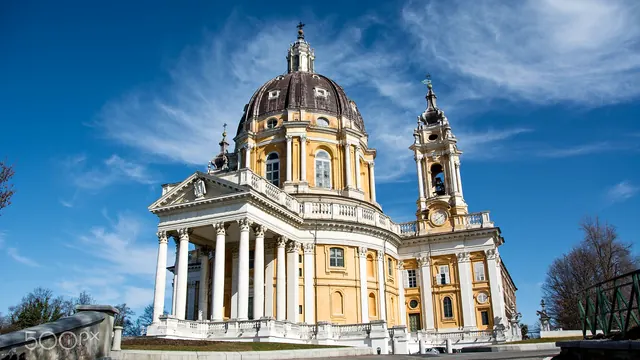
Piedmont's is concentrated in a grand capital. Turin's Baroque squares and royal palaces, the Egyptian Museum and the Savoy residences at Venaria Reale and Stupinigi make one large city to explore. Further out are monuments in dramatic settings, such as the Sacra di San Michele on its crag and the palace gardens of the Borromean Islands.
Nightlife
Neither is a party destination, but Turin gives Piedmont the livelier evenings. The aperitivo ritual leads on to the packed pavements of San Salvario and Vanchiglia, and to bars along the Po in summer.
Strasbourg's Krutenau student quarter has beer and wine bars and a few clubs, but nights end early, and many young locals head to Basel for a bigger night. In both regions, evenings in the countryside end with dinner.
Nature & outdoors
This is the clearest gap between the two. Piedmont has the real Alps on three sides: high trails and refuges under Monte Rosa, ibex at Gran Paradiso, the roadless Val Grande and the Olympic slopes around Sestriere. Lakes Maggiore and Orta add sailing and kayaking, and the Langhe hills are classic road-cycling country.
Alsace offers gentler country. The rounded, forested Vosges top out at the Grand Ballon, and the Route des Crêtes has long views to the Black Forest. It is good for walking among vineyards and castle ruins and for flat cycling on the Rhine plain, but its winter skiing is modest.
Day trips
Both make excellent bases, but the outings differ in scale. Alsace's are close together: the wine villages from Kaysersberg to Eguisheim are only a few kilometres apart, so one day can take in several of them. Across the borders, Basel, Freiburg and Baden-Baden are easy trips into two more countries.
Piedmont's outings go further and to bigger places. Milan is an hour away by fast train, Genoa and the Ligurian coast are under two hours, and Aosta is up the valley. Lake boats cross to the Swiss shore. From a Langhe base, Turin itself becomes the day out.
Good for families
Alsace is much better set up for children. Europa-Park is within an hour of Strasbourg or Colmar, and near Ribeauvillé free-roaming macaques, falconry at a castle and a stork park fill a day. Mulhouse adds a zoo and its railway and car museums.
Piedmont can work if you mix the city with the outdoors. The mummies in Turin's Egyptian Museum, the boats and peacock gardens on Lake Maggiore, and gentle ski schools all appeal to children. But there is no big theme park, and the wine country can bore younger ones.
Getting around
Alsace is easier without a car. Frequent trains run down the plain linking Strasbourg, Sélestat, Colmar and Mulhouse, Strasbourg has trams and some of France's best cycle lanes, and the flat land makes cycling between villages a real option. You only need a car for the Route des Crêtes and the smaller villages.
In Piedmont, Turin's flat grid, arcades and metro are simple to use, and trains reach Alba and Stresa. Beyond those lines, the hilltop Langhe villages and the Alpine valleys rely on winding roads and sparse buses. Without a car, a visit is limited to Turin and the lake.
Shopping & style
The two are evenly matched, and in both the best things to take home are regional rather than designer. Alsace has Betschdorf's grey-and-blue stoneware, Soufflenheim baking moulds and kelsch linen. Its Christmas markets, held in Strasbourg since the sixteenth century, turn December into a shopping season of its own.
Piedmont leans towards food and textiles. You'll find Turin chocolates and vermouth, Barolo bought at the cellar door, cashmere from the Biella mills, and the huge Porta Palazzo market with the Balon flea market beside it. For luxury fashion, Milan is close by.
Affordability
Piedmont is the cheaper of the two. Turin has reasonably priced hotels and generous aperitivo, and countryside trattorias serve long meals at fair prices. Costs only climb in the Langhe during truffle season, in the Maggiore resorts in high summer and on the ski slopes.
Alsace runs higher. Strasbourg's hotels are priced like those of any major French city, rooms get scarce and expensive in December and during European Parliament sessions, and car hire adds to the cost of touring the wine route. Village guesthouses outside December are the way to save.
Live music & performing arts
Here the two are level, with one city doing most of the work in each region. Strasbourg's Opéra national du Rhin also performs in Colmar and Mulhouse, and the Théâtre National de Strasbourg is one of France's leading drama houses. At village level there is a living tradition of choirs and brass bands.
Turin answers with the Teatro Regio's opera and ballet, the RAI National Symphony Orchestra and the historic Teatro Carignano. Its summer calendar also includes big electronic and rock events, which Alsace does not really have, and the Stresa festival brings classical concerts to the lake.
Wellness & relaxation
Piedmont has a slight edge thanks to its thermal waters. At Acqui Terme the Bollente spring rises at about 75°C in the middle of town, and Valdieri and Vinadio offer mountain thermal baths in the Maritime Alps.
Alsace's own spas at Niederbronn-les-Bains and Morsbronn are quieter, and many visitors cross to the great thermal baths of Baden-Baden instead. Both regions do slow wine-country stays very well. Avoid Strasbourg in December if rest is the aim.
When should you go?
Pick your month. The climate figures are measured averages, not a forecast.
Alsace in July
Piedmont in July
Daytime high, °C
Rainfall in the month, mm
Where the figures come from
Piedmont has no weather station within reach, so its figures come from a gridded climate model rather than a measured record, and read a broad area rather than one spot.
Temperature and rainfall are climate normals, averaged over the years shown. Alsace: 1991-2020 normals, Ihringen (20.8 km from centre). Piedmont: 1991-2020 normals, TerraClimate 4 km grid at the town, no weather station within 90 km.
Piedmont is the warmer of the two all year round. Summer highs reach about 29°C against Alsace's 27°C, and Piedmont's winters are a few degrees milder. In Alsace, May to August is the long, sunny stretch, and the brightest days come in July and August. Rain falls through the whole summer, though, and May is the wettest month at about 87mm. September and October are good for walking the vineyards at the harvest. From November to February it is grey and cold, apart from the lit-up Christmas markets.
Piedmont's July is surprisingly dry, and the lake water at Maggiore warms to around 24°C in July and August, so high summer suits the lakes and the mountains. The hot lowland days in Turin and Alba are better spent on early walks. The rain comes in autumn and peaks in November at about 89mm. That means the truffle and harvest weeks of October are worth visiting but need some flexibility. Spring and late September are pleasant everywhere for walking around towns.
Which traveller are you?
On a family trip with children, Alsace makes the simpler plan. One base can cover a theme park day, an animal park and a canal boat ride with short drives in between. In Piedmont, families would have to split their time between Turin and the lake.
For an outdoors trip, Alsace suits easy days: walk through the vineyards in the morning and have lunch in a village, all from the same room. Piedmont is the choice for serious hiking or skiing, but you'll need a separate base up in the mountains.
On a food and nightlife trip, Alsace makes good eating easy, with tastings and tavern dinners close together, but evenings end early. Piedmont takes more planning: book autumn tables in the hills, then spend some nights in Turin, where aperitivo runs late.
Before you go
| Measure | Alsace | Piedmont |
|---|---|---|
| Official language | French | Italian |
| Currency | Euro (EUR) | Euro (EUR) |
| Sockets | CE230 V, 50 Hz | CFL230 V, 50 Hz |
| Driving side | Right | Right |
| Time zone | UTC+1, UTC+2 in summer | UTC+1, UTC+2 in summer |
| Emergency number | 112 | 112 |
| Main airport | Strasbourg Airport (SXB)43 non-stop destinations | Turin Airport (TRN)65 non-stop destinations |
| Public holidays this year | 11 days | 13 days |
By the numbers
| Measure | Alsace | Piedmont |
|---|---|---|
| Population | - | 4,341,375 |
| Swim season, months above 21 °C | - | 4 months |
Where else could you go?
Every comparison below shares a destination with this one, so you can follow Alsace or Piedmont somewhere new.
- Black Forestvs Alsace
- Lake Maggiorevs Piedmont
- Cinque Terrevs Piedmont
- French Rivieravs Piedmont
- Swiss Alpsvs Alsace
- French Alpsvs Piedmont