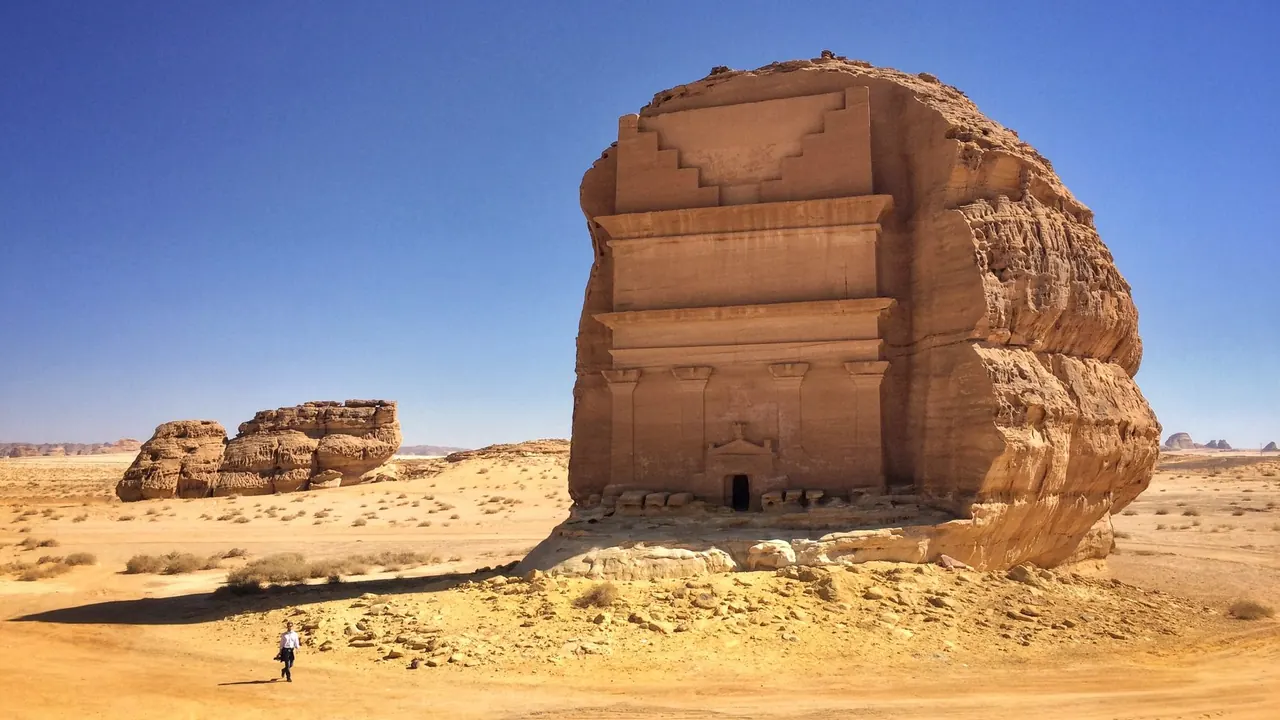
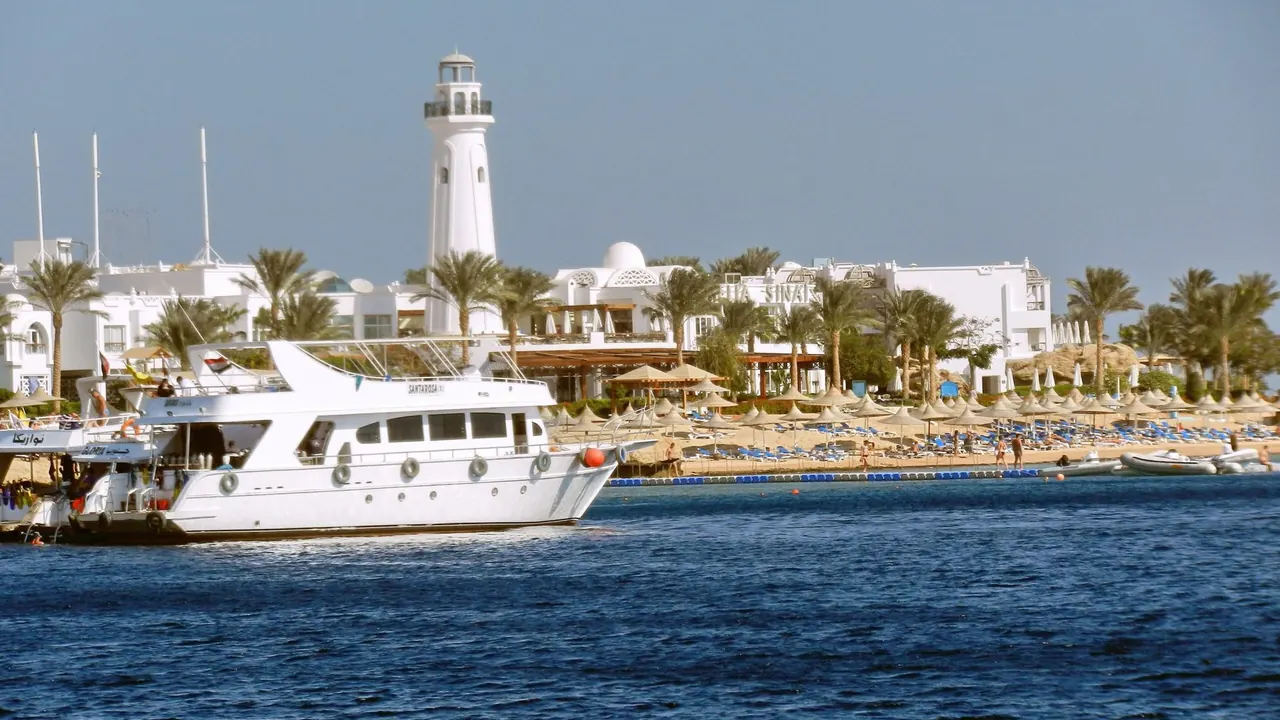
Photos: AlUla by Richard.hargas, CC BY-SA 4.0, cropped; Sharm el-Sheikh by Tanya Dedyukhina, CC BY 3.0, cropped.
AlUla or Sharm el-Sheikh?
Our verdict in twelve categories, each scored against the same fixed benchmark cities, and the climate month by month, so you can choose for your trip.
Choose AlUla for
- culture and sights
- live music and the arts
AlUla is for travellers who want ancient history set in a landscape on a grand scale: Nabataean tombs standing alone in open desert, a mud-brick old town below a fort, canyons and balloon flights over the palm groves. It suits couples and older children who are happy with a quiet, costly, car-dependent stay built around guided visits, cool winter days and dark skies, and who don't need a beach or bars.
Choose Sharm el-Sheikh for
- beaches
- prices
- nightlife
Sharm el-Sheikh makes more sense when the sea is the point. Coral reefs a few steps from the sand, world-class diving at Ras Mohammed and inexpensive all-inclusive resorts with kids' clubs make it the easier choice for families, snorkellers and anyone watching the budget. Go expecting a resort week with a little nightlife in Naama Bay, not history, because the town has almost none.
Scoreboard
Twelve categories on one fixed scale from 0 to 100. The shaded stretch is the gap between the two.
Your match
Pick a travel style or drag the sliders, and both match scores follow your weighting.
Wins on culture and sights and live music and the arts with your weighting.
Wins on beaches and prices with your weighting.
What matters to you?
Category by category
What the scores mean for a trip.
Beaches & swimming
There is no real contest. AlUla is a desert valley far from any coast, and swimming means the pool at your resort or camp.
Sharm el-Sheikh is built around the Red Sea. You get sandy Naama Bay, reef beaches along Sharks Bay, Ras Um Sid and Nabq, and coral within a few strokes of the jetties. Expect hotel-owned stretches of sand and wear reef shoes.
Food & drink
Neither is a place to travel for food, but the meals differ. AlUla eats at its resorts and on the Old Town terraces, with oasis dates, citrus and cardamom coffee as the local touch. In Sharm el-Sheikh the hotel buffet sets the tone, and the Old Market grills fish and serves koshari and taameya late into the night.
Culture & sights
AlUla has some of the most striking ancient sites in Arabia. Hegra's monumental Nabataean tombs, the older kingdoms at Dadan, the inscribed canyon of Jabal Ikmah and the abandoned mud-brick Old Town fill several full days, though mostly on guided visits rather than in museums.
Sharm el-Sheikh is a modern resort town. Its sights come down to the Al Sahaba Mosque and the painted Coptic cathedral, and anything older means a long trip out.
Nightlife
AlUla has no bars or clubs. A night out is dinner, a stroll through the lit Old Town lanes and stargazing in the desert.
Sharm el-Sheikh at least gives you somewhere to go: Naama Bay's promenade of bars, shisha lounges and a few late clubs, plus DJ nights at beach bars. It is aimed at tourists and fades outside the peak months, but it is enough for a few nights of dancing.
Nature & outdoors
Both are outstanding, and Sharm el-Sheikh edges ahead thanks to the reefs. Ras Mohammed's coral walls, the Thistlegorm wreck and the Tiran Strait put it among the world's great dive destinations, with Sinai's granite mountains and Bedouin camps on land as well.
AlUla's appeal is above ground: sandstone formations like Elephant Rock, palm groves, the lava plateau of Harrat Uwayrid and the Sharaan reserve. Canyon hikes, via ferrata, balloon flights and very dark skies make it the better choice if you would rather walk than dive.
Day trips
Neither has a lot to offer beyond its own area, but Sharm el-Sheikh has the stronger pair of outings. Dahab is an easy hour up the coast, and St Catherine's Monastery with a sunrise climb of Mount Sinai makes a memorable long day.
From AlUla the options are the ancient oasis towns of Tayma and Khaybar. Each is around two hours across open desert, and they are rewarding mainly if you want even more archaeology.
Good for families
Sharm el-Sheikh is far easier with children. Resorts come with kids' clubs, family pools and slides, and calm shallow lagoons are ideal for a first go at snorkelling.
AlUla suits older, outdoorsy children who will enjoy camel rides, ziplines and clambering among the rocks. There is nothing built for little ones, though, and days involve long drives and walking in the sun.
Getting around
Both are spread out and neither works on foot. Sharm el-Sheikh is a little easier, with taxis, hotel shuttles, minibuses along the coast road and a walkable Naama Bay, and many guests barely leave the resort. In AlUla the sites lie 20km or more apart along the valley, reached by ticketed shuttle buses or a hire car or driver, so each day needs planning.
Shopping & style
Sharm el-Sheikh has more to browse. The Old Market and the Naama Bay promenade sell spices, perfume oils, alabaster and galabiyas, with haggling expected, and there are a few malls for beachwear.
AlUla's shopping is a short run of Old Town craft shops selling weaving, pottery and local perfume. Dates from the oasis are the best thing to bring home.
Affordability
This is one of the sharpest differences between the two. Sharm el-Sheikh's all-inclusive resorts are cheap by European standards, and the best value comes from staying in and going out little, though diving and excursions add up.
AlUla is expensive almost by design. Accommodation is dominated by luxury resorts and tented camps, the main sites are reached on paid guided tours, and you will need a car or driver.
Live music & performing arts
AlUla has the better reason to plan around a performance. In the winter season the mirror-clad Maraya hall in its desert canyon hosts international singers and orchestras, alongside traditional dance among the rocks, though little happens the rest of the year. Sharm el-Sheikh offers hotel dinner shows with belly dancers and tanoura whirling, and nothing beyond that.
Wellness & relaxation
Both rely on resort spas rather than any local bathing tradition, so the difference is in mood. Sharm el-Sheikh's hotels often include hammam-style baths and inexpensive massage, and the sea and winter sun do the rest. AlUla offers sunrise yoga, pools among the rocks and silent desert evenings by a fire.
When should you go?
Pick your month. The climate figures are measured averages, not a forecast.
AlUla in July
Sharm el-Sheikh in July
Daytime high, °C
Rainfall in the month, mm
Where the figures come from
AlUla has no rain gauge within 25 km of the centre, so its rainfall comes from a gridded climate dataset read at the city rather than from a gauge further away.
Sharm el-Sheikh has no weather station within reach, so its figures come from a gridded climate model rather than a measured record, and read a broad area rather than the city itself.
Temperature and rainfall are climate normals, averaged over the years shown. AlUla: 2010-2025 (rainfall 1991-2020) normals, Alula / Al ‘Ulá (23.7 km from centre). Sharm el-Sheikh: 2001-2020 normals, NASA POWER reanalysis grid, no weather station within 90 km.
Both are desert climates where rain barely registers, so the choice comes down to heat. AlUla is at its best from November to March, when days run from about 23°C to 29°C, comfortable for walking among the tombs and canyons. From May to September it is fierce, peaking around 43°C, and sightseeing shrinks to the first and last hours of light. April and October are already hot by midday.
Sharm el-Sheikh follows much the same curve. Its winter days are a touch cooler than AlUla's and its summers a few degrees less extreme, and the sea is swimmable all year. The water stays near 23°C through winter and spring and warms to about 29°C in August. December to February is good for snorkelling, though afternoons can be breezy and a little cool for lying on the beach. From May the land heats up quickly, so the best balance of warm air and warm water comes in March and April, then again in October and November.
Which traveller are you?
On a culture and arts trip, AlUla is the clear choice. Hegra's carved tombs, the lion tombs at Dadan, the inscriptions of Jabal Ikmah and winter concerts at Maraya give a depth of history Sharm el-Sheikh cannot match.
For a beach and sun trip, Sharm el-Sheikh wins outright. Its warm, clear sea, reef snorkelling straight from hotel jetties and diving at Ras Mohammed are its whole purpose, while AlUla sits far inland with nothing but resort pools.
On a trip on a tight budget, Sharm el-Sheikh goes much further. All-inclusive hotels are cheap by European standards and Old Market food costs little, whereas AlUla leans on luxury camps, paid guided tours and a hire car.
Before you go
| Measure | AlUla | Sharm el-Sheikh |
|---|---|---|
| Official language | Arabic | Arabic |
| Currency | Saudi Riyal (SAR) | Egyptian Pound (EGP) |
| Sockets | G60 Hz | CF220 V, 50 Hz |
| Driving side | Right | Right |
| Time zone | UTC+3 | UTC+2, UTC+3 in summer |
| Emergency number | 112 or 911 | Police 122, ambulance 123, fire 180 |
| Elevation | 692 m | 1 m |
| Main airport | Al-Ula International Airport (ULH)24 km from centre8 non-stop destinations | Sharm El Sheikh International Airport (SSH)16 km from centre112 non-stop destinations |
| Public holidays this year | - | 15 days |
By the numbers
| Measure | AlUla | Sharm el-Sheikh |
|---|---|---|
| City population | 32,413 | 73,000 |
| Museums within 10 km | 2 | 1 |
| UNESCO World Heritage sites within 50 km | 1 | 0 |
| Swim season, months above 21 °C | - | 12 months |
Where else could you go?
Every comparison below shares a destination with this one, so you can follow AlUla or Sharm el-Sheikh somewhere new.