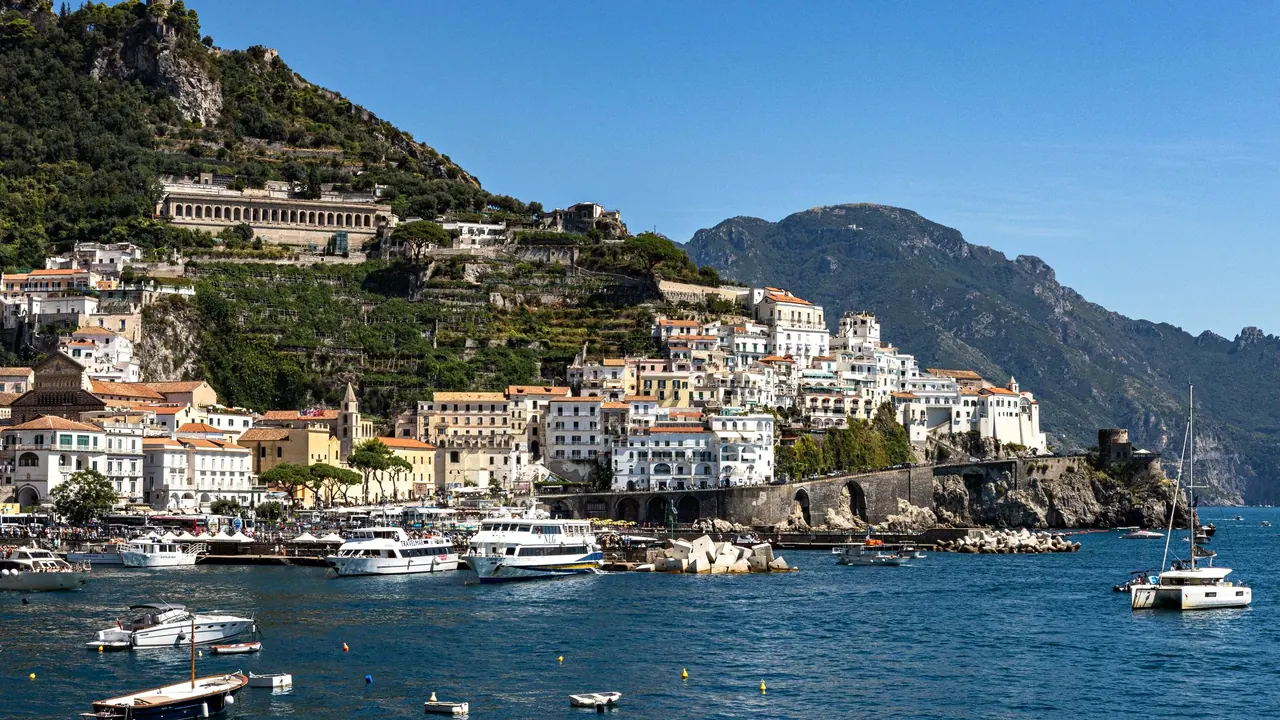
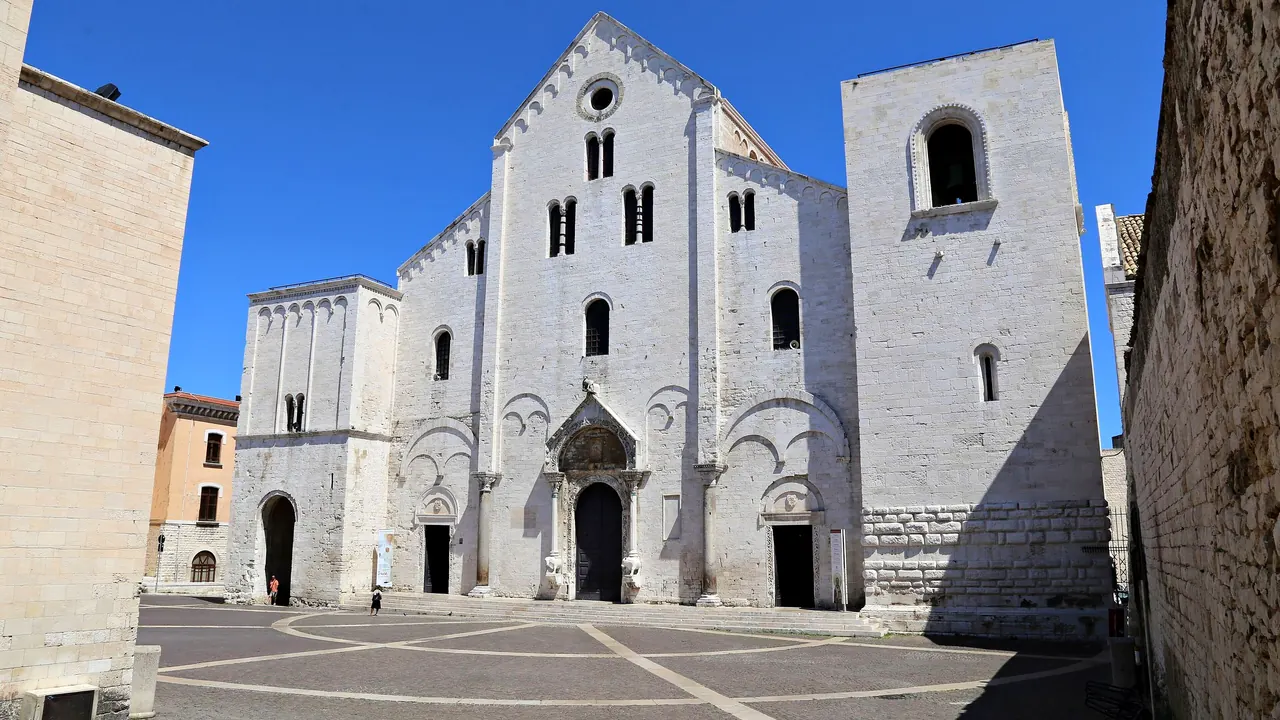
Photos: Amalfi by Oleksandra Zelena, Pexels License; Bari by Sailko, CC BY-SA 4.0, cropped.
Amalfi or Bari?
Our verdict in twelve categories, each scored against the same fixed benchmark cities, and the climate month by month, so you can choose for your trip.
Choose Amalfi for
- nature and the outdoors
- wellness
Amalfi is for travellers who come for scenery and are happy to pay for it. Cliffs drop into the sea, mule stairways climb to hill hamlets and the Path of the Gods is a short bus ride away, so walkers and anyone who wants the classic coast will find it hard to beat. It suits couples and adults on a short, well-funded stay who expect quiet evenings and food that is good rather than remarkable.
Choose Bari for
- nightlife
- prices
- live music and the arts
Bari makes more sense if you want a real southern Italian city with plenty going on. It eats better and costs far less, and it has an old town, an opera house and summer nights out in the piazzas. As a base for Matera, the trulli and the Puglian coast, it matches Amalfi's reach while being easier with children and kinder to a budget.
Scoreboard
Twelve categories on one fixed scale from 0 to 100. The shaded stretch is the gap between the two.
Your match
Pick a travel style or drag the sliders, and both match scores follow your weighting.
Wins on nature and the outdoors and wellness with your weighting.
Wins on nightlife and prices with your weighting.
What matters to you?
Category by category
What the scores mean for a trip.
Beaches & swimming
Neither town is a long-beach destination, and both send their best swimmers a short trip away. The difference is the surface and the setting. Amalfi's Marina Grande is pebble, lined with club loungers under the Duomo, and the better swims come from boats, rocks and coves like Santa Croce reached by stairs.
Bari has sand on its doorstep at Pane e Pomodoro, busy with local families, then a short train ride to Polignano's cliff-walled cove and the inlets around Monopoli. Choose Amalfi for swimming from boats and rocks below the cliffs, Bari for sand and easy half-days on the coast.
Food & drink
Bari is the far stronger place to eat. Its food comes from Apulian homes and streets: hand-rolled orecchiette, focaccia barese, fried sgagliozze, tiella and burrata, with Primitivo to drink, and none of it costs much.
Amalfi has fine ingredients in its sfusato lemons, colatura and scialatielli with seafood, but the town is small and much of the cooking around the piazza is aimed at day visitors. Good meals there take some hunting in the back alleys, while in Bari they are hard to avoid.
Culture & sights
Bari gives a sightseer more to do. Bari Vecchia's whitewashed lanes, the Romanesque Basilica di San Nicola, the cathedral and the Norman-Swabian castle fill a day, and the Murat quarter and the Pinacoteca can fill a second.
Amalfi's heritage is fine but compact: the striped Duomo with its Constantinople bronze doors, the Chiostro del Paradiso, the Arsenale and the paper museum. Half a day covers it, and the rest of the trip goes to the coast.
Nightlife
This is one of the widest gaps between the two. Bari goes out late and outdoors, with students filling Piazza Ferrarese, bars along the Umbertino streets and the seafront open past midnight, and beach clubs south of the city in summer.
In Amalfi the night ends with a drink by the harbour once the last ferries leave. Anyone after more than that would have to head to Salerno or Naples.
Nature & outdoors
Amalfi's landscape is the reason most people go. Lemon terraces and ravines climb the Lattari mountains straight from the sea, and the Valle delle Ferriere and the Path of the Gods above Positano are walks of real stature, with grottoes to explore by kayak below.
Bari's surroundings are gentler and flatter: olive groves, a long seafront promenade, the open karst of the Alta Murgia about an hour away and the Grotte di Castellana. They are good for quiet walks and cycling, but there is nothing to compare with Amalfi's cliffs.
Day trips
Both are excellent bases, so the choice comes down to which region you want to see. From Amalfi it is Ravello's villas, Positano by ferry, Capri, Paestum and, with effort, Pompeii and Herculaneum, though summer roads are slow and ferries are seasonal.
From Bari it is Matera's cave dwellings, the trulli of Alberobello, Ostuni and the Valle d'Itria, Trani's sea cathedral and Baroque Lecce. Trains run all year, but a hire car helps inland.
Good for families
Bari is much easier with children. Its centre is flat, the old town lanes are free of traffic and there is a sandy city beach, with the safari park at Fasano and the Castellana caves as outings.
Amalfi's stairways defeat pushchairs, the beach is crowded pebble and the winding buses can upset small stomachs. It works best for older children who swim confidently and enjoy boats.
Getting around
Both centres are walkable, but Bari's is flat and Amalfi's is a climb of steps from the seafront. Bari also has a rail link to the airport and regional lines fanning out along the coast and inland, slow in places but usable all year.
Amalfi depends on one cliff road and seasonal ferries. In summer its buses fill and pass waiting queues, and parking is so scarce that a car is a burden.
Shopping & style
Bari offers somewhat more range. Via Sparano has Italian chains and a few boutiques, and the delicatessens sell orecchiette, taralli and olive oil worth packing.
Amalfi's single main street repeats limoncello and ceramics from shop to shop. Its distinctive buy is the handmade cotton paper from the valley mills, along with made-to-measure sandals.
Affordability
The cost gap is large. Amalfi's sea-view rooms are priced like the dearest European capitals, and loungers, boat hire and piazza meals add up fast. The local buses are about the only bargain.
Bari stays moderately priced for most of the year. Street food, trattoria lunches and local wine cost little and the main sights are free, though rooms tighten in July and August.
Live music & performing arts
Bari has a proper stage in the Teatro Petruzzelli, one of Italy's largest opera houses, with opera, ballet and symphonic seasons, plus summer jazz in the piazzas and the castle.
Amalfi has no theatre of its own. Its one standout is the summer Ravello Festival up the hill, where concerts on the Villa Rufolo terrace above the sea are worth planning an evening around.
Wellness & relaxation
Neither has thermal baths, and in both the spas belong to hotels, so rest comes from the pace of the day. Amalfi's version is quiet mornings, swims from the rocks and retreating to the hill hamlets when summer crowds arrive. Bari's is the afternoon break and the evening stroll along the seafront, with countryside estates for anyone who wants real pampering.
When should you go?
Pick your month. The climate figures are measured averages, not a forecast.
Amalfi in July
Bari in July
Daytime high, °C
Rainfall in the month, mm
Where the figures come from
Amalfi's temperatures are measured 65 km from the centre, at Grazzanise.
Amalfi has no rain gauge within 25 km of the centre, so its rainfall comes from a gridded climate dataset read at the city rather than from a gauge further away.
Bari has no rain gauge within 25 km of the centre, so its rainfall comes from a gridded climate dataset read at the city rather than from a gauge further away.
Bari's sunshine is measured 77 km from the centre, at Marina Di Ginosa.
Temperature and rainfall are climate normals, averaged over the years shown. Amalfi: 1991-2020 normals, Grazzanise (64.7 km from centre). Bari: 1991-2020 (sunshine 1961-1990) normals, Bari / Palese Macchie (7 km from centre).
Amalfi's beach season runs from June to September. The sea is warm enough for long swims and reaches about 26°C in August, and the summer months are very sunny and almost dry. Those same months are hot for the stairways and cliff paths, with highs of about 31°C in July and August. Walkers do better in April and May, when the days are mild and the rain is easing, or in late September once the heat breaks, though showers are returning by then. From October the rain sets in properly and peaks at about 143mm in November, so winter on the coast is cool, wet and grey.
Bari's summer follows much the same pattern. Its sea is just as warm from June to early October and its highs run a degree or so lower, but the middle of the day in July and August is still too hot for long walks through the old town. The real difference is the cooler half of the year, which is much drier in Bari. Even November, its wettest month, brings only about 83mm, so a food and sightseeing break works there in any season. Spring and autumn are the most comfortable times for walking the streets.
Which traveller are you?
On an outdoors trip, Amalfi is the clear pick. The Lattari mountains start at the edge of town, with the Valle delle Ferriere gorge, the Path of the Gods and sea caves to kayak into. Bari's flat plain offers gentler cycling and the Murgia plateau.
For a food and nightlife trip, choose Bari. You get orecchiette rolled in the old town lanes, focaccia and raw seafood by the fishermen's pier, then late outdoor drinking on Piazza Mercantile. Amalfi's evenings stop at dinner and a gelato on the piazza.
On a trip with a tight budget, Bari wins easily. Street food, cheap local wine, free sights and moderately priced rooms let money stretch. Amalfi is among Italy's dearest places to stay, and even careful choices in the hill villages never make it cheap.
Before you go
| Measure | Amalfi | Bari |
|---|---|---|
| Official language | Italian | Italian |
| Currency | Euro (EUR) | Euro (EUR) |
| Sockets | CFL230 V, 50 Hz | CFL230 V, 50 Hz |
| Driving side | Right | Right |
| Time zone | UTC+1, UTC+2 in summer | UTC+1, UTC+2 in summer |
| Emergency number | 112 | 112 |
| Elevation | 6 m | 5 m |
| Main airport | Naples International Airport (NAP)38 km from centre131 non-stop destinations | Bari Karol Wojtyła International Airport (BRI)9 km from centre104 non-stop destinations |
| Public holidays this year | 13 days | 13 days |
By the numbers
| Measure | Amalfi | Bari |
|---|---|---|
| City population | 4,729 | 315,473 |
| People per km² | 830 | 2,687 |
| Museums within 10 km | 8 | 12 |
| UNESCO World Heritage sites within 50 km | 5 | 1 |
| Swim season, months above 21 °C | 5 months | 4 months |
Where else could you go?
Every comparison below shares a destination with this one, so you can follow Amalfi or Bari somewhere new.