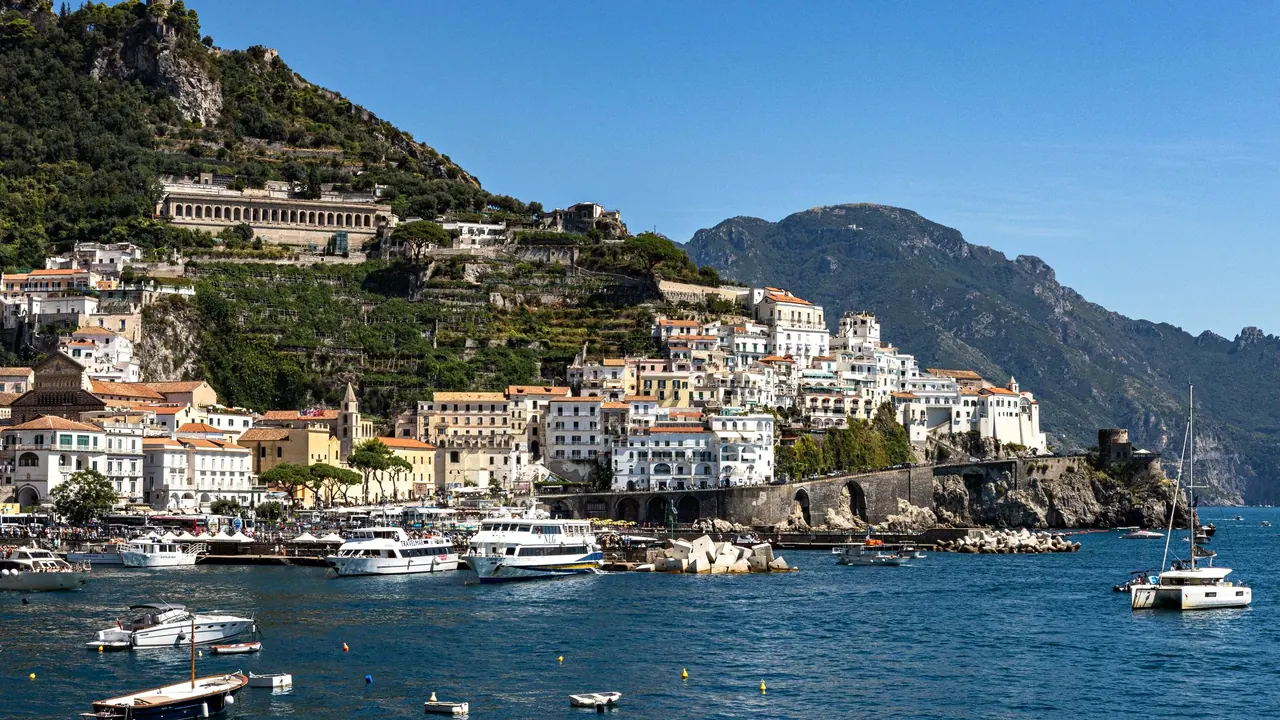
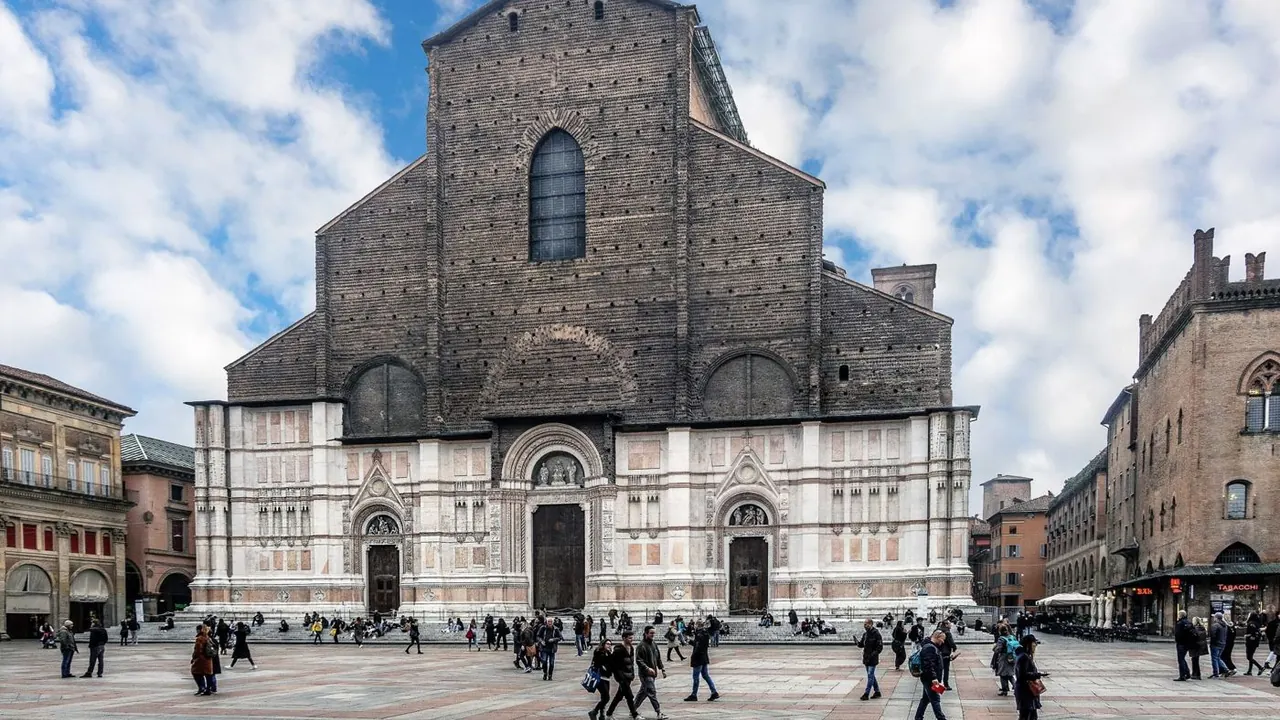
Photos: Amalfi by Oleksandra Zelena, Pexels License; Bologna by Vanni Lazzari, CC BY-SA 4.0, cropped.
Amalfi or Bologna?
Our verdict in twelve categories, each scored against the same fixed benchmark cities, and the climate month by month, so you can choose for your trip.
Choose Amalfi for
- beaches
- nature and the outdoors
Amalfi is for a trip built around the coast itself: swimming from pebbles and hired boats, walking the terraced cliffs and the Path of the Gods, and taking ferries to Positano or Capri. It suits couples and adults who want scenery and slow evenings, and who can live with steep stairs, summer crowds and some of the highest room prices in Italy.
Choose Bologna for
- nightlife
- culture and sights
- live music and the arts
Choose Bologna if you would rather eat, look and go out. Its arcaded medieval centre, Emilian cooking and student bar streets fill several days, the flat streets are far easier with children, and the station puts Florence, Ravenna and Venice within a day. Money goes further here too, though there is no sea on the doorstep and the countryside is gentle rather than dramatic.
Scoreboard
Twelve categories on one fixed scale from 0 to 100. The shaded stretch is the gap between the two.
Your match
Pick a travel style or drag the sliders, and both match scores follow your weighting.
Wins on beaches and nature and the outdoors with your weighting.
Wins on nightlife and culture and sights with your weighting.
What matters to you?
Category by category
What the scores mean for a trip.
Beaches & swimming
Amalfi is the one for swimming. Marina Grande is pebbly and lined with beach-club loungers in summer, but the sea is clear, Atrani and coves such as Santa Croce are close, and a hired boat opens up rocks and grottoes the road never reaches.
Bologna is inland, so the sea means an hour on the train to Rimini or Cervia. There the Adriatic is warm and shallow but lined with organised lidos, and the water is often greenish. It works as a day's escape from the city heat, not as a beach vacation.
Food & drink
Bologna is the far better place to eat. It is the home of tagliatelle al ragù, tortellini in brodo and mortadella, with hand-rolled pasta, old osterie and the market lanes of the Quadrilatero, and the Parmigiano and balsamic producers are less than an hour away.
Amalfi has its own coastal kitchen of sfusato lemons, anchovies, colatura and scialatielli with seafood, but the town is small and much of the cooking on the piazza is for passing crowds. In Amalfi you have to seek out the careful trattorias. In Bologna they are the norm.
Culture & sights
Amalfi's heritage fits into half a day: the striped Duomo with its bronze doors from Constantinople and the crypt of St Andrew, the Chiostro del Paradiso, the old Arsenale and the paper museum up the valley.
Bologna needs two or three days. It has a whole brick medieval centre with close to 40km of UNESCO-listed porticoes, plus San Petronio, the Two Towers, Santo Stefano, the anatomical theatre in the Archiginnasio and the Bolognese painting in the Pinacoteca. That makes it a culture trip in its own right.
Nightlife
Amalfi goes quiet once the last ferries and buses leave, and a late night means a wine or cocktail bar near the harbour at most. Bologna's students keep Piazza Verdi, Via Petroni and Via del Pratello busy until late, and aperitivo around the Quadrilatero leads on to wine bars. The tone is casual rather than polished, and it fades in August when the university empties.
Nature & outdoors
Amalfi's setting is the reason most people go. The Lattari mountains drop into the sea, lemon terraces and mule stairways link the cliff villages, and the Sentiero degli Dei is among the great coastal walks in Europe. Sea caves such as the Emerald Grotto add a side you explore by water.
Bologna's outdoors is milder. The Colli Bolognesi and the gypsum caves of the Parco dei Gessi are close, the Via degli Dei leaves Piazza Maggiore for Florence, and Corno alle Scale offers summer hiking. North of the city the land flattens into farmland, fine for cycling but plain.
Day trips
Both are excellent bases, but Bologna's rail junction gives it the wider and steadier reach. Florence is barely half an hour away, Ravenna, Ferrara, Modena and Parma are easy hops, and Venice, Verona and Padua all fit into a day, in any season.
Amalfi's outings are famous ones: Ravello, Positano, Capri, Paestum and Pompeii. Getting to them depends on ferries that run mainly from spring to autumn and on a slow coast road that clogs in summer.
Good for families
Neither city is built around children, but Bologna is much easier. Its centre is flat, mostly free of traffic and shaded by porticoes, and a day at Mirabilandia or on Rimini's beaches is within reach.
Amalfi's steep stairways defeat pushchairs, its pebble beach is crowded and the winding cliff buses can make children sick. Older children who swim well will love the boats and sea caves, but toddlers are better off elsewhere.
Getting around
Amalfi has to be climbed, while Bologna's centre is flat, and Bologna is much the easier of the two to get around. In Amalfi the main street soon turns into stairways and covered steps. In summer the blue buses fill up and pass waiting queues, and the ferries to Positano and Capri run only from spring to autumn. Anyone with limited mobility will struggle once they leave the seafront.
Bologna's old town is compact and largely closed to private cars, and the porticoes keep you in shade or out of the rain as you cross it on foot. There is no metro, but buses reach the hills and the airport. The central station sits at the edge of the old town, a short walk from most hotels. Watch for the many bikes under the arches.
Shopping & style
Amalfi's shopping is one main street of limoncello, lemon soaps and painted ceramics, and much of the stock repeats from shop to shop. The things worth taking home are the cotton paper still made in the valley, hand-painted majolica and sandals made to measure.
Bologna gives you more to browse, though food is still what most visitors take home: mortadella, aged Parmigiano and fresh tortellini from the Quadrilatero delicatessens. Via dell'Indipendenza has the Italian chains, and Via Farini and the Galleria Cavour have a small cluster of luxury fashion. The Montagnola market, the weekend antiques market on Piazza Santo Stefano and the vintage shops and bookshops of the university quarter make up the rest.
Affordability
Amalfi is among the dearest places to stay in Italy. Sea-view rooms, meals on the piazza, loungers and boat hire are all expensive, and only the local buses are cheap. Staying in the hill villages in spring or autumn helps.
Bologna is mid-priced. Rooms in the old town still cost what northern Italy charges, and more during trade fairs. Trattoria meals, aperitivo and free-to-enter churches keep day-to-day spending well below Amalfi's.
Live music & performing arts
For live performance Bologna is clearly the better choice, because its music runs through the whole year, while Amalfi's comes down to a single summer festival up the hill. In Amalfi itself an evening out means a church concert or the processions and brass bands of the Sant'Andrea feast. The real draw is the Ravello Festival a short ride above town, where orchestral and chamber music on the Villa Rufolo terrace, with the sea far below, makes one concert memorable. But it is a summer season, not a scene you can count on.
Bologna doesn't depend on the calendar. Opera at the Teatro Comunale, jazz in small basement clubs and student gigs mean there is something to hear on most nights, and in summer the concerts move outdoors into Piazza Maggiore. Theatre is mostly in Italian, so visitors will get more from the music than from the stage.
Wellness & relaxation
Neither has a bathing tradition of its own, but Bologna has thermal springs within reach. Castel San Pietro Terme is about twenty minutes away, and Porretta Terme lies in a green Apennine valley. Amalfi's spas sit mostly in cliff hotels and are mainly for their own guests, so the calm there comes from swims, long lunches and quiet mornings in May or October rather than from treatments.
When should you go?
Pick your month. The climate figures are measured averages, not a forecast.
Amalfi in July
Bologna in July
Daytime high, °C
Rainfall in the month, mm
Where the figures come from
Amalfi's temperatures are measured 65 km from the centre, at Grazzanise.
Amalfi has no rain gauge within 25 km of the centre, so its rainfall comes from a gridded climate dataset read at the city rather than from a gauge further away.
Bologna has no rain gauge within 25 km of the centre, so its rainfall comes from a gridded climate dataset read at the city rather than from a gauge further away.
Bologna's sunshine is measured 82 km from the centre, at Cervia.
Temperature and rainfall are climate normals, averaged over the years shown. Amalfi: 1991-2020 normals, Grazzanise (64.7 km from centre). Bologna: 1991-2020 normals, Bologna / Borgo Panigale (5.5 km from centre).
Amalfi's beach season runs from late May into early October. The sea is about 23°C in June and stays warm through September. July and August are hot, dry and very sunny, which makes the exposed cliff paths hard going, so walkers do better in April, May and October. From October the rain sets in properly, peaking at 143mm in November, and the winters are mild but wet.
Bologna's year has bigger swings. Summers are hotter and more humid, with highs of 32°C in July and August that make a day of sightseeing on foot tiring. Winter is properly cold at 7°C in January, with the fewest sunny hours. Its rain is spread more evenly and is heaviest in autumn. May, June, September and early October are the comfortable months for walking the porticoes, and those same months suit Amalfi for a mix of swimming and hiking.
Which traveller are you?
For a beach and sun trip, Amalfi wins easily. The water is clear and warm from late spring, coves and grottoes lie a short boat ride away, and summers are reliably sunny. Bologna's nearest sea is an hour away, on Rimini's packed lidos.
On a food and nightlife trip, Bologna is the clear choice. Ragù, tortellini and mortadella come from its own kitchens and market lanes, and aperitivo leads on to wine bars and student streets that stay up late. In Amalfi the evening ends with gelato on the piazza.
For an outdoors trip, pick Amalfi. Mountains fall straight into the sea, the Path of the Gods and the Valle delle Ferriere start close by, and kayaks reach the sea caves. Bologna offers gentler hill walks to San Luca and the start of the Via degli Dei.
Before you go
| Measure | Amalfi | Bologna |
|---|---|---|
| Official language | Italian | Italian |
| Currency | Euro (EUR) | Euro (EUR) |
| Sockets | CFL230 V, 50 Hz | CFL230 V, 50 Hz |
| Driving side | Right | Right |
| Time zone | UTC+1, UTC+2 in summer | UTC+1, UTC+2 in summer |
| Emergency number | 112 | 112 |
| Elevation | 6 m | 54 m |
| Main airport | Naples International Airport (NAP)38 km from centre131 non-stop destinations | Bologna Guglielmo Marconi Airport (BLQ)6 km from centre98 non-stop destinations |
| Public holidays this year | 13 days | 13 days |
By the numbers
| Measure | Amalfi | Bologna |
|---|---|---|
| City population | 4,729 | 387,971 |
| People per km² | 830 | 2,754 |
| Museums within 10 km | 8 | 68 |
| UNESCO World Heritage sites within 50 km | 5 | 3 |
| Swim season, months above 21 °C | 5 months | - |
Where else could you go?
Every comparison below shares a destination with this one, so you can follow Amalfi or Bologna somewhere new.