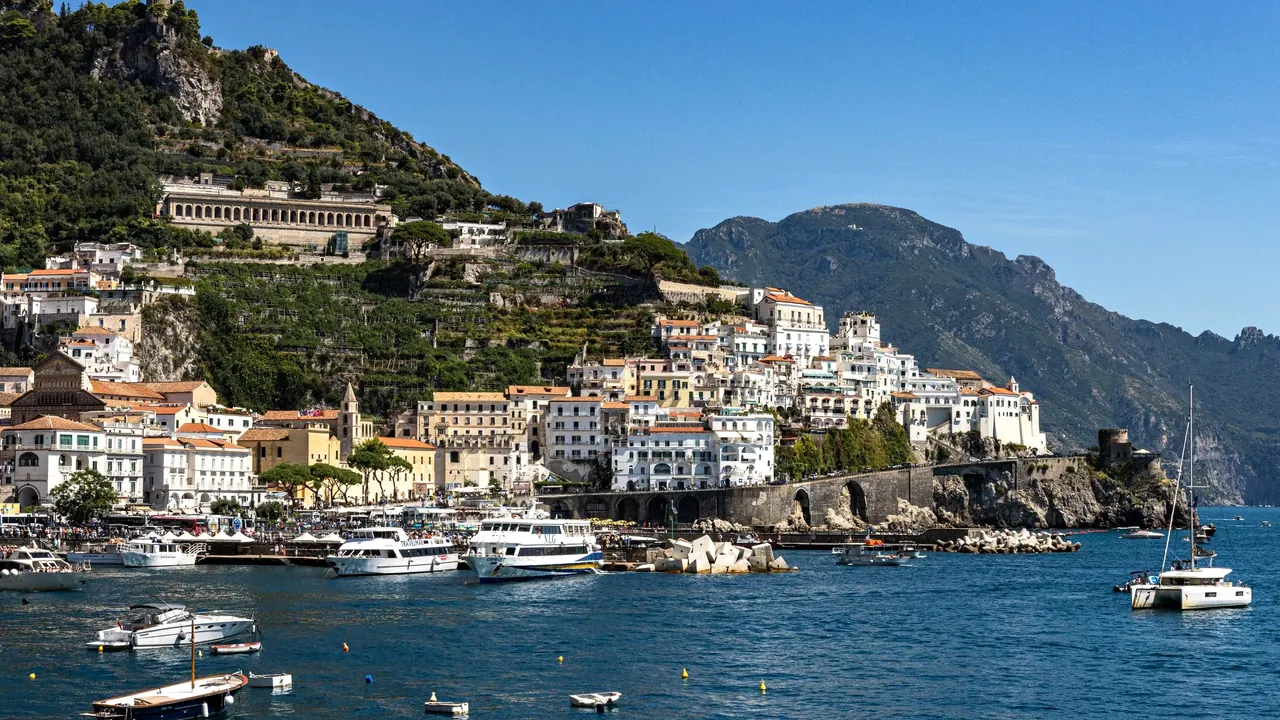
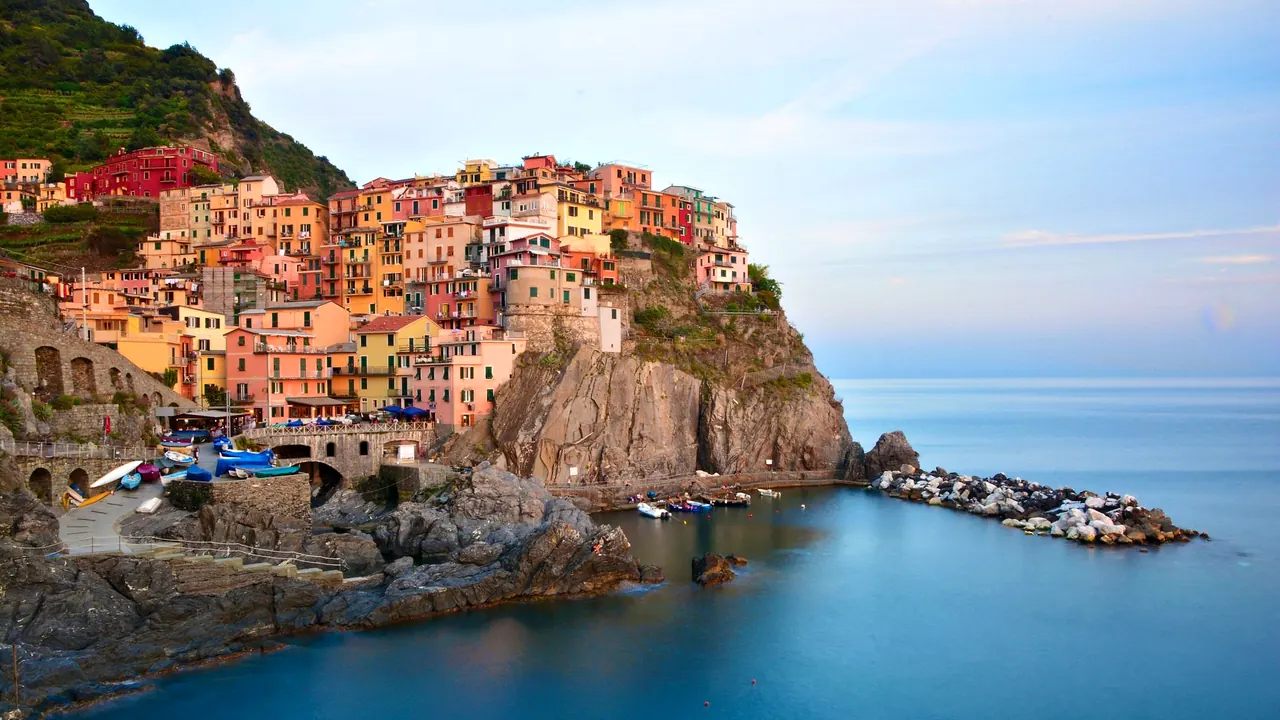
Photos: Amalfi by Oleksandra Zelena, Pexels License; Cinque Terre by Narcisa Aciko, Pexels License.
Amalfi or Cinque Terre?
Our verdict in twelve categories, each scored against the same fixed benchmark cities, and the climate month by month, so you can choose for your trip.
Choose Amalfi for
- shopping
- day trips
- live music and the arts
Amalfi suits travellers who want one base with a lot within reach of it. Ravello's gardens are just up the hill, Positano and Capri are a boat ride away, and Pompeii, Herculaneum and Paestum each fit into a full day out. On a summer evening there is a Ravello Festival concert, and the handmade paper and majolica are worth taking home. In return it asks for patience with crowded summer buses on the cliff road and for a generous budget, since it is the dearer of the two.
Choose Cinque Terre for
- getting around
- prices
- food and drink
For a walking trip spread across five villages rather than one town, the Cinque Terre is the better pick. The coastal train makes it simple to hike from Vernazza to Monterosso and ride back in minutes, and Monterosso gives you the sandy beach that Amalfi lacks. Rooms are still expensive, but less so, and staying in La Spezia or Levanto brings the cost down further. You get less to buy and almost no concerts, and in exchange you have car-free lanes and Ligurian cooking.
Scoreboard
Twelve categories on one fixed scale from 0 to 100. The shaded stretch is the gap between the two.
Your match
Pick a travel style or drag the sliders, and both match scores follow your weighting.
Too close to call, 2 points apart
Wins on shopping and day trips with your weighting.
Wins on getting around and prices with your weighting.
What matters to you?
Category by category
What the scores mean for a trip.
Beaches & swimming
Neither has a long sandy shore, and both have clear water warm enough for summer swimming. The difference is what you swim from. Amalfi's own beach is the pebble strip of Marina Grande below the Duomo, mostly covered by beach-club loungers, so the better swimming is at Atrani or in coves such as Santa Croce, reached by stairs or small boats.
On the Cinque Terre the place for a beach day is Monterosso, where Fegina has the coast's only proper stretch of sand and fine pebble. Elsewhere you swim off rock shelves and slipways at Manarola, Vernazza or Riomaggiore. These are ideal for a dip between walks, not for a day on a lounger.
Food & drink
Both cuisines are narrow but deeply local, and the pleasure lies in what each coast grows. Amalfi cooks around its sfusato lemons, colatura from Cetara and scialatielli with clams, and finishes with limoncello. The Cinque Terre is pesto country, with trofie, focaccia, farinata, Monterosso's anchovies and a rare sweet Sciacchetrà from its terraces. In both places the busiest squares cater to day visitors, and the better tables are tucked away, up Amalfi's valley or in Monterosso and the hill settlements.
Culture & sights
Amalfi keeps its history in one compact cluster, while the Cinque Terre spreads its heritage along a whole coast. Amalfi's sights date from its maritime republic and stand a few minutes apart around the top of the town: the striped Duomo with its bronze doors from Constantinople and the crypt of St Andrew, the white arches of the Chiostro del Paradiso, and the old Arsenale where galleys were built. A morning or an afternoon covers them.
On the Cinque Terre the monument is the coast itself, five villages and their dry-stone terraces listed together by UNESCO. Modest Gothic parish churches, the Doria tower above Vernazza and the hill sanctuaries come along the way. You take it in by walking Corniglia's ridge-top lanes and Manarola's colour-washed streets rather than by standing in front of one great building.
Nightlife
Evenings are quiet in both, and if you want clubs you have to leave. In Amalfi the night ends with a drink or a gelato on Piazza Duomo, and a proper night out means going to Salerno or Naples. The Cinque Terre's version is a glass of white on a harbour wall at sunset, a few bars that stay open later in Monterosso and Riomaggiore, and La Spezia for anything more.
Nature & outdoors
These are two of Italy's great walking coasts, and the difference is one of scale. Amalfi sits below the Lattari mountains, so its walks climb hard: the Path of the Gods from Agerola, the Valle delle Ferriere gorge behind town and the mule stairways up to Pontone and Ravello.
Walking on the Cinque Terre is more about getting from one village to the next. The Sentiero Azzurro joins the five villages along the cliffs, the Sentiero Rosso follows the wooded ridge above, and the train brings you back. The national park's marine reserve also draws divers as well as kayakers.
Day trips
Amalfi has the stronger list of famous names within a day. Ravello is just uphill, Positano and Capri are a ferry ride away, and Pompeii, Herculaneum and the temples of Paestum each fit into a full outing. Seasonal ferries and the jammed summer road do take some planning.
From the Cinque Terre the trips cover a wider area but have fewer headline sights: Portovenere and Lerici by boat, Pisa and Lucca by train, and Portofino and Genoa to the north. The railway makes all of these simple, which partly makes up the difference.
Good for families
Both are hard going with small children. They are built of steps and steep lanes where a pushchair is useless, and neither has anything made for children. The difference is that the Cinque Terre has a fallback in Monterosso, which is mostly flat and has a gently shelving beach. Amalfi's crowded pebbles and winding bus rides, which can make children carsick, offer nothing similar.
With older children who swim and walk confidently, both work well, whether that means Amalfi's boat trips and sea caves or short stretches of Cinque Terre trail and swims off the rocks.
Getting around
This is where the Cinque Terre has a real advantage. Its coastal train runs through tunnels between all five villages, La Spezia and Levanto, with a few minutes between stops, and seasonal ferries and footpaths give you other ways to move.
Amalfi depends on blue buses along a single cliff road. In summer they fill up and drive past waiting queues, and ferries only run from spring to autumn. Both places are easy on foot, a car is a burden in both, and both mean climbing a lot of steps.
Shopping & style
Amalfi has more worth carrying home. Past the limoncello and lemon soap repeated along its main street, you can find the town's handmade cotton paper, hand-painted majolica, linen and sandals made to measure. Cinque Terre shops are mostly about food and drink, so your bag fills with pesto, jarred anchovies and Sciacchetrà rather than crafts.
Affordability
Neither is cheap, but Amalfi is harder on the wallet. Its sea-view rooms cost as much as the dearest capitals, and loungers, boat hire and meals on the piazza add up quickly. The local buses are the one bargain.
On the Cinque Terre the main expense is the scarce rooms, plus paid access to the park's paths. Focaccia, takeaway fried fish and the cheap train keep daily spending reasonable, and staying in La Spezia or Levanto is a common way around the room prices.
Live music & performing arts
Amalfi has the one event worth planning a trip around: the Ravello Festival's summer concerts on the terrace of Villa Rufolo, a short ride uphill. The feast of Sant'Andrea also brings band music to the town. The Cinque Terre has little beyond an occasional concert in a church or on a square and the saints' day processions, so for a play or an orchestra you have to go to La Spezia or Genoa.
Wellness & relaxation
Neither has a spa tradition, and in both you relax by slowing down. Amalfi offers more comfort, with pools and treatment rooms in its cliffside luxury hotels, though mostly for their own guests, and quieter corners in the hill hamlets. The Cinque Terre has little more than the odd massage, but its car-free villages are calm early in the day and outside summer.
When should you go?
Pick your month. The climate figures are measured averages, not a forecast.
Amalfi in July
Cinque Terre in July
Daytime high, °C
Rainfall in the month, mm
Where the figures come from
Amalfi's temperatures are measured 65 km from the centre, at Grazzanise.
Amalfi has no rain gauge within 25 km of the centre, so its rainfall comes from a gridded climate dataset read at the destination rather than from a gauge further away.
Cinque Terre's temperatures are measured 78 km from the centre, at Pisa / S. Giusto.
Cinque Terre has no rain gauge within 25 km of the centre, so its rainfall comes from a gridded climate dataset read at the destination rather than from a gauge further away.
Temperature and rainfall are climate normals, averaged over the years shown. Amalfi: 1991-2020 normals, Grazzanise (64.7 km from centre). Cinque Terre: 1991-2020 normals, Pisa / S. Giusto (77.8 km from centre).
Both coasts have hot, dry summers and wet late autumns, but Amalfi runs a little warmer and keeps the good weather longer. In July and August Amalfi reaches about 31°C and the Cinque Terre villages a degree less, so in both places the exposed trails and stairways are hard work in the middle of the day. The sea is warm enough for swimming from June to September in both, peaking near 26°C off Amalfi in August. Amalfi's water is still around 22°C in October.
May and late September are the best months for walking on both coasts. October is where they part. Amalfi gets a fair amount of rain but stays mild, while the Cinque Terre turns properly wet, with about 170mm in October and slightly more in November, the kind of downpours that can close sections of the coastal path. Winters are cool and dull in both, slightly colder in Liguria, and December is the least sunny month in both.
Which traveller are you?
On a trip on a tight budget, the Cinque Terre goes further. Amalfi's hill-village rooms and spring or autumn stays help, but its sea views stay dear. In Liguria, a room in La Spezia, focaccia, the cheap train and free swims off the rocks keep days affordable.
For a shopping trip, Amalfi gives you more reason to browse. Its paper museum, in an old mill up the Valle dei Mulini, shows how the stationery is made, and Vietri's ceramics are a short ride east. The Cinque Terre sells little beyond its larder.
On an outdoors trip, choose by the kind of walking you want. Amalfi's trails climb hard, with Capri on the horizon from the Path of the Gods. Cinque Terre paths run lower, though steep and stony in places, linking village to village with the train back.
Before you go
| Measure | Amalfi | Cinque Terre |
|---|---|---|
| Official language | Italian | Italian |
| Currency | Euro (EUR) | Euro (EUR) |
| Sockets | CFL230 V, 50 Hz | CFL230 V, 50 Hz |
| Driving side | Right | Right |
| Time zone | UTC+1, UTC+2 in summer | UTC+1, UTC+2 in summer |
| Emergency number | 112 | 112 |
| Elevation | 6 m | - |
| Main airport | Naples International Airport (NAP)38 km from centre131 non-stop destinations | Pisa International Airport (PSA)82 non-stop destinations |
| Public holidays this year | 13 days | 13 days |
By the numbers
| Measure | Amalfi | Cinque Terre |
|---|---|---|
| Population | 4,729 | - |
| People per km² | 830 | - |
| Museums within 10 km | 8 | - |
| UNESCO World Heritage sites within 50 km | 5 | - |
| Swim season, months above 21 °C | 5 months | 4 months |
Where else could you go?
Every comparison below shares a destination with this one, so you can follow Amalfi or Cinque Terre somewhere new.
- Positanovs Amalfi
- Salernovs Amalfi
- Sorrentovs Amalfi
- Naplesvs Amalfi
- Portofinovs Cinque Terre
- Tuscanyvs Cinque Terre