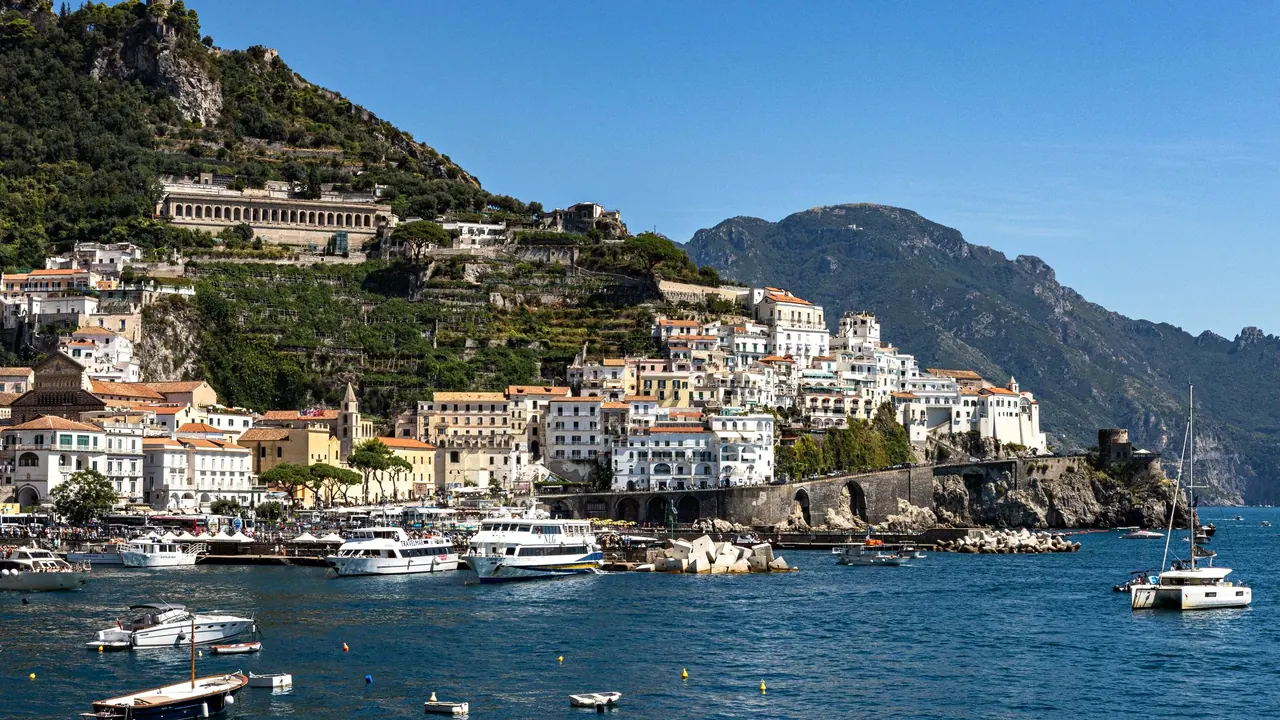
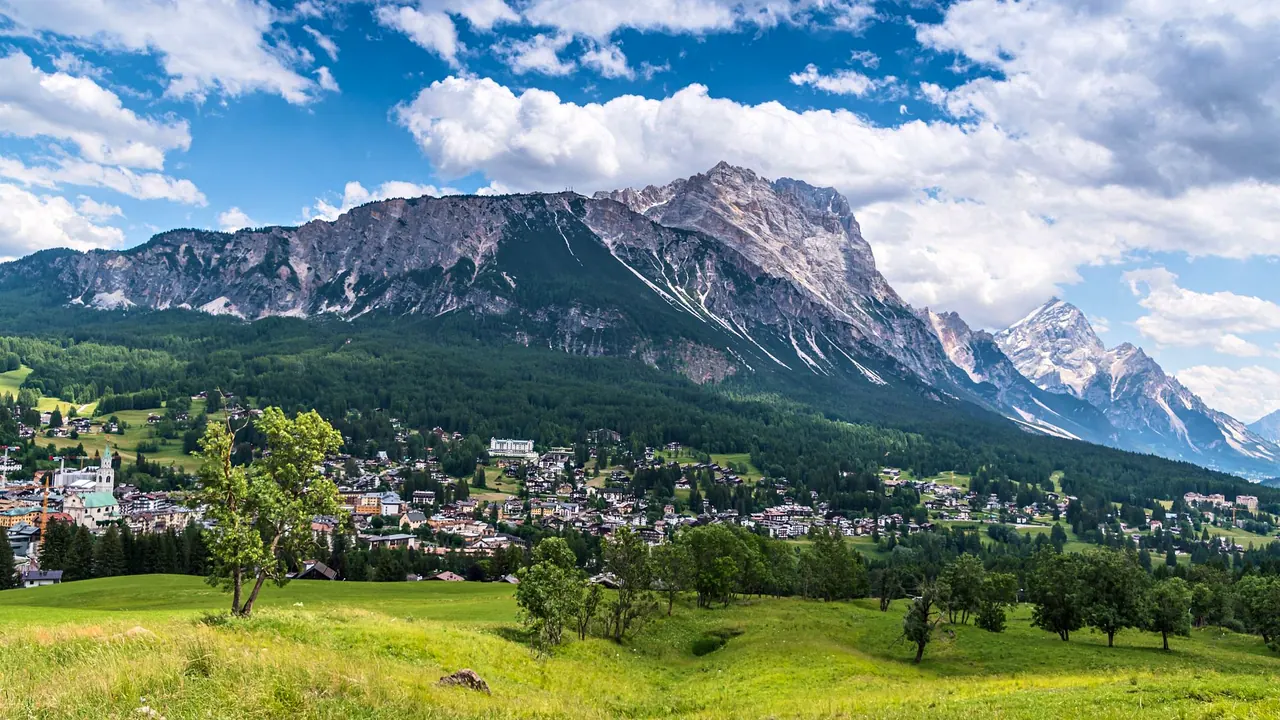
Photos: Amalfi by Oleksandra Zelena, Pexels License; Cortina d'Ampezzo by Andreas Neubauer, Pexels License.
Amalfi or Cortina d'Ampezzo?
Our verdict in twelve categories, each scored against the same fixed benchmark cities, and the climate month by month, so you can choose for your trip.
Choose Amalfi for
- beaches
- day trips
- culture and sights
Amalfi suits a summer trip built around the sea and the famous places along it. You swim from pebbles and coves, take a ferry to Positano or Capri, ride up to Ravello and walk the Path of the Gods, with a medieval cathedral and cloister at the end of the street. It works best for couples and adults who can manage a lot of steps and want the coast's towns within easy reach.
Choose Cortina d'Ampezzo for
- families
- nature and the outdoors
- wellness
Pick Cortina if the mountains are the point. The Dolomites ring the valley and lifts rise straight from town, so it serves skiers in winter and hikers, climbers and via ferrata fans in summer. Families who ski or walk will find it far easier than Amalfi's stairways, and the après-ski weeks bring a little more life in the evenings. There is no sea, though, and the towns nearby are pleasant rather than famous.
Scoreboard
Twelve categories on one fixed scale from 0 to 100. The shaded stretch is the gap between the two.
Your match
Pick a travel style or drag the sliders, and both match scores follow your weighting.
Wins on beaches and day trips with your weighting.
Wins on families and nature and the outdoors with your weighting.
What matters to you?
Category by category
What the scores mean for a trip.
Beaches & swimming
Amalfi has real sea swimming from May into October. There are the pebbles of Marina Grande under the Duomo, Atrani's beach a short walk away, and coves like Santa Croce reached by stairs or shuttle boat. It is not a long sandy shore, and in summer the loungers crowd out most of the free stretches.
Cortina has nothing like it. The Adriatic is more than two hours' drive away, and lakes such as Ghedina stay snowmelt-cold even in July, so a swim usually means the hotel pool.
Food & drink
Both towns eat well for their size, but from very different larders. Amalfi cooks with lemons, anchovies, colatura and scialatielli with clams, washed down with whites from Furore. The places on the piazza often serve average cooking to day visitors, though, and the better trattorias take some finding.
Cortina's table is Ampezzan mountain food: casunziei with poppy seeds, polenta with game and barley soup, best eaten on a rifugio terrace among the peaks. The valley restaurants cater to a wealthy crowd, so the cooking is polished but rarely cheap or varied.
Culture & sights
Amalfi has more to see, thanks to its past as a maritime republic. There is the striped Duomo with its bronze doors from Constantinople, the Chiostro del Paradiso, the old Arsenale and the paper museum up the Valle dei Mulini. Even so, it fills only about half a day.
Cortina's centre has a basilica, painted houses and the ice stadium from the 1956 Olympics, and the Rimoldi art collection is the best of its small museums. Its most striking history, the First World War tunnels on Lagazuoi, lies up in the mountains rather than in town.
Nightlife
Neither town is a place for nights out, but Cortina has a little more going on. After the lifts close there is après-ski and a crowded passeggiata on the Corso Italia, and in the peak winter weeks a few smart bars and a club stay open late.
Amalfi's evenings stop at dinner and a drink on Piazza Duomo, and the town goes quiet once the last ferries leave. For a proper night out you would have to go to Salerno or Naples.
Nature & outdoors
Amalfi's landscape is a coast of sea cliffs. The Lattari mountains drop into the Tyrrhenian, cut with lemon terraces, the Valle delle Ferriere gorge and old mule stairways up to Ravello and Pontone. The Path of the Gods above Positano is the walk worth planning around, and kayaks slip into sea caves such as the Emerald Grotto. In summer, though, the exposed trails are punishing in the heat.
Cortina's setting is on a grander scale and works in every season. The Dolomites ring the valley, lifts climb from town onto the Tofane and Cristallo, and the Tre Cime and Lago di Misurina are under an hour away. Winter means the Dolomiti Superski slopes, and summer means the Alta Via 1, hut-to-hut hiking, via ferrata and climbing.
Day trips
Amalfi sits at the centre of one of Italy's most famous stretches of coast. Ravello is a short bus ride up the hill, Positano is half an hour by ferry, Capri is within reach in season, and Paestum, Pompeii and Herculaneum each fit into a full day. The catch is the slow summer road and ferries that run mainly from spring to autumn.
From Cortina, most outings head into the mountains. San Candido and Brunico in South Tyrol are close, Bolzano and its Iceman are about two hours away, and Venice makes a long day by coach.
Good for families
Cortina is the easier choice with children, as long as they ski or walk. There are ski schools, beginner slopes at Socrepes and public skating at the ice stadium, and in summer there are lake walks, meadows by the huts and a rope park. Wet days drag, though, as nothing there is built for children indoors.
Amalfi is harder going. Pushchairs are useless on the stairways, the beach is a crowded strip of pebbles, and the winding buses can upset small stomachs. Older children who swim well will still enjoy the boat trips and sea caves.
Getting around
Both centres are small enough to walk, but Amalfi's is all steps and covered alleys, while Cortina's is flat. Amalfi is the hub of its coast, with buses to Ravello and Positano and ferries in season. In summer, though, the buses fill up and the cliff road jams, and a car is more trouble than it is worth.
Cortina has no railway, so you arrive by coach from Venice or after a long drive. In winter, ski buses and lifts serve the slopes well, but buses to the passes and the Tre Cime are limited, and many visitors hire a car.
Shopping & style
Cortina's shopping is the more polished. The Corso Italia has luxury fashion, jewellers and upmarket mountain wear, and its anchor is the Cooperativa di Cortina, a store since 1893. Wood carving and filigree cover local craft.
Amalfi's one main street sells the same limoncello and ceramics from shop to shop. The finds worth having are its handmade cotton paper, majolica and made-to-measure sandals, but there is no fashion shopping to speak of.
Affordability
Both are among the most expensive places to stay in Italy, so neither suits a tight budget. Amalfi is slightly less punishing. The local buses are cheap, and staying in the hill villages, eating in back-street trattorias and coming in spring or autumn all bring costs down.
Cortina adds lift passes and equipment hire to luxury-resort hotel rates in winter and August. Meals at the rifugi and visits in early summer or late September are the main ways to save.
Live music & performing arts
Amalfi has the better evening out, thanks to the summer Ravello Festival, with orchestral and chamber concerts on a garden terrace at Villa Rufolo high above the sea. Beyond that there are church concerts and the processions for Sant'Andrea. Cortina has no theatre or regular venue, and its summer chamber festivals, talks and the odd concert around Christmas and New Year add up to a thinner programme.
Wellness & relaxation
Neither town has thermal springs or a bathing tradition, so rest comes down to hotel spas and the pace of the place. In Amalfi the treatment rooms belong to a few luxury hotels on the cliffs, and unless you are staying in one they are mostly out of reach. Relaxing here means the sea and the table: an early dip before the town fills up, then a lunch that runs well into the afternoon. In high summer the centre is far from restful, so anyone after quiet should look to the villages above town or come in May or October.
Cortina is the better choice for spa time. Saunas and hay baths come as standard in its Alpine hotels, so warming up after a day of skiing or hiking is part of the routine rather than a treat you have to plan. Calm is also easier to find here. Outside the peak winter weeks and August the valley quietens, and an afternoon in the sun outside a mountain hut is restful in itself.
When should you go?
Pick your month. The climate figures are measured averages, not a forecast.
Amalfi in July
Cortina d'Ampezzo in July
Daytime high, °C
Rainfall in the month, mm
Where the figures come from
Amalfi's temperatures are measured 65 km from the centre, at Grazzanise.
Amalfi has no rain gauge within 25 km of the centre, so its rainfall comes from a gridded climate dataset read at the city rather than from a gauge further away.
Temperature and rainfall are climate normals, averaged over the years shown. Amalfi: 1991-2020 normals, Grazzanise (64.7 km from centre). Cortina d'Ampezzo: 1991-2020 normals, Dobbiaco (22.5 km from centre).
Amalfi is a warm-weather place. The sea is warm enough to swim from June to September, reaching about 26°C in August, and summer is long, dry and very sunny. July and August reach 31°C, which makes the stairways and exposed trails heavy going, so April, May and October are the months for walking, with mild days and fewer hot hours. Rain comes back in September and builds to 143mm in November, and winter is mild but grey and wet.
Cortina's year is the other way round. Winter is cold and the driest season, with January highs around 0°C, which suits the ski slopes. Summer is fresh rather than hot and good for hiking, but it is also the wettest time, with July bringing about 130mm, often in afternoon storms. June and September are mild and quieter, and September is also clearly drier than high summer.
Which traveller are you?
For a beach and sun trip, Amalfi is the only real option. The sea stays warm and clear from May into October, there are pebble beaches and coves you reach by boat, and summer is long and sunny. Cortina's lakes stay snowmelt-cold and the nearest coast is hours away.
On a family trip with children, Cortina is far easier to manage. The flat centre, ski schools, beginner slopes, skating and gentle walks to the huts keep children busy. Amalfi's endless stairways, crowded pebble beach and winding cliff buses wear out parents of small children.
For skiers, Cortina wins outright. It belongs to the Dolomiti Superski area, with lifts leaving from town and the Sella Ronda and the long Armentarola run within reach, and its winters are cold and dry. Amalfi's winters are mild and wet, with no snow sports at all.
Before you go
| Measure | Amalfi | Cortina d'Ampezzo |
|---|---|---|
| Official language | Italian | Italian |
| Currency | Euro (EUR) | Euro (EUR) |
| Sockets | CFL230 V, 50 Hz | CFL230 V, 50 Hz |
| Driving side | Right | Right |
| Time zone | UTC+1, UTC+2 in summer | UTC+1, UTC+2 in summer |
| Emergency number | 112 | 112 |
| Elevation | 6 m | 1,224 m |
| Main airport | Naples International Airport (NAP)38 km from centre131 non-stop destinations | Venice Marco Polo Airport (VCE)116 km from centre103 non-stop destinations |
| Public holidays this year | 13 days | 13 days |
By the numbers
| Measure | Amalfi | Cortina d'Ampezzo |
|---|---|---|
| City population | 4,729 | 5,546 |
| People per km² | 830 | 22 |
| Museums within 10 km | 8 | 3 |
| UNESCO World Heritage sites within 50 km | 5 | 1 |
| Swim season, months above 21 °C | 5 months | - |
Where else could you go?
Every comparison below shares a destination with this one, so you can follow Amalfi or Cortina d'Ampezzo somewhere new.
- Positanovs Amalfi
- Salernovs Amalfi
- Sorrentovs Amalfi
- Naplesvs Amalfi
- Innsbruckvs Cortina d'Ampezzo
- Venicevs Cortina d'Ampezzo