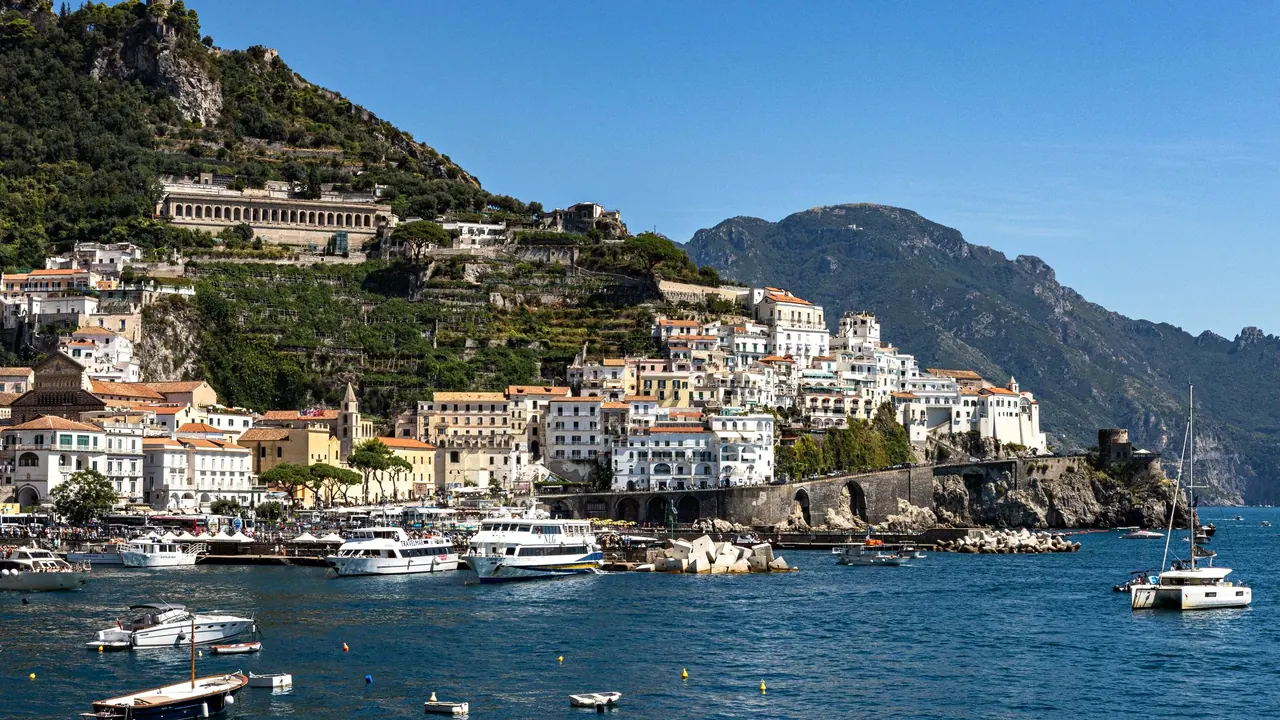
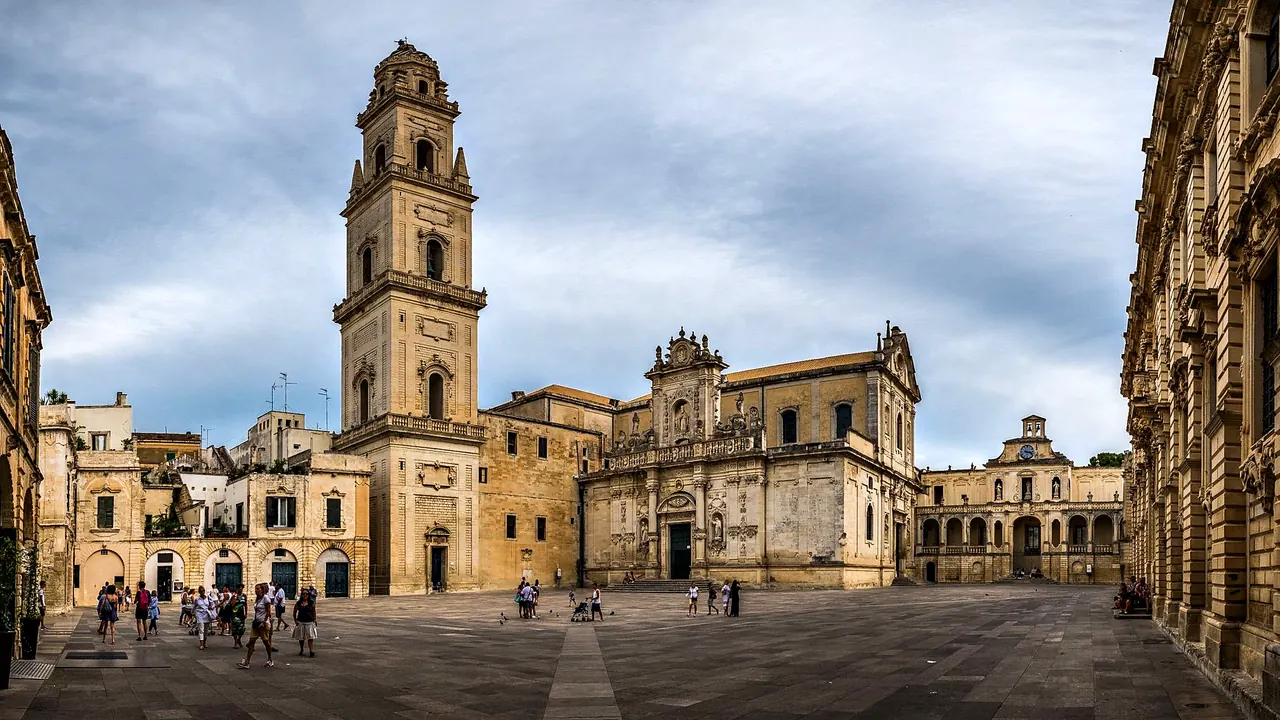
Photos: Amalfi by Oleksandra Zelena, Pexels License; Lecce by Giuseppe Milo, CC BY 3.0, cropped.
Amalfi or Lecce?
Our verdict in twelve categories, each scored against the same fixed benchmark cities, and the climate month by month, so you can choose for your trip.
Choose Amalfi for
- nature and the outdoors
- day trips
- getting around
Amalfi is the choice when the scenery is the point of the trip. Mountains fall straight into the sea here, the Path of the Gods and the valley gorges begin almost at the door, and Ravello, Positano and Capri are all an easy outing away. It suits walkers, boat lovers and couples who are happy to pay a lot, climb a lot of steps and spend their evenings over a long dinner rather than a night out.
Choose Lecce for
- prices
- culture and sights
- nightlife
Lecce suits travellers who want a real town to live in for a week. Its Baroque old town rewards days of wandering, the food is distinctive and cheap, the evenings on the piazzas have some life in them, and the sandy Salento beaches on two seas are within a short drive. Families, travellers on a budget and anyone who would rather see a city than a coastline will get more from it, as long as they hire a car.
Scoreboard
Twelve categories on one fixed scale from 0 to 100. The shaded stretch is the gap between the two.
Your match
Pick a travel style or drag the sliders, and both match scores follow your weighting.
Wins on nature and the outdoors and day trips with your weighting.
Wins on prices and culture and sights with your weighting.
What matters to you?
Category by category
What the scores mean for a trip.
Beaches & swimming
Amalfi's swimming is pebbly and fitted around everything else: the town beach at Marina Grande is lined with club loungers in summer, and the better water lies at Atrani or in coves such as Santa Croce, reached by stairs or shuttle boat. Hiring a boat to reach grottoes and rocks is the best of it.
Lecce has no good beach on its doorstep, but a short drive brings far more choice: pale coves under sea stacks at Torre dell'Orso on the Adriatic and long, shallow sandy beaches at Porto Cesareo on the Ionian. If whole days on the sand are the plan, the Salento offers more, provided you have a car.
Food & drink
Both kitchens are firmly regional, but Lecce's is the more rewarding to eat through. A day there runs from a warm pasticciotto and almond-milk iced coffee to ciceri e tria and orecchiette with turnip tops in simple old-town osterie, with dark Negroamaro on the table, and none of it costs much.
Amalfi has fine ingredients in its sfusato lemons, anchovies, colatura and scialatielli with clams. The trouble is that the piazza and seafront kitchens cater to passing crowds, so eating well means seeking out the trattorias in the alleys and up the valley.
Culture & sights
The gap here is between a morning's sightseeing and a week's. In Amalfi the sights come from the medieval maritime republic: the striped Duomo with its bronze doors cast in Constantinople, the white interlaced arches of the Chiostro del Paradiso, the old Arsenale where the galleys were built, and the paper museum in a mill up the Valle dei Mulini. Most visitors have seen it all by lunchtime.
Lecce is worth the journey for its sights alone. The old town is a near-complete Baroque townscape in honey-coloured limestone, from the carved facade of the Basilica di Santa Croce to the enclosed Piazza del Duomo at dusk, with half a Roman amphitheatre below Piazza Sant'Oronzo, the Castle of Charles V and Messapian layers beneath the streets. The museums are modest, but the streets alone can fill several days of wandering.
Nightlife
In Amalfi the evening ends with dinner and a gelato on Piazza Duomo or by the harbour, and the town goes quiet once the day visitors have left. Lecce has more going on: aperitivo on the piazzas, then wine and cocktail bars in the lanes, kept busy late at weekends by students. For dancing it still means a summer drive to the coastal discos around Gallipoli.
Nature & outdoors
Amalfi's landscape is its great asset. The Lattari mountains drop sheer into the sea, and the Sentiero degli Dei, the shaded gorge of the Valle delle Ferriere and the stairways between cliff villages make serious, spectacular walking. Kayaks reach sea caves such as the Emerald Grotto.
Around Lecce the land is flat olive country, better for gentle cycling than hiking. Its outdoors is the coast: clifftop paths from Roca Vecchia towards Leuca, birdwatching at Le Cesine and the Alimini lakes, and good snorkelling and diving.
Day trips
Amalfi puts famous names within easy reach: Ravello on the hill above, Positano by ferry, Capri in season, and Paestum, Pompeii and Herculaneum for a full day out. The catch is that ferries mostly stop in winter and the summer road is slow.
Lecce is a good base for the Salento, with Otranto's cathedral mosaic, Gallipoli's island old town and the frescoes at Galatina all nearby. Ostuni and the trulli of Alberobello take longer to reach, though, and most outings need a hire car.
Good for families
Lecce is far easier with children. Its old town is flat and largely free of traffic, families fill the piazzas in the evening, and the shallow sand around Porto Cesareo suits toddlers. Amalfi means steep stairways that defeat pushchairs, a crowded pebble beach and winding buses that can make children carsick. Confident older swimmers will still enjoy its boat trips and sea caves. Neither town has attractions built for children.
Getting around
Both centres are small enough to walk, but Amalfi's is all steps while Lecce's streets are flat, which matters a great deal for anyone with limited mobility. The bigger difference is beyond town. Amalfi's buses and seasonal ferries mean you can manage without a car, and are better off without one, despite the summer queues. Lecce has good trains north to Bari, but reaching the beaches and the smaller towns of the Salento really calls for one.
Shopping & style
Neither is a shopping trip. The difference is in the crafts: Amalfi's handmade cotton paper, majolica tiles and sandals made to measure, against Lecce's papier-mâché saints, carved limestone and ceramics from Grottaglie. Amalfi's one main street tends to repeat the same limoncello and ceramics, while Lecce adds food shops for olive oil, wine and taralli.
Affordability
This is where the two differ most. Amalfi has little space and much of its accommodation is luxury, so sea-view rooms, piazza meals, loungers and boat hire are all expensive. Only staying up in the hill villages in spring or autumn takes the edge off.
Lecce is good value by Italian standards, with cheap street food, simple trattorias and fairly priced palazzo bed and breakfasts. The exception is August, when the Salento fills up and you also have the cost of a hire car.
Live music & performing arts
Amalfi itself has no theatre, so its one big draw is in Ravello: summer concerts on the terrace of Villa Rufolo above the sea. Beyond that there are church music and the feast of Sant'Andrea. Lecce has more on through the year, with opera and drama at the Politeama Greco and the Paisiello. In summer it adds the pounding pizzica of village festivals, which peaks at the Notte della Taranta in Melpignano.
Wellness & relaxation
Lecce offers more ways to unwind. The cliffside sulphur pools of Santa Cesarea Terme are within reach, country masserie double as quiet spa retreats, and the long afternoon close slows the whole town down. In Amalfi, relaxing means a shaded lunch and a swim from the rocks. Its spas sit inside cliff hotels mainly for their own guests, and the centre is noisy in July and August.
When should you go?
Pick your month. The climate figures are measured averages, not a forecast.
Amalfi in July
Lecce in July
Daytime high, °C
Rainfall in the month, mm
Where the figures come from
Amalfi's temperatures are measured 65 km from the centre, at Grazzanise.
Amalfi has no rain gauge within 25 km of the centre, so its rainfall comes from a gridded climate dataset read at the city rather than from a gauge further away.
Lecce's temperatures are measured 38 km from the centre, at Brindisi.
Lecce has no rain gauge within 25 km of the centre, so its rainfall comes from a gridded climate dataset read at the city rather than from a gauge further away.
Temperature and rainfall are climate normals, averaged over the years shown. Amalfi: 1991-2020 normals, Grazzanise (64.7 km from centre). Lecce: 1991-2020 (sunshine 1981-2010) normals, Brindisi (38 km from centre).
The two follow much the same southern Italian year, and the beach season is the same in both: the sea is properly warm from June to September and peaks at about 26°C in August, with May and October still possible for the hardy. Amalfi runs slightly hotter in high summer, around 31°C, and that heat makes its exposed cliff paths hard going in July and August. Spring and early autumn are the walking months in both places.
Where they part is in rain and sun. Amalfi is clearly wetter from September onwards, peaking at about 143mm in November, so late autumn and winter there bring frequent grey, damp days. Lecce is drier and sunnier in every month of the year. Its wettest month brings closer to 102mm, which makes it the better bet for a mild off-season city visit between November and March.
Which traveller are you?
On an outdoors trip, Amalfi wins clearly. The Sentiero degli Dei, the waterfalls of the Valle delle Ferriere and the old mule stairways up to Ravello and Pontone give real mountain walking above the sea, which Lecce's flat plain of olive groves cannot match.
For a culture and arts trip, Lecce is the stronger choice. Its old town is one long Baroque display of carved limestone, with Santa Croce, the Roman amphitheatre and a theatre season, while Amalfi's Duomo and cloister fill only a morning.
On a trip with a tight budget, Lecce stretches the money much further. Pastries, osterie and rooms in old palazzi are fairly priced outside August, while Amalfi ranks with the dearest places to stay in Italy and only its buses are cheap.
Before you go
| Measure | Amalfi | Lecce |
|---|---|---|
| Official language | Italian | Italian |
| Currency | Euro (EUR) | Euro (EUR) |
| Sockets | CFL230 V, 50 Hz | CFL230 V, 50 Hz |
| Driving side | Right | Right |
| Time zone | UTC+1, UTC+2 in summer | UTC+1, UTC+2 in summer |
| Emergency number | 112 | 112 |
| Elevation | 6 m | 49 m |
| Main airport | Naples International Airport (NAP)38 km from centre131 non-stop destinations | Brindisi Airport (BDS)39 km from centre49 non-stop destinations |
| Public holidays this year | 13 days | 13 days |
By the numbers
| Measure | Amalfi | Lecce |
|---|---|---|
| City population | 4,729 | 94,783 |
| People per km² | 830 | 393 |
| Museums within 10 km | 8 | 11 |
| UNESCO World Heritage sites within 50 km | 5 | 0 |
| Swim season, months above 21 °C | 5 months | 4 months |
Where else could you go?
Every comparison below shares a destination with this one, so you can follow Amalfi or Lecce somewhere new.