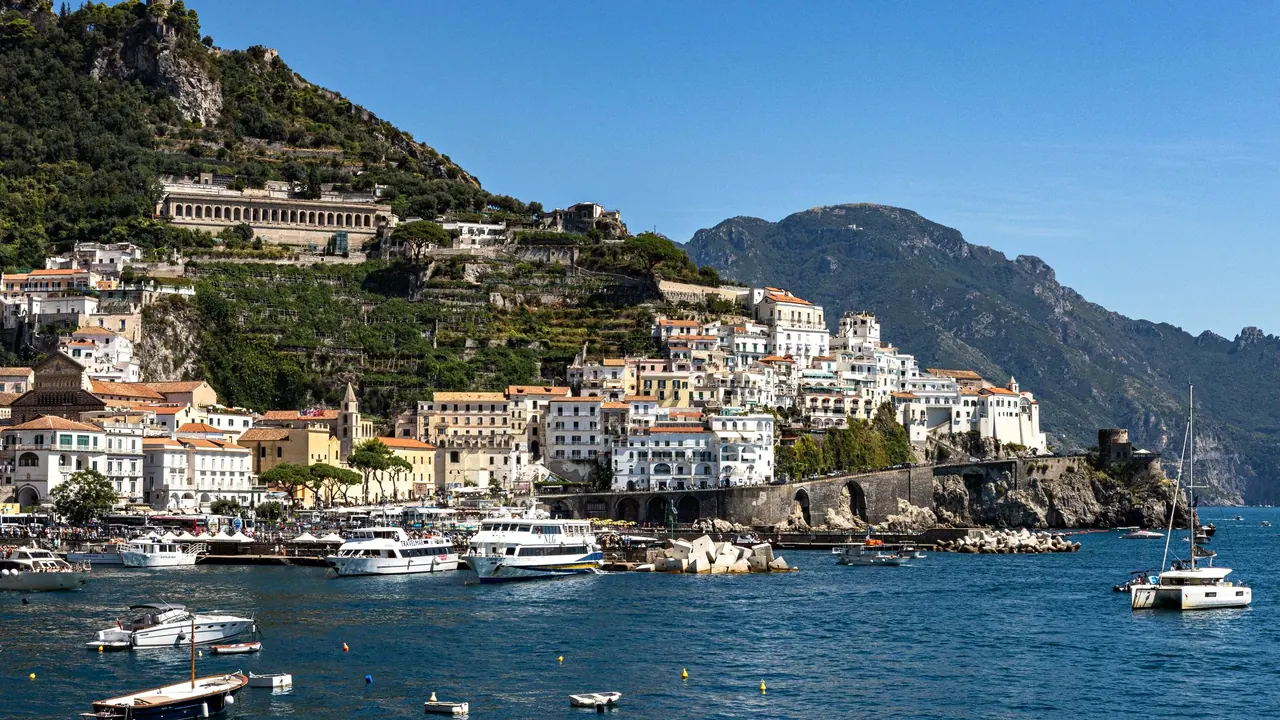
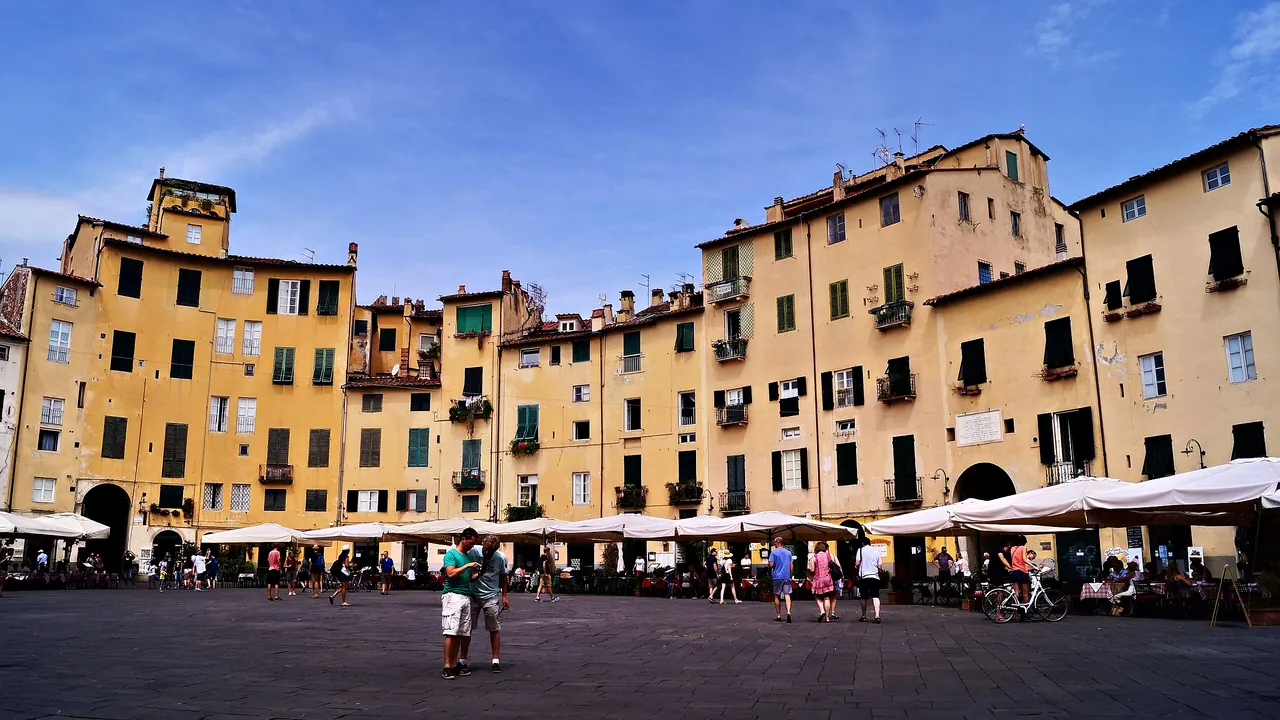
Photos: Amalfi by Oleksandra Zelena, Pexels License; Lucca by Stefano Sansavini, CC BY-SA 4.0, cropped.
Amalfi or Lucca?
Our verdict in twelve categories, each scored against the same fixed benchmark cities, and the climate month by month, so you can choose for your trip.
Choose Amalfi for
- nature and the outdoors
- beaches
Amalfi is for travellers who come for the coast itself: cliffs falling into clear water, boat days to grottoes and coves, and some of Europe's finest coastal walking right behind the town. It suits couples and active adults happy to spend freely, climb a great many steps and treat the town as a base for Ravello, Positano and Capri rather than a place to explore in depth.
Choose Lucca for
- live music and the arts
- culture and sights
- families
Choose Lucca if you want a complete historic city to live in for a few days, with walls you can cycle around, Romanesque churches on every other corner and Puccini in the evenings. It is flatter, calmer and far easier on families and budgets, and the train line puts Pisa, Florence and the Versilia beaches within easy reach, though you trade Amalfi's drama for a gentler countryside.
Scoreboard
Twelve categories on one fixed scale from 0 to 100. The shaded stretch is the gap between the two.
Your match
Pick a travel style or drag the sliders, and both match scores follow your weighting.
Wins on nature and the outdoors and beaches with your weighting.
Wins on live music and the arts and culture and sights with your weighting.
What matters to you?
Category by category
What the scores mean for a trip.
Beaches & swimming
Amalfi puts you right on the sea, though the town beach is crowded pebble rows of loungers under the Duomo. The real pleasure is the water itself, with coves like Santa Croce reached by stairs or shuttle boat, Atrani's beach a short walk away and a hired boat to rocks and grottoes. You can swim between sightseeing on any day.
Lucca has no shore of its own, but the Versilia coast is a short train ride away and offers what Amalfi lacks: long, gently shelving sand that suits waders, plus pine-backed dunes at the Lecciona. It is a half-day outing rather than a morning dip, so sea lovers will find Amalfi more rewarding.
Food & drink
Lucca eats better day to day. Its family trattorias and osterie inside the walls serve rustic Lucchese dishes such as farro soup, tordelli and chestnut-flour cooking, with fair prices and reliable standards, and aperitivo with local salumi in the wine bars.
Amalfi's cooking is built on lemons, anchovies, colatura and seafood scialatielli, which is a real draw for seafood lovers. But the piazza and seafront tables cater to passing crowds, and you have to seek out the better places in the alleys and up the valley. Neither offers much variety beyond its regional menu.
Culture & sights
Lucca is the far richer place for sightseeing. The whole walled city is the attraction, with San Michele in Foro, San Frediano's mosaic, the cathedral's Ilaria del Carretto tomb, the oval Piazza dell'Anfiteatro and the tree-topped Torre Guinigi.
Amalfi's heritage centres on its maritime republic past: the striped Duomo with its Constantinople bronze doors, the Chiostro del Paradiso, the Arsenale and the paper museum. These are fine, but they take half a day, while Lucca rewards two.
Nightlife
Neither is a place for a big night out, but Lucca has a little more life, with students in some pubs and wine bars and aperitivo in its two main piazzas. Amalfi winds down to a gelato on Piazza Duomo once the day visitors leave. In summer, Lucca's younger visitors can reach the Versilia discos, whereas from Amalfi a proper night out means Salerno or Naples.
Nature & outdoors
Amalfi's landscape is the main event: the Lattari mountains plunge into the sea, terraced with lemons and cut by gorges like the Valle delle Ferriere. The Path of the Gods and old mule stairways to Ravello and Pontone start close by, and kayaks reach sea caves such as the Emerald Grotto.
Lucca's surroundings are gentler, with olive groves, villa gardens and cycle paths along the Serchio and around the walls. The big scenery, the marble peaks of the Apuan Alps and the Garfagnana forests, is about an hour north, and Lake Massaciuccoli adds birdwatching.
Day trips
Both are outstanding bases, but for different kinds of outing. From Amalfi the trips are mostly coastal and by bus or ferry: Ravello's villas, Positano, Capri, Vietri's ceramics, with Paestum, Pompeii and Herculaneum possible on a full day. Ferries are seasonal and the summer road is slow.
Lucca's strength is the railway, which links it simply and year-round to Pisa, Florence and Pistoia. The Lucchese villas, Collodi, Pietrasanta's sculptors, Carrara's marble and, with an early start, the Cinque Terre broaden the mix of art towns, gardens and coast.
Good for families
Lucca is much the easier choice with children. Its flat, mostly traffic-free centre, quadricycle rides on the walls, Pinocchio Park at Collodi and nearby sandy beaches keep days simple, and Lucca Comics & Games in autumn thrills teenagers.
Amalfi suits only older, confident swimmers who will enjoy boat trips and sea caves. Steep stairways rule out pushchairs, the beach is crowded pebbles, and the twisting cliff road can make children sick.
Getting around
Both centres are walkable, but Lucca's is flat and largely closed to traffic, with bikes for hire at every gate and trains leaving just outside the southern walls. Only the hill villages and Garfagnana really call for a car.
Amalfi's town is tiny but full of steps, and its role as the coast's hub depends on buses that fill up and pass queues in summer and on ferries that stop out of season. A car is a liability, and anyone with limited mobility will struggle.
Shopping & style
Neither is a shopping destination, though Lucca offers a little more. Via Fillungo has fashion and jewellery behind old Liberty shopfronts, delicatessens sell local oil and buccellato, and the monthly antiques market around the cathedral is a genuine draw. Amalfi's single main street repeats limoncello and ceramics from shop to shop, with handmade cotton paper, majolica and made-to-measure sandals the best finds.
Affordability
Lucca is markedly kinder to your wallet. It costs less than Florence, many of its main sights, including the walls and many churches, are free, and trattoria meals and regional trains are fairly priced, with rooms just outside the walls the best value.
Amalfi sits among Italy's priciest places to stay, with sea-view rooms, piazza meals, loungers and boat hire all expensive. The cheap local buses help, as do hill-village rooms and shoulder-season dates, but it stays expensive.
Live music & performing arts
Lucca is Puccini's hometown, and it shows: recitals of his arias run through most of the year, the Teatro del Giglio holds a full opera and concert season, and summer adds stadium-scale concerts on Piazza Napoleone and open-air opera by the lake at Torre del Lago.
Amalfi itself has no theatre. Its one great draw is summer in Ravello, where orchestral concerts on the Villa Rufolo terrace above the sea are unforgettable, but outside that season there is little beyond church music and festival bands.
Wellness & relaxation
Neither town has its own baths, but Lucca is the more restful base. Its traffic-free streets and evening walks on the walls set an easy pace, and spa days are close by at Montecatini's belle époque baths, Monsummano's cave pools and the steam grottoes of Bagni di Lucca.
Amalfi's calm comes from long terrace lunches and swims from the rocks, while spa treatments are mostly kept for guests of the cliffside luxury hotels. In July and August the centre turns crowded and noisy.
When should you go?
Pick your month. The climate figures are measured averages, not a forecast.
Amalfi in July
Lucca in July
Daytime high, °C
Rainfall in the month, mm
Where the figures come from
Amalfi's temperatures are measured 65 km from the centre, at Grazzanise.
Amalfi has no rain gauge within 25 km of the centre, so its rainfall comes from a gridded climate dataset read at the city rather than from a gauge further away.
Temperature and rainfall are climate normals, averaged over the years shown. Amalfi: 1991-2020 normals, Grazzanise (64.7 km from centre). Lucca: 1991-2020 normals, Pisa / S. Giusto (21.4 km from centre).
Both places share the same Italian summer, hot and dry from June to August, with daytime highs around 30°C in each and the sea warm enough for comfortable swimming. Amalfi's season in the water is longer: the sea is still about 24°C in September and stays pleasant into October, so a late beach trip works there better than on Lucca's Versilia coast, where swimming is best kept to June through September. In high summer both are tiring for walking, Amalfi on its exposed trails and stairways, Lucca on the hot plain.
The wet months differ. Autumn rain arrives in both from September, peaking in November, when Amalfi gets about 143mm. Amalfi stays wetter right through winter, while Lucca's winters are drier and a couple of degrees cooler, which makes it the better choice for an off-season city visit. For walking, April, May and October suit both, with Amalfi a touch warmer and sunnier.
Which traveller are you?
On a culture and arts trip, Lucca has the edge. Amalfi's grandest heritage, at Pompeii, Herculaneum and Paestum, takes a long day out. Lucca has Puccini recitals through most of the year, and Florence's galleries are a little over an hour by train.
On a family trip with young children, Lucca is the better base. Amalfi's best days, with hard hikes, boat trips and long lunches, suit adults. Lucca's mostly traffic-free streets let children roam, Pisa is half an hour by train, and lower costs make a longer stay easier.
For an outdoors trip, Amalfi wins. The Valle delle Ferriere starts at the back of town and the Path of the Gods is a short bus ride up, with a swim from the rocks afterwards. Lucca's serious hiking means a trip out, about an hour, to the Apuan Alps.
Before you go
| Measure | Amalfi | Lucca |
|---|---|---|
| Official language | Italian | Italian |
| Currency | Euro (EUR) | Euro (EUR) |
| Sockets | CFL230 V, 50 Hz | CFL230 V, 50 Hz |
| Driving side | Right | Right |
| Time zone | UTC+1, UTC+2 in summer | UTC+1, UTC+2 in summer |
| Emergency number | 112 | 112 |
| Elevation | 6 m | 19 m |
| Main airport | Naples International Airport (NAP)38 km from centre131 non-stop destinations | Pisa International Airport (PSA)21 km from centre82 non-stop destinations |
| Public holidays this year | 13 days | 13 days |
By the numbers
| Measure | Amalfi | Lucca |
|---|---|---|
| City population | 4,729 | 88,798 |
| People per km² | 830 | 478 |
| Museums within 10 km | 8 | 20 |
| UNESCO World Heritage sites within 50 km | 5 | 4 |
| Swim season, months above 21 °C | 5 months | 4 months |
Where else could you go?
Every comparison below shares a destination with this one, so you can follow Amalfi or Lucca somewhere new.