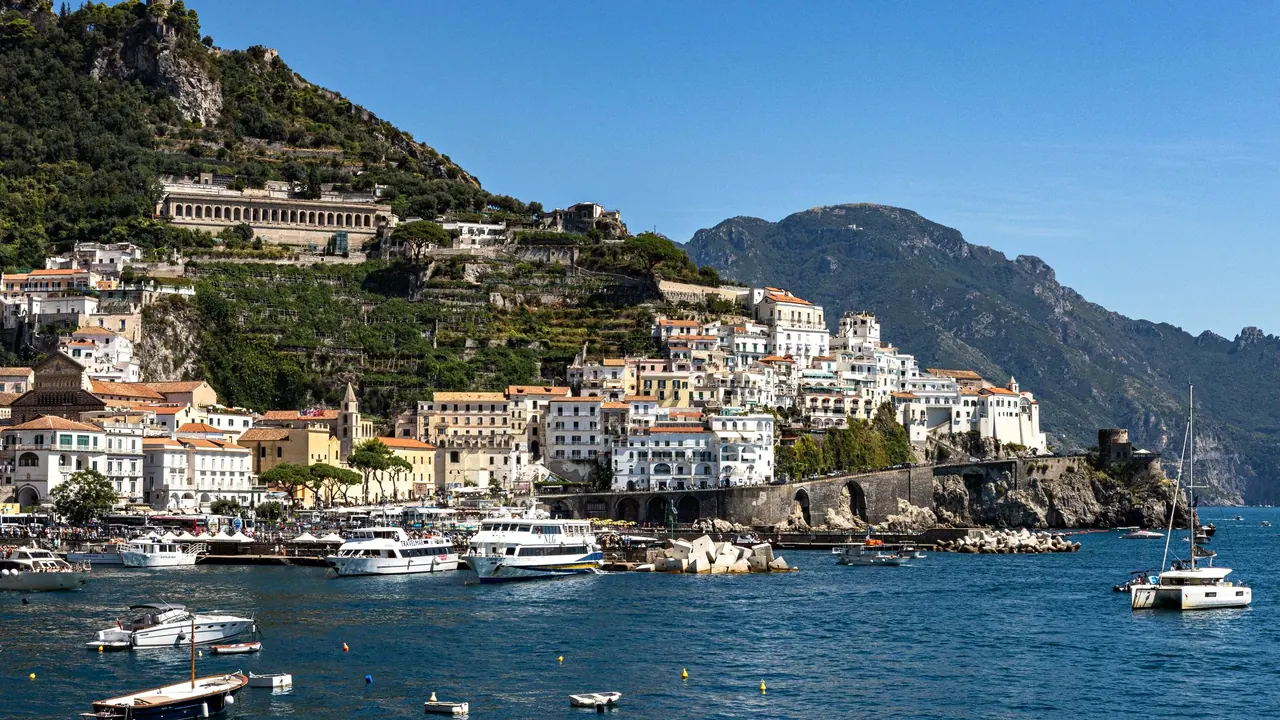
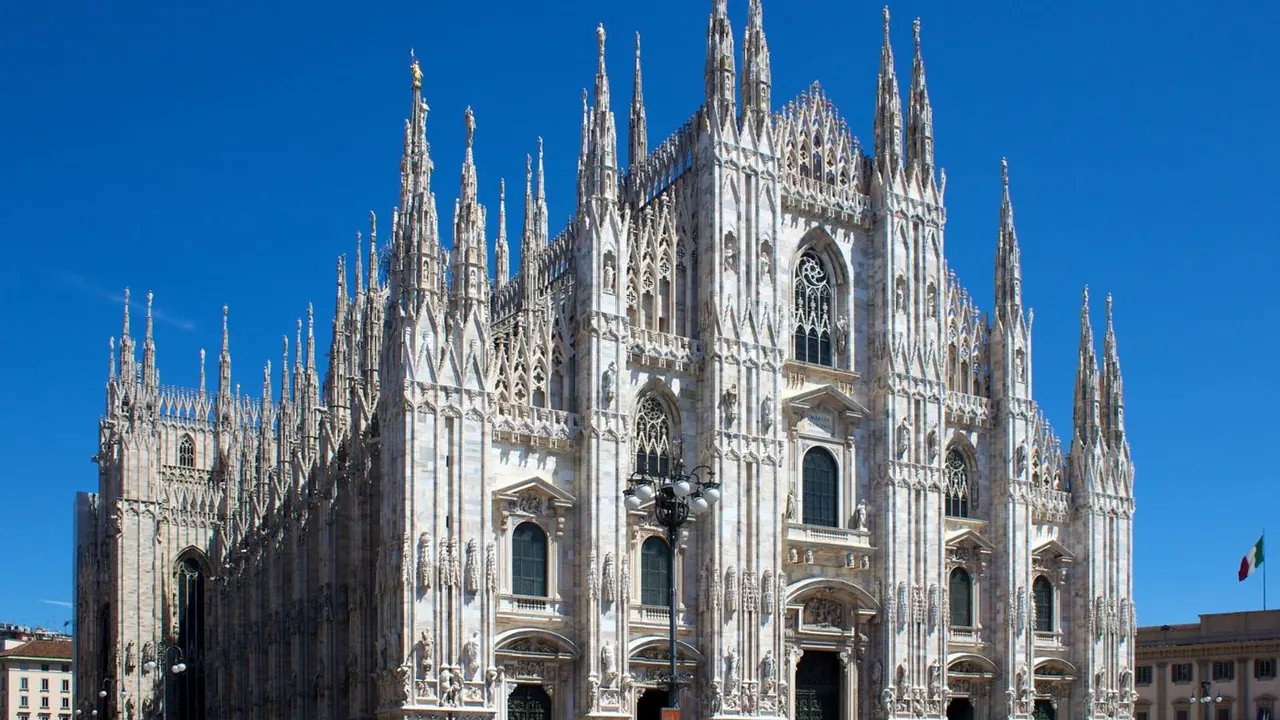
Photos: Amalfi by Oleksandra Zelena, Pexels License; Milan by Jiuguang Wang, CC BY-SA 3.0, cropped.
Amalfi or Milan?
Our verdict in twelve categories, each scored against the same fixed benchmark cities, and the climate month by month, so you can choose for your trip.
Choose Amalfi for
- beaches
- nature and the outdoors
Amalfi is for travellers who want the sea and the mountains in the same view: pebble coves reached by boat, lemon terraces climbing the cliffs and the Path of the Gods above Positano. It suits couples and walkers who are happy with a quiet evening after dinner and a half-day of sights. They also need to accept steep stairs and high prices as part of the deal.
Choose Milan for
- live music and the arts
- shopping
- nightlife
Milan rewards a trip built around the city itself. Its fashion district, La Scala, the Last Supper and the Brera collection give it far more to fill the days and evenings, aperitivo leads into a proper night out, and the metro and trams make it easy to get about. With fast trains to Verona, Bergamo and the lakes, it is the better base for anyone who wants variety more than scenery.
Scoreboard
Twelve categories on one fixed scale from 0 to 100. The shaded stretch is the gap between the two.
Your match
Pick a travel style or drag the sliders, and both match scores follow your weighting.
Wins on beaches and nature and the outdoors with your weighting.
Wins on live music and the arts and shopping with your weighting.
What matters to you?
Category by category
What the scores mean for a trip.
Beaches & swimming
Amalfi is a real swimming destination, if a pebbly one. Marina Grande sits under the Duomo steps, Atrani's small beach is ten minutes away on foot, and boats reach coves and grottoes the road cannot. The catch is the crowds: in high summer, beach-club loungers cover most of the town beach.
Milan has no coast at all. A summer swim means the Idroscalo basin, a city pool or an hour on the train to the lidos and platforms of Lake Como or Lake Maggiore. That makes a fine day out, but not a beach vacation.
Food & drink
Milan eats far better and more widely. Beyond saffron risotto, ossobuco and cotoletta, the city brings together cooking from every Italian region and has a serious tier of fine dining. The aperitivo hour in Brera, Isola and along the Navigli can turn into a meal of its own.
Amalfi's strengths are narrower: sfusato lemons, anchovies, colatura from Cetara, scialatielli with seafood and wines from Furore and Tramonti. It is a pleasure when you find the right trattoria up an alley, but the seafront tables are often average and the choice runs out within a few days.
Culture & sights
Milan has far more heritage. The Last Supper, the Brera gallery, Michelangelo's Rondanini Pietà in the Castello Sforzesco and the marble Duomo with its rooftop spires fill several full days, even though they come in clusters within a modern city.
Amalfi's history is that of a medieval sea republic. It is told through the striped Duomo di Sant'Andrea, the Chiostro del Paradiso, the old Arsenale and the paper museum in the valley. It has plenty of atmosphere but little range, and most visitors have seen it by lunchtime.
Nightlife
In Amalfi the dinner is the night out. Once the day visitors have gone, a slow meal, a stroll by the water and one last glass make up the whole evening. That suits couples who came for the quiet, but anyone hoping to dance will find nowhere to go. With no late transport on the cliff road, carrying on somewhere else along the coast is hard to arrange.
Milan gives an evening that builds, from early drinks to a bar crawl and then a club well after midnight. You choose the mood by where you go: crowds by the canals, a polished crowd in Brera, an easier mix and the gay bars around Porta Venezia. Dress counts for more than in most Italian cities, and a scruffy group may be turned away at the smarter doors. Friends travelling together and anyone who wants late nights will be far better off here, except in August.
Nature & outdoors
In Amalfi the landscape is right on the doorstep. The Lattari mountains fall straight into the sea, the Valle delle Ferriere gorge starts behind the town, and the Sentiero degli Dei is a short bus ride away. On the water, kayaks reach sea caves such as the Emerald Grotto.
Milan's own surroundings are flat and often hazy, with Parco Sempione and the canal towpaths for cycling. The good walking starts an hour north, around the lakes and on the Grigne above Lecco. In winter, the ski slopes of the Valtellina take a full day there and back.
Day trips
Both towns make excellent bases, but for different kinds of day out. From Amalfi the trips are short and stay on the coast: Ravello's villa gardens up the hill, Positano by ferry and Capri in season, with Pompeii, Herculaneum and Paestum possible if you plan ahead. A crowded road and boats that run only part of the year slow it all down.
Milan's reach comes from the high-speed rail network, which puts Verona, Turin, Bergamo and Bologna within easy range all year. The Certosa di Pavia, Mantua and the Borromean Islands are closer still. It suits a trip that takes in several cities rather than one coastline.
Good for families
Milan is the easier choice with children. The centre is flat, trams and the metro are far kinder to pushchairs than stairways, and the science and technology museum has a submarine and hands-on labs. Leolandia and Gardaland both make a day out.
Amalfi only really suits families with older children who swim well and will enjoy boats and sea caves. With toddlers, the endless steps, the crowded pebble beach and the winding cliff buses make every outing hard work.
Getting around
Amalfi itself is tiny and you can walk everywhere, but almost every route is a staircase, which is hard on anyone with limited mobility. Beyond the town, everything depends on the blue buses from the harbour front and one cliff road. In summer the buses fill up and drive past waiting queues, and the ferries to Positano, Salerno and Capri run only from spring to autumn. A car is more trouble than it is worth.
Getting about Milan is far simpler. The Duomo, Brera and the Castello are a short walk apart, the five metro lines are easy to follow and take contactless cards, and trams, including the old orange cars, fill the gaps. Direct trains from Centrale and Cadorna reach the lakes. The only real nuisance is the long transfer from Malpensa.
Shopping & style
This is where Milan is strongest. The Quadrilatero della Moda around Via Montenapoleone holds the flagships of fashion houses founded in the city, and La Rinascente and the Galleria add a long history. Design showrooms and the antique markets along the Navigli give a second reason to browse.
Amalfi's shopping is one street of limoncello, lemon soaps and painted ceramics, with much of the stock repeated from shop to shop. The things worth carrying home are its handmade cotton paper, hand-painted majolica tiles and sandals made to measure.
Affordability
Neither place is cheap, but Amalfi costs more. Its small supply of rooms is mostly at the luxury end, and loungers, boat hire and seafront meals all add up. The local buses are the only real bargain.
Milan is expensive too, especially during trade fairs and fashion weeks, but there are more ways to keep costs down. Office-lunch set menus are good value, aperitivo snacks can stand in for supper, and a hotel near a metro stop outside the centre makes a clear difference.
Live music & performing arts
In Amalfi there is no theatre or concert hall. For most of the year that leaves church concerts and the band music of the Sant'Andrea processions. The exception is summer up the hill in Ravello, where festival concerts on the Villa Rufolo terrace above the sea are memorable but few.
For anyone who plans evenings around a stage, Milan is in a different class. La Scala is one of the world's great opera houses, its season opens each December on the feast of Sant'Ambrogio, and gallery seats put it within reach. The Piccolo Teatro, the symphony orchestra at the Auditorium, the jazz rooms and the big summer concerts at San Siro fill the rest of the calendar.
Wellness & relaxation
Milan has more places for proper rest. There is a thermal spa complex with outdoor pools and saunas in the city, the restored 1930s Bagni Misteriosi pools open in summer, and quiet lakeside villas are an hour away. Amalfi has no bathing tradition, and its spas belong to the cliffside hotels, which serve mainly their own guests.
What Amalfi offers instead is a slower pace of shaded lunches and swims from the rocks. This is easiest to find in May and October or up in the hill hamlets, because the centre gets loud and crowded in July and August.
When should you go?
Pick your month. The climate figures are measured averages, not a forecast.
Amalfi in July
Milan in July
Daytime high, °C
Rainfall in the month, mm
Where the figures come from
Amalfi's temperatures are measured 65 km from the centre, at Grazzanise.
Amalfi has no rain gauge within 25 km of the centre, so its rainfall comes from a gridded climate dataset read at the city rather than from a gauge further away.
Milan has no rain gauge within 25 km of the centre, so its rainfall comes from a gridded climate dataset read at the city rather than from a gauge further away.
Milan's sunshine is measured 41 km from the centre, at Novara / Cameri.
Temperature and rainfall are climate normals, averaged over the years shown. Amalfi: 1991-2020 normals, Grazzanise (64.7 km from centre). Milan: 1991-2020 normals, Milano / Linate (8 km from centre).
Amalfi is a place for summer and the months either side of it. The sea is warm enough for easy swimming from June to September, reaching about 26°C in August, and May and October are still fine for most swimmers. July and August are dry and very sunny but hot, with highs near 31°C, which makes the exposed trails hard going. April, May and late September into October are the best months for walking. Rain arrives in autumn, November is the wettest month at 143mm, and winter is mild but grey.
Milan has a harsher year. Winters are cold, with highs around 7°C in December and January, and summer on the plain is hot and humid with no sea nearby to cool off in. Rain falls all year round, heaviest in autumn with 128mm in November, and late spring is showery too. April, May, September and early October are the most pleasant months for walking the streets, and they are also when the lakes are at their best.
Which traveller are you?
On a beach and sun trip, Amalfi is the clear choice. Milan is landlocked, and a swim there means the Idroscalo or a train to Lake Como. Amalfi has the clear Tyrrhenian at the foot of town, coves like Santa Croce and boat days to sea grottoes.
For a shopping trip, Milan is in another league. The Quadrilatero della Moda holds the flagships of the great Italian houses, while Brera and Porta Ticinese add boutiques and vintage shops. Amalfi's shopping is a single street of lemon goods, paper and ceramics.
On a culture and arts trip, Milan wins comfortably. The Last Supper, the Brera paintings and the Duomo roof fill the days, and La Scala or the Piccolo Teatro fill the evenings. Amalfi's cathedral and cloister take half a day, and its one big draw is Ravello's summer concerts.
Before you go
| Measure | Amalfi | Milan |
|---|---|---|
| Official language | Italian | Italian |
| Currency | Euro (EUR) | Euro (EUR) |
| Sockets | CFL230 V, 50 Hz | CFL230 V, 50 Hz |
| Driving side | Right | Right |
| Time zone | UTC+1, UTC+2 in summer | UTC+1, UTC+2 in summer |
| Emergency number | 112 | 112 |
| Elevation | 6 m | 138 m |
| Main airport | Naples International Airport (NAP)38 km from centre131 non-stop destinations | Milan Malpensa International Airport (MXP)40 km from centre208 non-stop destinations |
| Public holidays this year | 13 days | 13 days |
By the numbers
| Measure | Amalfi | Milan |
|---|---|---|
| City population | 4,729 | 1,354,196 |
| People per km² | 830 | 7,453 |
| Museums within 10 km | 8 | 88 |
| UNESCO World Heritage sites within 50 km | 5 | 4 |
| Swim season, months above 21 °C | 5 months | - |
Where else could you go?
Every comparison below shares a destination with this one, so you can follow Amalfi or Milan somewhere new.