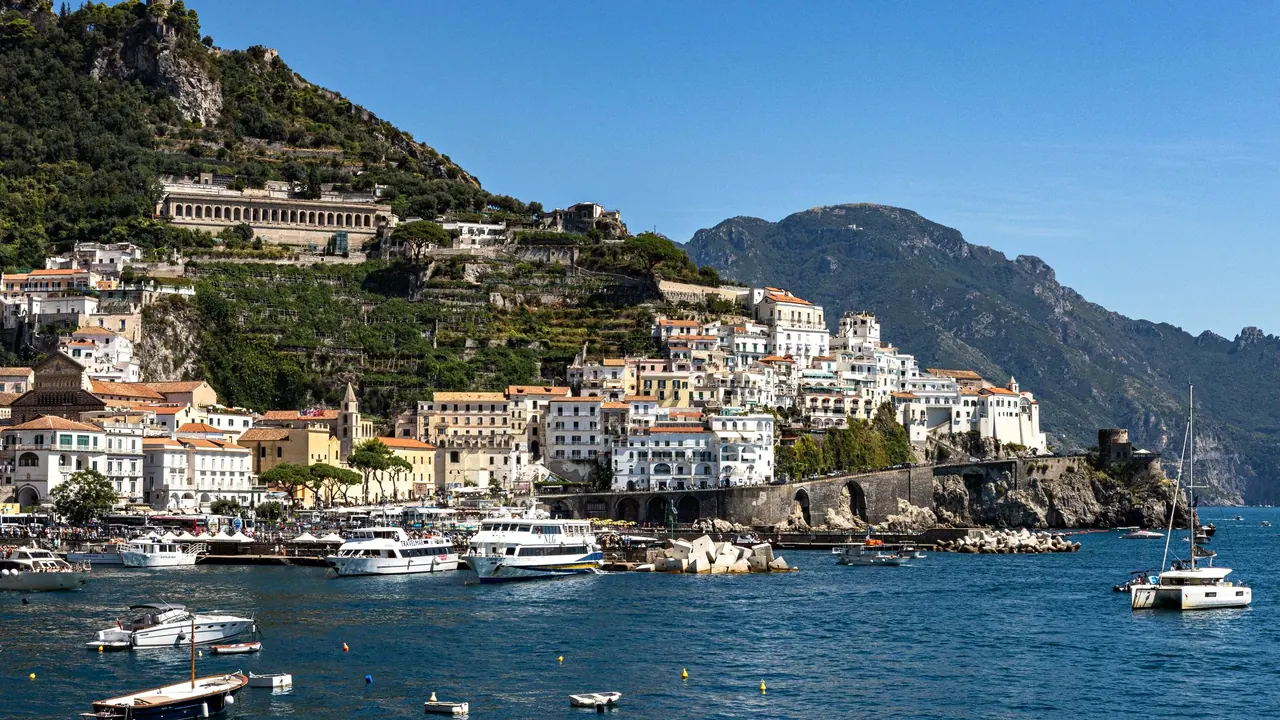
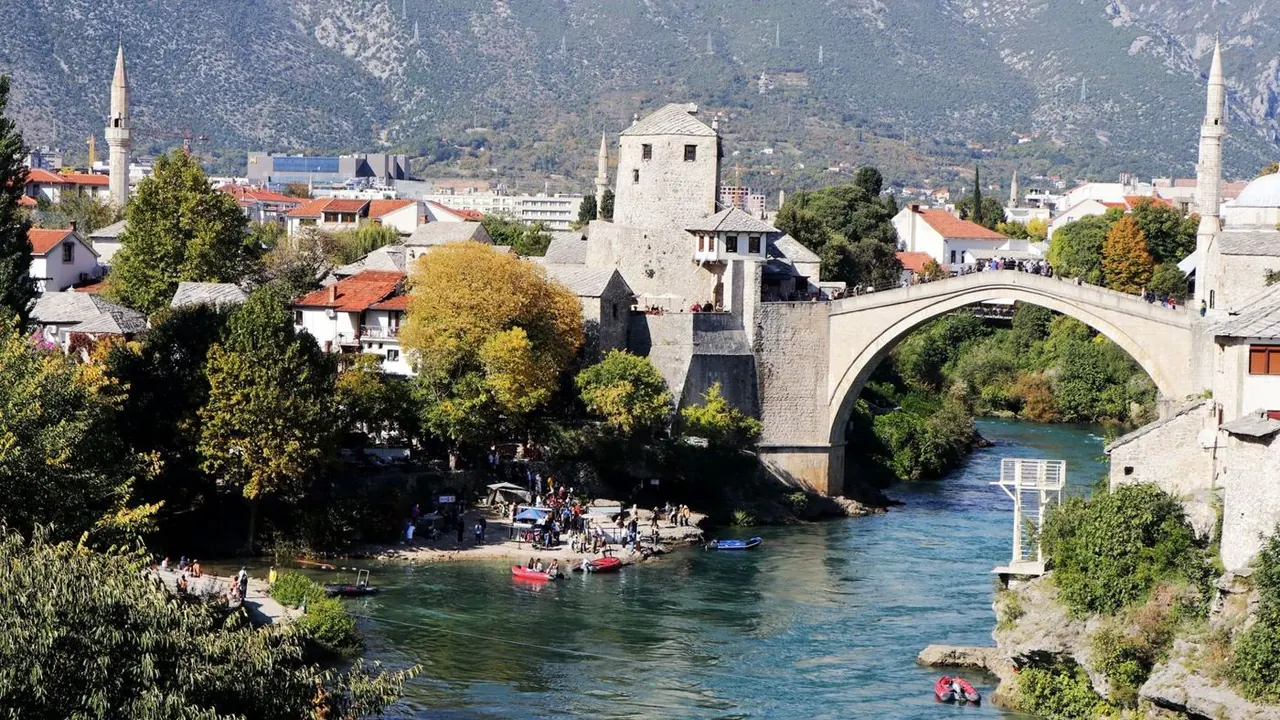
Photos: Amalfi by Oleksandra Zelena, Pexels License; Mostar by Alan Wang, Pexels License.
Amalfi or Mostar?
Our verdict in twelve categories, each scored against the same fixed benchmark cities, and the climate month by month, so you can choose for your trip.
Choose Amalfi for
- beaches
- day trips
- nature and the outdoors
Amalfi suits travellers who want the sea and the mountains in the same view. You get swims from pebble coves, boats out to grottoes and the Path of the Gods high above Positano, and Ravello, Capri and Pompeii are all within a day. It rewards a slow, well-funded stay of walking, swimming and long lunches. You will need a generous budget and patience with crowded summer buses and endless stairs.
Choose Mostar for
- prices
- culture and sights
- nightlife
Mostar is the better choice if you are curious about history and happy to spend far less. The Old Bridge, the Ottoman houses and mosques and the scars of the 1990s war give you more to take in over a day or two than Amalfi's half-day of sights. Rooms, meals and wine cost a fraction of coastal Italian prices. It works best as a stop on a wider Balkan journey, with a car for Blagaj, Počitelj and Kravica, and not as a beach base.
Scoreboard
Twelve categories on one fixed scale from 0 to 100. The shaded stretch is the gap between the two.
Your match
Pick a travel style or drag the sliders, and both match scores follow your weighting.
Too close to call, 2 points apart
Wins on beaches and day trips with your weighting.
Wins on prices and culture and sights with your weighting.
What matters to you?
Category by category
What the scores mean for a trip.
Beaches & swimming
Amalfi is a place to swim and Mostar is not. Marina Grande is pebbly and packed with beach-club loungers in summer, but the clear Tyrrhenian stays warm for months. Atrani, Santa Croce and boat trips to rocky inlets give you better water within easy reach.
Mostar has no shore at all. The Neretva is a cold plunge from the rocks below the old town. A proper swim means the falls at Kravica, about 40km south, or more than an hour's drive to the sea at Neum.
Food & drink
Amalfi has the more distinctive table, built on what the coast produces. That means sfusato lemons, anchovies and colatura from Cetara, scialatielli with clams and wines from Furore and Tramonti, with limoncello to finish.
Mostar's cooking is heartier and plainer: charcoal-grilled ćevapi in somun bread, burek and slow-cooked stews, with Herzegovina's Žilavka and Blatina and the slow ritual of Bosnian coffee. Neither town offers much range beyond its own region, and in both the cooking is weakest at the tables with the best view.
Culture & sights
Mostar has more to see. The Stari Most, rebuilt after it was destroyed in 1993, stands among the Kujundžiluk, the Koski Mehmed Pasha Mosque and the carpeted Ottoman houses. War-scarred façades further out add a harder chapter, and together they hold your attention for a day or two.
Amalfi's heritage comes from its time as a medieval sea republic: the striped Duomo with its bronze doors from Constantinople, the Chiostro del Paradiso, the Arsenale and the paper museum up the valley. These are fine sights, but they fill half a day before the coast takes over.
Nightlife
Neither is a place for a big night, but Mostar has a little more going on after dinner. Once the terraces facing the lit bridge empty, a few cocktail bars and student clubs keep going on weekends, especially in summer.
Amalfi stops at a late drink on Piazza Duomo or by the harbour, and the town goes quiet when the last ferries and buses leave. For anything more you would have to go to Salerno or Naples.
Nature & outdoors
Amalfi's landscape is its main attraction. Mountains fall straight into the sea past lemon terraces. The Valle delle Ferriere has waterfalls a short walk from town, and the Sentiero degli Dei runs high above Positano. Out on the water, kayaks reach sea caves such as the Emerald Grotto, so walking and the sea come together here in a way Mostar cannot match.
Mostar's surroundings are wilder and harsher: a bare karst basin under Velež and the Prenj range. There is rafting in the Neretva canyons, the Buna spring bursts from the cliff at Blagaj, and birds gather at Hutovo Blato. It rewards active travellers with a car, but it takes more effort to reach.
Day trips
From Amalfi, famous places are easy to reach. Ravello is just up the hill and Positano a ferry ride away. Capri, Paestum, Pompeii and Herculaneum all fit into a full day, and the ceramics town of Vietri sul Mare is along the coast road. The limits are ferries that run mainly from spring to autumn and a slow road in summer.
Mostar's outings are smaller and quieter: the dervish tekke at Blagaj, the walled hillside village of Počitelj, Stolac's medieval tombstones and Tito's bunker at Konjic. Most need a car or a tour. Sarajevo, two hours away by train through the gorge, is the only big city within a day.
Good for families
Neither is easy with small children, but Mostar is slightly kinder for a short stay. The bridge divers, a minaret climb and a swim at Kravica fill a couple of days, and restaurants welcome children readily. The slippery cobbles and summer heat still need care.
In Amalfi, pushchairs are useless on the stairways, the beach is crowded pebbles and the winding cliff buses can make children carsick. It suits older children who swim well and enjoy boats and sea caves better than toddlers.
Getting around
Both centres are small enough to walk around. The difference is what lies beyond them. Amalfi is the hub of its coast, with local buses and seasonal ferries to Ravello, Positano and Capri, so you can manage without a car, though summer buses overflow and the stairs never let up.
In Mostar, the old town and Austro-Hungarian centre are an easy stroll on worn, slippery cobbles. Local buses serve residents rather than visitors, though, so Blagaj, Počitelj and Kravica mean a car, a taxi or a tour. The train to Sarajevo is the main public link onwards.
Shopping & style
Shopping is a small affair in both, along a single souvenir street where much of the stock repeats. What differs is the craft. In Amalfi it is handmade cotton paper from the valley mills, painted majolica and sandals made to measure.
In Mostar it is hand-hammered copper coffee sets from the few smiths still working on the Kujundžiluk, along with kilims and embroidery. Neither has fashion or design shopping worth the name.
Affordability
This is where the two differ most. Mostar is one of Europe's cheaper stops. Guesthouses, ćevapi and local wine cost little, and prices only rise for old-town rooms and bridge-view terraces in midsummer.
Amalfi is at the other end of the scale. Summer sea-view rooms, seafront meals, loungers and boat hire are all expensive. Staying in a hill village and coming in spring or autumn help, but a stay here costs far more than the same days in Mostar.
Live music & performing arts
A summer evening at the Ravello Festival is the best performance either town can offer. Its orchestral and chamber concerts are held on the garden terrace of Villa Rufolo, high above the sea, a short ride up the hill from Amalfi. Outside the festival season, Amalfi has church concerts and the processions and band music of Sant'Andrea.
Mostar does have a national theatre and a youth theatre, but they perform mostly in local languages. For visitors, live performance comes down to open-air concerts in summer and the odd band in a café bar.
Wellness & relaxation
Amalfi is the easier place to unwind, more because of its setting than because of any spa. The luxury hotels built into the cliffs have pools and treatment rooms, though mostly for their own guests. The days fall into shaded lunches and swims from the rocks, and in high summer the calm moves up to the hill hamlets.
Mostar's Ottoman hammam survives as a historic building rather than a working bath, and treatments are limited to a few hotels. What rests you here is slow coffee in the shade and the old town early and late in the day, quiet apart from the river once the coach groups have gone.
When should you go?
Pick your month. The climate figures are measured averages, not a forecast.
Amalfi in July
Mostar in July
Daytime high, °C
Rainfall in the month, mm
Where the figures come from
Amalfi's temperatures are measured 65 km from the centre, at Grazzanise.
Amalfi has no rain gauge within 25 km of the centre, so its rainfall comes from a gridded climate dataset read at the city rather than from a gauge further away.
Temperature and rainfall are climate normals, averaged over the years shown. Amalfi: 1991-2020 normals, Grazzanise (64.7 km from centre). Mostar: 1991-2020 normals, Mostar (0.9 km from centre).
Amalfi's beach season runs from June to September, when the sea is warm enough for long swims and reaches about 26°C in August. May and October still suit hardier swimmers. July and August are hot for climbing stairs and trails, at around 31°C, so spring and autumn are the months for walking. Summer is sunny and almost dry. The rain returns in September and is heaviest from October through winter, when the coast is mild but grey.
Mostar has greater extremes. Its valley is the hotter of the two in high summer, around 33°C, which makes midday sightseeing heavy going. Its winters are colder, about 9°C in January, and much wetter, with close to 198mm in December. May and early June are its best stretch, warm and bright before the summer heat. September is a second choice once the heat eases, but autumn rain comes on sooner and heavier than on the coast.
Which traveller are you?
For a beach and sun trip, Amalfi is the clear pick. Its clear, warm sea, the coves at Atrani and Santa Croce and boat days to the grottoes beat Mostar, where the river is cold and the nearest real swim is the Kravica pool or a drive to the Adriatic.
On a trip on a tight budget, Mostar wins easily. Family guesthouses, plates of ćevapi and bottles of local Žilavka cost little. Amalfi is among Italy's dearest places to sleep and eat, and its local buses are the only thing that feels like a bargain.
For a culture and arts trip, Mostar gives you more to take in. The UNESCO-listed old town, the Ottoman mosques and houses and the war-marked old front line fill a day or two. Amalfi's Duomo and cloister take half a day, though Ravello's summer concerts are a real draw.
Before you go
| Measure | Amalfi | Mostar |
|---|---|---|
| Official language | Italian | Croatian, Serbian, Bosnian |
| Currency | Euro (EUR) | Convertible Mark (BAM) |
| Sockets | CFL230 V, 50 Hz | CF230 V, 50 Hz |
| Driving side | Right | Right |
| Time zone | UTC+1, UTC+2 in summer | UTC+1, UTC+2 in summer |
| Emergency number | 112 | 112 |
| Elevation | 6 m | 60 m |
| Main airport | Naples International Airport (NAP)38 km from centre131 non-stop destinations | Sarajevo International Airport (SJJ)68 km from centre38 non-stop destinations |
| Public holidays this year | 13 days | 8 days |
By the numbers
| Measure | Amalfi | Mostar |
|---|---|---|
| City population | 4,729 | 105,448 |
| People per km² | 830 | 90 |
| Museums within 10 km | 8 | 3 |
| UNESCO World Heritage sites within 50 km | 5 | 1 |
| Swim season, months above 21 °C | 5 months | - |
Where else could you go?
Every comparison below shares a destination with this one, so you can follow Amalfi or Mostar somewhere new.