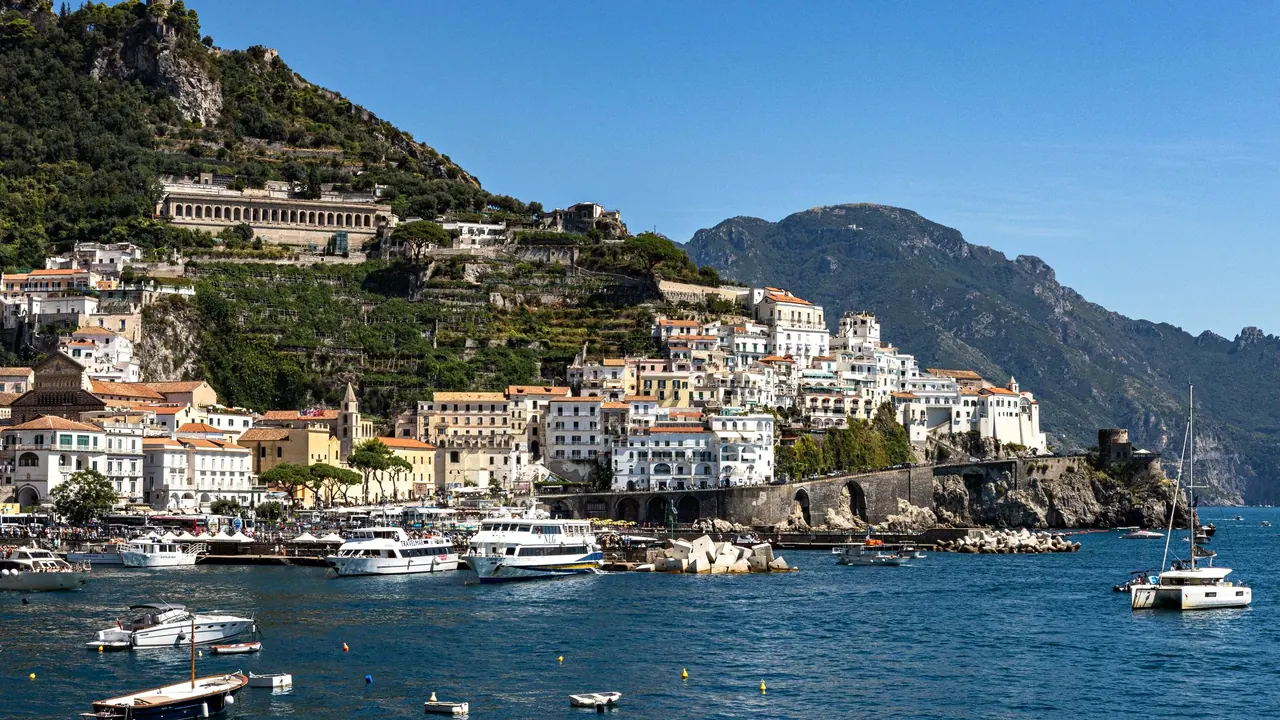
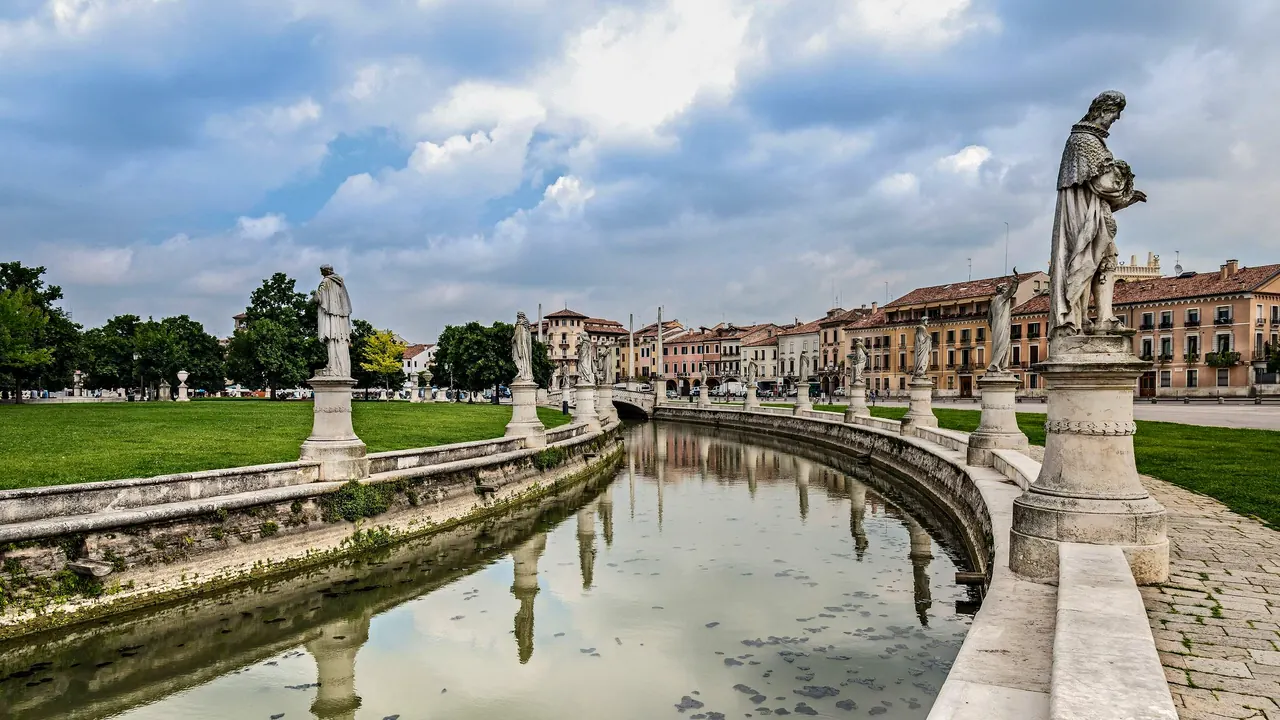
Photos: Amalfi by Oleksandra Zelena, Pexels License; Padua by Didier Descouens, CC BY-SA 4.0, cropped.
Amalfi or Padua?
Our verdict in twelve categories, each scored against the same fixed benchmark cities, and the climate month by month, so you can choose for your trip.
Choose Amalfi for
- beaches
- nature and the outdoors
Amalfi is for a coastal trip where the landscape does most of the work. Its days go on swims from pebble coves, boat trips to sea caves and walks on the terraced mountainsides, including the Path of the Gods. It suits couples and walkers who are happy to pay heavily for that setting and to spend quiet evenings over a long dinner.
Choose Padua for
- culture and sights
- prices
- wellness
Padua makes more sense if you'd rather fill your days with art, food markets and quick train rides. Giotto's frescoes and the Basilica of Saint Anthony are in the centre, Venice and Verona are easy rail trips, and the thermal pools of Abano are just outside town. It costs far less, it is flat and easy to get around, and its squares stay sociable into the evening.
Scoreboard
Twelve categories on one fixed scale from 0 to 100. The shaded stretch is the gap between the two.
Your match
Pick a travel style or drag the sliders, and both match scores follow your weighting.
Wins on beaches and nature and the outdoors with your weighting.
Wins on culture and sights and prices with your weighting.
What matters to you?
Category by category
What the scores mean for a trip.
Beaches & swimming
Amalfi has the sea right in front of the town. Marina Grande lies under the Duomo steps, though in summer it is mostly rows of beach-club loungers. Better swimming is at Atrani, at coves such as Santa Croce reached by stairs or shuttle boat, and off a hired boat among the rocks. The water is clear, but the beaches are pebble, not sand.
Padua is inland, so a swim means a day trip of about an hour to Sottomarina or the Lido of Venice. The Adriatic there is shallow and calm, which suits small children paddling, but the shore is a long, flat line of umbrellas with none of Amalfi's cliffs.
Food & drink
Amalfi's cooking is narrow but distinctive: sfusato lemons, anchovies and Cetara's colatura, and scialatielli with clams, with limoncello after dinner. The catch is the setting. The piazza and seafront cafés serve passing crowds, and the better trattorias have to be found up the alleys and in the valley.
Padua gives you more to eat and a better way to eat it. The morning markets in Piazza delle Erbe and Piazza della Frutta, the delicatessens under the Palazzo della Ragione, Venetian dishes such as bigoli and baccalà, and the early-evening spritz ritual make it the stronger choice for food, even though fine dining there is limited too.
Culture & sights
Amalfi's heritage comes from its time as a maritime republic: the striped Arab-Norman Duomo with its bronze doors from Constantinople, the white arches of the Chiostro del Paradiso, the old Arsenale and a paper museum in the valley. It is handsome but quickly seen.
Padua has a different level of art. The Scrovegni Chapel holds Giotto's fresco cycle that changed European painting, and the city's fourteenth-century frescoes form a UNESCO-listed group. Add the Basilica of Saint Anthony with Donatello's altar and Gattamelata statue, the frescoed hall of the Palazzo della Ragione and the university's anatomical theatre, and Padua can fill several days of serious sightseeing where Amalfi fills a morning.
Nightlife
After dinner in Amalfi there is a gelato or a glass on Piazza Duomo, and once the last ferries and buses have left the town goes quiet. Padua is livelier, mainly because of its students. Aperitivo crowds spill across Piazza delle Erbe and Piazza dei Signori until late, and there are wine bars around the Bo and the old ghetto. Neither town has much in the way of clubs, and Padua also goes quiet in high summer.
Nature & outdoors
Amalfi's mountains are the main reason to go. The Lattari range drops into the sea through lemon terraces and ravines. The Valle delle Ferriere gorge starts behind the town, and the Path of the Gods runs high above Positano. Old mule stairways climb to Pontone and Ravello, and kayaks reach sea caves such as the Emerald Grotto.
Padua's outdoors is gentler and starts outside the city. There are vineyard trails and cycling roads in the Euganean Hills, level towpaths along the Brenta and birdwatching on the lagoon. For real mountain walking you need to drive to Monte Grappa or the Asiago plateau.
Day trips
Both are excellent bases. From Amalfi you can reach Ravello, Positano, Capri, Paestum and, with some effort, Pompeii and Herculaneum. But the ferries run mainly in the warmer months, and the summer traffic on the cliff road slows everything down.
Padua has a slight edge because its trips are quicker and work all year. Venice is under half an hour by train, Vicenza is a quarter of an hour away, and Verona, Bologna and Ferrara are within about an hour. Closer by are the Brenta villas and walled towns such as Montagnana.
Good for families
Amalfi is hard going with young children. There are steep stairways that defeat a pushchair, a crowded pebble beach and winding bus rides that can make children carsick. Older children who swim well will still enjoy the boat trips and sea caves.
Padua is easier day to day: the centre is flat, safe and largely pedestrianised, and children can run around Prato della Valle. It has little made for children either, so families usually add day trips to Gardaland, Lake Garda or the shallow Adriatic.
Getting around
You can walk across Amalfi in minutes, but it is all steps and covered alleys. Travelling along the coast depends on blue buses that fill up in summer and seasonal ferries. Parking is so scarce that a car is a burden.
Padua is much simpler. The flat centre is covered by arcades, a tram runs from the station to Prato della Valle, and many people get about by bike. Fast mainline trains in every direction mean you don't need a car unless you are heading into the hills.
Shopping & style
Amalfi's shopping comes down to one street running up from Piazza Duomo, and many of its shops sell the same limoncello and lemon soaps. What is worth taking home is the handmade cotton paper still made in the valley mills, sold as notebooks and stationery, along with painted majolica tiles, linen and sandals made to measure.
Padua offers more variety. Under the arcades between the station and the old squares there are Italian fashion and shoe shops, independent boutiques and university bookshops. Cheeses and Euganean wine come from the market halls, and one Sunday a month there is an antiques market on Prato della Valle. For serious fashion shopping, people go on to Venice or Milan.
Affordability
This is where the two differ most. Space on the Amalfi coast is so limited that sea-view rooms, piazza meals, loungers and boat hire all cost a lot. Staying in the hill villages or going in spring or autumn helps, but only up to a point.
Padua charges ordinary northern Italian prices, so many people use it as the cheaper bed for Venice. Market food and standing spritzes cost little, and a walkable centre keeps transport costs low.
Live music & performing arts
Amalfi itself has no theatre. Its one big draw is in summer up the hill, where the Ravello Festival holds concerts on the terrace of Villa Rufolo above the sea, a setting few concert halls can match.
Padua has events all year. There is prose theatre and some opera at the horseshoe-shaped Teatro Verdi, a chamber orchestra season that plays in the Sala dei Giganti and the Basilica, and student live music. The Fenice in Venice and the Arena in Verona are both close enough for an evening.
Wellness & relaxation
Amalfi has no bathing tradition. Its spas belong to the cliffside luxury hotels and are mostly for their own guests, so the rest comes from long terrace lunches and swims from the rocks, best in May or October.
Padua has a real advantage here. About 12km out of town, Abano Terme and Montegrotto Terme form one of Europe's largest thermal districts, with hot mineral pools and mud treatments that go back to Roman times. Many spa hotels there take day visitors, so you can have a soak after a morning of frescoes.
When should you go?
Pick your month. The climate figures are measured averages, not a forecast.
Amalfi in July
Padua in July
Daytime high, °C
Rainfall in the month, mm
Where the figures come from
Amalfi's temperatures are measured 65 km from the centre, at Grazzanise.
Amalfi has no rain gauge within 25 km of the centre, so its rainfall comes from a gridded climate dataset read at the city rather than from a gauge further away.
Padua's temperatures are measured 35 km from the centre, at Treviso / Istrana.
Padua has no rain gauge within 25 km of the centre, so its rainfall comes from a gridded climate dataset read at the city rather than from a gauge further away.
Padua's sunshine is measured 36 km from the centre, at Treviso / S. Angelo.
Temperature and rainfall are climate normals, averaged over the years shown. Amalfi: 1991-2020 normals, Grazzanise (64.7 km from centre). Padua: 1991-2020 normals, Treviso / Istrana (35.4 km from centre).
Amalfi is at its best for swimming from June to September. The sea reaches about 23°C by June and stays warm into October. Midsummer is dry and very sunny, but daytime highs of around 31°C make the exposed mountain trails hard going, so May and late September to early October are better for combining walks and swims. From October the rain sets in properly and peaks at around 143mm in November. Winters are mild but wet.
Padua's summers are just as hot but more humid, so walking around the city is more comfortable in April, May, September and October. Its winters are much colder than Amalfi's, with highs of about 8°C in January and fog over the plain. Rain is spread more evenly through the year, with no dry season like Amalfi's, and there is noticeably less sun. The Adriatic within reach of Padua warms to swimming temperatures only from June to September.
Which traveller are you?
For a beach and sun trip, Amalfi is the clear choice. You can swim from the town itself or from the coves nearby, the summers are dry and sunny, and you can hire a boat to reach grottoes. Padua's nearest sand is an hour away on a flat Adriatic shore.
On a culture and arts trip, Padua is far richer. You get Giotto's Scrovegni Chapel, a UNESCO group of fresco cycles, Donatello's bronzes and the world's oldest permanent anatomical theatre, plus a year-round concert season. Amalfi's cathedral and cloister take only half a day.
On a tight budget, Padua is the sensible base. Its rooms are moderately priced, a spritz and market food cost little, and cheap trains reach Venice and Verona. Amalfi is among the most expensive places to stay in Italy, and only its local buses are a real bargain.
Before you go
| Measure | Amalfi | Padua |
|---|---|---|
| Official language | Italian | Italian |
| Currency | Euro (EUR) | Euro (EUR) |
| Sockets | CFL230 V, 50 Hz | CFL230 V, 50 Hz |
| Driving side | Right | Right |
| Time zone | UTC+1, UTC+2 in summer | UTC+1, UTC+2 in summer |
| Emergency number | 112 | 112 |
| Elevation | 6 m | 12 m |
| Main airport | Naples International Airport (NAP)38 km from centre131 non-stop destinations | Venice Marco Polo Airport (VCE)39 km from centre103 non-stop destinations |
| Public holidays this year | 13 days | 13 days |
By the numbers
| Measure | Amalfi | Padua |
|---|---|---|
| City population | 4,729 | 206,496 |
| People per km² | 830 | 2,220 |
| Museums within 10 km | 8 | 29 |
| UNESCO World Heritage sites within 50 km | 5 | 5 |
| Swim season, months above 21 °C | 5 months | 4 months |
Where else could you go?
Every comparison below shares a destination with this one, so you can follow Amalfi or Padua somewhere new.