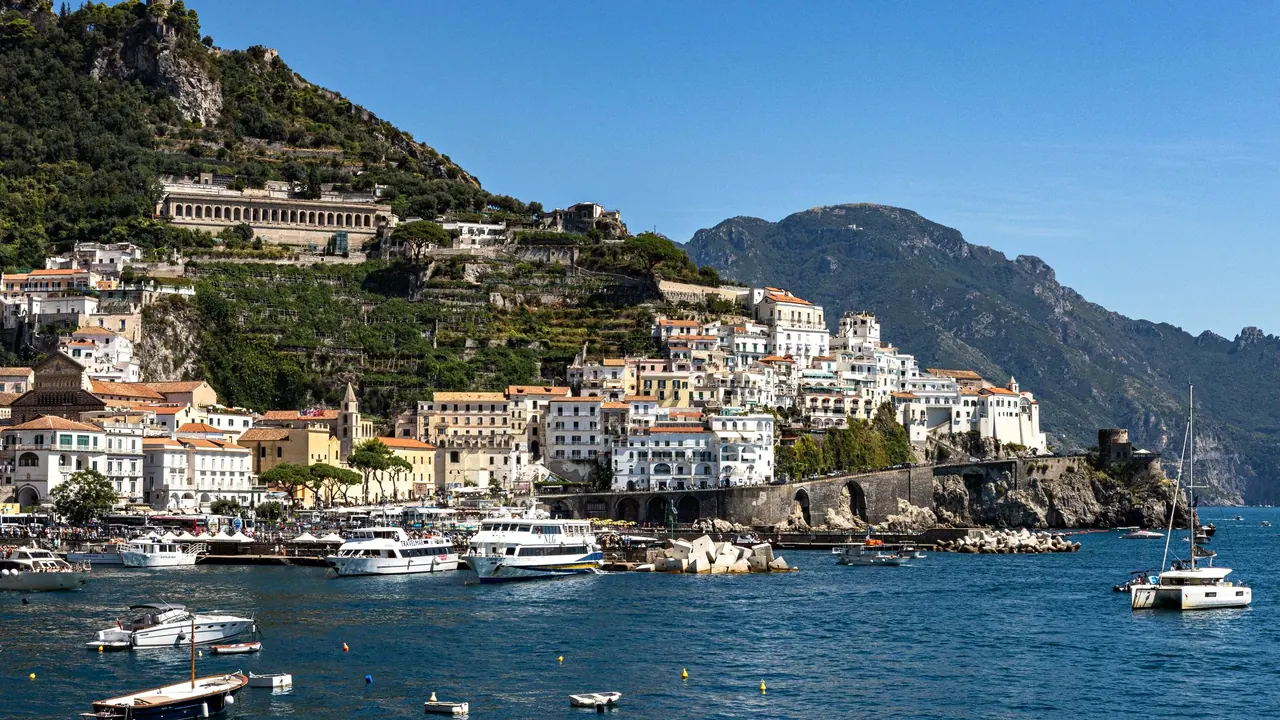
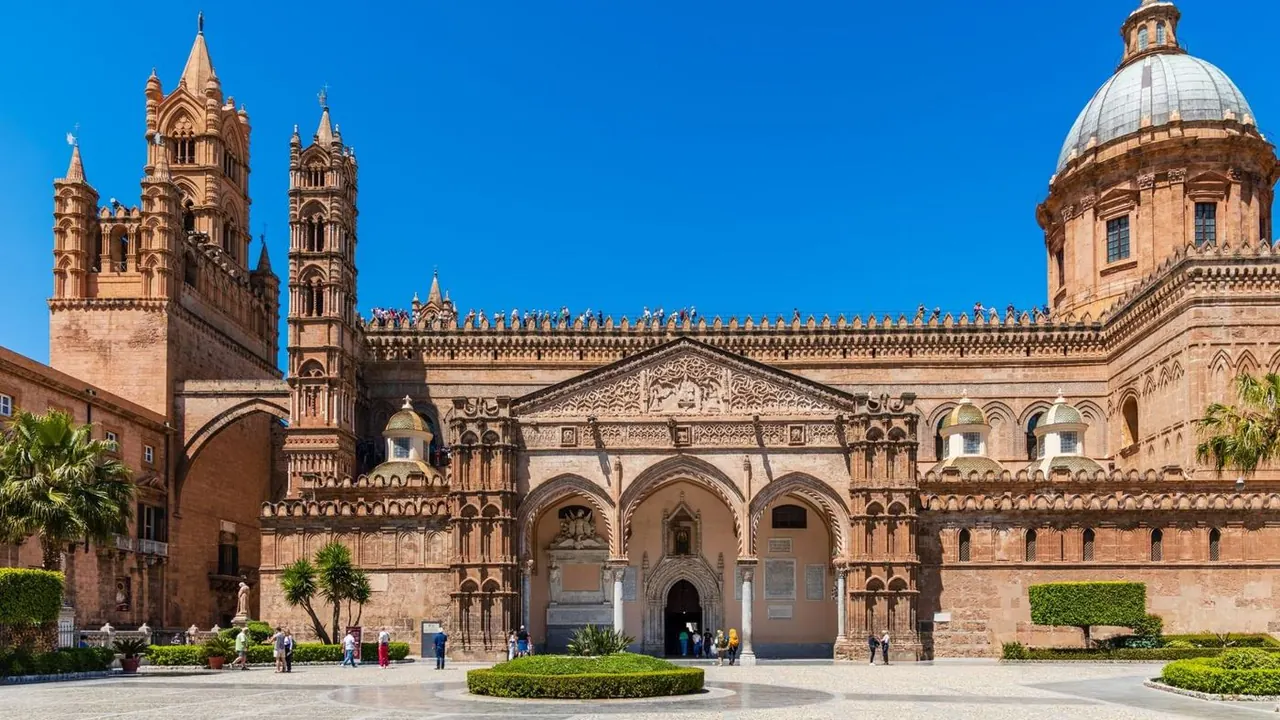
Photos: Amalfi by Oleksandra Zelena, Pexels License; Palermo by Antonino Giangrasso, Pexels License.
Amalfi or Palermo?
Our verdict in twelve categories, each scored against the same fixed benchmark cities, and the climate month by month, so you can choose for your trip.
Choose Amalfi for
- nature and the outdoors
- day trips
- wellness
Amalfi suits a slower coastal stay built around walking and the water: the Path of the Gods, the mule stairways up to Ravello, boat days to sea caves, with Positano and Capri a ferry ride away. It is best for couples with a generous budget who want scenery more than sights and are happy for the evening to end after dinner on the piazza.
Choose Palermo for
- nightlife
- prices
- culture and sights
Pick Palermo for a city with real substance. It has gold Arab-Norman mosaics, serious museums, opera at the Teatro Massimo and some of Italy's best street food in its old markets. It costs far less, stays out later and still has a sandy bay at Mondello, though it is noisier and rougher at the edges.
Scoreboard
Twelve categories on one fixed scale from 0 to 100. The shaded stretch is the gap between the two.
Your match
Pick a travel style or drag the sliders, and both match scores follow your weighting.
Wins on nature and the outdoors and day trips with your weighting.
Wins on nightlife and prices with your weighting.
What matters to you?
Category by category
What the scores mean for a trip.
Beaches & swimming
Amalfi's swimming is from pebbles. Marina Grande is lined with beach-club loungers, and the better water is in coves such as Santa Croce and Duoglio, or off a hired boat. It is a place to dip in between other plans.
Palermo also has to travel to the sea, but Mondello's shallow, sandy bay half an hour away by bus makes a proper beach day. The flat rocks around Capo Gallo and Sferracavallo add deep-water swimming. With sand and gently shelving water as well, Palermo has the edge.
Food & drink
Amalfi's cooking is narrow but rooted in the coast: sfusato lemons, colatura from Cetara, scialatielli with clams and wines from Furore. The trouble is that the places on the piazza and seafront cook for passing crowds, so a good meal takes some seeking out in the alleys.
Palermo is a far better city to eat in. Ballarò, the Capo and the Vucciria fry panelle and arancine all day, while Arab-tinged dishes such as pasta con le sarde and caponata fill the trattorie. Cannoli and brioche with granita make sweets a pursuit of their own, and you eat well here almost by accident.
Culture & sights
Amalfi's heritage fits into a morning: the striped Duomo with its doors from Constantinople, the Chiostro del Paradiso, the old Arsenale and the paper museum up the valley.
Palermo can fill a week. The Palatine Chapel, La Martorana and the cathedral form a UNESCO-listed Arab-Norman route, followed by baroque churches and oratories with Serpotta's stucco. The Salinas and Palazzo Abatellis are serious museums, so anyone who travels for sights will find much more in Palermo.
Nightlife
In Amalfi a night out means dinner, then a gelato on Piazza Duomo, and the town goes quiet once the day visitors leave. Palermo keeps going past midnight: the Vucciria becomes an open-air bar and the wine bars around the Kalsa fill up after a late dinner. Neither is a city for clubbing, but only Palermo offers a proper night out.
Nature & outdoors
Amalfi wins for landscape you can walk into from your door. The gorge of the Valle delle Ferriere starts behind the town, the Path of the Gods runs high above Positano, and kayaks reach sea caves such as the Emerald Grotto.
Palermo's outdoors is wider but further away. Monte Pellegrino and Capo Gallo are close by, but the Zingaro coast path and the Madonie peaks of nearly 2,000m really need a car.
Day trips
Both make superb bases, but the trips differ in kind. From Amalfi they are short hops along one famous coast: Ravello up the hill, Positano and Capri by ferry, with Pompeii or Paestum making a full day out. Most of the ferries run only from spring to autumn.
Palermo's range is wider and older. Monreale's mosaics are half an hour away and Cefalù is an hour by train, while Segesta, Erice and Agrigento's Valley of the Temples lie further out. The ancient sites are much easier with a hire car.
Good for families
Neither is easy with small children, but Palermo is the easier of the two. Mondello's shallow, sandy bay suits toddlers, the puppet shows of knights and Saracens entertain older children, and restaurants welcome families late into the evening.
Amalfi's stairways defeat pushchairs, its beach is crowded pebbles and the winding cliff buses can make children carsick. It works mainly for older children who swim confidently and enjoy boat trips.
Getting around
You can walk around both centres, but they feel very different on foot. Amalfi is tiny but steep, all stairs and covered alleys, and its buses and seasonal ferries along the coast get badly crowded in summer.
Palermo's centre is flat along Via Maqueda and Corso Vittorio Emanuele, though the side lanes often have no pavements. Its slow city buses make a hire car tempting for the rest of the island. In neither place is driving in town a pleasure.
Shopping & style
Amalfi's one shopping street sells the same limoncello and ceramics from shop to shop, and its real find is handmade cotton paper from the valley. Palermo has more range: Italian fashion on Via Libertà, moor's-head vases, marionettes from the puppet workshops, coral jewellery and pistachio pesto from the markets. Neither is a shopping destination, but Palermo gives you more to browse.
Affordability
Amalfi is among the most expensive places to stay in Italy. Sea-view rooms, beach loungers and boat hire are all priced at the luxury end, and only the local buses are a bargain.
Palermo costs much less from day to day. Street food in the markets makes a cheap meal, and trattorie and guesthouses are fairly priced. July and August at Mondello are the main exception.
Live music & performing arts
Amalfi has no theatre of its own, so its musical high point is a summer evening at the Ravello Festival, on the Villa Rufolo terrace above the sea. Palermo has a full season of opera, ballet and concerts at the Teatro Massimo and the symphony orchestra at the Politeama. It also has the Opera dei Pupi, where armoured marionettes fight out the Charlemagne legends in small family theatres.
Wellness & relaxation
Neither has a bathing tradition, and both leave spa treatments to the hotels. Amalfi's calm comes from the pace of a small coast town, with shaded lunches and morning swims from the rocks, although July and August crowd it. Palermo is noisier, so rest means the Orto Botanico, a cloister, or the train to the thermal waters at Termini Imerese.
When should you go?
Pick your month. The climate figures are measured averages, not a forecast.
Amalfi in July
Palermo in July
Daytime high, °C
Rainfall in the month, mm
Where the figures come from
Amalfi's temperatures are measured 65 km from the centre, at Grazzanise.
Amalfi has no rain gauge within 25 km of the centre, so its rainfall comes from a gridded climate dataset read at the city rather than from a gauge further away.
Palermo has no rain gauge within 25 km of the centre, so its rainfall comes from a gridded climate dataset read at the city rather than from a gauge further away.
Palermo's sunshine is measured 67 km from the centre, at Ustica.
Temperature and rainfall are climate normals, averaged over the years shown. Amalfi: 1991-2020 normals, Grazzanise (64.7 km from centre). Palermo: 1991-2020 (sunshine 1961-1990) normals, Palermo / Punta Raisi (24.1 km from centre).
Both are at their best in late spring and early autumn. Amalfi gets hotter in summer, about 31°C in July and August, which makes its exposed trails hard going. Palermo stays a degree or so cooler and is almost dry in June and July. At both, the sea is warm enough to swim from June to October and reaches about 26°C in August, with plenty of sunshine through the summer months.
The bigger difference comes in the cooler half of the year. Amalfi turns wet from September, and November is the wettest month at around 143mm, with winter highs in the low teens. Palermo gets roughly half that rain and stays a couple of degrees milder, so it works far better for a winter break of museums and markets. Amalfi is best kept for May, June and early October.
Which traveller are you?
On an outdoors trip, Amalfi lets you set off on foot from your door, with no car needed. Come in April, May or October, when the cliff trails are cool, and end the day with a swim or a boat back.
For a culture and arts trip, Palermo wins, and it works in winter too, when milder, drier days suit churches and museums. Amalfi's sights take a morning. Palermo keeps you busy for days, with opera in the evenings.
On a trip on a tight budget, Palermo makes the money last. Start the day with brioche and granita, make lunch a string of panelle and arancine through Ballarò, then take the bus to Mondello or Monreale. Avoid July and August, when seaside rooms are hardest to find.
Before you go
| Measure | Amalfi | Palermo |
|---|---|---|
| Official language | Italian | Italian |
| Currency | Euro (EUR) | Euro (EUR) |
| Sockets | CFL230 V, 50 Hz | CFL230 V, 50 Hz |
| Driving side | Right | Right |
| Time zone | UTC+1, UTC+2 in summer | UTC+1, UTC+2 in summer |
| Emergency number | 112 | 112 |
| Elevation | 6 m | 14 m |
| Main airport | Naples International Airport (NAP)38 km from centre131 non-stop destinations | Falcone–Borsellino Airport (PMO)25 km from centre106 non-stop destinations |
| Public holidays this year | 13 days | 13 days |
By the numbers
| Measure | Amalfi | Palermo |
|---|---|---|
| City population | 4,729 | 630,167 |
| People per km² | 830 | 3,924 |
| Museums within 10 km | 8 | 42 |
| UNESCO World Heritage sites within 50 km | 5 | 1 |
| Swim season, months above 21 °C | 5 months | 5 months |
Where else could you go?
Every comparison below shares a destination with this one, so you can follow Amalfi or Palermo somewhere new.