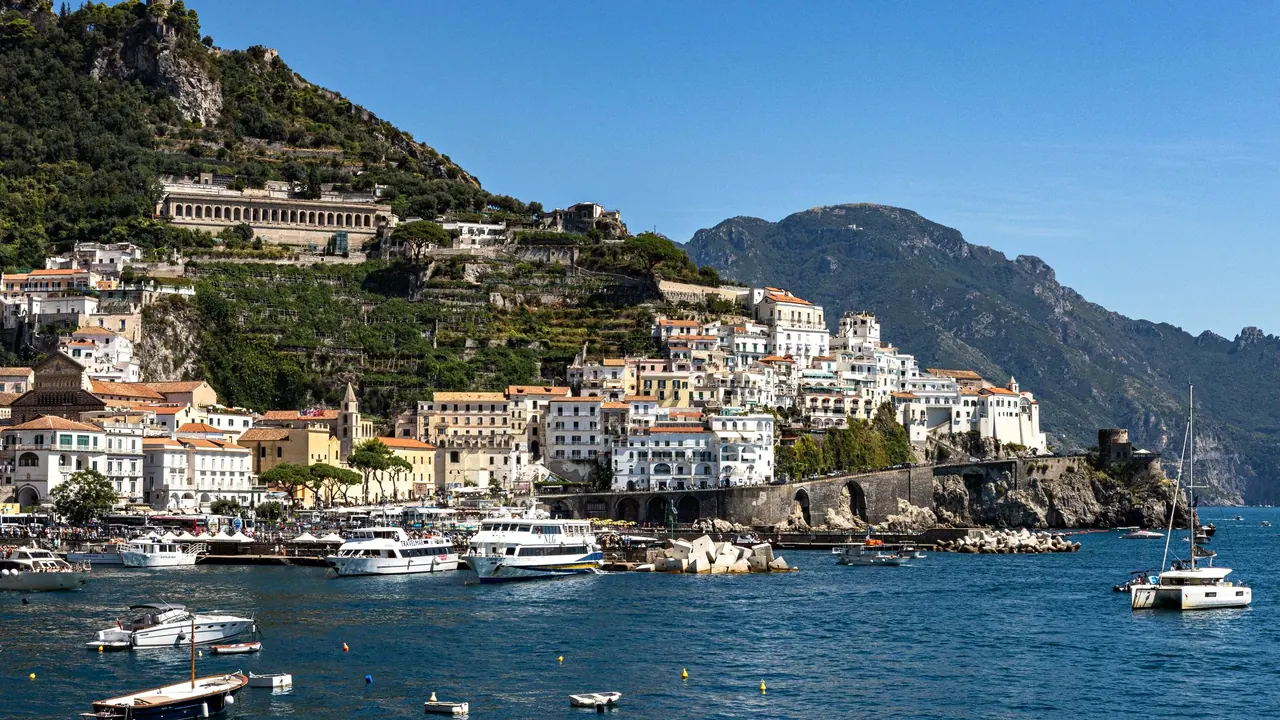
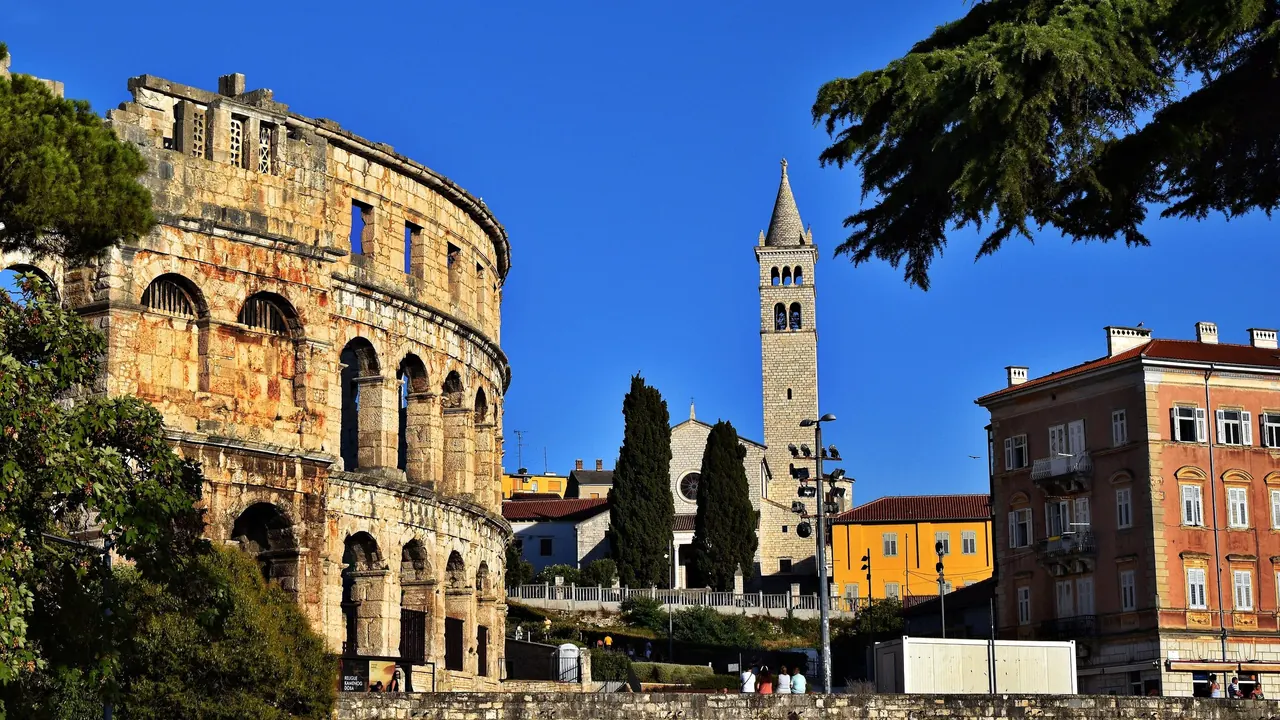
Photos: Amalfi by Oleksandra Zelena, Pexels License; Pula by Miroslav.vajdic, CC BY-SA 4.0, cropped.
Amalfi or Pula?
Our verdict in twelve categories, each scored against the same fixed benchmark cities, and the climate month by month, so you can choose for your trip.
Choose Amalfi for
- nature and the outdoors
- day trips
- shopping
Amalfi is for travellers who come for the landscape and accept the cost and the crowds that come with it. The Lattari mountains drop straight into the sea, the Path of the Gods runs above Positano, and Ravello, Capri and Pompeii are all within reach. That makes it a superb base for walkers and sightseers on a short, scenic stay, provided they can cope with endless steps and a busy summer.
Choose Pula for
- families
- prices
- nightlife
For a longer and more rounded summer vacation, Pula is the stronger pick. Its coves at Kamenjak are better for swimming, and the Roman Arena and Forum give it far more to see than Amalfi's half-day of sights. There is more going on in the evening, children are much easier to manage, and the bills stay reasonable outside high summer. You will want a car to see the rest of Istria.
Scoreboard
Twelve categories on one fixed scale from 0 to 100. The shaded stretch is the gap between the two.
Your match
Pick a travel style or drag the sliders, and both match scores follow your weighting.
Wins on nature and the outdoors and day trips with your weighting.
Wins on families and prices with your weighting.
What matters to you?
Category by category
What the scores mean for a trip.
Beaches & swimming
Neither town has a sandy beach, but Pula has the better swimming. At Amalfi you swim at Marina Grande, a pebble strip under the Duomo steps that is lined with beach-club loungers in summer. The nicer water is at Atrani or in coves such as Santa Croce, reached by stairs or shuttle boat.
Pula's coastline is longer and more open. Rock platforms and pebble coves run around Verudela and Stoja, pines grow down to the water, and Kamenjak's wild headland is about 10km south. The sheltered bays at Medulin add shallow water that Amalfi lacks. Bring water shoes for the urchins.
Food & drink
Both are regional seaside kitchens, and Pula's offers rather more depth. Istrian cooking goes well beyond seafood, with truffle fuži, scampi buzara, pršut, estate olive oil, Malvazija and Teran. The covered market shows what is in season, and the best meals are in hinterland taverns.
In Amalfi everything centres on the sfusato lemon, along with colatura from Cetara and scialatielli with clams. The town is small, though, and the piazza cafés are often only average. The careful trattorias are tucked away in the alleys.
Culture & sights
Pula has far more to see. The Arena is a Roman amphitheatre with its outer ring still complete, and around it you can trace the Roman town through the Temple of Augustus on the Forum and the Arch of the Sergii. The Venetian fortress museum and the Habsburg naval forts fill a day or two.
Amalfi's heritage belongs to its maritime republic. The striped Duomo has its Constantinople doors, beside it stands the Chiostro del Paradiso, and there are the Arsenale and the paper museum up the valley. Most people see it all in a morning.
Nightlife
Neither town is somewhere you go to party, but Amalfi hardly has an evening scene at all. The night is built around the dinner table, and once the day crowds leave the coast there is nowhere to move on to. Anyone who wants to dance has a long journey ahead of them. That suits couples who want quiet after a day of walking much better than groups of friends.
Pula, at least in summer, has somewhere to go after dinner. Drinks on the Forum terraces can turn into a later night at the beach bars on Verudela or around Medulin, and on warm weekends a handful of small clubs fill up with young Croatians. It never turns into a party town, and outside summer the student bars are about all that keeps going.
Nature & outdoors
Amalfi's scenery is in another league. Mountains fall sheer into the sea, and it has the shaded waterfalls of the Valle delle Ferriere, the Path of the Gods high above Positano and mule stairways to the hill hamlets. By kayak you can reach sea caves such as the Emerald Grotto.
Pula's southern Istria is low and gentle by comparison: macchia, pines and olive groves, with Kamenjak's car-free cliffs for walking and cycling. Water sports suit it better, with windsurfing at Premantura and diving on naval-era wrecks. Serious hiking means driving about an hour and a half to Učka.
Day trips
Amalfi's day trips have the bigger names, and you can reach them without a car. Ravello is a short bus ride away and Positano a short ferry trip. Capri, Paestum, Pompeii and Herculaneum also fit into a day, though the ferries run mainly from spring to autumn.
Pula's Istria is quieter but very rewarding. Rovinj, the Byzantine mosaics of Poreč's Euphrasian Basilica, the hill towns of Motovun and Hum, and the Brijuni islands are all close. Piran and Trieste are within a long day. Buses are thin, so hire a car.
Good for families
Pula is much more manageable with children. The bays at Medulin and Premantura shelve gently, the aquarium is set inside a Habsburg fort, and the Arena's underground passages are fun to explore. A dinosaur park, a water park and Tito's safari animals on Brijuni are all within reach.
Amalfi suits older children who swim confidently and will enjoy boats and sea caves. Toddlers are another matter: pushchairs are no use on the stairways, the beach is crowded, and the winding cliff buses can bring on carsickness.
Getting around
Both centres are small enough to walk, but they feel very different on foot. Pula's old town is flat, while Amalfi is a maze of steps that is hard on anyone with limited mobility.
Beyond the centre the picture reverses. Amalfi is the coast's bus and ferry hub, and a car there is more burden than help. Around Pula, regional buses are sparse, so Kamenjak, the hill towns and most beaches are far easier with a car or scooter.
Shopping & style
Amalfi sells crafts, and Pula sells things to eat and drink. Amalfi's one main street has handmade cotton paper from the valley mills, majolica tiles, linen and sandals made to measure, in among shop after shop of the same limoncello and lemon soap.
In Pula the best buys come from the market hall, delicatessens and the producers themselves: Istrian olive oil, truffle products, wine, rakija and pršut. Its pedestrian street offers only chain fashion and souvenirs, and you won't find luxury shopping in either town.
Affordability
There is a wide gap here. Amalfi is among the most expensive places to stay in Italy. Sea-view rooms, beach loungers, boat hire and piazza meals all cost a lot, and only the local buses are cheap, even if staying up in the hill villages helps.
Pula is mid-priced. Apartments and konobas keep a stay sensible, especially in spring and autumn. July and August push room prices up towards Western European levels, and car hire adds to the bill.
Live music & performing arts
Pula has the more memorable stage. On summer nights the Arena hosts touring concerts, classical galas and the Pula Film Festival, and the Istrian National Theatre keeps drama going through the rest of the year.
Amalfi has no theatre of its own. Its highlight is the Ravello Festival's concerts on the Villa Rufolo terrace above the sea, plus the processions and band music of the feast of Sant'Andrea.
Wellness & relaxation
Neither has a bathing tradition. Spas in both places are hotel affairs, and Amalfi's cliffside ones are mostly reserved for their own guests, while Pula's resorts on Verudela and in Medulin are larger. The calm comes from different places: in Amalfi it is long terrace lunches and the hill hamlets in May or October, in Pula it is pine-shaded coastal paths and quiet Istrian countryside outside high summer.
When should you go?
Pick your month. The climate figures are measured averages, not a forecast.
Amalfi in July
Pula in July
Daytime high, °C
Rainfall in the month, mm
Where the figures come from
Amalfi's temperatures are measured 65 km from the centre, at Grazzanise.
Amalfi has no rain gauge within 25 km of the centre, so its rainfall comes from a gridded climate dataset read at the city rather than from a gauge further away.
Pula's temperatures are measured 87 km from the centre, at Trieste.
Pula has no rain gauge within 25 km of the centre, so its rainfall comes from a gridded climate dataset read at the city rather than from a gauge further away.
Temperature and rainfall are climate normals, averaged over the years shown. Amalfi: 1991-2020 normals, Grazzanise (64.7 km from centre). Pula: 1991-2020 normals, Trieste (87 km from centre).
Amalfi is the warmer and sunnier of the two. Summer highs reach 31°C, which makes the stepped streets and exposed trails hard going in July and August, and the sea warms to 26°C. The sea is good for swimming from June into October. The rain arrives in autumn and stays through winter, peaking at 143mm in November, so April, May and early October are the best months for walking.
Pula's climate is milder in summer and colder in winter. Highs reach about 29°C in high summer, and the sea is warm enough to swim from June to late September. Rain is spread more evenly through the year and is heaviest from September to November. Winter days of around 10°C make it a poor off-season choice, so for walking and cycling aim for May or September.
Which traveller are you?
For an outdoors trip, choose Amalfi. Gorge walks in the Valle delle Ferriere, the Sentiero degli Dei and the old mule stairways up to Ravello make a far more dramatic hiking ground than Pula's low, stony coast and cycling lanes.
On a family trip with young children, Pula is much easier. The shallow bays at Medulin, the aquarium in an old fort and climbing around the Arena all suit small children, while Amalfi's stairways, crowded pebbles and winding buses make it hard work.
On a tight budget, Pula goes a lot further. Private apartments and simple konobas keep costs moderate, especially in spring and autumn, whereas Amalfi is among the dearest places to stay in Italy and only its local buses come cheap.
Before you go
| Measure | Amalfi | Pula |
|---|---|---|
| Official language | Italian | Croatian |
| Currency | Euro (EUR) | Euro (EUR) |
| Sockets | CFL230 V, 50 Hz | CF230 V, 50 Hz |
| Driving side | Right | Right |
| Time zone | UTC+1, UTC+2 in summer | UTC+1, UTC+2 in summer |
| Emergency number | 112 | 112 |
| Elevation | 6 m | 5 m |
| Main airport | Naples International Airport (NAP)38 km from centre131 non-stop destinations | Pula Airport (PUY)7 km from centre34 non-stop destinations |
| Public holidays this year | 13 days | 14 days |
By the numbers
| Measure | Amalfi | Pula |
|---|---|---|
| City population | 4,729 | 52,220 |
| People per km² | 830 | 971 |
| Museums within 10 km | 8 | 4 |
| UNESCO World Heritage sites within 50 km | 5 | 1 |
| Swim season, months above 21 °C | 5 months | 4 months |
Where else could you go?
Every comparison below shares a destination with this one, so you can follow Amalfi or Pula somewhere new.