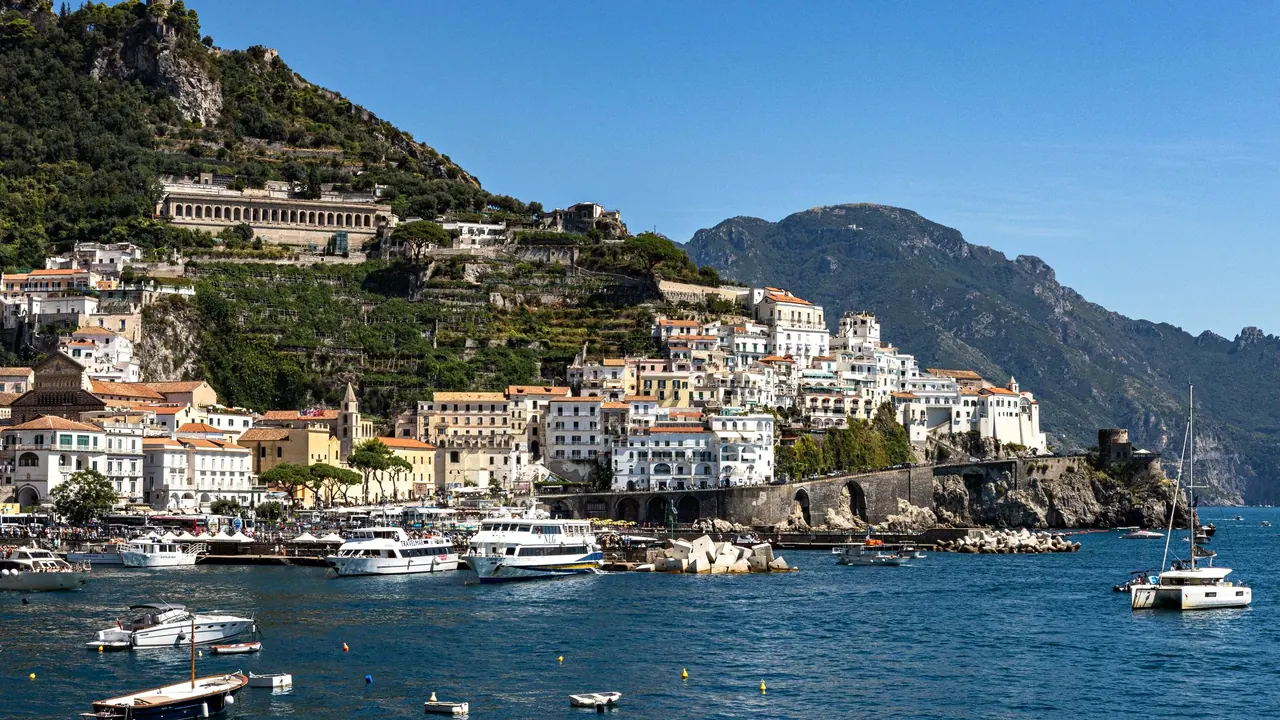
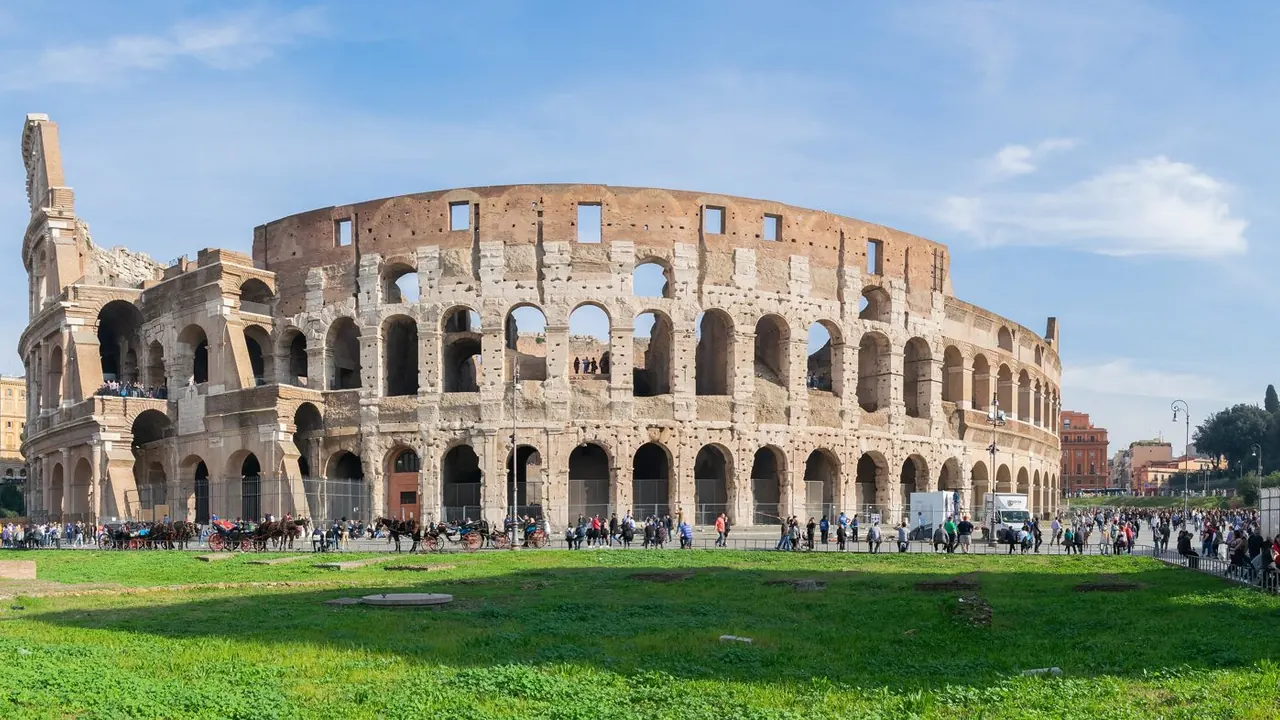
Photos: Amalfi by Oleksandra Zelena, Pexels License; Rome by Tournasol7, CC BY-SA 4.0, cropped.
Amalfi or Rome?
Our verdict in twelve categories, each scored against the same fixed benchmark cities, and the climate month by month, so you can choose for your trip.
Choose Amalfi for
- nature and the outdoors
- beaches
Amalfi suits travellers who come for the coast itself: clear water for a swim between other plans, boat trips to grottoes, and some of Europe's finest cliff walking straight from town. It is best for couples and active adults who will pay heavily for the view and are happy with slow dinners and quiet nights once the day visitors leave.
Choose Rome for
- culture and sights
- nightlife
- live music and the arts
If you want a city to explore, Rome is by far the stronger choice. Its ancient sites, museums and churches, its own cuisine and a real evening life easily fill a week. It also works better for families, shoppers and tighter budgets. The price is noise, summer heat and a beach that takes a train ride to reach.
Scoreboard
Twelve categories on one fixed scale from 0 to 100. The shaded stretch is the gap between the two.
Your match
Pick a travel style or drag the sliders, and both match scores follow your weighting.
Wins on nature and the outdoors and beaches with your weighting.
Wins on culture and sights and nightlife with your weighting.
What matters to you?
Category by category
What the scores mean for a trip.
Beaches & swimming
Amalfi has the sea right at the edge of town. From the old town you step straight onto Marina Grande, a pebble beach lined with beach-club loungers. Atrani and coves like Santa Croce are a short walk or boat ride away, the water is clear, and a hired boat takes you to rocks and grottoes the road never reaches.
Rome's sea is a train ride away at Ostia or Fregene, with dark volcanic sand mostly divided into paid lidos, warm in summer but rarely clear. It makes a half-day escape from the heat rather than part of daily life. In Amalfi, a swim fits easily between lunch and an afternoon walk.
Food & drink
Rome eats far better. Its own cuisine of carbonara, cacio e pepe, Jewish-style artichokes and the offal dishes of Testaccio is served in neighbourhood trattorias across Trastevere, Monti and Testaccio, with pizza al taglio and supplì for lunch on the move.
Amalfi's cooking is narrower and tied to the coast: lemons, anchovies, colatura from Cetara and scialatielli with seafood, with limoncello to finish. It can be very good in the back alleys and up the valley. But the tables on the piazza and seafront are often average, and a week there offers little variety.
Culture & sights
The gap here is huge. Rome packs the Colosseum, the Forum, the Pantheon, the Vatican Museums and Sistine Chapel, the Borghese and Baroque churches hung with Caravaggios into one centre. That is enough to fill a week and still leave much unseen.
Amalfi's heritage comes from its medieval maritime republic: the striped Duomo with its bronze doors cast in Constantinople, the Chiostro del Paradiso, the old Arsenale and the paper museum up the valley. It makes a fine half-day, and then the coast takes over.
Nightlife
Rome is not known for clubbing, but it has evenings worth going out for. There is aperitivo in the piazzas, Trastevere's crowded lanes of wine bars, cocktail bars in Monti, cheap student drinking in San Lorenzo, and a small club scene in Testaccio and Ostiense.
Amalfi's evening is dinner followed by a gelato or a nightcap on Piazza Duomo, and the town goes quiet once the last ferries and buses leave. For anything more than a late glass you would have to go to Salerno or Naples.
Nature & outdoors
Amalfi is the place for landscape. The Lattari mountains fall almost straight into the sea and the Valle delle Ferriere gorge starts behind the town. Mule stairways climb to Pontone and Ravello, and the Sentiero degli Dei above Positano is one of Europe's great coastal walks. Kayaks and small boats reach sea caves such as the Emerald Grotto.
Rome's green is gentler and takes more effort to reach. There are villa parks like Villa Borghese and Villa Pamphili, a bike ride along the Appian Way, crater lakes in the Alban Hills, and the Apennines about ninety minutes away. Both are best outdoors in spring and autumn, because summer heat is hard on exposed trails and midday walks alike.
Day trips
Both are excellent bases, and the difference is in what lies around them. Amalfi's trips are coastal and scenic: Ravello's villa gardens up the hill, Positano by ferry, Capri in season, and with some planning Paestum's Greek temples, Pompeii or Herculaneum. Ferries run mainly from spring to autumn, and the coast road gets jammed in summer.
Rome reaches further and deeper into history, helped by its trains. Ostia Antica and Tivoli are close, there are Etruscan tombs at Tarquinia and Cerveteri, and Orvieto and Civita di Bagnoregio lie to the north. Florence and Naples are about ninety minutes away by high-speed train.
Good for families
With children, Rome is the easier choice, though not an easy one. Villa Borghese has the Bioparco zoo, rowing boats and room to run, and there is a children's museum near Piazza del Popolo. Gladiators, catacombs and daily pizza help keep children interested in the ancient sights.
Amalfi has no attractions made for children. Its steep stairways make pushchairs useless, the pebble beach is crowded, and the winding buses can make small children carsick. It works better for older children who swim well and will enjoy boat trips and sea caves.
Getting around
Rome's centre is made for walking, from the Colosseum past the Pantheon and Piazza Navona to Trastevere. The metro barely enters the core but does reach the Vatican, Termini and the Spanish Steps, and buses and trams fill the gaps when traffic allows.
Amalfi itself is tiny and easy to walk, but going anywhere beyond it means crowded summer buses, seasonal ferries and a single cliff road. Neither is kind to tired feet, Rome because of its cobbles and Amalfi because of its stairs. The stairs make Amalfi much harder going for anyone with limited mobility.
Shopping & style
Rome has real shopping. The big fashion houses line Via Condotti and the streets around the Spanish Steps, Via del Corso has the chains, and Monti has independent boutiques and vintage. There are antiques around Via dei Coronari and a huge Sunday market at Porta Portese.
Amalfi has one main street of limoncello, ceramics and lemon soap, with much of the stock repeated from shop to shop. Its best buys are local and specific: handmade cotton paper from the valley mills, painted majolica and sandals made to measure.
Affordability
Neither is cheap, but Rome is easier on a budget. Its rooms are costly and the big sights charge entry, but standing espresso, pizza al taglio, free drinking fountains and churches full of art keep daily spending down.
Amalfi's rooms are among the most expensive in Italy, especially sea-view rooms in summer, and meals on the piazza, beach loungers and boat hire add up. The local buses are good value, and staying in the hill villages in spring or autumn helps. Even so, the bill stays high.
Live music & performing arts
Rome has a proper season. The Teatro dell'Opera stages opera and ballet in winter and moves outdoors to the ruins of the Baths of Caracalla in summer. The Santa Cecilia orchestra plays at the Auditorium Parco della Musica, and there are also jazz clubs and organ concerts in churches.
Amalfi has no theatre or concert hall. Its big musical occasion is the summer Ravello Festival, held in the gardens of Villa Rufolo up the hill, and the setting makes it an evening few venues can match. The town's own feast of Sant'Andrea brings processions and band music.
Wellness & relaxation
Neither city has a living bathing culture, but Rome comes closer. The sulphur pools of Bagni di Tivoli are nearby, the free hot springs around Viterbo are about ninety minutes away, and the city has hotel spas and hammam-style day spas. The centre is noisy, but the villa gardens and the Aventine are quiet.
Amalfi's spas are in luxury hotels built into the cliffs and are mostly for their own guests. Its calm comes from slow lunches, swims off the rocks and early mornings. In July and August the centre loses that calm, and you have to go up to the hill hamlets to find it.
When should you go?
Pick your month. The climate figures are measured averages, not a forecast.
Amalfi in July
Rome in July
Daytime high, °C
Rainfall in the month, mm
Where the figures come from
Amalfi's temperatures are measured 65 km from the centre, at Grazzanise.
Amalfi has no rain gauge within 25 km of the centre, so its rainfall comes from a gridded climate dataset read at the city rather than from a gauge further away.
Rome's sunshine is measured 31 km from the centre, at Vigna Di Valle.
Temperature and rainfall are climate normals, averaged over the years shown. Amalfi: 1991-2020 normals, Grazzanise (64.7 km from centre). Rome: 1991-2020 normals, Roma / Ciampino (15.1 km from centre).
The two share almost the same calendar of heat. Both reach about 31°C in July and August, which is too hot for long afternoons on Rome's cobbles or on Amalfi's exposed trails. In both, April, May, late September and October are the comfortable months for walking. June to August are the driest and sunniest months in each.
Amalfi has the edge for the sea. It is warm enough for most swimmers from June into October and reaches 26°C in August, while Rome's beaches are an outing rather than the point of the trip. The coast gets wetter from autumn, with about 143mm of rain in November against Rome's 114mm. For a winter trip, Rome's museums make far more sense than a coast that is at its best in the sun.
Which traveller are you?
For a culture and arts trip, Rome wins outright. The Colosseum, the Vatican Museums, the Borghese Gallery and the Baroque churches fill day after day, and in summer you can see opera at Caracalla. Amalfi's Duomo and cloister take a morning.
On an outdoors trip, Amalfi is the better pick. The Path of the Gods, the Valle delle Ferriere gorge and the mule stairways up to Ravello all start close to town, and there are kayaks for the sea caves. Rome's green is mostly parks and day trips.
For a food and nightlife trip, choose Rome. In Trastevere, Monti and Testaccio you get classic pastas, street food and markets, then aperitivo and wine bars that stay open late. Amalfi offers a narrower range of coastal cooking, followed by a quiet piazza and an early night.
Before you go
| Measure | Amalfi | Rome |
|---|---|---|
| Official language | Italian | Italian |
| Currency | Euro (EUR) | Euro (EUR) |
| Sockets | CFL230 V, 50 Hz | CFL230 V, 50 Hz |
| Driving side | Right | Right |
| Time zone | UTC+1, UTC+2 in summer | UTC+1, UTC+2 in summer |
| Emergency number | 112 | 112 |
| Elevation | 6 m | 21 m |
| Main airport | Naples International Airport (NAP)38 km from centre131 non-stop destinations | Rome–Fiumicino Leonardo da Vinci International Airport (FCO)23 km from centre242 non-stop destinations |
| Public holidays this year | 13 days | 13 days |
By the numbers
| Measure | Amalfi | Rome |
|---|---|---|
| City population | 4,729 | 2,748,109 |
| People per km² | 830 | 2,135 |
| Museums within 10 km | 8 | 178 |
| UNESCO World Heritage sites within 50 km | 5 | 7 |
| Swim season, months above 21 °C | 5 months | 5 months |
Where else could you go?
Every comparison below shares a destination with this one, so you can follow Amalfi or Rome somewhere new.