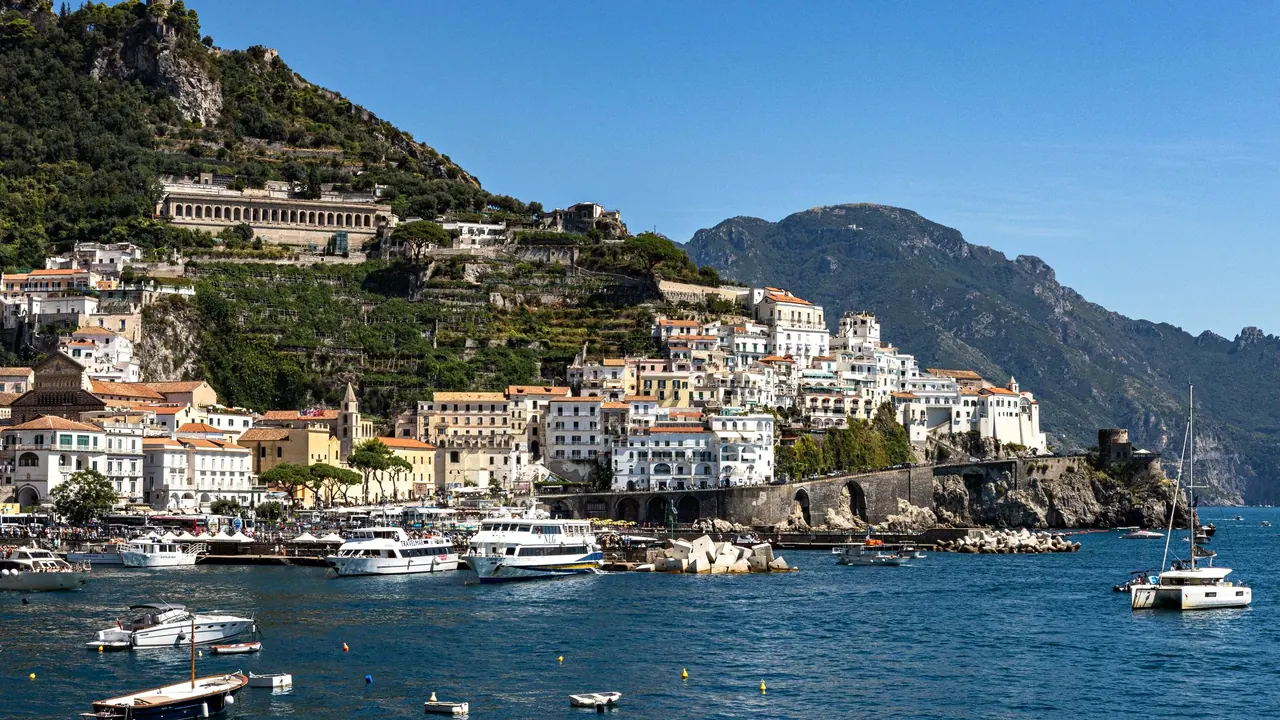
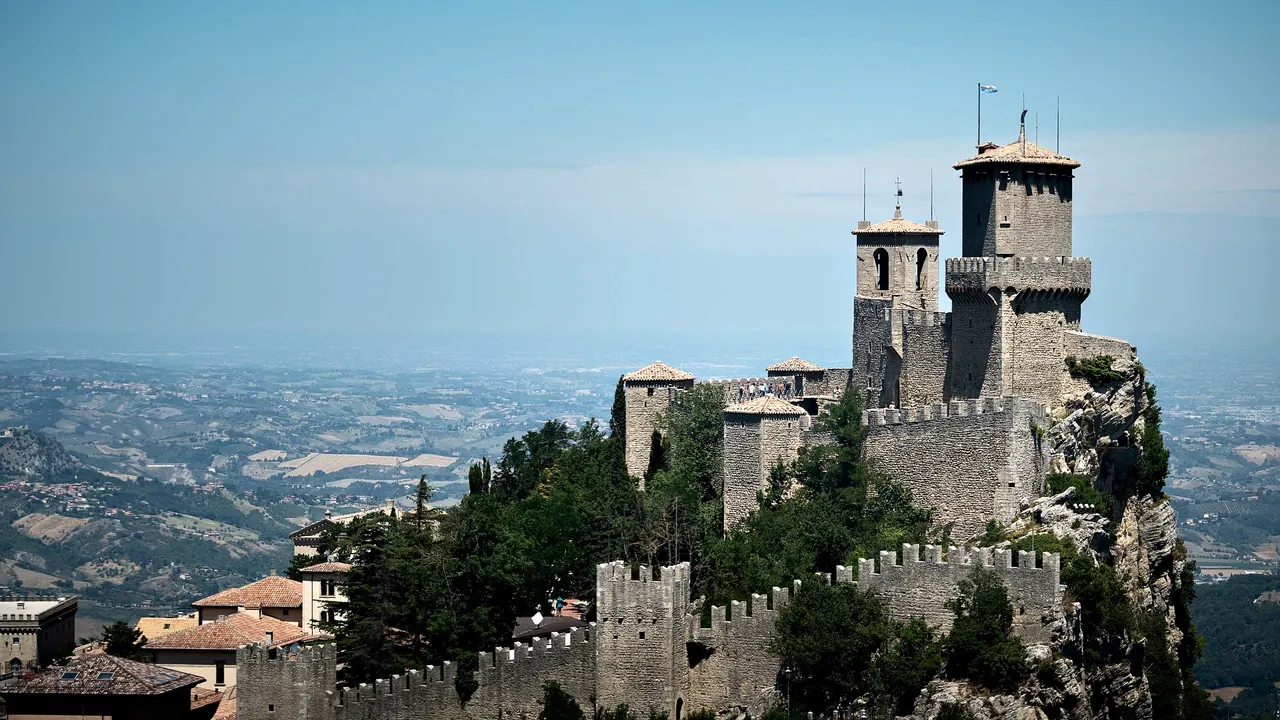
Photos: Amalfi by Oleksandra Zelena, Pexels License; San Marino by Tibor Szabo, Pexels License.
Amalfi or San Marino?
Our verdict in twelve categories, each scored against the same fixed benchmark cities, and the climate month by month, so you can choose for your trip.
Choose Amalfi for
- nature and the outdoors
- beaches
- day trips
Amalfi is for travellers who want sea and mountains in the same day: swims from pebble coves, the Path of the Gods above Positano, ferries to Capri and the gardens of Ravello up the hill. It suits couples and keen walkers who don't mind paying a lot for a sea-view room or climbing stairs from morning to night.
Choose San Marino for
- prices
- families
- culture and sights
Choose San Marino for a calmer, cheaper trip with a car. The walled republic on its ridge, with its three towers, takes about half a day to see, but it makes a good base for San Leo, Urbino and Ravenna. Families can spend the morning on the battlements and the afternoon on the shallow sandy beaches below at Rimini.
Scoreboard
Twelve categories on one fixed scale from 0 to 100. The shaded stretch is the gap between the two.
Your match
Pick a travel style or drag the sliders, and both match scores follow your weighting.
Wins on nature and the outdoors and beaches with your weighting.
Wins on prices and families with your weighting.
What matters to you?
Category by category
What the scores mean for a trip.
Beaches & swimming
In Amalfi you swim straight from town, either off the pebbles of Marina Grande or in coves like Santa Croce, which you reach by stairs or shuttle boat. A hired boat gets you to rocks and grottoes the road never touches. Space is tight, though, and in summer loungers cover the whole front.
San Marino has no shore of its own. The sandy beaches at Rimini and Riccione are about half an hour away. They are shallow and well run, with rows of umbrellas, and children like them, but every swim is a trip down the mountain.
Food & drink
Amalfi's cooking comes from the sea and its lemon terraces: scialatielli with clams, anchovies with colatura from Cetara, and sfusato lemons in everything from cakes to limoncello. The town is small and the tables on the piazza are hit and miss, but the more careful trattorias in the alleys give it the edge.
San Marino serves the food of the Romagna hills: piadina, passatelli in broth, grilled meats and the Tre Monti wafer cake. It is honest cooking, just less distinctive. On the summit the terraces sell the view more than the meal, so the better places to eat are down in Borgo Maggiore.
Culture & sights
San Marino has the stronger story to tell. It is one of the world's oldest surviving republics, walled along the crest of Monte Titano. A cliff path links the Guaita and Cesta towers, and the Captains Regent are installed in the Palazzo Pubblico. Here the whole town is the sight.
Amalfi's heritage centres on one outstanding group of buildings: the Arab-Norman Duomo with its bronze doors from Constantinople, and the Chiostro del Paradiso beside it. The Arsenale and the paper museum complete the list. Each town takes about half a day, but San Marino's sense of place stays with you longer.
Nightlife
Neither town is the place for a night out. In Amalfi the evening is a long dinner, then a drink on Piazza Duomo or by the harbour, and real nightlife means a trip to Salerno or Naples. San Marino's summit goes quiet once the coaches leave. Its advantage is that the summer clubs and seafront bars of Rimini and Riccione are a short drive down the mountain.
Nature & outdoors
This is where Amalfi is strongest. The Lattari mountains drop straight into the sea in lemon terraces and ravines, and the Valle delle Ferriere begins at the back of town. The Path of the Gods from Agerola is one of the finest coastal walks in Europe, and kayaks can reach the Emerald Grotto.
San Marino's limestone ridge has wide views to the Adriatic and the Apennines, and there are good short walks between the towers and down to Borgo Maggiore. Beyond that lies the gentle farmland of the Montefeltro, which is lovely for a drive or a bike ride but has no long trails.
Day trips
Both towns make good bases, but Amalfi reaches further and is easier without a car. Ravello is a bus ride away, Positano a ferry ride, Capri is reachable in season, and Paestum, Pompeii and Herculaneum each fit into a full day. The drawbacks are that most ferries only run from spring to autumn and the coast road is jammed in summer.
From San Marino the day trips are about the Renaissance and Byzantium: the fortress of San Leo, the court city of Urbino and the mosaics of Ravenna, with Gradara and Bologna also in reach. You'll need a car for the hill towns, as the only regular bus goes down to Rimini.
Good for families
San Marino is the easier choice for a family. The battlements, the towers on the cliff edge and the cable car keep children interested. On the coast below there are Italia in Miniatura, Fiabilandia and waterparks, and with a car it is easy to combine the two.
Amalfi is harder work for parents, with stairs everywhere, a crowded pebble beach and cliff-road buses that can make children sick. It suits older children who swim confidently and are ready for boat trips and sea caves.
Getting around
Both centres are explored on foot and up and down steps, and both are hard for anyone with limited mobility. Amalfi is better connected, with buses from the harbour to Ravello, Positano and Salerno and ferries from spring to autumn, though summer queues and the single cliff road can be a trial. San Marino has a cable car down to Borgo Maggiore and a bus to the trains at Rimini, but you need a car for its villages and the hill towns around.
Shopping & style
Neither suits serious shoppers, but they sell different things. Amalfi's crafts are more its own, above all the handmade cotton paper from the valley mills, along with majolica, linen and sandals made to measure. San Marino's shops rely on lower taxes, selling perfume, watches and leather goods, along with stamps and coins for collectors and an outlet centre on the valley floor.
Affordability
San Marino is much the cheaper place to stay. Hotels are moderately priced outside August, the trattorias in the lower villages are fair and the sights cost little. Only the terraces and hotels on the summit cost more.
Amalfi is among the most expensive places to stay in Italy, and sea-view rooms, seafront meals, loungers and boat hire all add up. Staying in the hill villages and coming in spring or autumn help, and the local buses are the one real bargain.
Live music & performing arts
Amalfi's advantage lies up the hill in Ravello. Every summer the Ravello Festival holds orchestral and chamber concerts on a terrace in the gardens of Villa Rufolo, high above the sea. San Marino's highlight is more pageant than concert: the summer Medieval Days, with costumed musicians, crossbow contests and flag-throwers. For opera or a proper concert season you would go to Bologna or Pesaro.
Wellness & relaxation
Neither town has a bathing tradition, and in both a spa means a hotel spa. Amalfi has the edge because the sea is part of the rest: long shaded lunches and swims off the rocks, best in May and October or up in the hill hamlets. In San Marino the calm comes in the evening, when the day crowds have gone and you can walk the walls above the plain.
When should you go?
Pick your month. The climate figures are measured averages, not a forecast.
Amalfi in July
San Marino in July
Daytime high, °C
Rainfall in the month, mm
Where the figures come from
Amalfi's temperatures are measured 65 km from the centre, at Grazzanise.
Amalfi has no rain gauge within 25 km of the centre, so its rainfall comes from a gridded climate dataset read at the city rather than from a gauge further away.
San Marino's temperatures are measured 52 km from the centre, at Frontone.
San Marino has no rain gauge within 25 km of the centre, so its rainfall comes from a gridded climate dataset read at the city rather than from a gauge further away.
Temperature and rainfall are climate normals, averaged over the years shown. Amalfi: 1991-2020 normals, Grazzanise (64.7 km from centre). San Marino: 1991-2020 normals, Frontone (51.5 km from centre).
Amalfi has the longer season. The sea is warm enough for swimming from June to September, at around 23°C to 26°C, and summer is almost dry. But July and August reach 31°C, which makes the trails and stairways hard going, so May and late September to early October are the best months overall. The rain comes in autumn and is heaviest in November at 143mm. Winters stay mild enough for walking.
San Marino sits on a mountain, so it is cooler. Its winters are properly cold, with January highs around 7°C, and the summit is pleasant from May to early October. Rain is spread more evenly through the year and is heaviest in autumn. The Adriatic below warms up much as Amalfi's sea does, so July and August are the best months for beach days on the Rimini coast.
Which traveller are you?
On an outdoors trip, Amalfi is the choice. Steep walks and days on the water fill a week, each starting from the bus stop or the harbour. San Marino gives one good morning on its ridge, then gentle countryside for driving.
On a tight budget, San Marino stretches the money further, and the savings can pay for the car its day trips need. Amalfi on the same money means a small room up the hill, picnics and few boat days.
On a family trip with young children, San Marino gives easier days: a short morning on the mountain, then the afternoon at the seaside below, with a car making it simple. Amalfi suits older children who swim and climb well, not toddlers.
Before you go
| Measure | Amalfi | San Marino |
|---|---|---|
| Official language | Italian | Italian |
| Currency | Euro (EUR) | Euro (EUR) |
| Sockets | CFL230 V, 50 Hz | CFL230 V, 50 Hz |
| Driving side | Right | Right |
| Time zone | UTC+1, UTC+2 in summer | UTC+1, UTC+2 in summer |
| Emergency number | 112 | 112 |
| Elevation | 6 m | 675 m |
| Main airport | Naples International Airport (NAP)38 km from centre131 non-stop destinations | Bologna Guglielmo Marconi Airport (BLQ)114 km from centre98 non-stop destinations |
| Public holidays this year | 13 days | 18 days |
By the numbers
| Measure | Amalfi | San Marino |
|---|---|---|
| City population | 4,729 | 4,040 |
| People per km² | 830 | 569 |
| Museums within 10 km | 8 | 19 |
| UNESCO World Heritage sites within 50 km | 5 | 2 |
| Swim season, months above 21 °C | 5 months | 4 months |
Where else could you go?
Every comparison below shares a destination with this one, so you can follow Amalfi or San Marino somewhere new.
- Positanovs Amalfi
- Salernovs Amalfi
- Sorrentovs Amalfi
- Naplesvs Amalfi
- Assisivs San Marino
- Florencevs San Marino