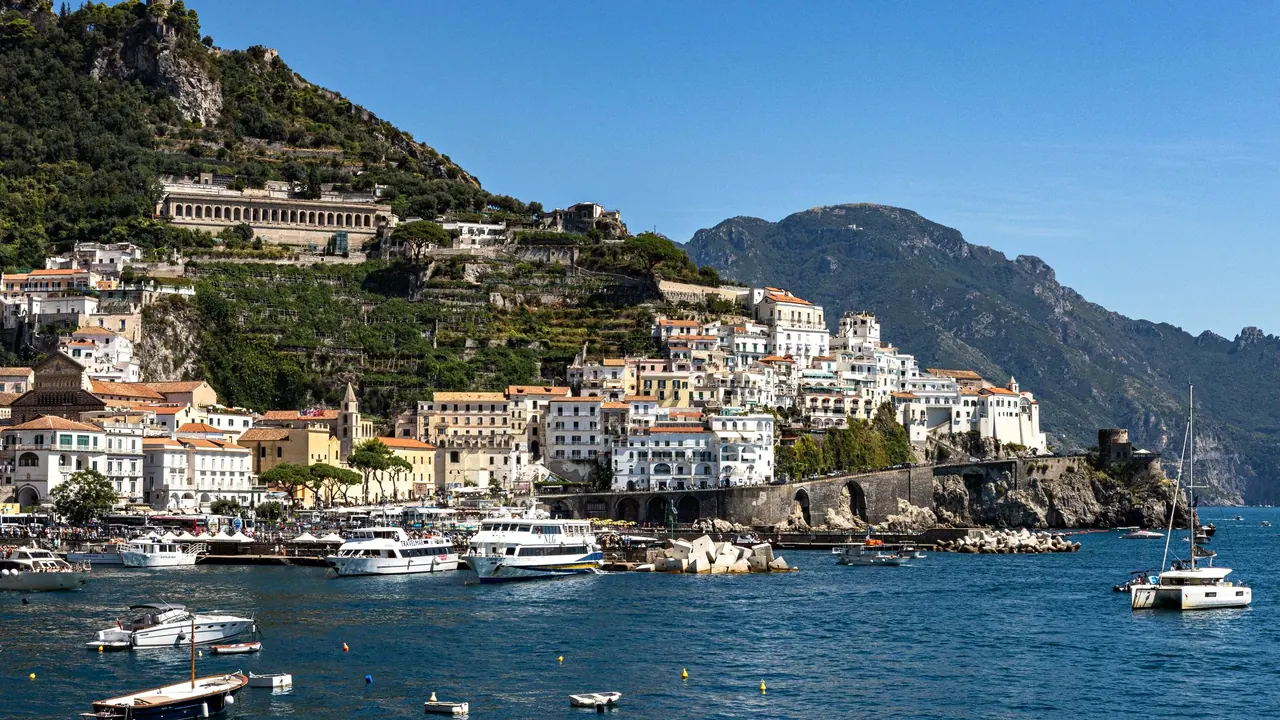
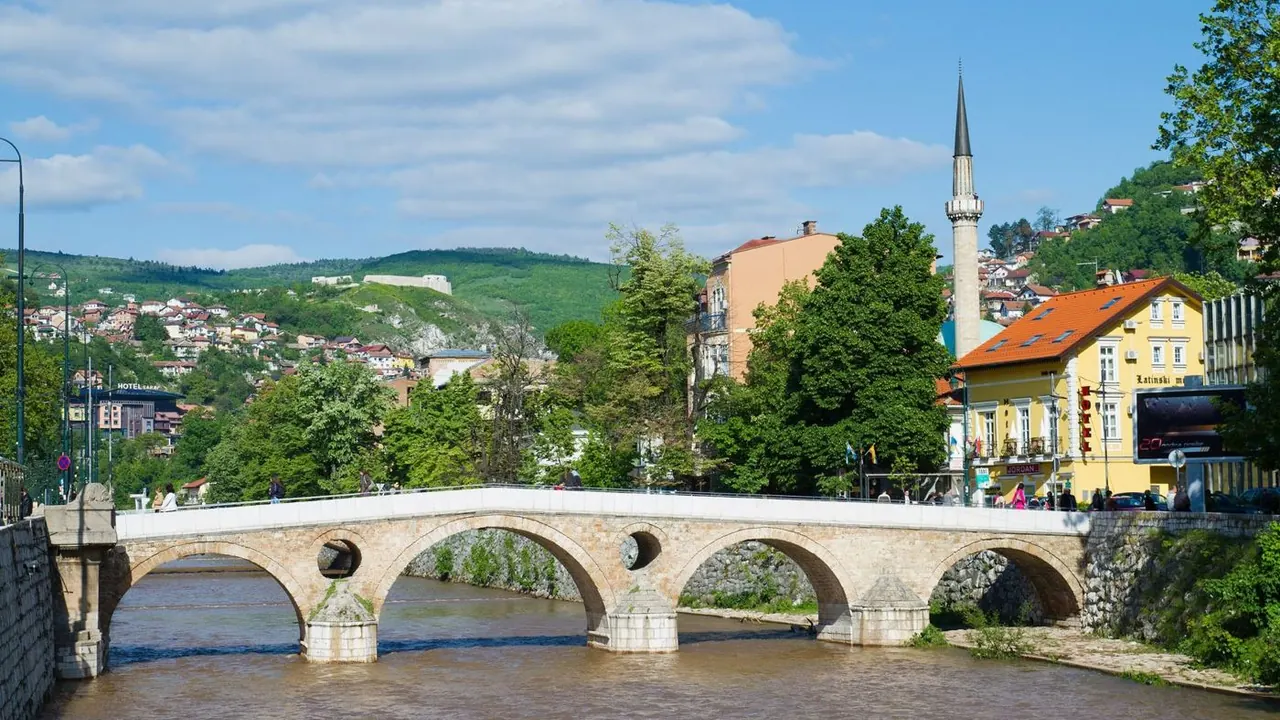
Photos: Amalfi by Oleksandra Zelena, Pexels License; Sarajevo by Tumi-1983, CC0.
Amalfi or Sarajevo?
Our verdict in twelve categories, each scored against the same fixed benchmark cities, and the climate month by month, so you can choose for your trip.
Choose Amalfi for
- beaches
- day trips
- nature and the outdoors
Amalfi suits travellers who want the sea and the cliffs to be the whole point of the trip. You swim off pebbles and rocks, walk terraced mountainsides above the water, and take boats along a coastline that has Positano, Ravello and Capri within easy reach. It costs a lot and goes quiet at night, so it works best as a slow, scenic stay rather than a lively or thrifty one.
Choose Sarajevo for
- prices
- nightlife
- culture and sights
Sarajevo is the better choice for a curious, budget-minded city trip. Ottoman, Austro-Hungarian and twentieth-century history sit within a few flat streets, the food is cheap and comforting, and the café-bars keep the evenings going. There is no sea at all, but the mountains are just as close, and in winter they bring skiing that the Italian coast cannot offer.
Scoreboard
Twelve categories on one fixed scale from 0 to 100. The shaded stretch is the gap between the two.
Your match
Pick a travel style or drag the sliders, and both match scores follow your weighting.
Wins on beaches and day trips with your weighting.
Wins on prices and nightlife with your weighting.
What matters to you?
Category by category
What the scores mean for a trip.
Beaches & swimming
This is Amalfi's clearest advantage. Its swimming is all pebble and rock: the crowded Marina Grande in front of town, Atrani a short walk away, and coves such as Santa Croce that you reach by stairs or boat. The sea is warm and clear enough for a dip on most days between May and October.
Sarajevo has nothing comparable. It is an inland valley city about three hours from the Adriatic, and summer swimming there means mountain rivers, Jablanica lake or a pool.
Food & drink
Sarajevo eats better and more reliably. Its grills in Baščaršija, pita bakeries and slow-cooked dishes such as lamb under a metal lid are made with real care, and the coffee ritual with rahat lokum is a pleasure in itself.
Amalfi's strength is a narrower set of coastal ingredients: sfusato lemons, anchovies and colatura, and scialatielli with seafood. However, much of the cooking around the piazza is average, and you have to search the alleys for the good trattorias. Neither city offers much international or fine dining.
Culture & sights
Sarajevo has far more to see. The mosques, madrasa and covered markets of Baščaršija give way within minutes to Austro-Hungarian avenues, Orthodox and Catholic cathedrals and the Old Synagogue. Add the Latin Bridge, the Tunnel of Hope and the War Childhood Museum, and you have several days of moving sightseeing.
Amalfi's heritage comes from its time as a maritime republic: the Arab-Norman Duomo with St Andrew's crypt, the Chiostro del Paradiso, the old Arsenale and the paper museum. It is lovely but quickly seen.
Nightlife
Neither city is for clubbing, but Sarajevo actually has evenings out. Café-bars around Ferhadija grow louder as the night goes on, students keep cellar bars and small clubs open past midnight at weekends, and drinks are cheap.
In Amalfi the night ends with dinner and a gelato or a glass on Piazza Duomo. Once the last ferries and buses leave, the town goes quiet.
Nature & outdoors
Both cities are framed by mountains, but they lead to very different outdoors. Amalfi's slopes fall straight into the sea, so walking here means the Sentiero degli Dei high above Positano, the waterfalls of the Valle delle Ferriere and mule stairways to Ravello, with kayaking into sea caves as well.
Sarajevo's mountains are higher and greener, starting with the cable car to Trebević. Beyond it lie Jahorina and Bjelašnica, the Olympic peaks, with skiing in winter and grassy ridges for hiking and biking in summer, plus the remote shepherds' village of Lukomir above the Rakitnica canyon.
Day trips
Amalfi has the stronger choice of day trips, and most need no car. Ravello's villa gardens are a short bus ride up the hill, Positano is half an hour by ferry, and Capri, Paestum, Pompeii and Herculaneum all fit into a full day. The catch is that ferries are seasonal and the coast road clogs in summer.
Sarajevo's highlight is Mostar, about two hours away by a scenic train through the Neretva gorge that passes Konjic and Jablanica on the way. From Mostar, Blagaj's dervish house and the fortress village of Počitelj are easy to add. Travnik and the Višegrad bridge lie further out on slow roads and work better by car or tour.
Good for families
Neither city is easy with small children, but Sarajevo is the gentler of the two. Its Old Town is flat for pushchairs, and outings such as the Trebević cable car, carriage rides to Vrelo Bosne and the small zoo give children something to do. Smoke from the grills and winter smog are the drawbacks.
Amalfi climbs in stairways, its beach is a crowded strip of pebbles and the winding buses can make children carsick. It suits older children who swim confidently better than toddlers.
Getting around
Sarajevo is easier to get around. A long-established tram runs along the valley floor from Baščaršija to Ilidža, trolleybuses and minibuses climb the hillsides, and taxis are cheap. It is harder to follow once you leave that single corridor.
Amalfi is tiny and walkable but full of steps. Its buses and ferries make it the hub of the coast, though in summer full buses pass waiting queues and the single cliff road crawls.
Shopping & style
Both are souvenir towns more than shopping destinations, and Sarajevo is slightly ahead. On Kazandžiluk you can watch coppersmiths hammer out coffee sets, and the Bezistan and nearby lanes sell kilims, slippers and filigree.
Amalfi's best buys are handmade cotton paper from the valley mills, majolica ceramics and made-to-measure sandals, though its single main street repeats a lot of limoncello stock.
Affordability
The gap here is wide. Sarajevo is among Europe's cheapest capitals, where ćevapi, coffee, trams, museum tickets and central guesthouses all cost very little.
Amalfi is among the most expensive places to stay in Italy, with sea-view rooms, seafront meals, loungers and boat hire all priced high. Its local buses are the only real bargain, and staying in the hill villages outside summer helps only so much.
Live music & performing arts
Sarajevo has a real if modest stage life. The National Theatre stages drama, opera and ballet, the Philharmonic gives regular concerts, MESS and the November jazz festival take place each year, and you can hear sevdah in traditional restaurants.
Amalfi has no theatre of its own. Its one standout is summer in Ravello, where the Ravello Festival holds concerts on the Villa Rufolo terrace above the sea.
Wellness & relaxation
Sarajevo has an actual place to bathe: the thermal springs at Ilidža, at the end of the tram line, used since Roman times, with Vrelo Bosne's shaded avenue nearby. Winter smog takes the edge off the calm.
Amalfi has no bathing tradition. Its spas belong to cliffside luxury hotels, and the rest comes from long terrace lunches and swims from the rocks, best in May and October.
When should you go?
Pick your month. The climate figures are measured averages, not a forecast.
Amalfi in July
Sarajevo in July
Daytime high, °C
Rainfall in the month, mm
Where the figures come from
Amalfi's temperatures are measured 65 km from the centre, at Grazzanise.
Amalfi has no rain gauge within 25 km of the centre, so its rainfall comes from a gridded climate dataset read at the city rather than from a gauge further away.
Temperature and rainfall are climate normals, averaged over the years shown. Amalfi: 1991-2020 normals, Grazzanise (64.7 km from centre). Sarajevo: 1991-2020 normals, Sarajevo-Bejelave (2 km from centre).
Amalfi is best for swimming from June to September. Days reach 28°C to 31°C and the sea warms to about 26°C by August. June to August are almost dry. September keeps the warm water but brings the first real rain, so expect the odd wet day. July and August are hot for the stepped trails, so May, late September and early October are better for walking. The rain is heaviest in November, but winter stays mild.
Sarajevo has a continental climate. Daytime highs in December and January reach only 4°C, which suits the ski mountains but makes sightseeing raw. Summer is warm without the coast's heat, and late spring and September are pleasant for both the streets and the hills. Rain falls fairly evenly through the year, so no season is truly dry. From spring to autumn Amalfi gets noticeably more sunshine.
Which traveller are you?
For a beach and sun trip, Amalfi is the only real option. It has a warm, clear sea, coves reached by boat and long dry summers, while Sarajevo sits hours inland, where swimming means cold rivers and pools.
On a trip on a tight budget, Sarajevo makes the money last far longer. Grilled ćevapi, bakery pastries, trams and central guesthouses all cost little. On the Amalfi coast, rooms, seafront meals and boat hire are among the dearest in Italy.
For a culture and arts trip, Sarajevo gives much more to see and do. There is the Ottoman bazaar, the cathedrals and synagogue, the 1914 assassination site, siege museums and a working national theatre. Amalfi's cathedral and cloister fill only half a day.
Before you go
| Measure | Amalfi | Sarajevo |
|---|---|---|
| Official language | Italian | Croatian, Serbian, Bosnian |
| Currency | Euro (EUR) | Convertible Mark (BAM) |
| Sockets | CFL230 V, 50 Hz | CF230 V, 50 Hz |
| Driving side | Right | Right |
| Time zone | UTC+1, UTC+2 in summer | UTC+1, UTC+2 in summer |
| Emergency number | 112 | 112 |
| Elevation | 6 m | 518 m |
| Main airport | Naples International Airport (NAP)38 km from centre131 non-stop destinations | Sarajevo International Airport (SJJ)7 km from centre38 non-stop destinations |
| Public holidays this year | 13 days | 8 days |
By the numbers
| Measure | Amalfi | Sarajevo |
|---|---|---|
| City population | 4,729 | 275,524 |
| People per km² | 830 | 1,947 |
| Museums within 10 km | 8 | 25 |
| UNESCO World Heritage sites within 50 km | 5 | 1 |
| Swim season, months above 21 °C | 5 months | - |
Where else could you go?
Every comparison below shares a destination with this one, so you can follow Amalfi or Sarajevo somewhere new.