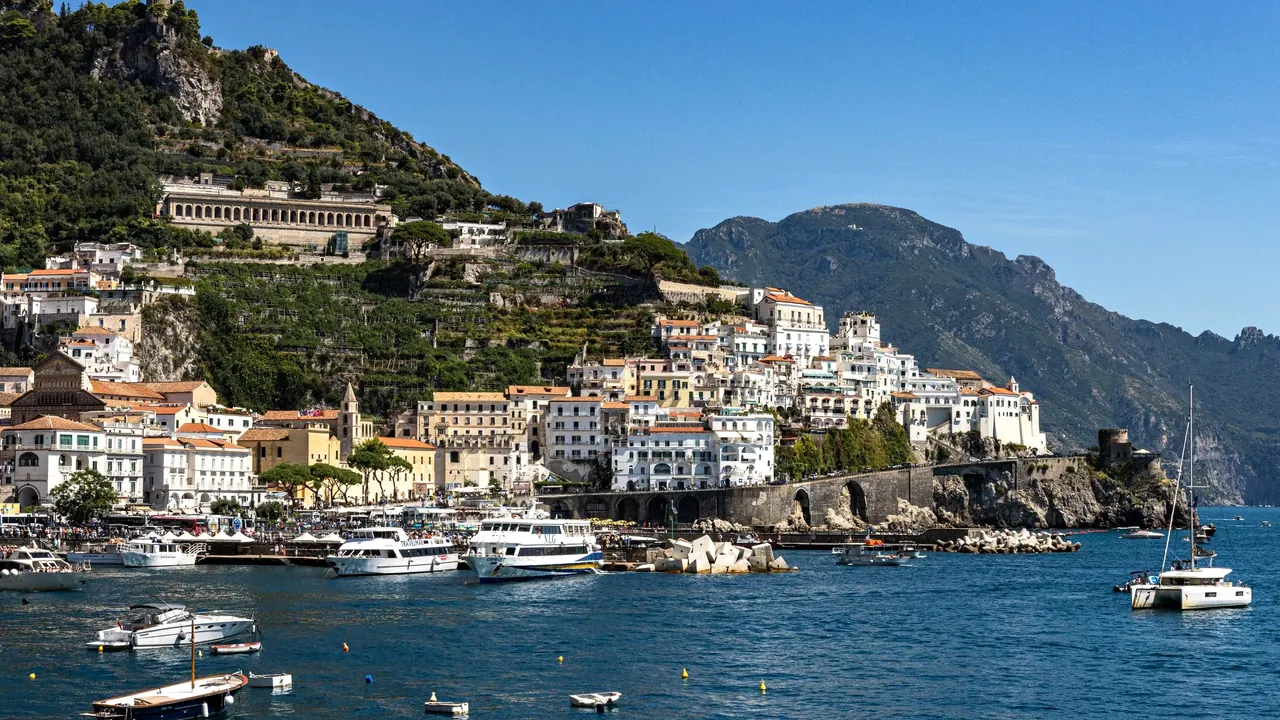
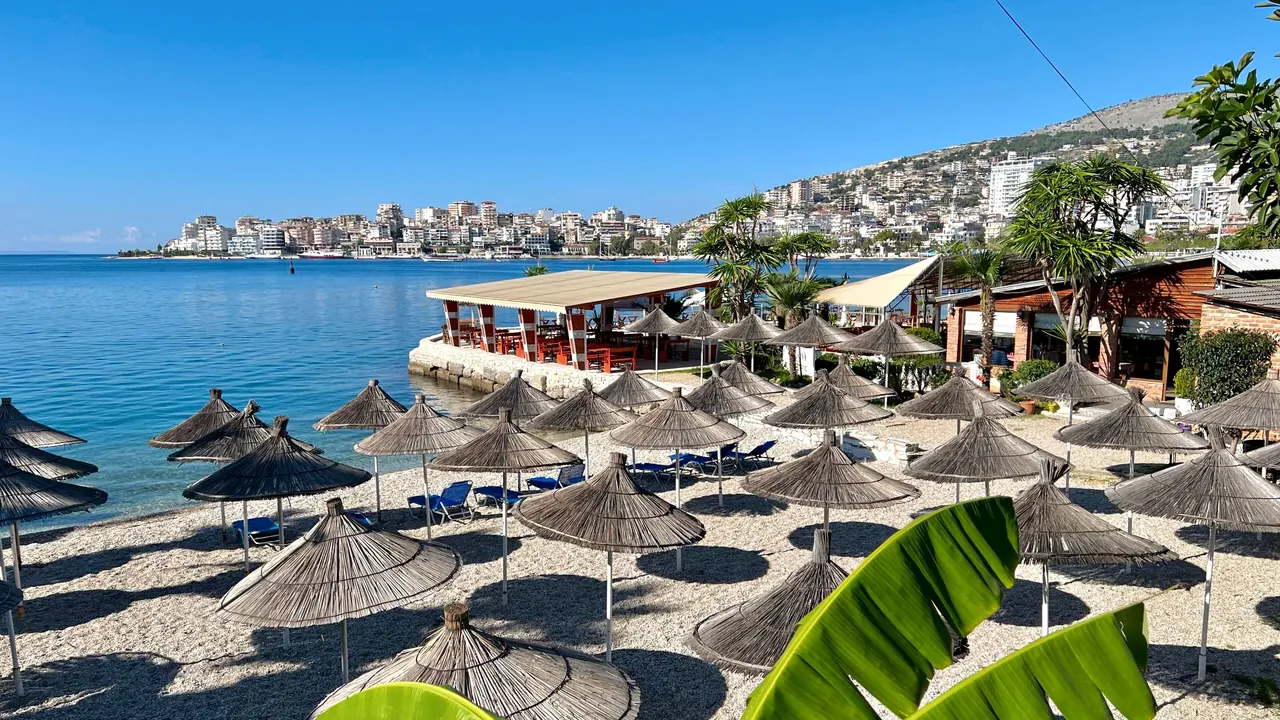
Photos: Amalfi by Oleksandra Zelena, Pexels License; Saranda by Sharon Hahn Darlin, CC BY 2.0, cropped.
Amalfi or Saranda?
Our verdict in twelve categories, each scored against the same fixed benchmark cities, and the climate month by month, so you can choose for your trip.
Choose Amalfi for
- nature and the outdoors
- shopping
- day trips
Amalfi suits travellers who come for the landscape. It has mule stairways up to Ravello, the Path of the Gods above Positano, ferries to Capri and a medieval cathedral at the top of the town's steps. It rewards walkers and keen day-trippers who can pay for the setting, as long as they don't mind that the sea comes mostly as a crowded pebble strip and evenings end early.
Choose Saranda for
- prices
- nightlife
- beaches
For a long, sunny beach stay that costs far less, Saranda is the better pick. It has the clear coves at Ksamil, quieter bays up the Riviera, and a summer promenade that stays loud past midnight. That gives it the edge for swimmers, younger groups and families with children who love the water. Butrint and a ferry to Corfu are close enough to break up the week.
Scoreboard
Twelve categories on one fixed scale from 0 to 100. The shaded stretch is the gap between the two.
Your match
Pick a travel style or drag the sliders, and both match scores follow your weighting.
Too close to call, level with your weighting
Wins on nature and the outdoors and shopping with your weighting.
Wins on prices and nightlife with your weighting.
What matters to you?
Category by category
What the scores mean for a trip.
Beaches & swimming
Amalfi's swimming comes in pieces. Marina Grande, under the Duomo steps, is mostly given over to beach-club loungers, so the better swims are at Atrani, in the coves of Santa Croce and Duoglio reached by stairs, or among rocks reached by hired boat. It suits a swim fitted in between walks, not whole days on the shore.
Both seas reach about 25°C in August, and both towns have crowded pebble beaches, but Saranda has much more to swim to. Ksamil, twenty minutes south, has pale coves and small islets in strikingly clear water. The Riviera bays of Lukova and Borsh give you space if you are willing to drive north.
Food & drink
Amalfi eats better, thanks to its terraced sfusato lemons, Cetara's colatura and scialatielli with clams, with wines from Furore and Tramonti and a limoncello to finish. The cafés on the piazza live off walk-in crowds, so the more careful meals are found in the alleys and up the valley.
Saranda's cooking is simpler and more rustic: Butrint lagoon mussels, grilled octopus, byrek in the morning and salads in local olive oil, at their best in the family taverns in the back streets. Neither town has much range, but Saranda has even less in the way of coffee, wine and fine dining.
Culture & sights
Amalfi has more to see, though it still fills only about half a day. The striped Duomo di Sant'Andrea with its bronze doors from Constantinople, the Chiostro del Paradiso, the Arsenale and the paper museum in the Valle dei Mulini all go back to the town's time as a medieval maritime republic.
Saranda itself is largely modern. It has an excavated synagogue that later became a church, with mosaic floors, a few stretches of old wall, and Lekuresi Castle, which people visit more for the view to Corfu than for its history. Its real heritage lies at sites outside town.
Nightlife
Neither town is built for partying, but Saranda at least has a real summer night out. In July and August its promenade moves from the family evening stroll to loud cocktail bars open past midnight, with DJ beach clubs at Ksamil and a young Albanian and Kosovar crowd. In Amalfi the evening is a long dinner and a gelato on Piazza Duomo, and the town goes quiet once the last buses and ferries leave.
Nature & outdoors
Amalfi has the more dramatic landscape and is the better base for walking. The Lattari mountains drop almost straight into the sea. From town you can reach the shaded Valle delle Ferriere and the mule stairways to Pontone and Ravello, and a bus to Agerola takes you to the Path of the Gods, high above Positano.
Saranda's surroundings are gentler and less set up for walkers. There are the lagoon and oak woods of Butrint National Park for birdwatching, the deep blue spring of the Blue Eye inland, and sea kayaking under the Riviera cliffs. Its mountain trails are mostly unmarked, which makes hiking on your own harder.
Day trips
Both towns are well placed for day trips, but Amalfi reaches further. Ravello's villa gardens are a short bus ride up the hill, Positano is half an hour by ferry and Capri is across the water in season. With some planning, Paestum, Pompeii and Herculaneum each fit into a day.
Saranda's list is shorter but excellent. There is the layered ancient city of Butrint, the Ottoman tower houses of Gjirokaster, and a ferry to Corfu in under an hour. Gjirokaster and the Riviera villages are easiest by hire car or on a tour, while most of Amalfi's outings run on buses and ferries.
Good for families
Calm water is what tips this towards Saranda. Amalfi climbs in stairways where pushchairs are useless, its beach is a packed strip of pebbles and the winding cliff buses can make children carsick. It works best for older children who swim confidently and will enjoy boats and sea caves.\n\nAt Saranda, the sheltered coves at Ksamil suit young swimmers, and the evening promenade with ice cream and rides is a real family scene. Steep streets and chaotic summer traffic still make a pool hotel and a June or September stay the sensible plan.
Getting around
Both towns are small enough to get around on foot, but the walking feels very different. Amalfi is a knot of covered alleys and stairways climbing from the seafront, and away from the front the steps make it hard going for anyone with limited mobility. Blue buses leave from the harbour front, but in summer they fill up and pass waiting queues on the single cliff road. Parking is so scarce that a car is more trouble than it is worth.
Saranda is easier on the legs at its heart. Its beaches, restaurants and port are strung along one long promenade, and the steep climbs only start on the way up to the hotels on the slopes. Buses to Ksamil and Butrint run without printed timetables, so you ask locals. For anywhere further, a taxi or hire car is the practical answer, though the narrow coast road jams in summer.
Shopping & style
Amalfi gives a shopper more to find. Past the limoncello and lemon soap repeated along its main street, there is handmade cotton paper from the valley mills, hand-painted majolica, linen clothing and made-to-measure sandals. Saranda's promenade sells beachwear and souvenirs, and the best things to take home are olive oil, mountain honey, raki and dried herbs, with crafts a reason to visit the bazaar in Gjirokaster.
Affordability
This is where the two differ most. Amalfi is one of the most expensive places to stay in Italy: sea-view rooms, meals on the piazza, beach loungers and boat hire all cost a lot. The buses are the only bargain, and staying in the hill villages in spring or autumn brings costs down without ever making it cheap.
Saranda is inexpensive for a European seaside stay. Simple fish and byrek, taxis and rooms in family-run places cost little. Sunbeds, seafront hotels and busy terraces cost noticeably more in July and August, but late spring and September give you the same sea for much less.
Live music & performing arts
Amalfi has one event worth planning around: the summer Ravello Festival, with orchestral and chamber concerts on the garden terrace of Villa Rufolo above the sea, along with processions and band music for the feast of Sant'Andrea in town. Saranda has no regular venue, only the odd seafront concert in summer, an occasional performance in Butrint's ancient theatre and live Albanian music in some restaurants. If you are curious about the region's polyphonic singing, look inland near Gjirokaster.
Wellness & relaxation
Neither town has thermal baths, so relaxing in either comes down to pace more than treatments. Amalfi has a slight edge, with spas in its cliffside luxury hotels (mostly for their own guests), the calm of the hill hamlets, long lunches in the shade and swims from the rocks.
In Saranda, wellness means a hotel spa or a massage at a beach resort, and in July and August the town is loud with music and traffic late into the night. Both slow down nicely in May and the early autumn, which is the time to go if unwinding is the point.
When should you go?
Pick your month. The climate figures are measured averages, not a forecast.
Amalfi in July
Saranda in July
Daytime high, °C
Rainfall in the month, mm
Where the figures come from
Amalfi's temperatures are measured 65 km from the centre, at Grazzanise.
Amalfi has no rain gauge within 25 km of the centre, so its rainfall comes from a gridded climate dataset read at the destination rather than from a gauge further away.
Saranda's temperatures are measured 30 km from the centre, at Kerkyra Airport.
Saranda has no rain gauge within 25 km of the centre, so its rainfall comes from a gridded climate dataset read at the destination rather than from a gauge further away.
Temperature and rainfall are climate normals, averaged over the years shown. Amalfi: 1991-2020 normals, Grazzanise (64.7 km from centre). Saranda: 1991-2020 normals, Kerkyra Airport (29.8 km from centre).
Both coasts follow the same Mediterranean pattern of hot, dry summers and wet winters. The sea is warm enough for proper swimming from June into October, reaching about 26°C at Amalfi in August and a degree less at Saranda. July and August bring highs of 31-32°C in both places. That is too hot for Amalfi's exposed stairways and trails or the hills above Saranda, so May and early October are the months for walking, when the sea is still pleasant enough for a dip.
The real difference comes after summer. Saranda has the brighter summer, with about 349 hours of sunshine in July, but it turns much wetter from September. By November and December it gets well over 220mm of rain a month, roughly twice what falls at Amalfi. Neither town is a winter beach place, but Amalfi is the gentler choice for a quiet off-season walk.
Which traveller are you?
On a trip on a tight budget, Saranda is the clear choice. Family hotels and apartments off the seafront, cheap grilled fish and byrek, and local buses to Ksamil and Butrint keep costs low. In Amalfi, sea-view rooms and lounger hire make even a careful stay expensive.
For an outdoors trip, Amalfi wins. The Path of the Gods, the Valle delle Ferriere gorge and the mule stairways to Ravello are well-known walks you can reach on foot or by bus. Saranda's Butrint wetlands and Blue Eye are lovely, but its trails are mostly unmarked.
On a beach and sun trip, Saranda gives you more. Ksamil's pale coves and islets and the longer Riviera bays at Lukova and Borsh leave room to spread out. Amalfi's sea is mostly a packed pebble strip, with better coves reached by stairs or boat.
Before you go
| Measure | Amalfi | Saranda |
|---|---|---|
| Official language | Italian | Albanian |
| Currency | Euro (EUR) | Lek (ALL) |
| Sockets | CFL230 V, 50 Hz | CF220 V, 50 Hz |
| Driving side | Right | Right |
| Time zone | UTC+1, UTC+2 in summer | UTC+1, UTC+2 in summer |
| Emergency number | 112 | 112 |
| Elevation | 6 m | 0 m |
| Main airport | Naples International Airport (NAP)38 km from centre131 non-stop destinations | Corfu Ioannis Kapodistrias International Airport (CFU)32 km from centre88 non-stop destinations |
| Public holidays this year | 13 days | 14 days |
By the numbers
| Measure | Amalfi | Saranda |
|---|---|---|
| Population | 4,729 | 22,613 |
| People per km² | 830 | 383 |
| Museums within 10 km | 8 | 0 |
| UNESCO World Heritage sites within 50 km | 5 | 3 |
| Swim season, months above 21 °C | 5 months | 5 months |
Where else could you go?
Every comparison below shares a destination with this one, so you can follow Amalfi or Saranda somewhere new.