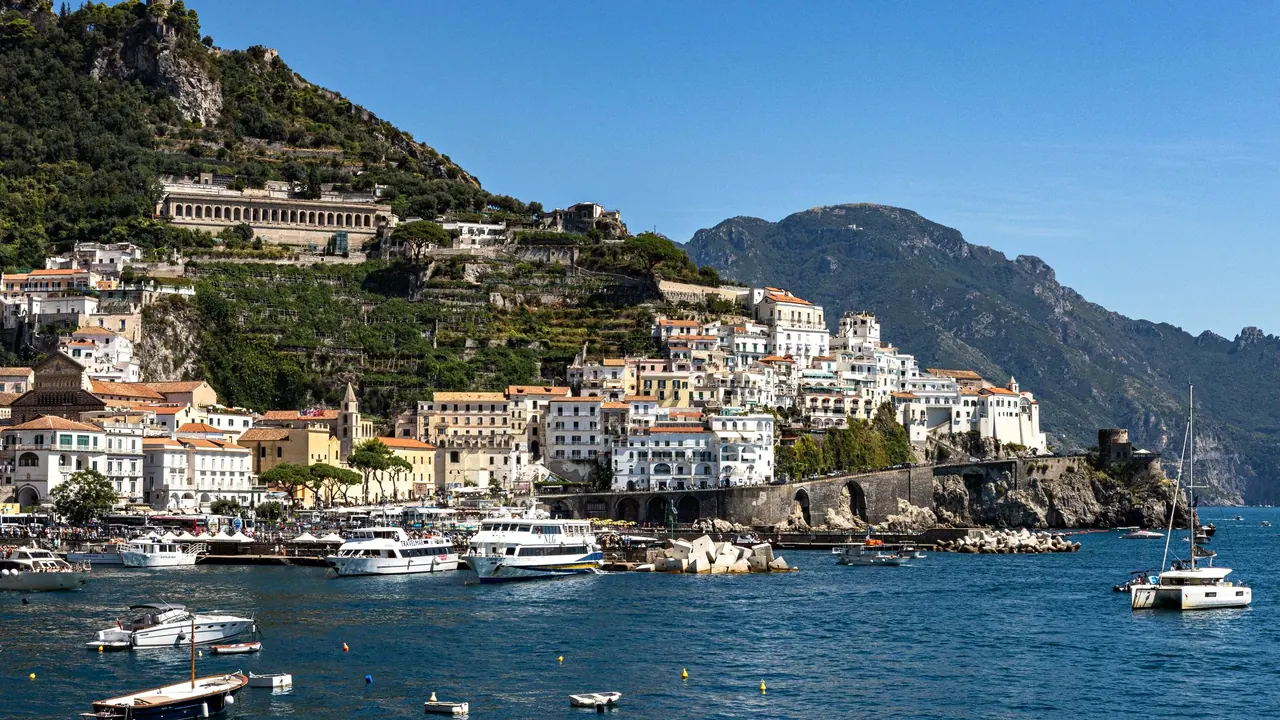
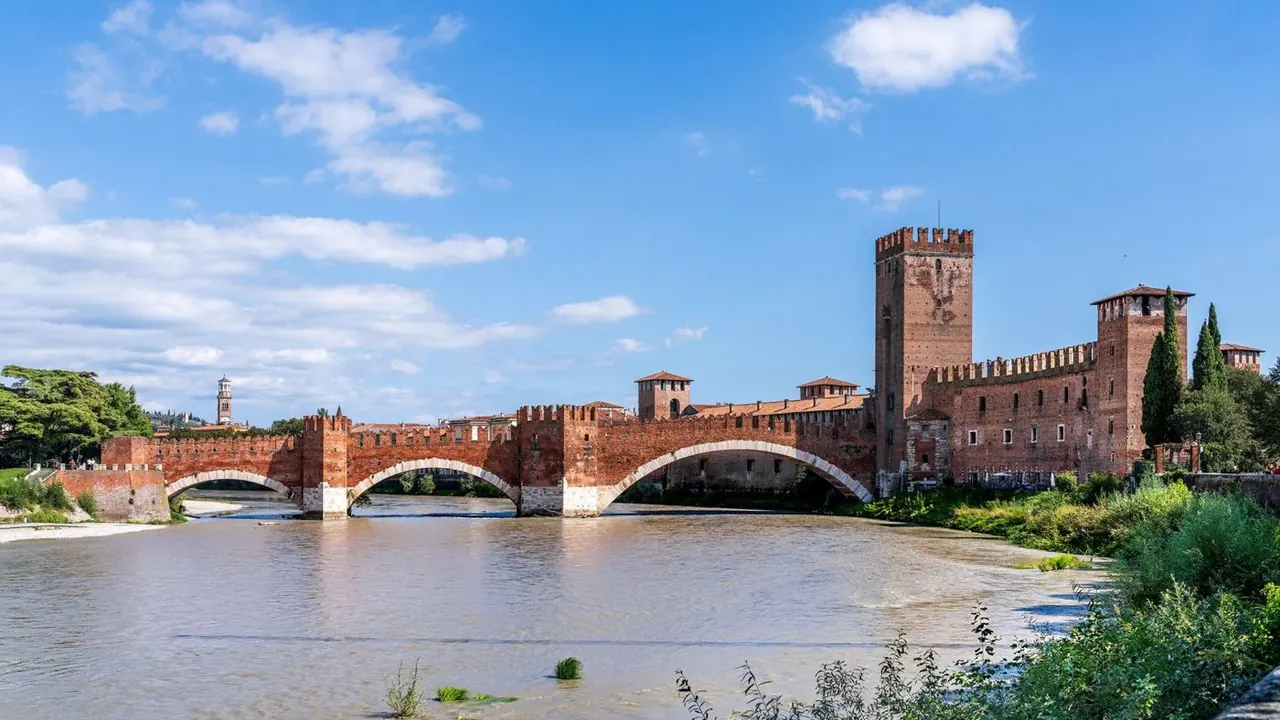
Photos: Amalfi by Oleksandra Zelena, Pexels License; Verona by NorbertNagel, CC BY-SA 4.0, cropped.
Amalfi or Verona?
Our verdict in twelve categories, each scored against the same fixed benchmark cities, and the climate month by month, so you can choose for your trip.
Choose Amalfi for
- beaches
- nature and the outdoors
Amalfi is for travellers who want the sea and the mountains right outside the door. Cliffs drop into clear water, boats run to grottoes and coves, and the Path of the Gods and the lemon-terrace stairways start almost from town. It suits couples and active adults happy to pay a lot, climb plenty of steps and settle for quiet evenings in exchange for one of Europe's great coastlines.
Choose Verona for
- live music and the arts
- culture and sights
- families
Choose Verona for history, opera, wine and easy movement. The Roman Arena, San Zeno and Castelvecchio fill several unhurried days, the food and Valpolicella cellars are a real draw, and trains reach Venice, Padua and Lake Garda without fuss. It is the gentler, flatter and more affordable choice, and far easier with children.
Scoreboard
Twelve categories on one fixed scale from 0 to 100. The shaded stretch is the gap between the two.
Your match
Pick a travel style or drag the sliders, and both match scores follow your weighting.
Wins on beaches and nature and the outdoors with your weighting.
Wins on live music and the arts and culture and sights with your weighting.
What matters to you?
Category by category
What the scores mean for a trip.
Beaches & swimming
Amalfi has the better swimming, though it is pebble rather than sand. Marina Grande sits under the Duomo steps and fills with beach-club loungers in summer. The real pleasures are a walk or a short boat ride away: Atrani's small beach, the coves at Santa Croce and Duoglio, and rocks and grottoes you can only reach by hired boat.
Verona has no sea, so swimming means a half-hour trip to the south shore of Lake Garda. There you will find lidos, grassy lawns and Sirmione's flat limestone shelves, with calm, tide-free water through the summer. It makes a pleasant day out, but you can't have a quick dip between other plans.
Food & drink
Verona offers more to eat and drink. Risotto made with Amarone, bigoli with duck, bollito misto with pearà and pastissada are served in wood-panelled osterie around Piazza delle Erbe and in Veronetta. Valpolicella, Soave and Bardolino are all made within a short drive, so an evening glass at a counter is part of the visit.
Amalfi's cooking is narrower but more maritime: scialatielli with clams, anchovies with Cetara's colatura, and lemon in everything from cakes to limoncello. In such a small town, the good trattorias have to be sought out in the alleys, away from the seafront tables.
Culture & sights
Verona is in another league here. Inside the loop of the Adige it layers a Roman amphitheatre and theatre, the Scaliger tombs, Romanesque San Zeno, Gothic Sant'Anastasia and the art collection at Castelvecchio, enough for two or three full days.
Amalfi's heritage belongs to its days as a maritime republic: the striped Duomo with its Constantinople bronze doors, the Chiostro del Paradiso, the old Arsenale and the paper museum. It is striking, but most visitors finish it in a morning.
Nightlife
Neither town suits clubbers, but Verona at least has evenings that run on. The aperitivo fills Piazza delle Erbe and the riverside, and Veronetta's student wine bars and pubs stay busy later. In summer, the crowd leaving the opera keeps the centre alive near midnight.
Amalfi's nights end with dinner and a gelato on Piazza Duomo. Once the last ferries and buses leave, the town goes quiet.
Nature & outdoors
Amalfi's landscape is the stronger draw. The Lattari mountains plunge into the sea, the Valle delle Ferriere gorge starts at the back of town, and the Path of the Gods runs high above Positano. Kayaks explore the sea caves below.
Verona's outdoors is gentler and more spread out: vineyard walks and cycling in Valpolicella, the Adige cycle route, and the Lessinia plateau. The more dramatic setting is an hour away at Lake Garda, with Monte Baldo's ridges and the windsurfing at the northern end.
Day trips
Both towns make excellent bases, but the trips are of different kinds. From Amalfi it is coast and antiquity: Ravello up the hill, Positano and Capri by ferry, and Pompeii, Herculaneum and Paestum with some planning. Ferries are seasonal and the cliff road is slow in summer.
From Verona the rail line does the work all year. Venice is about an hour away, Vicenza, Padua and Mantua are closer, and the Garda towns and Soave's walls make easy half-days.
Good for families
Verona is much the easier choice with children. Its flat, largely pedestrian centre works with a pushchair, and the Arena tends to impress children. Gardaland, the water parks and the Parco Natura Viva safari zoo are all within about half an hour, though you will need a car or transfer to reach them.
Amalfi has nothing built for children, and its stairways, crowded pebble beach and winding buses are hard work with toddlers. Older children who swim confidently are the exception. They will love the boat trips and sea caves.
Getting around
You can walk both centres, but Verona's is flat and largely free of traffic, with Castelvecchio, the Arena and Veronetta minutes apart. Trains make onward journeys simple, though Valpolicella and Lessinia are easier by car.
In Amalfi, everything is up and down steps. Its blue buses and seasonal ferries make it the coast's hub, but in summer the buses fill up, the single cliff road jams and parking is hard to find. This is a real obstacle for anyone with limited mobility.
Shopping & style
Verona has more proper shopping. The marble-paved Via Mazzini is lined with Italian fashion labels, and boutiques, jewellers and shoe shops fill Corso Porta Borsari. Amarone, Garda olive oil and pandoro are the best things to take home.
Amalfi is more about craft than fashion. Look for handmade cotton paper from the valley mills, painted majolica and made-to-measure sandals, but expect the same limoncello and lemon soap in shop after shop.
Affordability
Verona is noticeably easier on the budget, though it is not cheap. Central hotels are expensive and soar on opera nights and during trade fairs, but student osterie, wine counters and a centre you can walk keep daily spending sensible.
Amalfi is among the dearest places to stay in Italy. Sea-view rooms, loungers, boat hire and piazza meals all cost a lot. Only the buses are a bargain, and staying in the hill villages or coming out of season reduces the cost without making it cheap.
Live music & performing arts
Opera in the Roman Arena gives Verona the edge. Grand Verdi and Puccini productions play to thousands on the ancient tiers through the summer. The Teatro Filarmonico season and the summer festival of Shakespeare, dance and jazz in the Roman theatre add more.
Amalfi has no theatre of its own. Its big night out is the Ravello Festival, with concerts on the Villa Rufolo terrace above the sea. It is an unforgettable setting, but the season is short.
Wellness & relaxation
Warm springs are what Amalfi lacks and the country around Verona has. On the coast there is no bathing tradition at all, and the spas belong to the luxury hotels built into the cliffs, which keep them mostly for their own guests. Rest comes instead from shaded terrace lunches and early swims from the rocks, and the calm moves up to the hill hamlets or into May and October when the centre fills in high summer.
Around Verona, the water itself does the restoring. Sirmione's sulphurous thermal pools look out over Lake Garda, a warm spring-fed lake sits in an old villa garden near Lazise, and the springs at Caldiero have been used since Roman times. Back in town, the terraces of the Giardino Giusti and an evening stroll by the Adige keep the pace gentle.
When should you go?
Pick your month. The climate figures are measured averages, not a forecast.
Amalfi in July
Verona in July
Daytime high, °C
Rainfall in the month, mm
Where the figures come from
Amalfi's temperatures are measured 65 km from the centre, at Grazzanise.
Amalfi has no rain gauge within 25 km of the centre, so its rainfall comes from a gridded climate dataset read at the city rather than from a gauge further away.
Temperature and rainfall are climate normals, averaged over the years shown. Amalfi: 1991-2020 normals, Grazzanise (64.7 km from centre). Verona: 1991-2020 normals, Verona / Villafranca (11.6 km from centre).
Amalfi's sea is good for swimming from June to October and warmest in August, at around 26°C. July and August are hot, close to 31°C, very sunny and almost dry. That suits the beach and the boats but makes the exposed trails punishing, so walkers do best in May and the start of autumn. From October the rain sets in properly and peaks around 143mm in November, though winter days stay mild enough for a stroll along the harbour.
Verona's seasons are further apart. Summer is as hot as on the coast, near 30°C, which is fine for evenings and Lake Garda swims but tiring for afternoon sightseeing. Rain is spread fairly evenly through the year rather than coming in a wet season. Winter is properly cold, with January highs around 7°C, so April to June and September to October are the best months for walking the city on foot.
Which traveller are you?
On a beach and sun trip, Amalfi is the clear pick. The sea is right at the end of the street, warm and clear for months, with coves, sea caves and boat days. Verona's swimming means a side trip to Lake Garda.
For a culture and arts trip, Verona wins easily. You get a Roman amphitheatre with summer opera inside it, Romanesque San Zeno, Scarpa's Castelvecchio and a whole UNESCO centre. Amalfi's Duomo and cloister take half a day.
On a family trip with children, Verona is far easier. The centre is flat, works with a pushchair and is mostly free of traffic, and Gardaland, a safari zoo and shallow lake swimming lie close by. Amalfi means steep stairs, crowded pebbles and winding buses.
Before you go
| Measure | Amalfi | Verona |
|---|---|---|
| Official language | Italian | Italian |
| Currency | Euro (EUR) | Euro (EUR) |
| Sockets | CFL230 V, 50 Hz | CFL230 V, 50 Hz |
| Driving side | Right | Right |
| Time zone | UTC+1, UTC+2 in summer | UTC+1, UTC+2 in summer |
| Emergency number | 112 | 112 |
| Elevation | 6 m | 59 m |
| Main airport | Naples International Airport (NAP)38 km from centre131 non-stop destinations | Verona Villafranca Valerio Catullo Airport (VRN)10 km from centre96 non-stop destinations |
| Public holidays this year | 13 days | 13 days |
By the numbers
| Measure | Amalfi | Verona |
|---|---|---|
| City population | 4,729 | 255,588 |
| People per km² | 830 | 1,285 |
| Museums within 10 km | 8 | 18 |
| UNESCO World Heritage sites within 50 km | 5 | 5 |
| Swim season, months above 21 °C | 5 months | - |
Where else could you go?
Every comparison below shares a destination with this one, so you can follow Amalfi or Verona somewhere new.