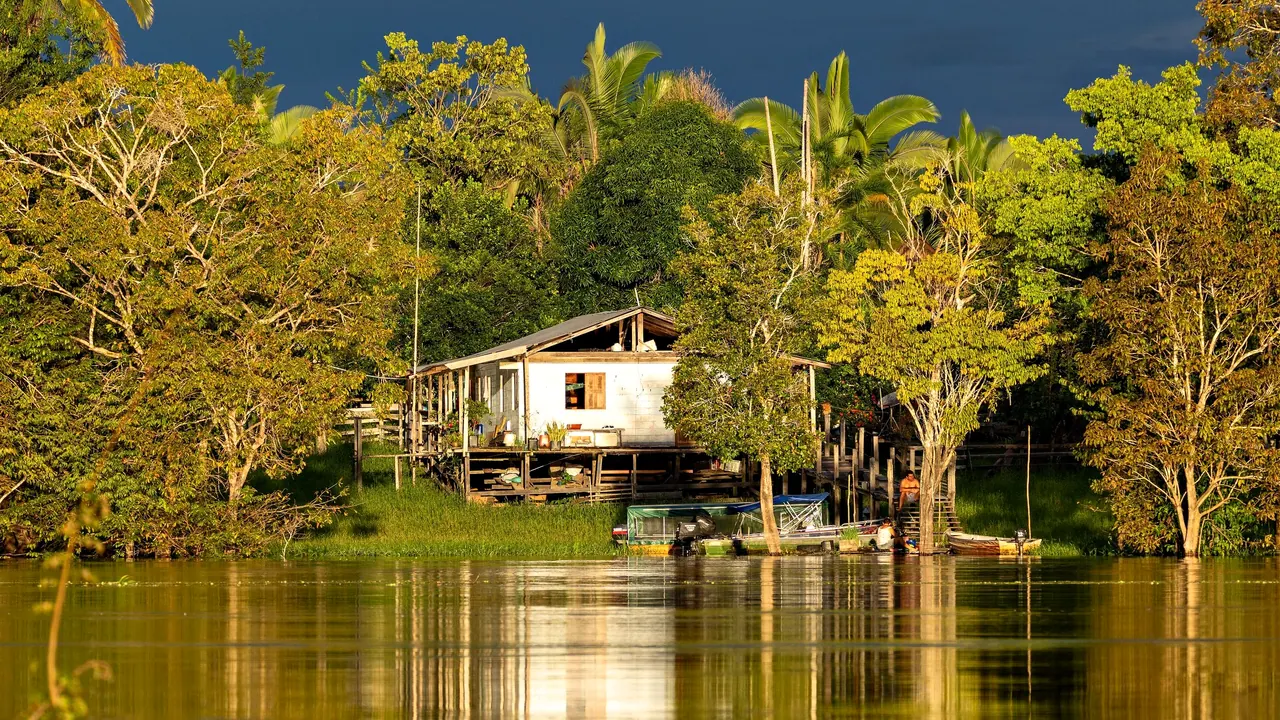
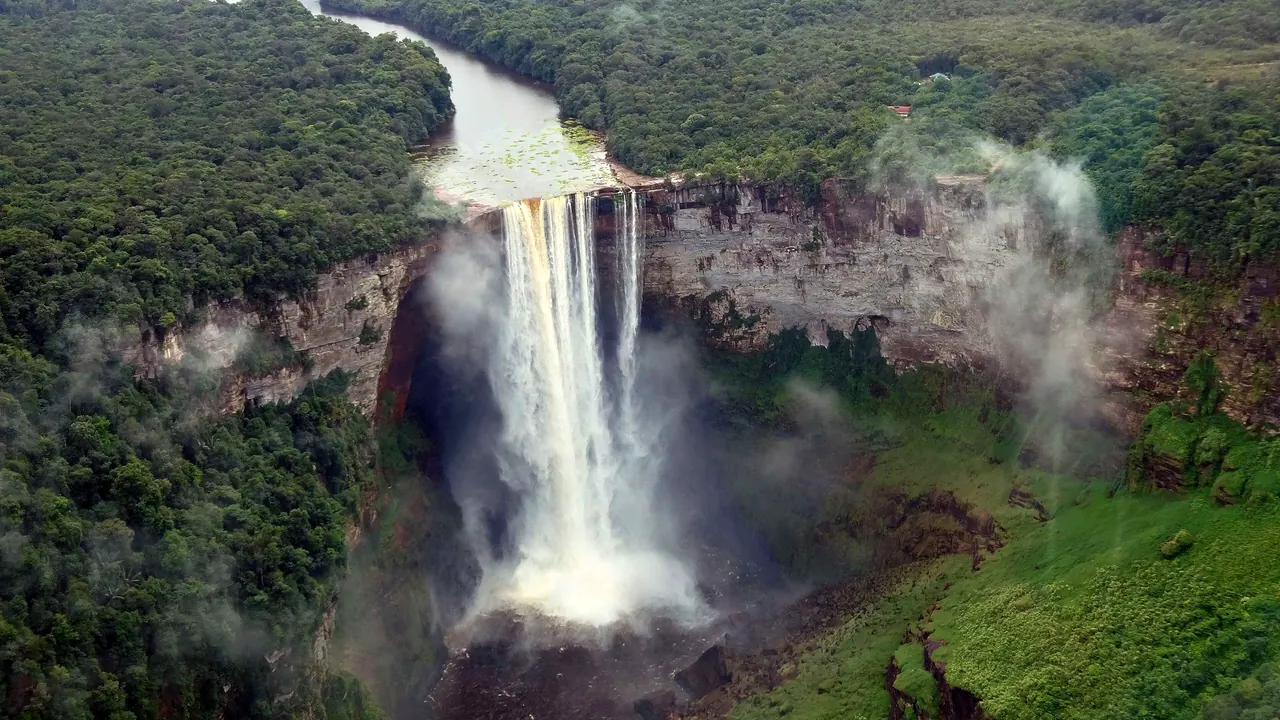
Photos: Amazon by flowcomm, CC BY 4.0, cropped; Kaieteur Falls by Amanda, CC BY 2.0, cropped.
Amazon or Kaieteur Falls?
Our verdict in twelve categories, each scored against the same fixed benchmark cities, and the climate month by month, so you can choose for your trip.
Choose Amazon for
- food and drink
- beaches
- culture and sights
The Amazon suits a traveller who wants a whole trip rather than a single sight. A few nights in a lodge on the Rio Negro or the Tapajós give canoe trips through flooded forest, dolphins and dawn birdwatching, and Manaus and Belém add a regional cuisine, rubber-boom theatres and markets for the days in between. Seeing it properly means picking a base and accepting long boat transfers, but there is enough here to fill a fortnight.
Choose Kaieteur Falls for
Kaieteur Falls does not lead in any category we score.
Kaieteur Falls is a single, overwhelming spectacle, best for someone already in Guyana who wants to stand at the lip of an enormous free-falling waterfall with only a handful of other people around. It is a day out by light aircraft from Georgetown, or a hard trek of several days for those who want the forest on foot. There is nothing to eat, see or do beyond the falls and their trails, so treat it as one unforgettable excursion, not a place to stay.
Scoreboard
Twelve categories on one fixed scale from 0 to 100. The shaded stretch is the gap between the two.
Your match
Pick a travel style or drag the sliders, and both match scores follow your weighting.
Wins on food and drink and beaches with your weighting.
Has no clear advantage with the weighting you have chosen.
What matters to you?
Category by category
What the scores mean for a trip.
Beaches & swimming
The Amazon has real beaches, if river ones. In the dry months the Tapajós at Alter do Chão uncovers white sandbanks and a clear lagoon worth several lazy days, and the Rio Negro gives warm, dark-water swimming at Ponta Negra and Praia do Tupé, though the sand largely disappears from March to June.
Kaieteur offers no swimming at all. The only dip comes on combined flights that stop at Orinduik Falls, where visitors sit in shallow pools on red jasper terraces for an hour before flying on.
Food & drink
Eating is one of the reasons to go to the Amazon. Belém's Ver-o-Peso market and its cassava-based dishes, maniçoba and pato no tucupi among them, Manaus's river fish and tucumã sandwiches, and juices of cupuaçu and bacuri make a cuisine found nowhere else, even if meals in the lodges are simple.
At Kaieteur food is just fuel: a packed lunch near the airstrip or rice and chicken at the basic overnight lodging. Eat well in Georgetown before and after.
Culture & sights
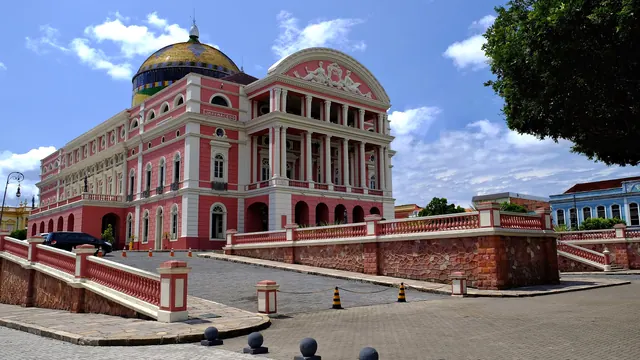
The Amazon's heritage is the architecture of sudden wealth. Rubber money around 1900 put European ironwork, palaces and theatres on the riverbanks, and in Manaus you see it in the iron hall of the Adolpho Lisboa market and the Palácio Rio Negro. Belém goes further back, to the fort its Portuguese founders built in 1616, and feels more like an old colonial port than a boom town. With the riverside communities that many forest trips visit, each city is worth a day or two of sightseeing, though the forest stays the main event.
At Kaieteur the falls themselves are the monument, and there is nothing built to see. The human side is a Patamona legend and the park's long record as protected land, which you hear from a guide on the walk to the edge. For history and colonial streets in Guyana, look in Georgetown.
Nightlife
The Amazon at least has a night out in its cities: Belém's riverside warehouses and its tecnobrega sound-system parties, Manaus's Ponta Negra bars and forró halls, and a small square of bars in Alter do Chão. In the lodges, evenings mean a caiman-spotting canoe trip and an early night.
Kaieteur has nothing after dark. Day visitors are back in Georgetown before dusk, and overnight guests hear only insects and the river.
Nature & outdoors
The Amazon wins on breadth. From Manaus you can reach the Meeting of the Waters and the island maze of Anavilhanas, and the Mamirauá reserve offers some of the region's best primate and bird watching. Lodges add night walks, canopy towers and pink river dolphins, and the forest looks completely different in high water and low.
Kaieteur is a single sight of extraordinary force: the Potaro dropping about 226m off a sandstone plateau, seen from unfenced rock with golden frogs in the bromeliads and swifts diving behind the water. It is a few hours of wonder rather than days of wildlife, unless you take the multi-day overland route.
Day trips
Neither is a good base for outings, but the Amazon has a few. From Belém you can cross by boat to Combu island, visit Mosqueiro's river beaches or see Marajoara-style potters at Icoaraci, and from Santarém you can reach Fordlândia's sister town of Belterra and its wooden plantation houses.
From Kaieteur the only usual extra is the short hop to Orinduik Falls. Everything else in Guyana is reached from Georgetown.
Good for families
The Amazon can work for families with older children who love animals: canoeing through flooded trees, spotting sloths and fishing for piranha, with the Rio Negro's low mosquito numbers and Belém's Mangal das Garças park as gentler options. Vaccinations, heat and simple lodges still make it hard going with toddlers.
Kaieteur is a short adventure for steady older children at best. Open rock with no railings above a 200m drop, basic toilets and flights delayed by cloud make it a place to skip with small ones.
Getting around
Both are hard to reach, in different ways. The Amazon's cities are joined only by flights or riverboats that take days, and lodge transfers take hours by road and boat, so most visitors settle in Manaus and let a lodge organise the rest.
Kaieteur is a single hop of about an hour by light aircraft from Georgetown, but the flights wait for passengers and clear skies, so a spare day helps. Once there, the viewpoints are an easy guided walk away, over roots and rock.
Shopping & style
The Amazon has worthwhile markets and crafts: Ver-o-Peso's oils, herbal remedies and chocolate, Icoaraci pottery, and seed jewellery and basketry around the Manaus theatre, plus guaraná and jambu cachaça to take home.
At Kaieteur there is at most a handful of souvenirs by the airstrip. Look for Amerindian baskets and balata figures in Georgetown.
Affordability
The Amazon can be done modestly. Hotels, market meals and local transport in Manaus and Belém are cheap, and public riverboats and simple Alter do Chão guesthouses keep costs down, though good all-inclusive lodges and domestic flights raise the bill.
Kaieteur offers no cheap way in. The charter flight package buys only a few hours on the ground, the overland trek costs more again, and it is likely to be the most expensive single day of a trip to Guyana.
Live music & performing arts
The Amazon has some stage life, centred on the Teatro Amazonas in Manaus, with its resident orchestra and dance company and an opera festival in April and May. Belém adds the Theatro da Paz and carimbó dancing, and the Boi-Bumbá festival on Parintins at the end of June is a spectacle in its own right. Outside these, the programme is thin.
Kaieteur has no performances of any kind. The roar of the water is the only show.
Wellness & relaxation
Neither is a spa destination, but the Amazon offers a fuller kind of rest: hammocks on a lodge veranda on the Rio Negro or the Tapajós, little phone signal, slow days on a riverboat and a few hotel spas near Manaus. Early wildlife starts and humid heat keep it from being a pampering vacation.
Kaieteur is rarely restful. Day visitors spend a rushed few hours flying and walking, and only overnight guests get the plateau's evening stillness once the planes have gone.
When should you go?
Pick your month. The climate figures are measured averages, not a forecast.
Amazon in July
Kaieteur Falls in July
Daytime high, °C
Rainfall in the month, mm
Where the figures come from
Kaieteur Falls has no weather station within reach, so its figures come from a gridded climate model rather than a measured record, and read a broad area rather than one spot.
Temperature and rainfall are climate normals, averaged over the years shown. Amazon: 1991-2020 normals, Manaus (3.3 km from centre). Kaieteur Falls: 2001-2020 normals, NASA POWER reanalysis grid, no weather station within 90 km.
At the main Amazon base the heat hardly changes, with highs above 30°C in every month, so the real choice is about rain. January to May is very wet, often over 300mm a month, and the rivers rise until canoes can pass among the treetops. The rain eases in June, and July to September is the driest and sunniest stretch, when the trails open up and the river beaches start to appear. They stay wide into the last months of the year, while the rain builds again from November. September is the hottest month, at 35°C, and walking the cities then is tiring.
Kaieteur is cooler, and its year runs almost the other way. The plateau's wet season is May to August, peaking at 284mm in June. That is when the falls carry the most water, and also when cloud is most likely to hold up the small planes. February and March, and again September and October, are much drier, with easier trails and more reliable flights but a thinner curtain of water. Daytime temperatures stay comfortable for walking all year.
Which traveller are you?
On a food and nightlife trip, the Amazon is the only real option. Belém has tacacá stalls, pato no tucupi and its weekend aparelhagem parties, and Manaus has grilled tambaqui and waterfront bars. At Kaieteur you get a packed lunch and the sound of frogs.
For a culture and arts trip, the Amazon gives the Teatro Amazonas and its opera festival, Belém's colonial Cidade Velha and the Goeldi museum. Kaieteur has the Patamona legend of Kai told by the guides, and no buildings, museums or performances at all.
On a family trip with children, the Amazon is far easier. A lodge on the mosquito-light Rio Negro or the dry-season sands of Alter do Chão can work for older children. Kaieteur's unfenced viewpoints above a sheer drop make it unsuitable for young ones.
Before you go
| Measure | Amazon | Kaieteur Falls |
|---|---|---|
| Official language | Portuguese | English |
| Currency | Brazilian Real (BRL) | Guyana Dollar (GYD) |
| Sockets | CN60 Hz | ABG240 V, 60 Hz |
| Driving side | Right | Left |
| Time zone | UTC-4 | UTC-4 |
| Emergency number | Police 190, ambulance 192, fire 193 | 999 |
| Main airport | Eduardo Gomes International Airport (MAO)21 non-stop destinations | Kaieteur Airport (KAI)2 non-stop destinations |
| Public holidays this year | 14 days | 11 days |
By the numbers
| Measure | Amazon | Kaieteur Falls |
|---|---|---|
| Population | 34,000,000 | - |
Where else could you go?
Every comparison below shares a destination with this one, so you can follow Amazon or Kaieteur Falls somewhere new.
- Georgetownvs Kaieteur Falls
- Galápagosvs Amazon
- Puerto Iguazuvs Kaieteur Falls
- Monteverdevs Amazon
- Niagara Fallsvs Kaieteur Falls
- Okavango Deltavs Amazon