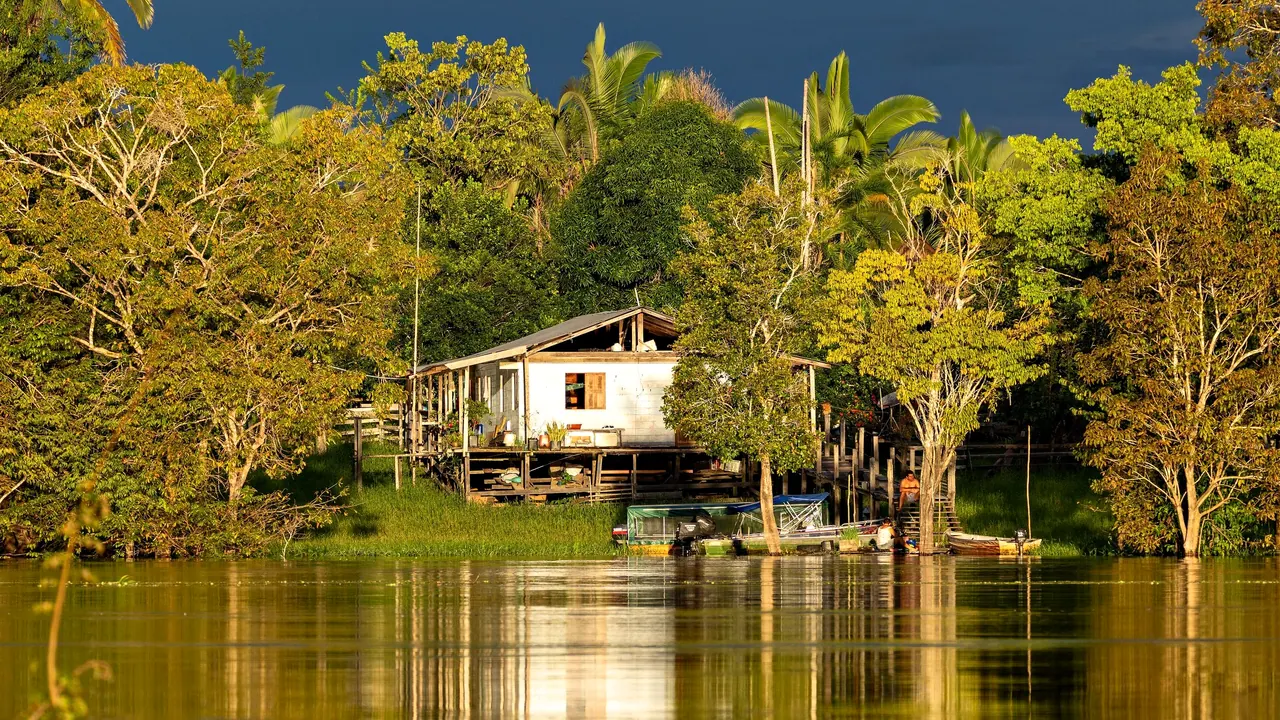
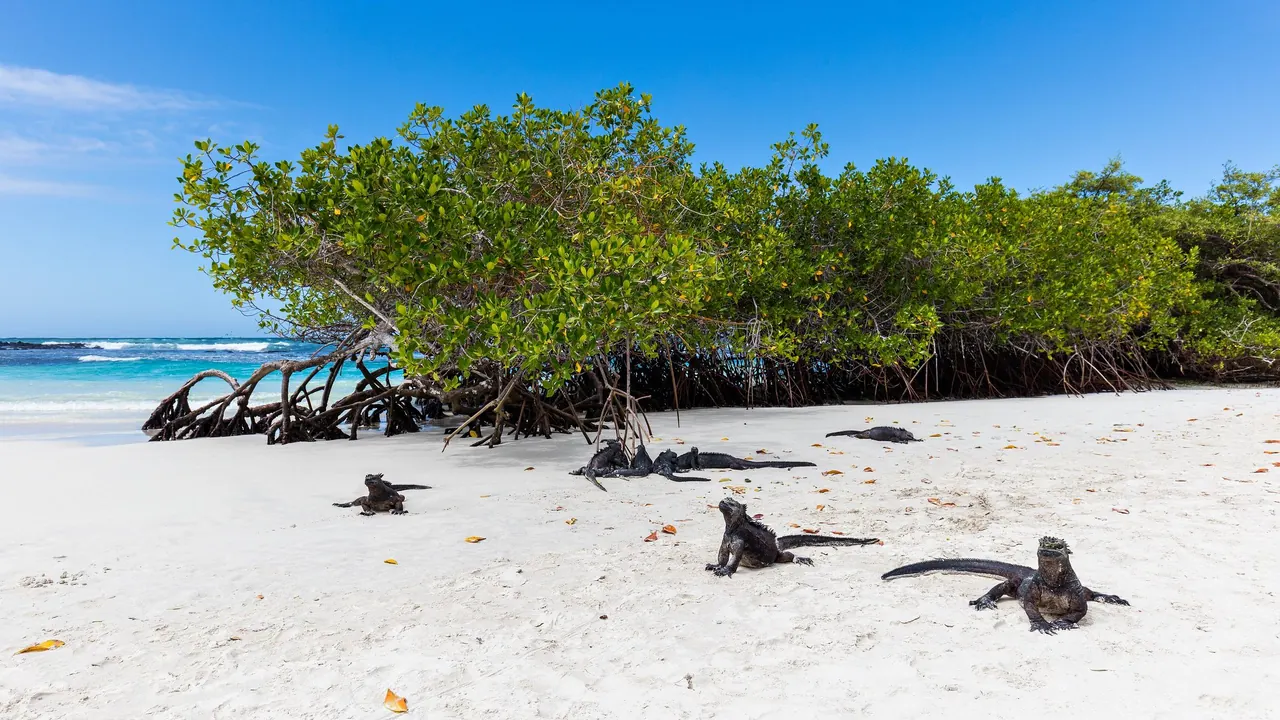
Photos: Amazon by flowcomm, CC BY 4.0, cropped; Galápagos by Diego Delso, CC BY-SA 4.0, cropped.
Amazon or Galápagos?
Our verdict in twelve categories, each scored against the same fixed benchmark cities, and the climate month by month, so you can choose for your trip.
Choose Amazon for
- food and drink
- prices
- live music and the arts
Choose the Amazon if the forest is the draw and you want more around it than wildlife. Nights in a lodge on the Rio Negro or the Tapajós go well with Belém's market cooking, its riverside nights out and the rubber-boom opera house in Manaus. The trip also costs much less, especially if you use the riverboats and simpler lodges. It suits travellers who can put up with heat, insects and slow transfers.
Choose Galápagos for
- families
- getting around
- beaches
The Galápagos is the better pick if you want to watch animals at arm's length and snorkel with sea lions, turtles and penguins. It is easier with children who can swim and walk, its beaches are real sea beaches and the small port towns are simple to manage. In return you pay far more, eat plainly and find almost nothing to do after dark.
Scoreboard
Twelve categories on one fixed scale from 0 to 100. The shaded stretch is the gap between the two.
Your match
Pick a travel style or drag the sliders, and both match scores follow your weighting.
Wins on food and drink and prices with your weighting.
Wins on families and getting around with your weighting.
What matters to you?
Category by category
What the scores mean for a trip.
Beaches & swimming
The Galápagos has proper sea beaches, with white sand and black lava that you share with sea lions and marine iguanas. Swimming there mostly means snorkelling with turtles and rays in coves such as Playa Mansa, at the end of Tortuga Bay. For the equator, the water is cool in the second half of the year.
The Amazon's beaches are freshwater sandbanks that appear only when the rivers fall. They are best around Alter do Chão on the Tapajós from about August to December and mostly under water in the high-water months. There is no salt or surf, so they work as a rest between jungle outings, and only Alter do Chão is worth several days on the sand.
Food & drink
The Amazon has a real cuisine and the Galápagos does not. In Belém, the Ver-o-Peso market and dishes built on tucupi, jambu and cassava make eating part of the trip. Manaus adds grilled tambaqui, tucumã sandwiches and fruit ices of cupuaçu and bacuri, although meals in the lodges are simple.
In the Galápagos the best meal is the day's catch grilled at the evening kiosks in Puerto Ayora, or ceviche and lobster in season. Most other food is shipped in from the mainland, and cruise passengers eat on board.
Culture & sights
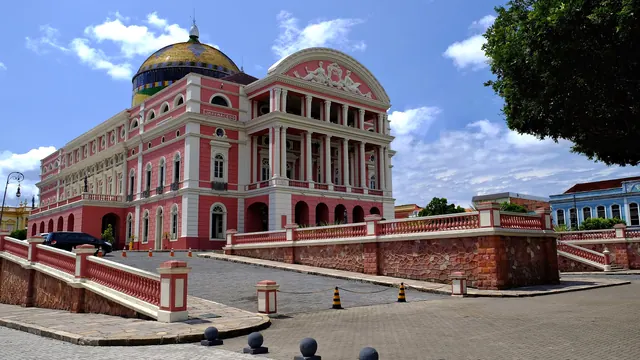
Neither is a trip for monuments, but the Amazon has more to see in its two river cities. Manaus has the Teatro Amazonas and its iron market hall. Belém has the colonial Cidade Velha, the Forte do Presépio and the Emílio Goeldi museum. Many forest trips also include visits to living Indigenous and riverside communities.
The Galápagos heritage is scientific. The Charles Darwin Research Station on Santa Cruz explains evolution and the work to save the giant tortoises. Beyond that there are a few traces of the past, such as the Wall of Tears on Isabela and Floreana's barrel post office, and the towns themselves are modern and plain.
Nightlife
Belém gives the Amazon a night out with a strong local character, from bars in old riverside warehouses to weekend aparelhagem parties playing tecnobrega. Manaus has waterfront bars at Ponta Negra and forró dance halls. In a jungle lodge, though, the evening means a canoe trip to spot caimans and an early night.
The Galápagos goes quiet after dinner. Puerto Ayora has a few waterfront bars and a modest place to dance at weekends, and the other islands have hardly anything.
Nature & outdoors
Both are among the world's great wildlife destinations, and the difference is in the kind of encounter. The Amazon is about scale and being inside the forest. You canoe through flooded forest in the Anavilhanas, see the Meeting of the Waters off Manaus and look for pink river dolphins, and you hear the animals more often than you see them.
The Galápagos is the opposite: open volcanic islands where boobies, sea lions and giant tortoises ignore people a metre away. The sea is as rich as the land, and divers meet hammerheads at Gordon Rocks. The trade-off is that you see most of the park on fixed trails with a licensed guide.
Day trips
The Amazon has a handful of real outings to other places, most of them from Belém. Boats cross to Combu island for its riverside houses and cocoa growers, and the old river villas of Mosqueiro and the Marajoara-style pottery of Icoaraci are close by. From Santarém you can reach Belterra, the plantation town Henry Ford built. Otherwise, a day out here usually means going into the forest.
In the Galápagos, outings are boat trips to wildlife sites. The neighbouring port towns on Isabela and San Cristóbal are about two hours away by speedboat and have little to see in themselves.
Good for families
The Galápagos is the more manageable choice with children who can snorkel and walk for a few hours. The port towns are small and safe, the tortoise breeding centres hold children's attention, and coves such as Concha de Perla are gentle places for a first look underwater. Rough speedboat crossings and minimum ages on some cruises still need thought.
The Amazon asks more of a family: yellow fever vaccination, malaria risk in places, heavy humidity, mosquitoes and long transfers. A lodge on the Rio Negro suits older children who are keen on animals, but neither destination offers much for toddlers.
Getting around
Both take planning, but the Galápagos is easier. The port towns are walkable, pickup taxis run to the highlands, and a live-aboard cruise solves the problem of getting between islands by sailing overnight, though the public speedboats are often choppy.
In the Amazon, the cities are linked only by flights or by riverboats that take days, with passengers sleeping in hammocks. There is no metro and the buses are hard for visitors to use. Most people stay in Manaus and let a lodge handle the hours of road and boat transfers.
Shopping & style
The Amazon has more worth buying. Belém's Ver-o-Peso market sells scented oils, herbal remedies and chocolate, and the craft shops around the theatre in Manaus sell seed jewellery, basketry and Indigenous handicrafts. Cupuaçu chocolate and jambu cachaça travel home well.
The Galápagos offers souvenir T-shirts and wildlife prints on Avenida Charles Darwin and a few galleries of local work. Little is made on the islands, so it is better to shop on the Ecuadorian mainland.
Affordability
The Amazon is much the cheaper trip. The cities, market meals and local transport are inexpensive. Costs go up with all-inclusive lodges and domestic flights, and down if you use public riverboats and stay in guesthouses in Alter do Chão.
The Galápagos is expensive from the start: flights from the mainland and park fees come before anything else, then guided tours priced for international visitors and imported goods. A land base in Puerto Ayora or Puerto Villamil costs less than a cruise, but the daily boat trips still add up.
Live music & performing arts
Here the Amazon has something real to offer and the Galápagos almost nothing. The Teatro Amazonas in Manaus has a resident orchestra and dance company and stages full productions at its opera festival, usually held in April and May. Belém's Theatro da Paz has a smaller programme, and carimbó is still danced at festivals in Pará. The Boi-Bumbá festival on Parintins at the end of June is a spectacle of its own.
In the Galápagos, the most you will find is the occasional local band in a waterfront bar.
Wellness & relaxation
Neither is a spa destination. Both are more tiring than pampering, with early starts and few treatments beyond a handful of hotel and lodge spas. The calm each offers is different. In the Amazon it is a lodge on the Rio Negro or the Tapajós with no traffic, little phone signal and hammocks on the veranda, or the slow pace of a riverboat.
In the Galápagos it is the gentle pace of the port towns, especially Puerto Villamil on Isabela with its sandy streets and long beach. Choppy crossings and guided walks still fill most days.
When should you go?
Pick your month. The climate figures are measured averages, not a forecast.
Amazon in July
Galápagos in July
Daytime high, °C
Rainfall in the month, mm
Where the figures come from
Galápagos's temperatures are measured 81 km from the centre, at San Cristobal Galapagos.
Galápagos has no rain gauge within 25 km of the centre, so its rainfall comes from a gridded climate dataset read at the destination rather than from a gauge further away.
Temperature and rainfall are climate normals, averaged over the years shown. Amazon: 1991-2020 normals, Manaus (3.3 km from centre). Galápagos: 1961-1990 (rainfall 1991-2020) normals, San Cristobal Galapagos (81.3 km from centre).
The Amazon is hot all year, so the real choice is between wet and dry. From January to April more than 300mm of rain falls each month, and the rivers keep rising until the high-water months of about March to June. That is the time to canoe among flooded treetops. The rain eases from June, and August is the driest and sunniest month. As the water drops, forest trails and river beaches open up. The heat peaks at around 35°C in September, though, and walking the cities in the middle of the day is hard work.
The Galápagos is dry by comparison in every month and never as hot. From January to April highs reach about 30°C, the sea warms to 27°C and the water is calm and easy for snorkelling. From June to November the air is milder and the sea drops to around 22°C, so a wetsuit helps, but this is when marine life is richest. If you are combining the two, the Amazon's drier months fall in the cooler Galápagos season.
Which traveller are you?
For a food and nightlife trip, the Amazon wins easily. Belém cooks one of Brazil's most distinctive cuisines, from tacacá at street stalls to pato no tucupi, and its riverside bars and aparelhagem parties go on late. The Galápagos offers grilled fish and quiet harbours.
On a family trip with children who can swim, the Galápagos is easier and more rewarding. Sea lion pups, tortoises and calm coves such as Playa Mansa hold their attention, and the port towns are small and safe. The Amazon means malaria risk, heavy humidity and long boat transfers.
On a tight budget, the Amazon is the only realistic choice of the two. City hotels, market meals and public riverboats cost little, and simple lodges keep forest stays modest. In the Galápagos, flights, park fees and guided boat tours add up before you have seen anything.
Before you go
| Measure | Amazon | Galápagos |
|---|---|---|
| Official language | Portuguese | Spanish, Shuar, Northern Quichua |
| Currency | Brazilian Real (BRL) | US Dollar (USD) |
| Sockets | CN60 Hz | AB120 V, 60 Hz |
| Driving side | Right | Right |
| Time zone | UTC-4 | UTC-6 |
| Emergency number | Police 190, ambulance 192, fire 193 | 911 |
| Main airport | Eduardo Gomes International Airport (MAO)21 non-stop destinations | Seymour Galapagos Ecological Airport (GPS)3 non-stop destinations |
| Public holidays this year | 14 days | 11 days |
By the numbers
| Measure | Amazon | Galápagos |
|---|---|---|
| Population | 34,000,000 | 25,000 |
| Swim season, months above 21 °C | - | 12 months |
Where else could you go?
Every comparison below shares a destination with this one, so you can follow Amazon or Galápagos somewhere new.
- Easter Islandvs Galápagos
- Fernando de Noronhavs Galápagos
- Monteverdevs Amazon
- Hawaiivs Galápagos
- Okavango Deltavs Amazon
- Serengetivs Amazon