Photos: Amazon by flowcomm, CC BY 4.0, cropped; Serengeti by DipaliLath, CC BY-SA 4.0, cropped.
Amazon or Serengeti?
Our verdict in twelve categories, each scored against the same fixed benchmark cities, and the climate month by month, so you can choose for your trip.
Choose Amazon for
- food and drink
- beaches
- culture and sights
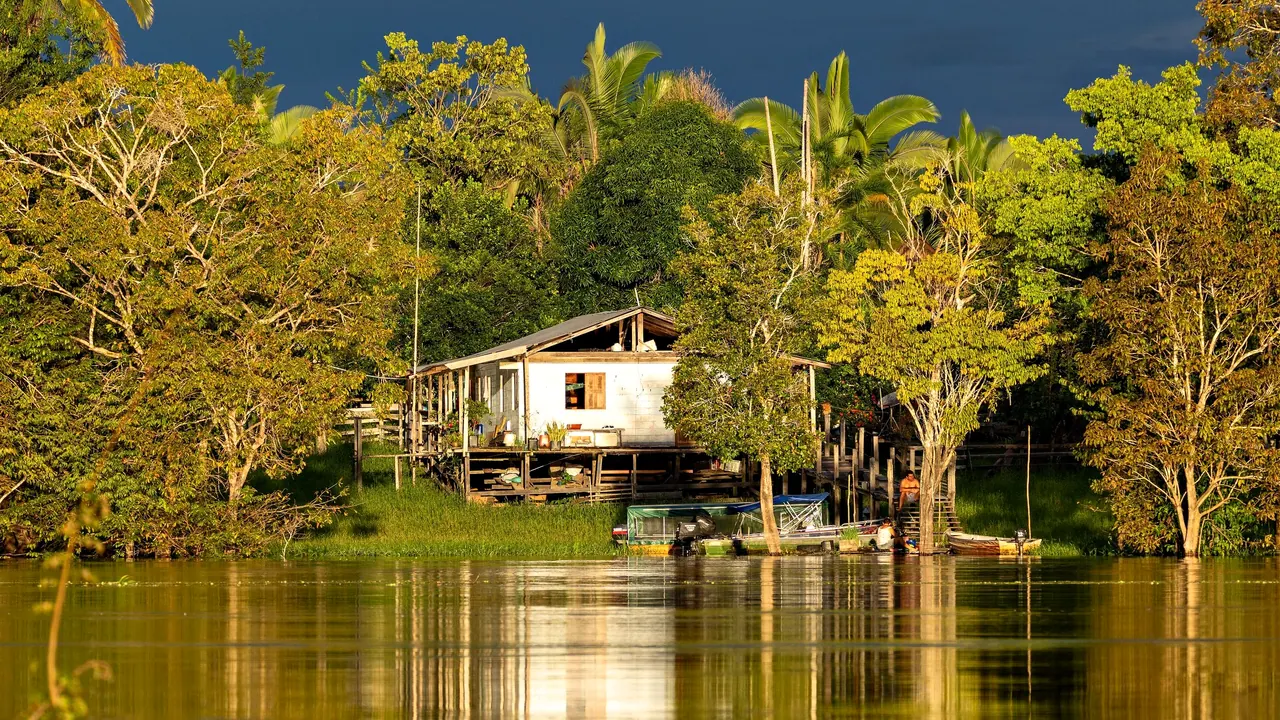
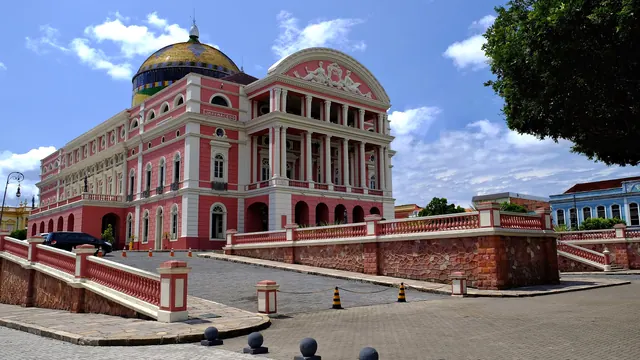
Choose the Amazon if you want the forest along with places to eat, see and go out in. Its river cities add what a safari park cannot: Belém's cooking and markets, the rubber-boom opera house in Manaus, weekend parties and dry-season river beaches. It is also the easier trip to keep modest, with cheap city stays, simpler lodges and public riverboats.
Choose Serengeti for
- nature and the outdoors
- families
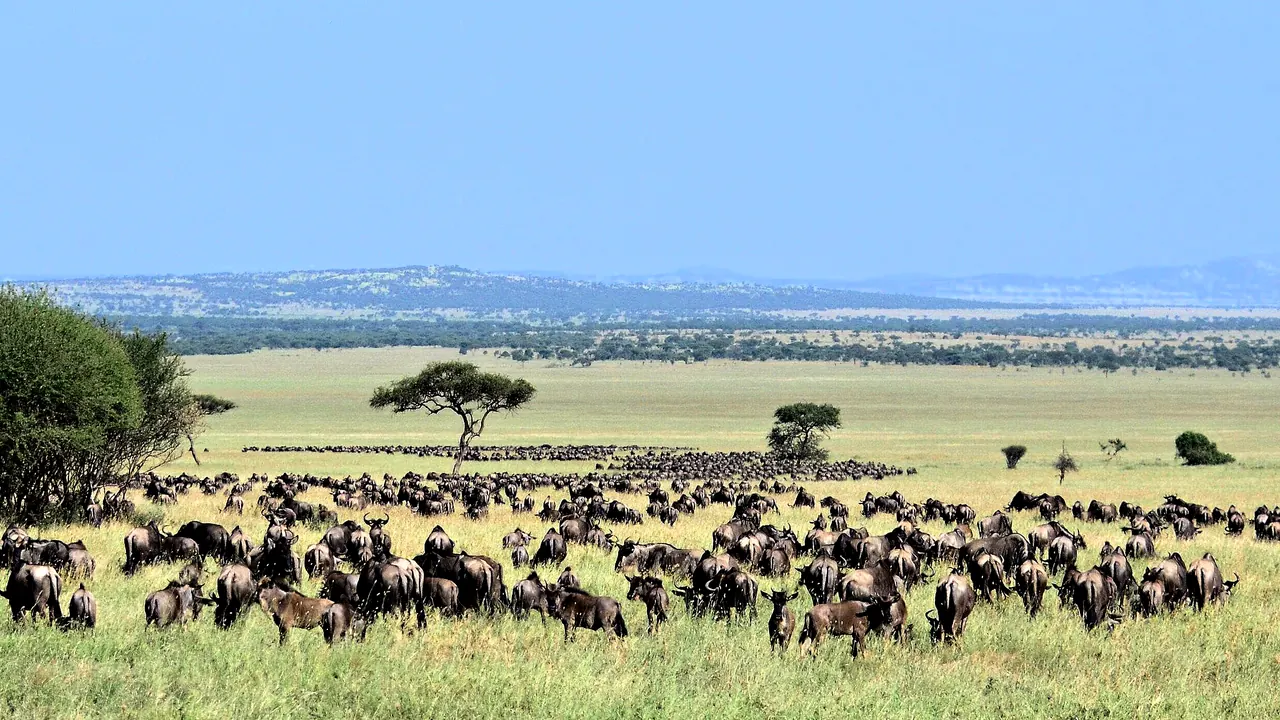
The Serengeti is for travellers who want one thing done superbly, which is big animals on open plains. Lions, cheetahs and elephants are part of most days, and the migrating herds are a spectacle you watch in the open rather than listen for under a canopy. Almost everything else is missing and the cost is high, so it suits a focused safari, often finished with a few days on the coast.
Scoreboard
Twelve categories on one fixed scale from 0 to 100. The shaded stretch is the gap between the two.
Your match
Pick a travel style or drag the sliders, and both match scores follow your weighting.
Wins on food and drink and beaches with your weighting.
Wins on nature and the outdoors and families with your weighting.
What matters to you?
Category by category
What the scores mean for a trip.
Beaches & swimming
The Amazon at least has beaches, all of them on rivers. In the dry months Alter do Chão on the Tapajós offers white sandbanks and a clear lagoon worth several lazy days. Manaus and Belém have river strands at Ponta Negra and Mosqueiro. The water is warm and fresh, but the beaches vanish under high water from March to June.
The Serengeti has nothing of the kind. It lies far inland, Lake Victoria is not for swimming, and your camp pool is the only option, which is why so many safari-goers add Zanzibar or the coast afterwards.
Food & drink
Food is one of the Amazon's real draws, and on safari it barely counts. Belém cooks the region's cassava and river-fish cuisine best, from duck in tucupi to the jambu-laced tacacá sold at late-afternoon stalls, and the Ver-o-Peso market is worth a morning in itself. Manaus adds grilled tambaqui and tucumã sandwiches, and the strange fruit ice creams are everywhere.
In the Serengeti you eat what your camp serves: buffets or set menus with pilau and grilled meat, and packed breakfasts in the vehicle. A lantern-lit bush dinner is memorable, but there is nothing to explore, and Tanzanian food is better tasted in Arusha.
Culture & sights
Neither is a sightseeing trip, but the Amazon has far more to show. Its rubber-boom heritage gives Manaus the Teatro Amazonas and the iron market hall, and Belém a colonial Cidade Velha with its fort and cathedral, plus the Emílio Goeldi museum. The two cities are a flight apart, but each is worth a day.
Inside the Serengeti there are only the Maasai rock paintings at the Moru Kopjes and the visitor centre at Seronera. The region's deeper human story, from early hominids to the Maasai, is found outside the park.
Nightlife
The Amazon offers nights out with strong local character, and the Serengeti offers none at all. Belém's riverside warehouses and weekend aparelhagem parties, with tecnobrega booming from elaborate sound rigs, are unlike anything elsewhere, and Manaus has waterfront bars and forró halls.
On safari the evening ends at the campfire, with an early bed before a dawn drive. The entertainment is lions calling in the dark under a sky full of stars.
Nature & outdoors
Both are among the great wild places on earth, and in each the wildlife is the whole reason for the trip, but they are opposite experiences. The Amazon is enclosed and watery: canoes through flooded forest, the Meeting of the Waters, the Anavilhanas islands and Mamirauá's primates, with dolphins and macaws often heard before they are seen, in constant heat and insects.
The Serengeti is open and visible. Short-grass plains, kopjes and acacia woodland let you watch lions, cheetahs and elephants from a vehicle. The wildebeest move from Ndutu to the Mara River crossings over the year, and there are balloon flights at dawn.
Day trips
Neither suits a trip of day excursions from one base, but the Amazon has a few more places to go. From Belém, short boat rides reach Combu island, the old villas of Mosqueiro and the potters of Icoaraci who work in the Marajoara style. From Santarém you can visit Belterra, Henry Ford's rubber town.
The Serengeti's outings are fewer and the drives longer: Olduvai Gorge and its fossil museum near the southern edge, and Maasai homesteads along the boundary. Ngorongoro is usually a stop on the way in rather than a day out.
Good for families
Both are hard work with small children and rewarding for older ones who love animals. In the Amazon the difficulties are humidity, mosquitoes, yellow fever precautions and long boat transfers to simple lodges. Staying on the Rio Negro or the Alter do Chão beaches makes it easier, and Belém's Mangal das Garças gives a gentle city outing.
The Serengeti asks children to sit through long, bumpy drives in unfenced country, and many camps set minimum ages. In return some lodges offer family tents, junior ranger activities and private vehicles, and the animals are big and easy to see.
Getting around
Both are slow and need planning, but in different ways. In the Amazon the river sets the pace: you fly between cities or take public riverboats that sleep passengers in hammocks for days, use taxis within the cities, and reach the forest on lodge transfers by road and boat.
In the Serengeti you go everywhere in a guided safari vehicle. You arrive either by a road from Arusha that takes most of a day or by small plane to airstrips such as Seronera and Kogatende. The park is so large that most visitors choose one or two areas, depending on where the herds are.
Shopping & style
Shopping is a sideline in both, but the Amazon gives it some purpose. Belém's Ver-o-Peso sells herbal remedies, scented oils, chocolate and cassava flours. Manaus has seed jewellery, basketry and Indigenous crafts, and cupuaçu chocolate or jambu cachaça make good things to take home.
The Serengeti has lodge gift shops and Maasai beadwork at roadside curio stops. Anyone after crafts or tanzanite should buy them in Arusha.
Affordability
The gap here is wide. In the Amazon's cities, hotels, market food and transport are cheap. Only the guided lodges and domestic flights push the bill up, so a trip by riverboat with simpler lodges stays modest.
The Serengeti is costly from the outset, with per-person park fees, a guided vehicle you cannot really do without and remote camps supplied over long tracks. Even public-campsite safaris are expensive, though lodge rates drop in the green season around November and early in the year.
Live music & performing arts
The Amazon has a real if modest stage life, and the Serengeti has essentially none. The Teatro Amazonas in Manaus is home to an orchestra, a dance company and an opera festival in April and May. Belém adds the Theatro da Paz and carimbó dancing, and at the end of June Parintins stages the night-long Boi-Bumbá.
On safari the only performance is Maasai song and the jumping dance, put on at some lodges or during village visits.
Wellness & relaxation
An Amazon river lodge gives the kind of rest that comes from being out of reach: hammocks on a veranda above the Rio Negro or the Tapajós, little phone signal and long, slow hours on the water, and a riverboat journey has the same effect. Treatments are limited to a few spa rooms near Manaus, and the cities themselves are hot and noisy.
A Serengeti camp fits its quiet into the middle of the day, between the dawn and late-afternoon game drives, by the pool or on a tent veranda facing the plains. Some upmarket lodges have massage rooms. The early starts and bumpy tracks keep it from being truly restful, which is why many visitors finish on the coast.
When should you go?
Pick your month. The climate figures are measured averages, not a forecast.
Amazon in July
Serengeti in July
Daytime high, °C
Rainfall in the month, mm
Where the figures come from
Serengeti has no weather station within reach, so its figures come from a gridded climate model rather than a measured record, and read a broad area rather than one spot.
Temperature and rainfall are climate normals, averaged over the years shown. Amazon: 1991-2020 normals, Manaus (3.3 km from centre). Serengeti: 2001-2020 normals, NASA POWER reanalysis grid, no weather station within 90 km.
Both are warm, but in different ways. The Amazon, measured where most visitors stay, is steamy all year, with daytime highs from 31°C to 35°C. The rains run from about November to May and pass 300mm a month at their peak. From around March comes high water, when canoes glide through flooded forest and the river beaches disappear. June to October is drier and much sunnier, the season for sandbanks, forest trails and Alter do Chão, though September and October are the hottest months for walking city streets.
The Serengeti lies on high savannah and is far more comfortable, with highs in the mid to upper twenties all year. Its driest stretch runs from June to September, with barely 9mm in July, so both regions are at their driest in the same months. Rain returns in November and December and peaks again in March and April, when the tracks turn muddy. January and February bring a drier spell in between, which suits the calving on the southern plains.
Which traveller are you?
On a culture and arts trip, the Amazon is the clear pick. Manaus has the Teatro Amazonas with its orchestra and opera festival, and Belém a colonial old town and a historic science museum. The Serengeti has rock paintings and little else.
For a trip on a tight budget, the Amazon is far kinder, with cheap city hotels, market meals and riverboats. In the Serengeti, park fees, remote camps and a guided vehicle that is practically a necessity make even camping safaris costly.
On an outdoors trip built around big animals, the Serengeti wins. Lions, cheetahs and elephants are seen daily on open plains, with the migrating herds following the rains. The Amazon's wildlife hides in dense forest, heard more often than seen.
Before you go
| Measure | Amazon | Serengeti |
|---|---|---|
| Official language | Portuguese | English, Swahili |
| Currency | Brazilian Real (BRL) | Tanzanian Shilling (TZS) |
| Sockets | CN60 Hz | G230 V, 50 Hz |
| Driving side | Right | Left |
| Time zone | UTC-4 | UTC+3 |
| Emergency number | Police 190, ambulance 192, fire 193 | Police 112, ambulance 115, fire 114 |
| Main airport | Eduardo Gomes International Airport (MAO)21 non-stop destinations | Kilimanjaro International Airport (JRO)14 non-stop destinations |
| Public holidays this year | 14 days | 13 days |
By the numbers
| Measure | Amazon | Serengeti |
|---|---|---|
| Population | 34,000,000 | - |
Where else could you go?
Every comparison below shares a destination with this one, so you can follow Amazon or Serengeti somewhere new.
- Masai Maravs Serengeti
- Zanzibarvs Serengeti
- Okavango Deltavs Serengeti
- Krugervs Serengeti
- Galápagosvs Amazon
- Monteverdevs Amazon