Photos: Amazon by flowcomm, CC BY 4.0, cropped; Okavango Delta by Diego Delso, CC BY-SA 4.0, cropped.
Amazon or Okavango Delta?
Our verdict in twelve categories, each scored against the same fixed benchmark cities, and the climate month by month, so you can choose for your trip.
Choose Amazon for
- beaches
- food and drink
- prices
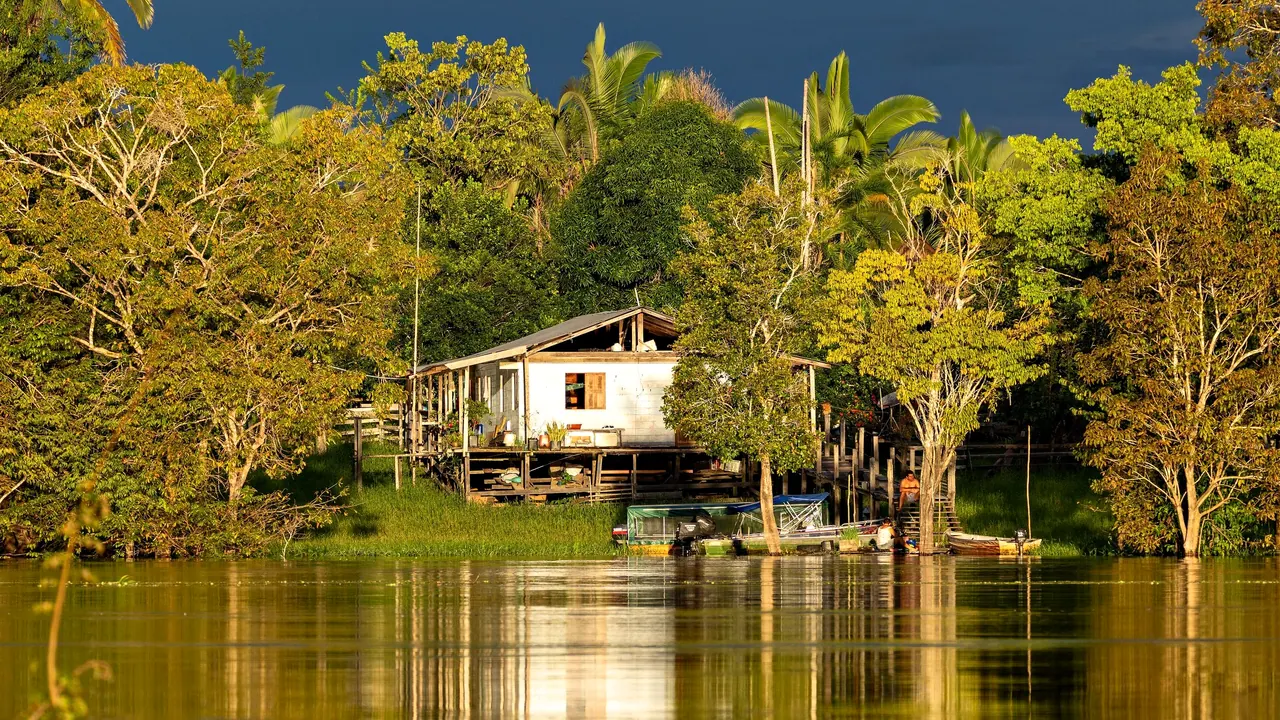
The Amazon suits a traveller who wants the rainforest with a wider country around it. That means river cities with their own cooking, a domed opera house built on rubber money, sandbanks on the Tapajós in the dry season and a loud night out in Belém. It also costs much less, because cheap city days can be mixed with a lodge stay, and riverboats and simple guesthouses can stretch the money further.
Choose Okavango Delta for
- nature and the outdoors
- wellness
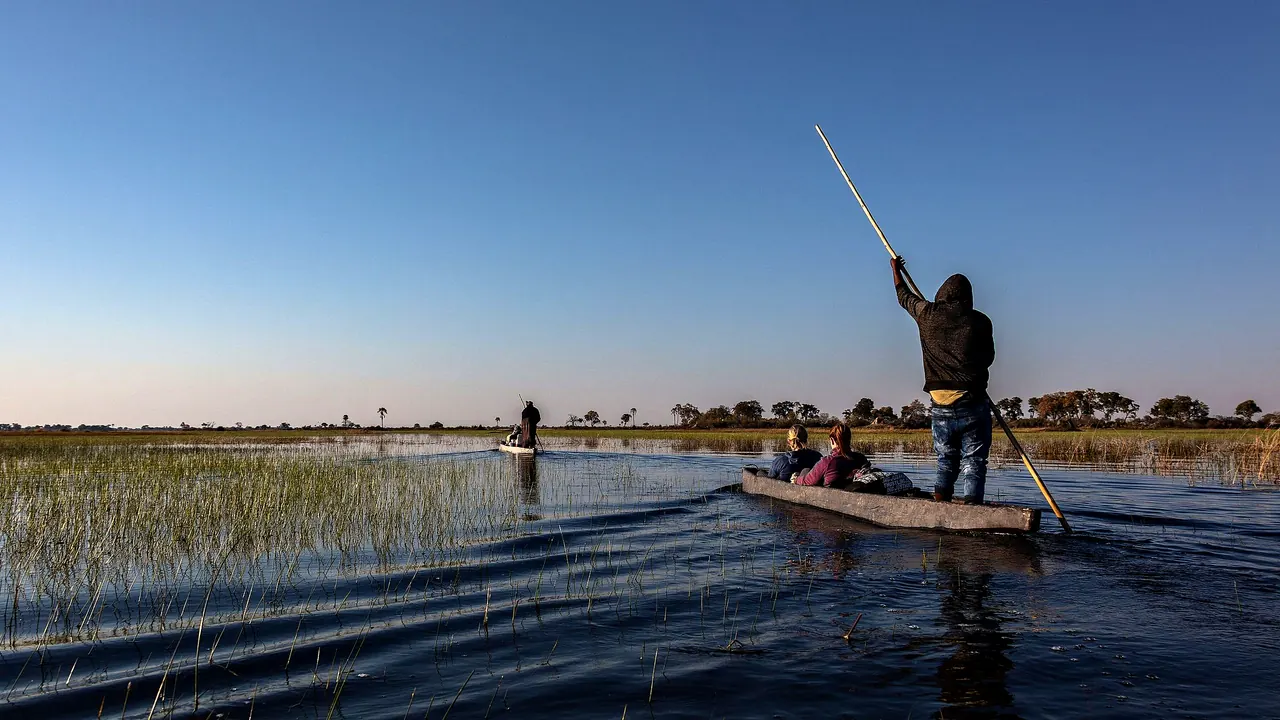
Pick the Okavango Delta for wildlife above everything else, done in great comfort. Lions, elephants and wild dogs are seen out in open floodplain, not glimpsed through dense forest, and the small unfenced camps feel truly wild. The price is very high, though, and beyond the camp fire there are no towns, food culture or evenings to speak of.
Scoreboard
Twelve categories on one fixed scale from 0 to 100. The shaded stretch is the gap between the two.
Your match
Pick a travel style or drag the sliders, and both match scores follow your weighting.
Wins on beaches and food and drink with your weighting.
Wins on nature and the outdoors and wellness with your weighting.
What matters to you?
Category by category
What the scores mean for a trip.
Beaches & swimming
The Amazon has real beaches, though they are on rivers. At Alter do Chão on the Tapajós, white sandbanks and a clear lagoon are worth several lazy days. Ponta Negra and Praia do Tupé on the Rio Negro make easy breaks near Manaus, in warm fresh water. These are dry-season pleasures. The beaches are widest from August to December and mostly underwater from March to June.
In the Okavango Delta nobody swims, because the channels belong to crocodiles and hippos. The only water you will get into is the camp plunge pool on a deck above the floodplain.
Food & drink
Eating is one of the reasons to go to the Amazon, and Belém is the place for it. There is the Ver-o-Peso market, pato no tucupi, maniçoba and tacacá in the late afternoon. Manaus adds grilled tambaqui and tucumã sandwiches, and juices of cupuaçu and bacuri are sold everywhere. Out at the lodges, the cooking turns simple.
In the delta, meals come with the camp. At the good lodges they are generous and carefully made, from brunch after the morning drive to dinner by the fire with South African wine. This is hospitality, not a regional cuisine, and Maun's seswaa is about the only local dish you are likely to meet.
Culture & sights
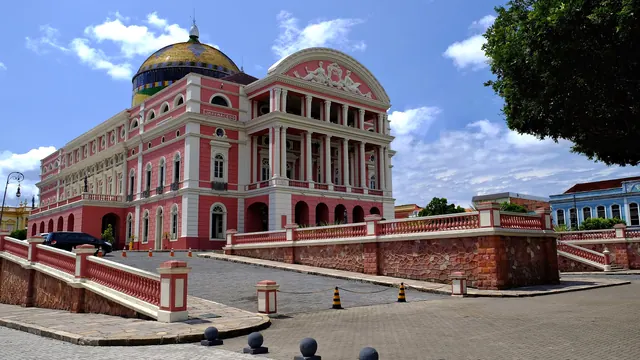
The Amazon has a short but real list of sights left by the rubber boom. In Manaus there are the domed Teatro Amazonas and the iron market hall. Belém has the colonial Cidade Velha, the Forte do Presépio and the Emílio Goeldi museum. The two cities are a flight apart, so most visitors see one city's sights, not both.
The delta has almost nothing built to visit. Its one important heritage site, the San rock paintings of the Tsodilo Hills, lies far to the north-west and few safari itineraries reach it. Culture there comes mostly from Bayei and Hambukushu guides explaining how people live in the delta.
Nightlife
Nobody goes to either place for a night out, but the Amazon at least has evenings. Belém's riverside warehouses and bar streets fill on warm nights. Its weekend aparelhagem parties, with tecnobrega played through enormous sound systems, are unlike anything elsewhere. Manaus adds waterfront bars and forró halls.
In the Okavango, a night ends with a drink by the fire and an escort back to your tent, because animals walk through camp. Maun's few bars are where guides and pilots gather.
Nature & outdoors
These are two of the world's great wildlife destinations, and they are close to equal. The difference is in what you see. The Amazon is about the sheer scale of forest and water: the Meeting of the Waters, the island maze of Anavilhanas, canoeing among the treetops at high water, pink river dolphins and macaws, and Mamirauá for primates. Its animals are often heard more than seen.
The delta is open country. Elephants, lions, leopards, wild dogs and buffalo gather in plain view among its lagoons, papyrus and palm islands, especially when the flood peaks in the dry winter. You watch them from a mokoro, on foot with an armed guide, or from a vehicle in Moremi and the private concessions, where visitor numbers are kept low.
Day trips
Belém is the one place in either destination where a day out has somewhere to go. A short boat ride takes you to Combu island for riverside houses and cocoa growers. Mosqueiro has river beaches and old summer villas, and Icoaraci still makes pottery in Marajoara designs. From Santarém, Belterra keeps the wooden houses of the rubber town Henry Ford built in the 1930s. Manaus, where most visitors stay, offers little beyond the forest itself.
Maun is the delta's only town, and there is nothing to visit around it. The Makgadikgadi pans and the Chobe riverfront are wilderness areas you travel to as separate stages of a safari, not outings for an afternoon. Every day is spent in the floodplain around camp.
Good for families
Both are hard going with small children and rewarding for older ones who love animals, so the choice depends on which difficulties you would rather manage. In the Amazon, yellow fever vaccination is advised, malaria is a risk in some areas, and there are mosquitoes and long boat transfers. On the other hand, the Rio Negro near Manaus has fewer insects, Alter do Chão has beach days, and parks such as Belém's Mangal das Garças break up a trip.
The delta's problems are of another kind. Camps are unfenced and animals walk through them, and many set minimum ages for walks, mokoro trips or even staying at all. There is malaria too, and small planes with tight luggage limits. In return, some camps offer family tents and private vehicles, which make it work well with teenagers.
Getting around
Both are hard places to get around, but for opposite reasons. In the Amazon the obstacle is distance. Almost no roads join its cities, so moving between Manaus, Belém and Santarém means paying for a flight or giving up several days to a public riverboat, sleeping in a hammock among local passengers. That slowness leaves you free to travel independently and on little money if you have time. In town a taxi or ride-hailing car gets you about, and only the forest needs a lodge transfer of several hours.
The delta is quicker but far less free. A light aircraft takes you from Maun to an airstrip near your camp. After that, every outing is in a guide's vehicle, boat or mokoro on the camp's timetable, because going anywhere on foot alone is unsafe. You trade spontaneity for ease. The only way to set your own route is to drive into Moremi yourself, and that suits only seasoned off-road drivers, since high water cuts many of the tracks.
Shopping & style
The Amazon is far better for things to take home, though it is all markets and crafts. There are oils, chocolate and herbal remedies at Ver-o-Peso, Marajoara-style pottery from Icoaraci, and seed jewellery and basketry around the theatre in Manaus. The malls are ordinary Brazilian ones.
The delta has one craft worth seeking out: the palm-fibre baskets of the Ngamiland villages, sold in Maun. Beyond those there are only camp curio shops, and once you leave Maun there is nowhere to buy anything.
Affordability
In the Amazon the cities cost little. A hotel in Manaus or Belém, a fish lunch at the market and a taxi across town are all cheap by international standards. The bill goes up once you head into the forest, because good lodges sell guided packages at European hotel prices and flights between the cities add up. Even so, a comfortable rainforest trip stays mid-priced.
The Okavango is at the far end of the scale. Botswana keeps visitor numbers small on purpose and charges accordingly. A night in a delta camp costs many times a night in an Amazon lodge, and the small planes between camps are paid for separately. Travelling in the green months, roughly November to March, lowers the rates but does not make the delta cheap.
Live music & performing arts
The Amazon has a stage life, if a thin one. The resident orchestra and dance company perform at the Teatro Amazonas, which also holds an opera festival, usually in April and May. Belém has carimbó, and at the end of June the island of Parintins stages the huge Boi-Bumbá folk operas.
The delta has no theatre or venue at all. What you hear is the camp staff singing in close harmony to welcome guests or after dinner. It can be moving, but it is brief and never something to plan around.
Wellness & relaxation
A lodge on the Rio Negro or the Tapajós, or a slow riverboat, gives the looser kind of rest: hammocks on the veranda, little phone signal and long hours on the water. The heat, the humidity and the early wildlife outings come with it, and the cities in between are noisy. Spa treatments are limited to a few hotel and lodge spas around Manaus.
A delta camp is quieter and more ordered. The day runs to a fixed schedule from a start before dawn, but you spend the hot middle hours on a deck above the floodplain while elephants drink below. Some upmarket lodges also have a massage room. It is more comfortable than the Amazon, but you have less freedom to set your own pace.
When should you go?
Pick your month. The climate figures are measured averages, not a forecast.
Amazon in July
Okavango Delta in July
Daytime high, °C
Rainfall in the month, mm
Temperature and rainfall are climate normals, averaged over the years shown. Amazon: 1991-2020 normals, Manaus (3.3 km from centre). Okavango Delta: 1961-1990 (rainfall 1991-2020) normals, Maun (0.5 km from centre).
The Amazon is never cool, so the choice is between wet and dry. From January to April the rain tops 300mm a month and the rivers rise. That is the season for canoeing through flooded forest, while most of the river beaches are underwater. From June to October it dries out and the sun breaks through, with August the sunniest month. The sandbanks appear from August and are at their widest towards the end of the year. September reaches 35°C, though, and walking city streets is sticky in any month.
The Okavango Delta follows a different pattern. From May to September almost no rain falls. June and July are the mildest months, with afternoons around 25°C that suit game drives and walks, and the flood is high then too. October and November climb to 34°C before the summer rains, which peak at about 130mm in January and bring storms and green landscapes. June to September is the drier stretch in both places, which makes it the easiest time to compare them directly.
Which traveller are you?
On a trip on a tight budget, the Amazon is the only realistic choice. Hotels and market meals in Manaus and Belém are cheap, and riverboats and Alter do Chão guesthouses keep forest time modest. In the delta, even camping runs up heavy park and vehicle costs.
For a food and nightlife trip, the Amazon wins easily. Belém has tacacá stalls, duck in tucupi and aparelhagem parties, and Manaus has grilled tambaqui and waterfront bars. The delta offers camp dinners and an early night by the fire.
On an outdoors trip centred on big animals, the Okavango Delta comes out ahead. Its open floodplains let you watch lions, elephants and wild dogs from a vehicle or a mokoro. The Amazon's forest is vast, but its wildlife is more often heard than seen.
Before you go
| Measure | Amazon | Okavango Delta |
|---|---|---|
| Official language | Portuguese | English |
| Currency | Brazilian Real (BRL) | Pula (BWP) |
| Sockets | CN60 Hz | GM230 V, 50 Hz |
| Driving side | Right | Left |
| Time zone | UTC-4 | UTC+2 |
| Emergency number | Police 190, ambulance 192, fire 193 | 911 |
| Main airport | Eduardo Gomes International Airport (MAO)21 non-stop destinations | Maun International Airport (MUB)9 non-stop destinations |
| Public holidays this year | 14 days | 11 days |
By the numbers
| Measure | Amazon | Okavango Delta |
|---|---|---|
| Population | 34,000,000 | - |
Where else could you go?
Every comparison below shares a destination with this one, so you can follow Amazon or Okavango Delta somewhere new.
- Victoria Fallsvs Okavango Delta
- Krugervs Okavango Delta
- Serengetivs Okavango Delta
- Masai Maravs Okavango Delta
- Galápagosvs Amazon
- Monteverdevs Amazon