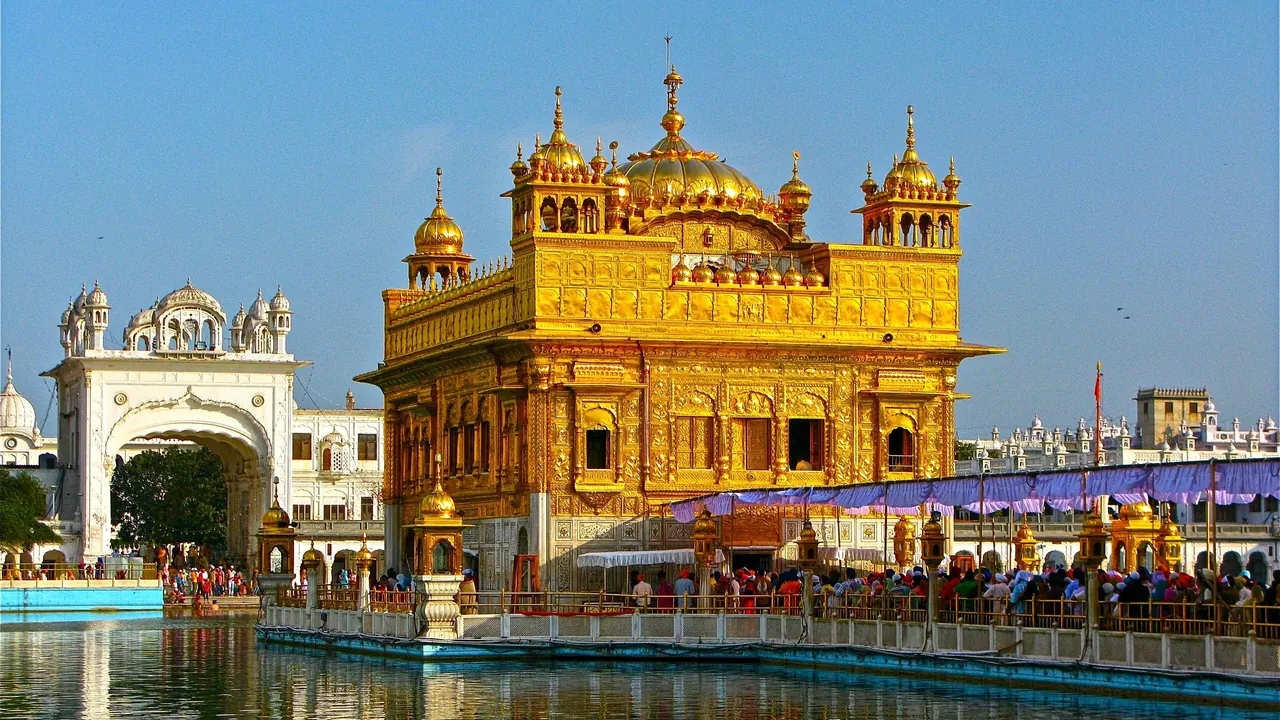
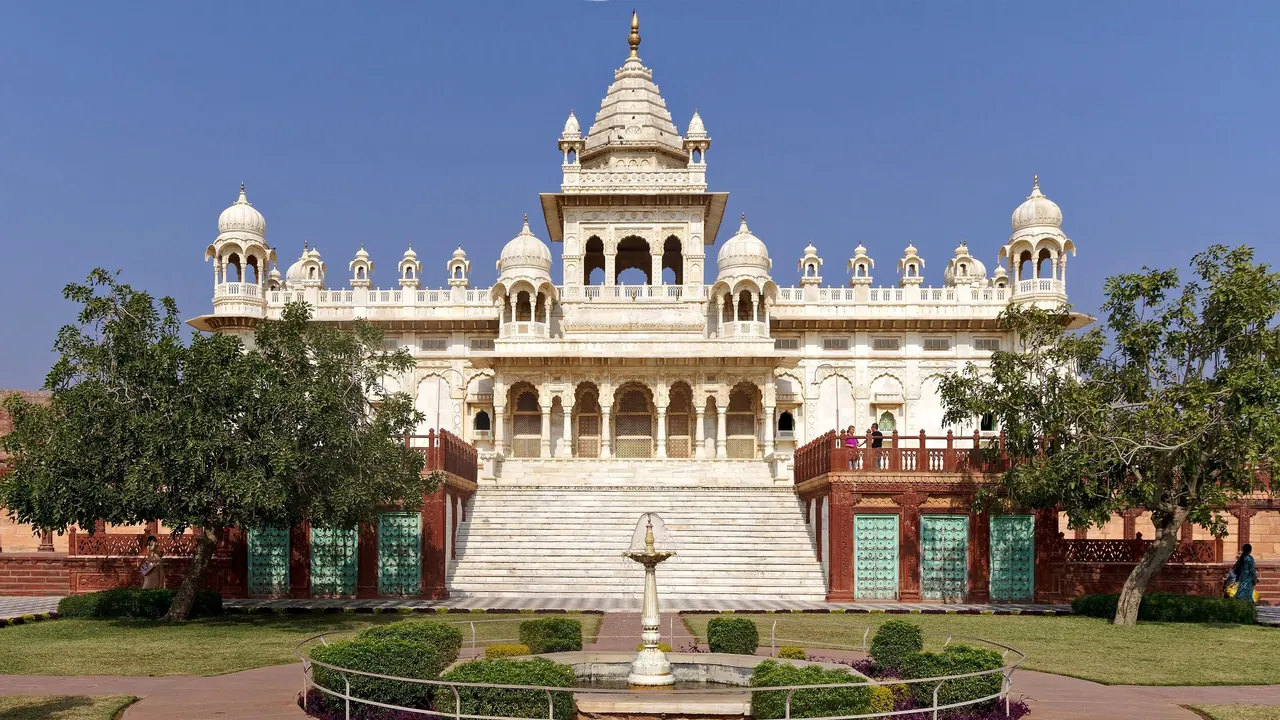
Photos: Amritsar by Ken Wieland, CC BY-SA 2.0, cropped; Jodhpur by Jakub Hałun, CC BY-SA 4.0, cropped.
Amritsar or Jodhpur?
Our verdict in twelve categories, each scored against the same fixed benchmark cities, and the climate month by month, so you can choose for your trip.
Choose Amritsar for
- food and drink
- getting around
- prices
Amritsar suits a traveller who wants one extraordinary place and the food around it. The Golden Temple rewards visits at dawn, at midday and after dark. The langar seats you on the floor beside pilgrims, and the kulcha and lassi of the old city lanes make this the better trip for eating. Its key sights sit close together on foot, which suits a short, focused stay.
Choose Jodhpur for
- nature and the outdoors
- wellness
- shopping
For a broader taste of Rajasthan, Jodhpur is the better pick. It has a great fort and museum above a blue-washed old town, desert scenery and wildlife on the edge of the city, and more to buy. Its shaded courtyards, rooftop terraces and palace hotels also give you more chances to slow down, and its winter days are noticeably warmer than Amritsar's.
Scoreboard
Twelve categories on one fixed scale from 0 to 100. The shaded stretch is the gap between the two.
Your match
Pick a travel style or drag the sliders, and both match scores follow your weighting.
Wins on food and drink and getting around with your weighting.
Wins on nature and the outdoors and wellness with your weighting.
What matters to you?
Category by category
What the scores mean for a trip.
Beaches & swimming
Neither city has a beach. Amritsar lies on the Punjab plains and Jodhpur in the Thar desert, both far from the coast, so swimming means a hotel pool in either. What differs is small: Jodhpur's heritage hotels often have courtyard pools, while Amritsar's only open water is the Golden Temple's sacred pool, where pilgrims bathe as an act of devotion and visitors do not swim.
Food & drink
Amritsar is the better city to eat in, and for many visitors its Punjabi cooking is a reason to travel. Kulcha comes from the tandoor with chole and butter, alongside batter-fried fish, slow-cooked dal and lassi in steel tumblers from dhabas that make a single dish all morning. The free langar at the Golden Temple, eaten on the floor among pilgrims, is part of any visit.
Jodhpur has a strong breakfast of mirchi vada, pyaaz kachori and saffron makhaniya lassi, and a Marwari thali with ker sangri, or a plate of laal maas, is worth seeking out. Beyond that, the rooftop menus lean towards the generic. In both cities the range is narrow, alcohol plays a small part and the best eating happens in daytime.
Culture & sights
Jodhpur gives you more to see. Mehrangarh Fort and its museum of miniature paintings, palanquins and arms could fill a day on their own. Around them are Jaswant Thada, the blue old city, the Toorji ka Jhalra stepwell, the Art Deco Umaid Bhawan and the cenotaphs at Mandore.
Amritsar's list is shorter, but its centrepiece is of a different order. The Golden Temple is worth returning to at different hours, and Jallianwala Bagh and the Partition Museum close by tell the harder history of 1919 and 1947. Amritsar offers depth in one place, while Jodhpur fills two days with fort, palace and old town.
Nightlife
Neither city offers a night out, and both go quiet early. In Amritsar's old pilgrimage centre alcohol is unwelcome near the temple, which leaves a few hotel lounges in the newer districts. Jodhpur has heritage hotel bars and little else.
The difference is in the kind of evening. In Amritsar the best part of the night is a walk round the lit temple pool after dinner. In Jodhpur it is a rooftop meal facing the floodlit fort.
Nature & outdoors
Jodhpur puts you much closer to the landscape. The Rao Jodha Desert Rock Park has trails across volcanic rock right under the fort, and ziplines cross the ramparts. Jeep drives into Bishnoi country find blackbuck, chinkara and peacocks, and dune camps give a taste of the Thar.
Around Amritsar the land is flat wheat and mustard farmland, and Ram Bagh and Company Bagh are for a shady stroll rather than an outing. Its one real trip into nature is the Harike wetland, an hour and a half away, which is rewarding in winter when migratory waterbirds gather.
Day trips
The two are close here, and the difference is in the kind of outing. Amritsar's headline trip is the flag ceremony at the Wagah border, a loud, crowded spectacle about 30km away. Most of its other trips go to Sikh pilgrimage towns such as Tarn Taran, apart from Kapurthala with its French-style palace.
Jodhpur's trips lean towards temples and crafts. Osian has carved sandstone temples and dunes, and there are Bishnoi villages and the durrie weavers of Salawas. Ranakpur and Kumbhalgarh take three hours or more, so they suit travellers who are moving on to Udaipur.
Good for families
Both cities suit a short visit with older children rather than a relaxed family vacation, and both have scorching summers and crowded lanes. In Amritsar the draws are the warm welcome at the Golden Temple, the huge langar kitchens and the drama at Wagah. In Jodhpur they are the fort's cannons and armour, the ziplines, camel rides and blackbuck safaris.
Jodhpur's activities are more physical, and a hotel with a pool helps a lot in the heat. In Amritsar, winter mornings bring dense fog, and families need to take care with water and street food.
Getting around
Amritsar is a little easier to get around. The Golden Temple, Jallianwala Bagh and the Partition Museum cluster around a pedestrianised heritage street, so the heart of a visit needs no transport at all. Rickshaws and ride-hailing cars cover the rest of the city, though the traffic is heavy.
Jodhpur's Clock Tower and blue old city are walkable too, but Mehrangarh means a steep climb, pavements are rare and auto-rickshaw fares have to be agreed first. Neither city has a metro, and both call for a car and driver for trips out.
Shopping & style
Jodhpur is the better place to shop. Sardar Market and the lanes around the Clock Tower sell bandhani and leheriya textiles, mojari slippers, silver and lacquerwork. The antique and furniture warehouses on the outskirts will ship carved doors and chests home. The drawback is touts working on commission, so bargain and take your time.
Amritsar's Hall Bazaar and Katra Jaimal Singh are good for phulkari embroidery, juttis, shawls and Punjabi suits, and the lanes near the temple sell steel bangles and devotional items. The range is narrower, though, with nothing like Jodhpur's antiques trade. Neither city offers luxury or design shopping.
Affordability
Both are very cheap, and the difference lies in where the money can go. In Amritsar the main sight and the langar meals are free, and pilgrim rest houses offer basic beds. In Jodhpur the guesthouses, thalis and rickshaws are just as easy on a budget. However, its converted palaces and haveli hotels cost as much as fine hotels anywhere, so that is where a stay can become expensive.
Live music & performing arts
Neither city has a theatre or concert life, but each has one musical tradition worth hearing. In Amritsar it is the gurbani kirtan, sung at the Golden Temple from before dawn until late and free to anyone sitting by the pool.
Jodhpur's music is secular and tied to the evening. Manganiyar and Langa folk musicians play in the fort's courtyards and on hotel terraces, often with Kalbeliya dancers. The autumn folk festival at Mehrangarh is the high point of the year.
Wellness & relaxation
Jodhpur offers more ways to rest. There are Ayurvedic massage centres in the old town and spas in the palace hotels. Shaded courtyards, palace gardens and rooftop terraces at dusk keep the noise of the lanes outside.
Amritsar has only a few hotel spas, and outside the temple the city is loud. Its calm comes from one place, but a powerful one: the cool marble beside the temple pool at dawn or late at night, with hymns in the air.
When should you go?
Pick your month. The climate figures are measured averages, not a forecast.
Amritsar in July
Jodhpur in July
Daytime high, °C
Rainfall in the month, mm
Temperature and rainfall are climate normals, averaged over the years shown. Amritsar: 1991-2020 normals, Amritsar (1.2 km from centre). Jodhpur: 1991-2020 normals, Jodhpur (1.3 km from centre).
Both cities are best in the cooler half of the year, but Amritsar has a real winter. January highs are around 17°C and the mornings can be foggy, so October to November and February to March are usually the most comfortable months for walking the old city. From April to June the heat becomes punishing, reaching about 40°C in May. The monsoon then brings heavy rain in July and August, close to 190mm a month. Sunshine is plentiful for most of the year and only drops off in midwinter.
Jodhpur is warmer and much drier. Winter is its best season, with January highs around 25°C, clear mornings and almost no rain from October to March. In December and January that makes it the more pleasant of the two for sightseeing. Its summer heat is just as harsh as Amritsar's, but its monsoon is lighter, with about 119mm in each of the wettest months.
Which traveller are you?
On a food and nightlife trip, Amritsar is the stronger choice for the eating: tandoor-baked kulcha, batter-fried river fish and the Golden Temple langar. Neither city has a night out to offer, so plan your evenings around long dinners and the lit temple pool.
For an outdoors trip, Jodhpur gives you far more. There are trails through the desert rock park under the fort, ziplines over the ramparts, blackbuck drives in Bishnoi country and camel rides on the dunes. Around Amritsar there is little beyond the winter birds at Harike.
On a relaxing and wellness trip, Jodhpur is the better base. Its palace hotels have spas, the old town has Ayurvedic massage, and there are shaded courtyards and rooftop terraces to retreat to. In Amritsar the calm is found at the temple pool and almost nowhere else.
Before you go
| Measure | Amritsar | Jodhpur |
|---|---|---|
| Official language | Hindi, English | Hindi, English |
| Currency | Indian Rupee (INR) | Indian Rupee (INR) |
| Sockets | CM230 V, 50 Hz | CM230 V, 50 Hz |
| Driving side | Left | Left |
| Time zone | UTC+5:30 | UTC+5:30 |
| Emergency number | 108 or 112 | 108 or 112 |
| Elevation | 234 m | 231 m |
| Main airport | Sri Guru Ram Das Ji International Airport (ATQ)12 km from centre17 non-stop destinations | Jodhpur Airport (JDH)5 km from centre7 non-stop destinations |
By the numbers
| Measure | Amritsar | Jodhpur |
|---|---|---|
| City population | 1,159,227 | 1,033,918 |
| People per km² | 6,819 | 4,437 |
| Museums within 10 km | 3 | 1 |
| UNESCO World Heritage sites within 50 km | 1 | 0 |
Where else could you go?
Every comparison below shares a destination with this one, so you can follow Amritsar or Jodhpur somewhere new.