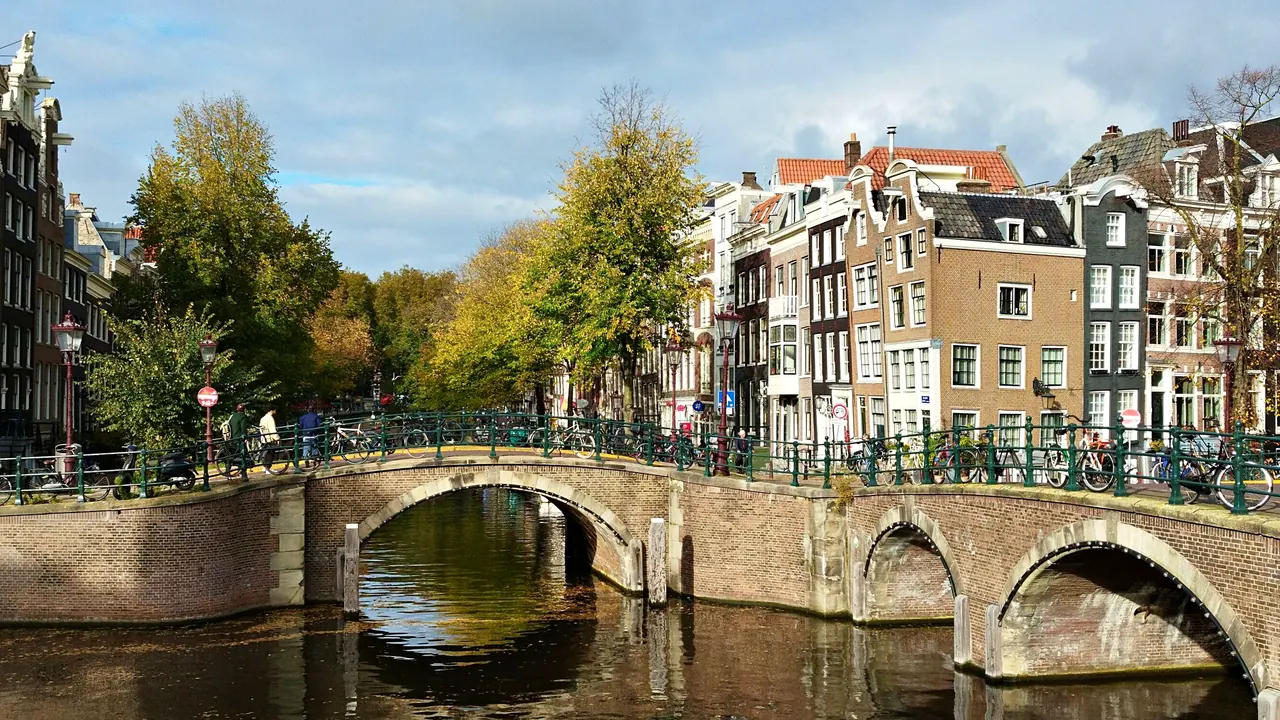
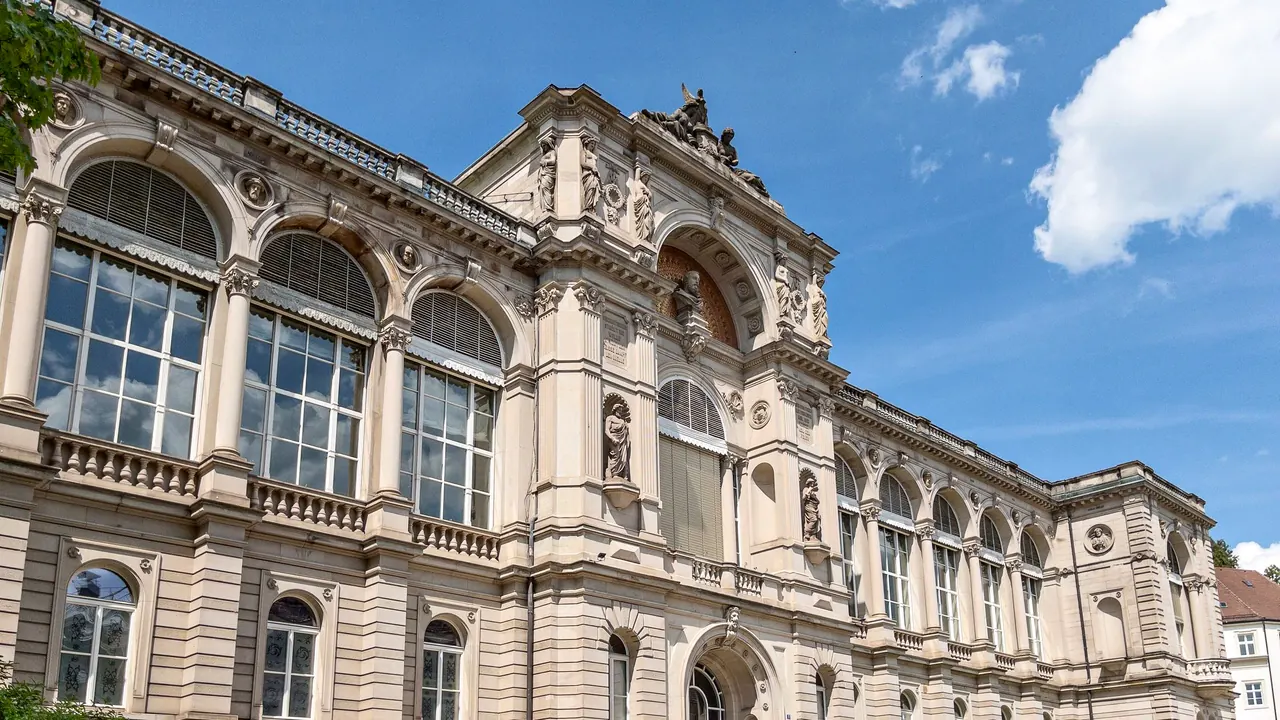
Photos: Amsterdam by Hans, Pexels License; Baden-Baden by Kent Wang, CC BY-SA 2.0, cropped.
Amsterdam or Baden-Baden?
Our verdict in twelve categories, each scored against the same fixed benchmark cities, and the climate month by month, so you can choose for your trip.
Choose Amsterdam for
- nightlife
- culture and sights
- shopping
Amsterdam suits a trip that wants a lot packed into a few days. You get Rembrandt and Van Gogh within a few minutes' walk of each other, the canal ring on foot or by bike, brown cafés that lead into all-night clubs, and a fast train to a different Dutch town each morning. It is also the easier of the two with children and for a first trip abroad.
Choose Baden-Baden for
- wellness
- nature and the outdoors
- prices
Pick Baden-Baden if the point of going away is to slow down. The Friedrichsbad and Caracalla baths, walks into the northern Black Forest and evenings in the Rebland wine taverns make for a restful week that Amsterdam cannot match, and Strasbourg and Alsace are close by when you want a change. Night owls and keen shoppers will find it too quiet.
Scoreboard
Twelve categories on one fixed scale from 0 to 100. The shaded stretch is the gap between the two.
Your match
Pick a travel style or drag the sliders, and both match scores follow your weighting.
Wins on nightlife and culture and sights with your weighting.
Wins on wellness and nature and the outdoors with your weighting.
What matters to you?
Category by category
What the scores mean for a trip.
Beaches & swimming
Neither is a place to plan a trip around swimming, but Amsterdam at least has a real coast within reach. The dune-backed sands of Zandvoort and Bloemendaal are half an hour away by train, though the North Sea stays chilly and most people walk on the beach rather than swim. On hot days, the city beaches at IJburg and lakes like the Sloterplas are good for a casual dip.
Baden-Baden is far inland, and summer swimming means outdoor pools or the flooded gravel pits on the Rhine plain. Its water culture is the thermal kind, and it happens indoors.
Food & drink
Amsterdam has the wider range, shaped by its trading history: Indonesian rijsttafel, Surinamese roti, herring from street stalls, and good neighbourhood cooking in De Pijp, the Jordaan and Oost. For drinking there are brown cafés and old jenever tasting rooms. Baden-Baden is smaller and narrower, with menus built on Baden dishes such as Flammkuchen, venison and Black Forest gateau, plus a French accent from across the Rhine.
Where the spa town wins is wine. Riesling and Pinot Noir grow in the Rebland villages on the edge of town, and you drink them in the villages' own taverns. Amsterdam has nothing like that so close to the vineyards, and Baden-Baden has nothing like Amsterdam's range of cuisines.
Culture & sights
Amsterdam is in another league for museums. The Rijksmuseum, the Van Gogh Museum and the Stedelijk share the Museumplein, the Anne Frank House needs booking ahead, and the canal ring of merchant houses fills three or four days on its own.
Baden-Baden's appeal is the town itself as a Belle Époque set piece: the Kurhaus, the Trinkhalle, the Lichtentaler Allee and the hillside villas. The Museum Frieder Burda and the Kunsthalle cover art, and Roman bath ruins lie under the streets. It makes a rewarding day or two, while Amsterdam can keep a culture lover busy for most of a week.
Nightlife
After dark, these two could hardly be further apart. Amsterdam runs from candlelit brown cafés in the Jordaan to all-night electronic clubs in old industrial buildings in Noord, and the Amsterdam Dance Event takes over the city every October.
Baden-Baden's big night out is the gilded casino in the Kurhaus, which has a dress code, followed by a hotel or wine bar. The streets are quiet by late evening, and for a club you would have to go to Karlsruhe or Strasbourg.
Nature & outdoors
Baden-Baden has the forest on its doorstep. The Merkur funicular climbs to a viewpoint over the Rhine plain, the Battert cliffs draw climbers, and trails lead into fir woods. Further along the Black Forest High Road are the Mummelsee and the moorland of the Hornisgrinde at over 1,100m.
Amsterdam's countryside is flat and quiet and best seen by bike, through the polders and wooden villages of Waterland. The Amsterdamse Bos and the coastal dunes, where bison graze, are good for walking. Its outdoors is about wide skies rather than climbs, so hill walkers and mountain bikers will be far happier in the spa town.
Day trips
Both make excellent bases, but Amsterdam's dense rail network gives it the edge. Haarlem is a quarter of an hour away, and Leiden, Delft, Utrecht and the Mauritshuis in The Hague are all within an hour. The windmills at Zaanse Schans and Kinderdijk are easy outings without a car.
From Baden-Baden the list crosses a border. Strasbourg and the Alsace wine villages, Heidelberg and Freiburg are each about an hour away, and so are the UNESCO-listed cathedral at Speyer and monastery at Maulbronn. The catch is that the best of Alsace and the Black Forest is much easier with a car.
Good for families
Amsterdam is the easier choice with children. The Artis zoo, the NEMO science museum, the playgrounds in the Vondelpark and canal boat trips are all in the city, though fast bikes and unfenced canal edges keep parents alert.
Baden-Baden is safe and calm, and the funicular and forest trails go down well with children. But the town is built for adults taking the waters, and the Friedrichsbad turns away young children. Families here tend to spend their days out of town, at Europa-Park about an hour south or Karlsruhe's zoo.
Getting around
Amsterdam is simpler to get around. It has a compact, flat centre, trams, a metro, free ferries across the IJ, contactless payment on all of it and a direct train from Schiphol, and a hired bike is the local way to move.
Baden-Baden's centre is small enough to walk, but some streets are steep and the station sits a few kilometres out in Oos. The wine villages, the High Road and Alsace really call for a car, which in Amsterdam is only a burden.
Shopping & style
Amsterdam has far more to browse. There are independent boutiques and vintage shops in the Nine Streets, luxury labels on PC Hooftstraat, the department store De Bijenkorf, and markets from the Albert Cuyp and Waterlooplein to the floating Bloemenmarkt. Sophienstraße and Lange Straße in Baden-Baden are polished, with jewellers, watchmakers and delicatessens for a spa clientele, but the town has no department stores or real markets.
The souvenirs differ too: Delft blue, cheese and Dutch design in Amsterdam, cuckoo clocks and a case of Rebland wine in Baden-Baden.
Affordability
Neither is cheap, but Amsterdam costs more, mainly because hotel rooms around the canal ring are among the dearest in Europe and a hefty tourist tax comes on top. Baden-Baden's grand hotels and pay-per-visit baths add up as well, but its simple guesthouses, wine taverns and bakeries are fair by German standards.
In Amsterdam, you save by sleeping in Haarlem or Utrecht and by walking or cycling. In Baden-Baden, you save by keeping the spa sessions to a few.
Live music & performing arts
Both are classical music towns, but Amsterdam has more of it and more besides. It has the Concertgebouw and its orchestra, the Dutch National Opera and Ballet on the Amstel, contemporary music and the Bimhuis jazz club at the Muziekgebouw, and touring bands at Paradiso and the Melkweg.
Baden-Baden does remarkably well for its size. The Festspielhaus is one of Germany's largest opera and concert houses, the town's philharmonic plays in the Kurhaus, and the old theatre is a jewel box, all with the musical legacy of Brahms and Clara Schumann behind them. Beyond classical music, though, it has little to offer.
Wellness & relaxation
This is the reason Baden-Baden exists. Its two bathhouses draw on hot springs the Romans used: the Friedrichsbad, with its silent sequence of hot rooms and pools under a nineteenth-century dome, and the modern Caracalla complex with its large sauna area. The whole town around them moves at a resting pace.
Amsterdam has well-run Dutch saunas and day spas on its edges, and a quiet morning on the canals or in the Vondelpark helps. Its crowded centre, though, is not where anyone goes to unwind.
When should you go?
Pick your month. The climate figures are measured averages, not a forecast.
Amsterdam in July
Baden-Baden in July
Daytime high, °C
Rainfall in the month, mm
Where the figures come from
Amsterdam has no rain gauge within 25 km of the centre, so its rainfall comes from a gridded climate dataset read at the destination rather than from a gauge further away.
Amsterdam's sunshine is measured 35 km from the centre, at De Bilt.
Temperature and rainfall are climate normals, averaged over the years shown. Amsterdam: 1991-2020 normals, Amsterdam Airport Schiphol (12 km from centre). Baden-Baden: 1991-2020 normals, Baden-Baden-Geroldsau (3.9 km from centre).
Amsterdam is mild and changeable all year. July and August reach about 22°C and are the natural months for canal terraces, though they are fairly wet. April is the driest month and May the sunniest, so late spring is a good time to walk the streets. The North Sea peaks at about 19°C in August, cool even then. Autumn brings the heaviest rain, with October the wettest month, and from November to February the days are short, grey and cold.
Baden-Baden is a little warmer in summer, around 25°C in July and August, and from June to September it gets clearly more sunshine than Amsterdam, which is ideal for forest walks. It is wetter, though, with over 100mm in most months, and April and September are the drier spells. Winter is as cold as Amsterdam's and gloomier, but that matters less in a town whose hot baths are indoors.
Which traveller are you?
On a relaxing and wellness trip, Baden-Baden is the clear choice. The Friedrichsbad and Caracalla baths, slow walks along the Lichtentaler Allee and quiet evenings make rest the whole point of a stay, while Amsterdam's crowded centre and busy bike lanes work against it.
For a food and nightlife trip, Amsterdam wins easily. Rijsttafel, Surinamese roti and a borrel in a brown café lead on to canal-side terraces and all-night clubs in Noord. In Baden-Baden the evening ends early, after the casino or a glass of Rebland Riesling.
On an outdoors trip, choose Baden-Baden. The Black Forest begins at the edge of town, with the Merkur funicular, the Battert cliffs, ridge trails up to the Hornisgrinde and mountain biking. Amsterdam offers flat cycling through polders and coastal dunes, which is pleasant but tame.
Before you go
| Measure | Amsterdam | Baden-Baden |
|---|---|---|
| Official language | Dutch | German |
| Currency | Euro (EUR) | Euro (EUR) |
| Sockets | CF230 V, 50 Hz | CF230 V, 50 Hz |
| Driving side | Right | Right |
| Time zone | UTC+1, UTC+2 in summer | UTC+1, UTC+2 in summer |
| Emergency number | 112 | 112 |
| Elevation | -2 m | 181 m |
| Main airport | Amsterdam Airport Schiphol (AMS)12 km from centre287 non-stop destinations | Karlsruhe Baden-Baden Airport (FKB)12 km from centre44 non-stop destinations |
| Public holidays this year | 11 days | 12 days |
By the numbers
| Measure | Amsterdam | Baden-Baden |
|---|---|---|
| Population | 921,468 | 56,952 |
| People per km² | 4,208 | 406 |
| Museums within 10 km | 101 | 11 |
| UNESCO World Heritage sites within 50 km | 5 | 3 |
| Swim season, months above 21 °C | None | - |
Where else could you go?
Every comparison below shares a destination with this one, so you can follow Amsterdam or Baden-Baden somewhere new.
- Haarlemvs Amsterdam
- Utrechtvs Amsterdam
- Strasbourgvs Baden-Baden
- The Haguevs Amsterdam
- Rotterdamvs Amsterdam
- Stuttgartvs Baden-Baden