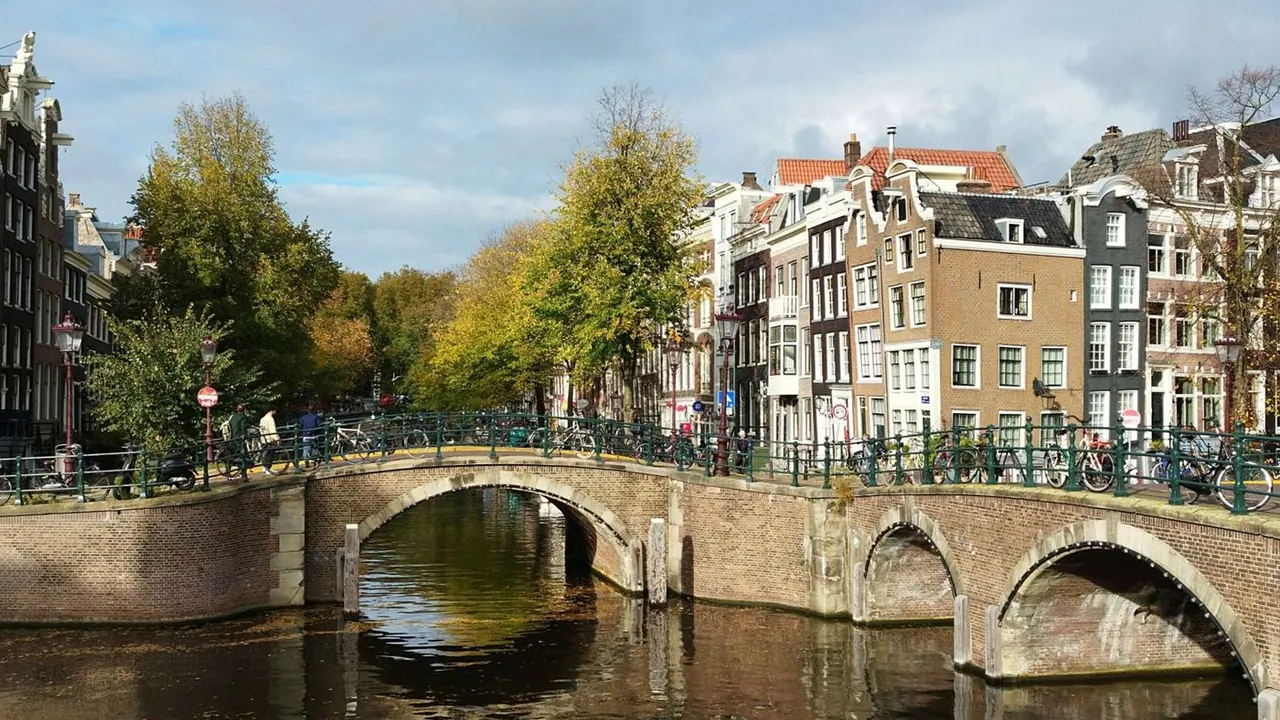
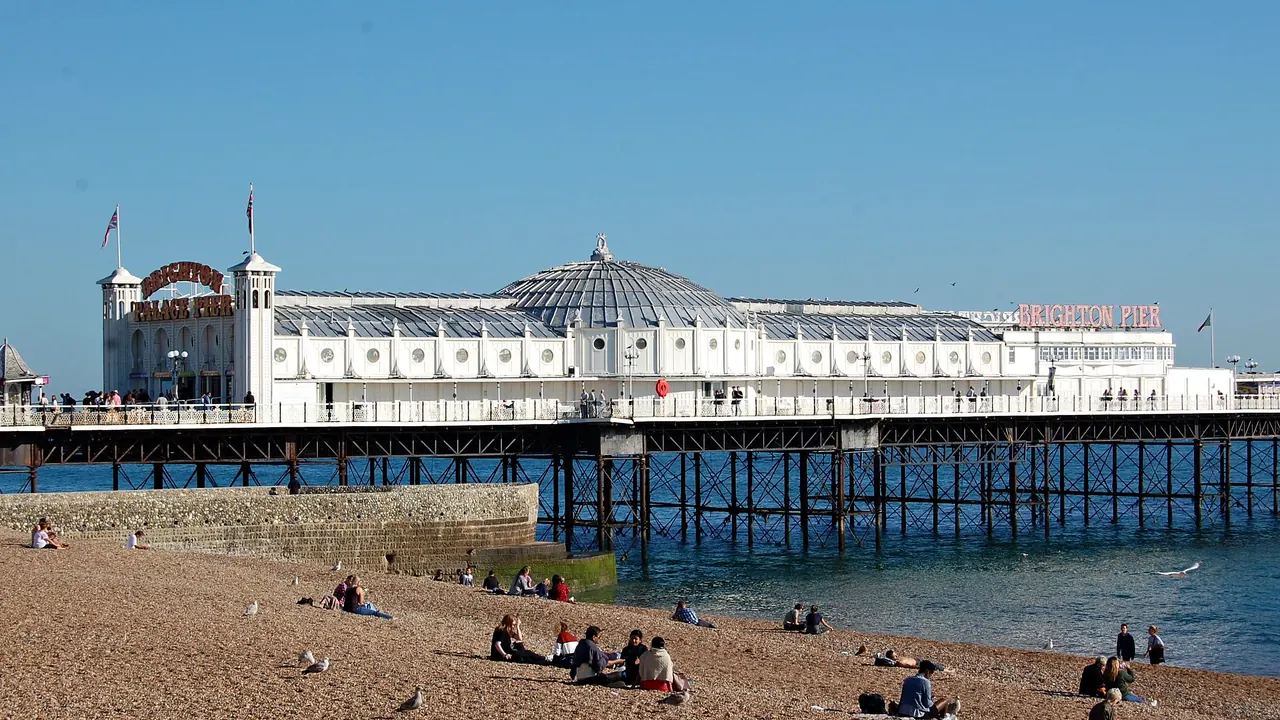
Photos: Amsterdam by Hans, Pexels License; Brighton by Hassocks5489, CC0.
Amsterdam or Brighton?
Our verdict in twelve categories, each scored against the same fixed benchmark cities, and the climate month by month, so you can choose for your trip.
Choose Amsterdam for
- culture and sights
- live music and the arts
- nightlife
Amsterdam suits the traveller who wants a dense, rewarding city break. The great Dutch painting collections, the canal ring, world-class concerts and all-night clubs fill several days without leaving the centre. Fast trains then open up a whole country of historic towns. It is the stronger choice for culture, music and families, provided the budget can take the cost of rooms.
Choose Brighton for
- nature and the outdoors
- beaches
- prices
Brighton is the pick for people who want the sea at the end of the street and open hills behind the town. It is a looser, more informal place, with walks on the South Downs, a festival-heavy May, pubs that are full every night of the week, and London an hour up the line. Rooms cost less, especially midweek, though it offers far less to see than Amsterdam.
Scoreboard
Twelve categories on one fixed scale from 0 to 100. The shaded stretch is the gap between the two.
Your match
Pick a travel style or drag the sliders, and both match scores follow your weighting.
Wins on culture and sights and live music and the arts with your weighting.
Wins on nature and the outdoors and beaches with your weighting.
What matters to you?
Category by category
What the scores mean for a trip.
Beaches & swimming
Brighton has the edge, because its beach is the town itself. The shingle runs from the Marina past the Palace Pier to Hove, with lifeguards on the central stretches in summer. Amsterdam's nearest real beach is the sandy shore at Zandvoort, half an hour away by train.
That is the trade-off: soft sand and dunes on the Dutch side, steep pebbles on the English one. In both places the sea is cold and grey days are common, so this is a place to sit by the sea, not a reason to choose either city.
Food & drink
The two eat about equally well, but in very different ways. Amsterdam's best flavours come from its trading past: Indonesian rijsttafel, Surinamese roti and herring from street stalls, followed by jenever and bitterballen in an old brown café.
Brighton has no dishes of its own and relies on independent kitchens in the North Laine and Kemptown. It is known for vegetarian and vegan food and serious coffee, with fish and chips on the seafront and Sussex sparkling wine on the wine lists.
Culture & sights
This is where the two differ most. Amsterdam has the Rijksmuseum's Night Watch, the largest Van Gogh collection anywhere, the Stedelijk and the Anne Frank House, all set around a UNESCO-listed 17th-century canal ring that takes three or four days to see properly.
Brighton has one sight in that league, the Royal Pavilion with its Indian domes and chinoiserie rooms. Add the Regency crescents, the piers and the Lanes, and a day or two of wandering is enough.
Nightlife
Amsterdam offers the bigger night out. It is known for electronic music, with all-night clubs in old industrial buildings and across the IJ in Noord, and the Amsterdam Dance Event every October. For a slower evening there are candlelit brown cafés in the Jordaan and De Pijp.
Brighton's strength is pubs and bars that are busy every night of the week, plus one of Britain's oldest LGBTQ+ scenes in Kemptown. West Street and the clubs in the seafront arches stay open late, but at weekends the stag and hen parties make them rowdy.
Nature & outdoors
Brighton is better placed for the outdoors. The chalk hills of the South Downs National Park start at the edge of the city, Devil's Dyke is a short bus ride away, and the Seven Sisters cliffs are about forty minutes east. Windsurfing and paddleboarding off the seafront add something on the water.
Amsterdam's countryside is flat and quiet. You get windmills, dykes and wooden villages in Waterland, best seen by bike, and dunes with grazing bison in Zuid-Kennemerland, but no hills at all.
Day trips
Both are excellent bases, and Amsterdam has a slight lead because so many towns are close by train. Haarlem, Leiden, Delft, Utrecht and The Hague with its Vermeers are all within an hour, with Zaanse Schans windmills and the Keukenhof in spring as extras.
From Brighton, the big draw is London, an hour away by fast train. Lewes, Arundel, Chichester and medieval Rye fill the gaps, though the country houses of the Weald are easier with a car.
Good for families
Amsterdam is the better city for children. The Artis zoo, the hands-on NEMO science museum, Vondelpark playgrounds, city farms and pancake houses keep them busy, though fast bikes and unfenced canal edges mean holding small hands.
Brighton is the traditional English seaside day out, with pier rides, the Victorian aquarium and Volk's Electric Railway. The shingle and cold water are poor for sandcastles, and the centre is best avoided late on weekend nights.
Getting around
Both centres are walkable, but Amsterdam is flat and better served. Trams, a metro line and free ferries across the IJ cover the city, the train from Schiphol is short and direct, and hiring a bike feels natural if you can cope with busy cycle lanes.
Brighton gets by on its feet and a dense bus network. The walk down to the sea is easy, but the climb back to the station and up into Kemptown is steep.
Shopping & style
Both cities are best for small independent shops, but Amsterdam covers more ground. The boutiques and vintage shops of the Nine Streets sit alongside the luxury labels on PC Hooftstraat, De Bijenkorf department store and markets from the Albert Cuyp to the floating Bloemenmarkt.
Brighton's North Laine is good for browsing for records, retro furniture and alternative fashion, and the Lanes have jewellery and antiques. There are no luxury streets or grand department stores.
Affordability
Rooms are what make Amsterdam so costly, and beds around the canal ring are among the dearest in Europe. Daytime spending is easier to keep in check. Trams and trains are reasonably priced, walking or cycling costs almost nothing, and herring stalls and the Albert Cuyp market give you a cheap lunch. Museums are the other drain, because several of the big collections in one trip soon mount up.
Brighton works out somewhat lighter overall. The Royal Pavilion is its only major paid sight, so a day in town costs little beyond food and drink, although restaurants and pubs charge south-of-England prices. Train fares are the cost to watch. If you plan to visit London and several Sussex towns, the tickets quickly become a real part of the budget.
Live music & performing arts
Amsterdam has the deeper programme all year round. It has the Concertgebouw and its orchestra, national opera and ballet on the Amstel, jazz at the Bimhuis and touring bands at Paradiso and the Melkweg, though most theatre is in Dutch.
Brighton is busiest in May, when the Brighton Festival and England's largest fringe take over the town. The rest of the year brings comedy, small music rooms and the Theatre Royal, and Glyndebourne's summer opera is nearby.
Wellness & relaxation
For a spa afternoon, Amsterdam is the better bet. The Dutch take their saunas seriously, and the large wellness centres on the edge of the city have pools and sauna rooms where men and women usually share the space without swimwear. Away from the crowded centre, an early walk along the quieter canals or a ferry across the IJ slows the pace.
In Brighton, wellness mostly means the sea itself. A loyal group of swimmers goes into the Channel at dawn all year and then warms up in the seafront saunas. Beyond that there are only a handful of hotel and day spas. To find calm here you have to pick your time or leave town: Hove's lawns and beach huts out of season, or the villages of the Downs.
When should you go?
Pick your month. The climate figures are measured averages, not a forecast.
Amsterdam in July
Brighton in July
Daytime high, °C
Rainfall in the month, mm
Where the figures come from
Amsterdam has no rain gauge within 25 km of the centre, so its rainfall comes from a gridded climate dataset read at the city rather than from a gauge further away.
Amsterdam's sunshine is measured 35 km from the centre, at De Bilt.
Brighton has no rain gauge within 25 km of the centre, so its rainfall comes from a gridded climate dataset read at the city rather than from a gauge further away.
Brighton's sunshine is measured 37 km from the centre, at London Gatwick Airport.
Temperature and rainfall are climate normals, averaged over the years shown. Amsterdam: 1991-2020 normals, Amsterdam Airport Schiphol (12 km from centre). Brighton: 1999-2020 (sunshine 1981-2010, rainfall 1991-2020) normals, Shoreham Airport (10.3 km from centre).
Neither city is ever hot, so streets are comfortable for walking all summer, and June to August is the only stretch warm enough to sit on a beach. Amsterdam gets slightly warmer in midsummer, reaching about 22°C, and its sea warms to around 19°C by August. Brighton peaks a little lower, but its winters are milder and the Channel holds its warmth well into autumn. In both cities the late spring and summer months are the sunniest, and from November to February the days are short, grey and chilly.
The rain falls differently. Amsterdam's wettest weather runs from late summer through autumn, with October the wettest month at about 102mm. Brighton stays fairly dry from spring through September and then turns wet from October to December, peaking near 105mm. For Brighton, May to September is the best window. Amsterdam is at its most pleasant from April to June, before the summer showers build.
Which traveller are you?
On a culture and arts trip, Amsterdam is the clear choice. Rembrandt, Van Gogh and the Anne Frank House sit a short walk apart, the Concertgebouw has concerts most days of the season, and the canal ring is a sight in its own right.
For an outdoors trip, Brighton has the advantage. The South Downs begin at the edge of town for walking and mountain biking, the Seven Sisters cliffs are close, and the seafront is good for windsurfing and paddleboarding. Around Amsterdam you get flat polders seen by bike.
On a trip with a tight budget, Brighton is the easier of two expensive places. Midweek and winter rooms cost noticeably less, and the beach, piers, Lanes and Downs are free. Amsterdam's central hotels and tourist tax stretch a small budget much harder.
Before you go
| Measure | Amsterdam | Brighton |
|---|---|---|
| Official language | Dutch | English |
| Currency | Euro (EUR) | Pound Sterling (GBP) |
| Sockets | CF230 V, 50 Hz | G230 V, 50 Hz |
| Driving side | Right | Left |
| Time zone | UTC+1, UTC+2 in summer | UTC, UTC+1 in summer |
| Emergency number | 112 | 112 or 999 |
| Elevation | -2 m | 22 m |
| Main airport | Amsterdam Airport Schiphol (AMS)12 km from centre287 non-stop destinations | London Gatwick Airport (LGW)37 km from centre224 non-stop destinations |
| Public holidays this year | 11 days | 8 days |
By the numbers
| Measure | Amsterdam | Brighton |
|---|---|---|
| City population | 921,468 | 134,293 |
| People per km² | 4,208 | 1,624 |
| Museums within 10 km | 101 | 11 |
| UNESCO World Heritage sites within 50 km | 5 | 0 |
| Swim season, months above 21 °C | None | None |
Where else could you go?
Every comparison below shares a destination with this one, so you can follow Amsterdam or Brighton somewhere new.
- Haarlemvs Amsterdam
- Utrechtvs Amsterdam
- The Haguevs Amsterdam
- Rotterdamvs Amsterdam
- Londonvs Brighton
- Oxfordvs Brighton