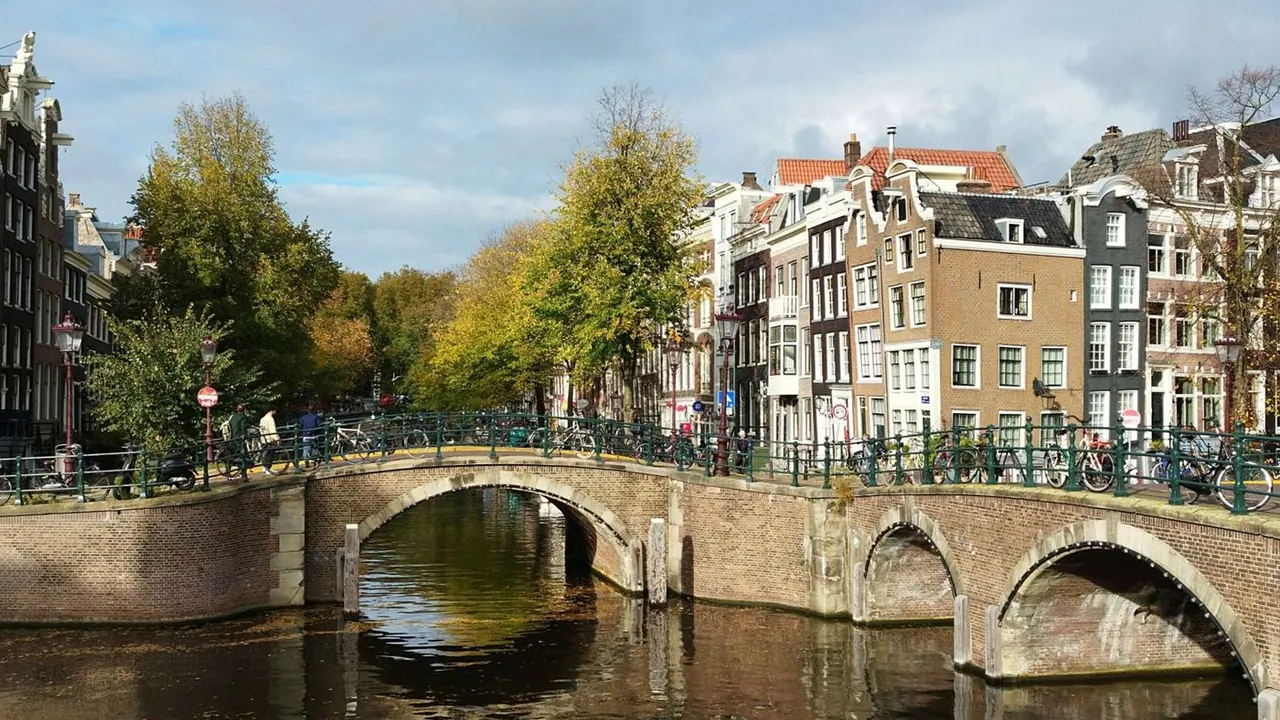
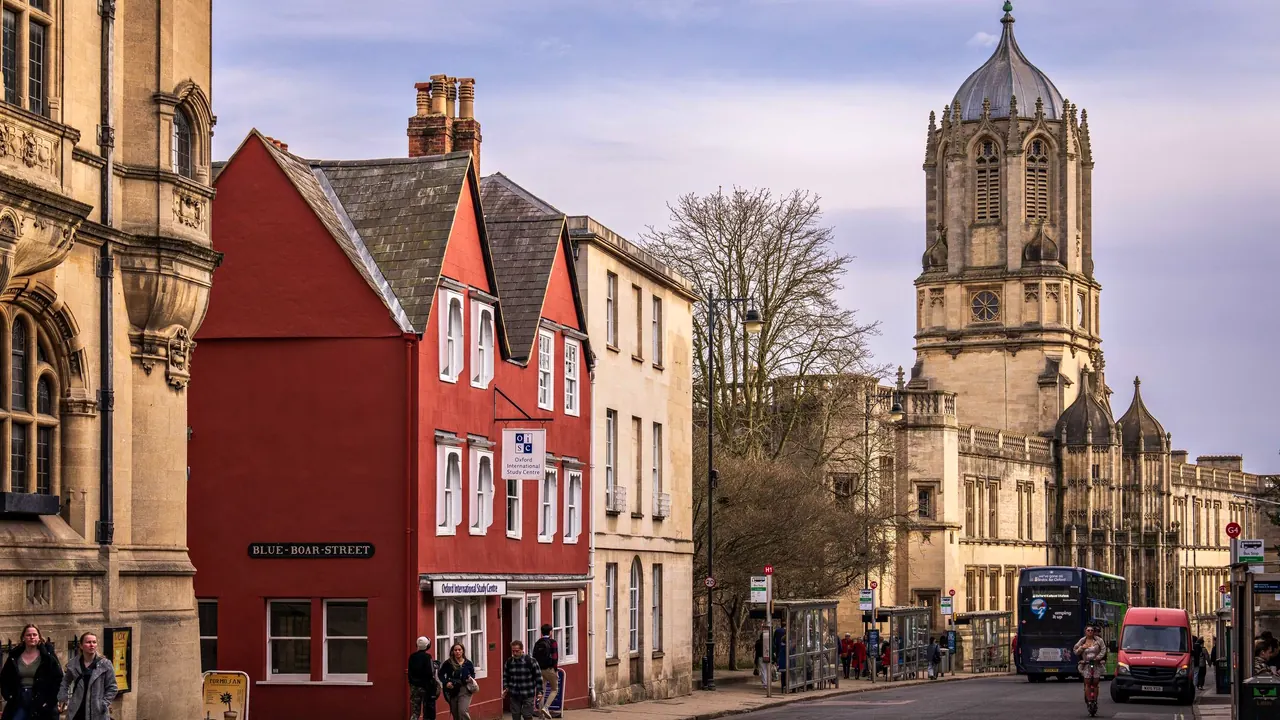
Photos: Amsterdam by Hans, Pexels License; Oxford by Mark Stebnicki, Pexels License.
Amsterdam or Oxford?
Our verdict in twelve categories, each scored against the same fixed benchmark cities, and the climate month by month, so you can choose for your trip.
Choose Amsterdam for
- nightlife
- live music and the arts
- families
Amsterdam is the stronger choice for most city trips. It has bigger museums, from Rembrandt at the Rijksmuseum to the Van Gogh collection, and nights out that run from brown cafés to clubs open until morning. It has a world-class concert hall, better and more varied food, and trams and trains that make the whole country easy to reach. It suits travellers who want a full few days with plenty to fill the evenings, and it works well for families too.
Choose Oxford for
- prices
- nature and the outdoors
Oxford is the quieter, smaller trip. It is built for people who like walking between honey-stone college quadrangles, sitting in on Evensong, finishing the day in an old pub and heading out to the Cotswolds or Blenheim. Rooms are scarce and dear, but once you are there the free museums and pub meals keep costs down. Choose it for a slower, bookish break with countryside close by, not for nightlife or food.
Scoreboard
Twelve categories on one fixed scale from 0 to 100. The shaded stretch is the gap between the two.
Your match
Pick a travel style or drag the sliders, and both match scores follow your weighting.
Wins on nightlife and live music and the arts with your weighting.
Wins on prices and nature and the outdoors with your weighting.
What matters to you?
Category by category
What the scores mean for a trip.
Beaches & swimming
Amsterdam at least has a proper beach within reach. The wide sands at Zandvoort and Bloemendaal are half an hour away by train, with dunes and summer beach pavilions, though the cold, windy North Sea means most people walk along the shore rather than swim. In town there are the man-made IJburg beaches and lakes like the Sloterplas.
Oxford is about as far from the sea as you can get in England. Swimming there means a cool dip in the Thames at Port Meadow, the Cherwell or the open-air pool at Hinksey, with grassy banks instead of sand.
Food & drink
Amsterdam eats better, mainly thanks to its trading past. Indonesian rijsttafel and Surinamese roti are the meals to look for, along with herring from the stalls and stroopwafels at the Albert Cuyp. Its brown cafés and old jenever houses make an early-evening borrel part of the trip.
Oxford's food revolves around the pub: ale under low beams, a Sunday roast by the river, and lunch stalls in the Covered Market. Cowley Road adds cheap Middle Eastern, South Asian and Caribbean food, but meals here are solid rather than something you would travel for.
Culture & sights
Amsterdam has the heavier collections. The Rijksmuseum, the Van Gogh Museum and the Stedelijk sit together on the Museumplein, the Anne Frank House needs booking well ahead, and the UNESCO-listed canal ring turns a walk into sightseeing. Give it three or four days.
Oxford's appeal is a living university. You walk through Christ Church, the Radcliffe Camera, the Bodleian and the Sheldonian within a few minutes of each other, and the Ashmolean and Pitt Rivers are better than such a small city leads you to expect. It is more compact and can be covered well in two or three days.
Nightlife
This is where the two differ most. Amsterdam goes from candlelit bars to a serious electronic music scene, with clubs licensed to stay open all night in old industrial buildings and in Noord, and the Amsterdam Dance Event every October. For a drink, head to the Jordaan and De Pijp rather than Leidseplein.
Oxford's evenings are pub evenings: a historic tavern in term time, a riverside garden in summer, or a late bar on Cowley Road. The centre is mostly quiet by midnight and quieter still once the students leave for the summer.
Nature & outdoors
Both offer gentle countryside rather than wild landscape, but of different kinds. Around Amsterdam it is completely flat. You cycle out across the IJ into Waterland's meadows and wooden villages, wander the Amsterdamse Bos, or look for bison in the coastal dunes.
Oxford has more contour. Port Meadow and Christ Church Meadow are a stroll from the centre, punting is the classic pastime, and within an hour lie the rolling Cotswolds, the Chiltern beech woods and the ancient Ridgeway. It is the better pick if you want long walks on foot rather than flat bike rides.
Day trips
Both make excellent bases, and the difference is how you travel. From Amsterdam, fast trains reach Haarlem, Leiden, Delft, Utrecht, The Hague and Rotterdam, each with its own historic centre, and the windmills of Zaanse Schans and the old Zuiderzee villages are close by. You never need a car.
Oxford's outings are more about countryside and great houses: Blenheim Palace just up the road, Cotswold villages such as Bibury and Burford, Stratford, Warwick and Windsor. London is about an hour away by train. Some of the Cotswold trips are much easier with a car or a tour.
Good for families
Amsterdam has more for children in the city itself. There is the old Artis zoo, NEMO's hands-on science floors, playgrounds in the Vondelpark, canal boats and city farms. The catches are fast bikes and unfenced canal edges, so keep small children close.
Oxford is safe and easy to walk round, and the free Natural History Museum and Pitt Rivers are big favourites, as is punting. Christ Church's Harry Potter hall delights older fans, but most of the city is aimed at adults, and the wildlife park and studio tour both mean a trip out.
Getting around
Both centres are small, flat and good on foot, but Amsterdam has the fuller network. Trams cover the canal ring, a metro runs north to south, free ferries cross to Noord, and Schiphol is a short direct train ride away. Hiring a bike is the local way to get around, though the busy lanes take some nerve.
In Oxford, walking does nearly everything: you can cross the centre in twenty minutes, and some streets are closed to through traffic. Buses serve the outer districts and the station is close to the centre. In both cities a car is a burden.
Shopping & style
Amsterdam is the better place to shop, especially for independents. The Nine Streets and the Jordaan are packed with boutiques and vintage shops, PC Hooftstraat has the luxury labels, and the markets, from Waterlooplein to the floating Bloemenmarkt, give a reason to browse.
Oxford's centre is mostly chains, but its best shops are distinctive: Blackwell's vast book room on Broad Street, map and print dealers, the Covered Market traders and university clothing. Designer hunters go to the outlet village at Bicester.
Affordability
Neither is cheap, and accommodation is the main cost in both. Amsterdam's canal-ring hotels are among the dearest in Europe, there is a tourist tax on top, and museum tickets add up. Staying in Haarlem or Utrecht helps.
Oxford comes out a little cheaper. Rooms are scarce and pricey around graduations and conferences, but the major museums are free and pub meals keep daily spending modest. College entry fees and library tours are the main extras.
Live music & performing arts
Amsterdam has the bigger stage. The Concertgebouw and its orchestra are world-class, the National Opera and Ballet perform on the Amstel, the Bimhuis covers jazz, and Paradiso and the Melkweg bring touring bands.
Oxford's highlight is more intimate: Evensong sung by the choirs of Christ Church, Magdalen and New College in candlelit chapels during term. Add chamber music at the historic Holywell Music Room and summer plays in college gardens, but theatre and gigs are on a smaller scale.
Wellness & relaxation
For pampering, Amsterdam has more to offer. Neither city has a thermal bath tradition, but the Dutch take saunas seriously, and there are large day spas on the edge of town, mixed and nude in the northern style. Quiet canals early in the morning and ferry rides across the IJ help too.
Oxford has few spas, so its calm comes from places instead: the Botanic Garden, walled college gardens, Addison's Walk past Magdalen's deer park, or an unhurried afternoon on a punt.
When should you go?
Pick your month. The climate figures are measured averages, not a forecast.
Amsterdam in July
Oxford in July
Daytime high, °C
Rainfall in the month, mm
Where the figures come from
Amsterdam has no rain gauge within 25 km of the centre, so its rainfall comes from a gridded climate dataset read at the city rather than from a gauge further away.
Amsterdam's sunshine is measured 35 km from the centre, at De Bilt.
Oxford's temperatures are measured 37 km from the centre, at Fairford Royal Air Force Base.
Oxford has no rain gauge within 25 km of the centre, so its rainfall comes from a gridded climate dataset read at the city rather than from a gauge further away.
Oxford's sunshine is measured 57 km from the centre, at Lyneham.
Temperature and rainfall are climate normals, averaged over the years shown. Amsterdam: 1991-2020 normals, Amsterdam Airport Schiphol (12 km from centre). Oxford: 1961-1990 (sunshine 1991-2020, rainfall 1991-2020) normals, Fairford Royal Air Force Base (37 km from centre).
Both cities have a mild, cool climate and share the same best season, from late May to early September, when afternoons reach about 22°C and the long days bring the most sunshine. Neither is warm enough for a beach trip. Amsterdam's North Sea peaks at about 19°C in August, which suits a walk along the sand better than a swim. Winters in both are grey, short on sun and cold, with highs in single figures. That is fine for museums but raw for a long day outdoors.
Rain is where they differ. Amsterdam gets wetter from midsummer onwards and autumn is its dampest season, with about 102mm in October, so April and May are its most reliable months for cycling and canal walks. Oxford is drier all year. Its driest stretch runs from February to April at around 44mm a month, and by May the countryside is green and the days are long. Its autumn is less wet than Amsterdam's but is still its rainiest time, so Cotswold walks are best planned for late spring or September.
Which traveller are you?
For a food and nightlife trip, Amsterdam is the clear choice. You can eat flavours Britain rarely does well, drink your way from an old gin house to a canal terrace, and still find somewhere to dance at three in the morning. Oxford offers a good pint and an early night.
On a family trip with young children, Amsterdam keeps a week full without leaving town, and Dutch culture treats children as welcome company. Oxford suits a couple of days with older children, but after that most outings need a car.
On a tight budget, Oxford is slightly kinder. Apart from the colleges, its sights cost little to see, you need no transport to get around the centre, and the east side of the river eats cheaply. In Amsterdam a full day out adds up faster.
Before you go
| Measure | Amsterdam | Oxford |
|---|---|---|
| Official language | Dutch | English |
| Currency | Euro (EUR) | Pound Sterling (GBP) |
| Sockets | CF230 V, 50 Hz | G230 V, 50 Hz |
| Driving side | Right | Left |
| Time zone | UTC+1, UTC+2 in summer | UTC, UTC+1 in summer |
| Emergency number | 112 | 112 or 999 |
| Elevation | -2 m | 73 m |
| Main airport | Amsterdam Airport Schiphol (AMS)12 km from centre287 non-stop destinations | London Heathrow Airport (LHR)63 km from centre224 non-stop destinations |
| Public holidays this year | 11 days | 8 days |
By the numbers
| Measure | Amsterdam | Oxford |
|---|---|---|
| City population | 921,468 | 147,500 |
| People per km² | 4,208 | 3,235 |
| Museums within 10 km | 101 | 11 |
| UNESCO World Heritage sites within 50 km | 5 | 1 |
| Swim season, months above 21 °C | None | - |
Where else could you go?
Every comparison below shares a destination with this one, so you can follow Amsterdam or Oxford somewhere new.
- Haarlemvs Amsterdam
- Utrechtvs Amsterdam
- The Haguevs Amsterdam
- Rotterdamvs Amsterdam
- Londonvs Oxford
- Bathvs Oxford