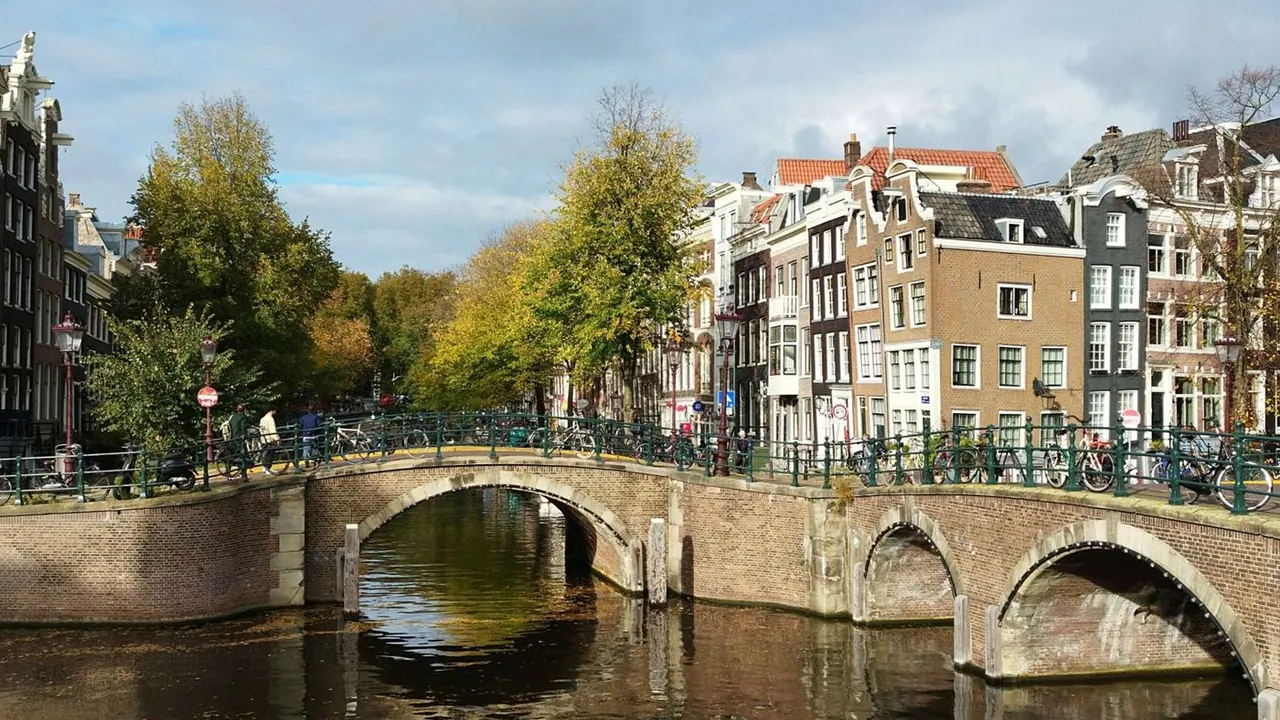
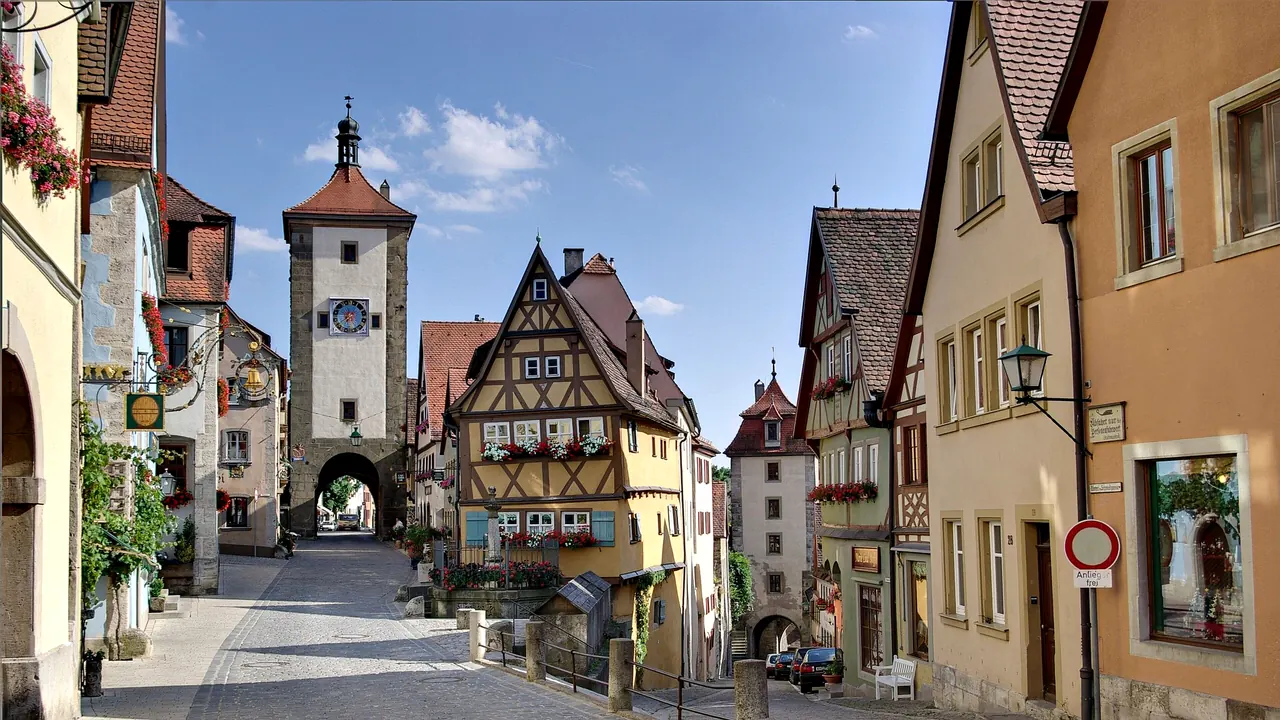
Photos: Amsterdam by Hans, Pexels License; Rothenburg ob der Tauber by Berthold Werner, Public domain.
Amsterdam or Rothenburg ob der Tauber?
Our verdict in twelve categories, each scored against the same fixed benchmark cities, and the climate month by month, so you can choose for your trip.
Choose Amsterdam for
- nightlife
- live music and the arts
- shopping
Amsterdam suits travellers who want a full city to fill their days and evenings. Its world-class museums sit beside a UNESCO canal ring, the Concertgebouw and the club scene keep the nights busy, and fast trains bring Haarlem, Delft or The Hague within easy reach without a car. It costs a good deal more, but almost every kind of interest gets more to work with here.
Choose Rothenburg ob der Tauber for
- prices
Rothenburg ob der Tauber is the choice for someone who wants one perfectly preserved medieval town, walked slowly and seen properly in a day or two. It suits a quiet, unhurried stop on a Romantic Road drive, with evenings in wine taverns rather than bars, and a smaller bill than Amsterdam. If you need nightlife, shopping or a lot of variety, it will feel thin.
Scoreboard
Twelve categories on one fixed scale from 0 to 100. The shaded stretch is the gap between the two.
Your match
Pick a travel style or drag the sliders, and both match scores follow your weighting.
Wins on nightlife and live music and the arts with your weighting.
Wins on prices with your weighting.
What matters to you?
Category by category
What the scores mean for a trip.
Beaches & swimming
Neither city is a beach destination, but Amsterdam at least has a coast within reach. The dune-backed sands at Zandvoort and Bloemendaal are half an hour by train, good for a windy walk even if the North Sea is cold, and on hot days the city has the IJburg beaches and the Sloterplas lake.
Rothenburg is hundreds of kilometres from the sea. Swimming means the town's outdoor pool or a drive of about an hour to the bathing lawns of the Franconian lake district.
Food & drink
Amsterdam eats far better, mostly because of its trading past. Indonesian and Surinamese cooking, herring stalls, the Albert Cuyp market and the borrel ritual of beer and bitterballen give it range, and De Pijp, the Jordaan and Oost have good neighbourhood restaurants.
Rothenburg keeps to one register: roast pork, Schäufele and bratwurst in timbered inns, with Silvaner in its round Bocksbeutel. It is satisfying for a couple of nights, but the choice is narrow, and the better tables are in family guesthouses away from the Marktplatz.
Culture & sights
Amsterdam offers far more depth. The Rijksmuseum, the Van Gogh Museum and the Stedelijk alone could fill two days, and the Anne Frank House, the canal ring and the Portuguese Synagogue add history on a big-city scale.
Rothenburg's strength is completeness rather than quantity. The whole walled town is the attraction, with the rampart walkway, the Plönlein and Riemenschneider's Holy Blood Altar in St Jakob's as the highlights, and it is all seen well within a day or two.
Nightlife
This is the widest gap between the two. Amsterdam runs from candlelit brown cafés to clubs with all-night licences in old industrial buildings, with canal-side terraces in the Jordaan and De Pijp for a quieter drink.
In Rothenburg the evening is a dinner, a glass of Franconian wine and the night watchman's tour, and the lanes are silent by eleven. For anything more you would need to go to Würzburg or Nuremberg.
Nature & outdoors
A short ferry ride across the IJ puts a cyclist from central Amsterdam among the polders, dykes and wooden villages of Waterland, and that easy reach gives the city the edge. The Amsterdamse Bos on the southern edge adds woods and rowing, and near the coast the dunes of Zuid-Kennemerland have walking routes and grazing bison.
Rothenburg's countryside begins at the foot of its walls. Paths drop into the Tauber valley past mills and meadows, and the Tauber valley cycle path follows the river downstream through vineyards. It is smaller in scope, with no large lakes or wild country nearby, and looks its best in spring blossom and autumn colour.
Day trips
Both are good bases, but Amsterdam is the easier one. Fast, frequent trains reach Haarlem in a quarter of an hour, and Leiden, Delft, Utrecht, The Hague and Rotterdam are all within an hour, with windmills at Zaanse Schans and the Keukenhof in spring. None of it needs a car.
Rothenburg's neighbours on the Romantic Road are excellent: Dinkelsbühl, Nördlingen in its crater, Würzburg's Residenz and Nuremberg's castle. Getting to them, though, mostly means driving, as the branch-line trains are slow and the buses are sparse.
Good for families
Amsterdam gives children far more to do over several days: Artis zoo, the hands-on NEMO science museum, city farms, playgrounds in the Vondelpark and canal boat trips. Parents need to watch the fast bikes and unfenced canal edges.
Rothenburg delights children for a day or so, with ramparts to walk, a tower to climb and the lantern-carrying night watchman. Older children often like the Medieval Crime Museum. After that there is little made for them, and cobbles and steep valley paths make pushchairs hard work.
Getting around
Amsterdam is much the easier place to move around, and you notice it from the moment you land: a short direct train brings you in from Schiphol, and one contactless card then works on trams, the metro and the free ferries to Noord. In the flat centre you will often not need any of it, and a hired bike puts you in step with the locals. On foot, though, you have to keep an eye on the cycle lanes.
In Rothenburg there is hardly anything to get around on, because nothing needs it. The walled town takes a quarter of an hour to cross on foot and cars stay at the gates. What it asks of you is physical: cobbles underfoot and a steep climb back up from the Tauber. Just getting there is the awkward part. The station sits at the end of a branch line, usually with a change at Steinach, and there is nothing to match Amsterdam's direct link from the airport.
Shopping & style
Amsterdam is far stronger for shopping. The Nine Streets and the Jordaan are full of independent boutiques and vintage shops, PC Hooftstraat has the luxury labels, De Bijenkorf stands on Dam Square, and markets such as the Noordermarkt and Waterlooplein add character.
Rothenburg sells mainly one thing: Christmas, all year round, with baubles, nutcrackers and Erzgebirge carvings along the Herrngasse, plus cuckoo clocks and teddy bears. Its December market is lovely, but fashion and everyday shopping are almost absent.
Affordability
Rothenburg is clearly the cheaper stay. Its guesthouses and Marktplatz restaurants cost more than in ordinary Franconian towns, but local wine and beer are fairly priced, entry fees are modest, and villages just outside the walls cost less still.
Amsterdam is among Europe's expensive cities, with costly canal-ring hotels, a tourist tax and museum tickets that add up quickly. Walking, cycling and market snacks help, as does sleeping in Haarlem or Utrecht.
Live music & performing arts
Amsterdam has a serious performing-arts life. The Concertgebouw and its orchestra have concerts most days of the season, opera and ballet are staged on the Amstel, the Muziekgebouw and Bimhuis cover contemporary music and jazz, and Paradiso and the Melkweg host touring bands.
Rothenburg's performances are tied to its history: the costumed Meistertrunk play, summer open-air theatre and organ concerts in St Jakob's. On most evenings there is no show to go to.
Wellness & relaxation
Neither is a place people go to for wellness, and both rely on what lies nearby. Amsterdam's version is the Dutch sauna, with large mixed, nude day spas on the city's edges, and calm comes from early canal walks or the Vondelpark.
Rothenburg itself becomes very quiet once the coach groups leave. For proper thermal bathing it relies on spa towns about an hour's drive away, such as Bad Windsheim with its salt-water float pool and Bad Mergentheim.
When should you go?
Pick your month. The climate figures are measured averages, not a forecast.
Amsterdam in July
Rothenburg ob der Tauber in July
Daytime high, °C
Rainfall in the month, mm
Where the figures come from
Amsterdam has no rain gauge within 25 km of the centre, so its rainfall comes from a gridded climate dataset read at the city rather than from a gauge further away.
Amsterdam's sunshine is measured 35 km from the centre, at De Bilt.
Rothenburg ob der Tauber's sunshine is measured 27 km from the centre, at Feuchtwangen-heilbronn.
Temperature and rainfall are climate normals, averaged over the years shown. Amsterdam: 1991-2020 normals, Amsterdam Airport Schiphol (12 km from centre). Rothenburg ob der Tauber: 1991-2020 normals, Rothenburg ob der Tauber (0.9 km from centre).
Both are at their best from May to September, but they feel different. Amsterdam stays mild, with summer highs around 22°C, often breezy and grey, and the North Sea only reaches about 19°C at its warmest in August, so swimming is for the hardy. Rain falls all year and builds through the autumn to a peak of about 102mm in October, which makes late autumn and winter damp, dark weather for walking the canals.
Rothenburg has the more continental climate: warmer, sunnier summers reaching about 25°C, which is pleasant on the walls and in the Tauber valley, and noticeably colder winters, with January highs near 3°C. It is drier than Amsterdam through most of the year. Spring and early autumn are mild in both, and are good months for walking either one.
Which traveller are you?
For a food and nightlife trip, Amsterdam is far ahead. Indonesian rijsttafel, Surinamese roti and brown cafés lead on to all-night clubs in Noord, while Rothenburg offers Franconian inns and then goes quiet before midnight.
On a trip on a tight budget, Rothenburg is the easier one to manage. Rooms and meals carry a tourist premium but stay well below Amsterdam's canal-ring hotels, the sights charge little, and staying in a village just outside the walls saves more.
For a relaxing and wellness trip, Rothenburg has the calmer setting. The lanes empty once the day visitors leave, the valley paths are quiet, and real thermal bathing at Bad Windsheim is about an hour away, whereas central Amsterdam stays busy with crowds and bikes.
Before you go
| Measure | Amsterdam | Rothenburg ob der Tauber |
|---|---|---|
| Official language | Dutch | German |
| Currency | Euro (EUR) | Euro (EUR) |
| Sockets | CF230 V, 50 Hz | CF230 V, 50 Hz |
| Driving side | Right | Right |
| Time zone | UTC+1, UTC+2 in summer | UTC+1, UTC+2 in summer |
| Emergency number | 112 | 112 |
| Elevation | -2 m | 430 m |
| Main airport | Amsterdam Airport Schiphol (AMS)12 km from centre287 non-stop destinations | Nuremberg Airport (NUE)66 km from centre56 non-stop destinations |
| Public holidays this year | 11 days | 12 days |
By the numbers
| Measure | Amsterdam | Rothenburg ob der Tauber |
|---|---|---|
| City population | 921,468 | 11,331 |
| People per km² | 4,208 | 272 |
| Museums within 10 km | 101 | 6 |
| UNESCO World Heritage sites within 50 km | 5 | 2 |
| Swim season, months above 21 °C | None | - |
Where else could you go?
Every comparison below shares a destination with this one, so you can follow Amsterdam or Rothenburg ob der Tauber somewhere new.
- Haarlemvs Amsterdam
- Utrechtvs Amsterdam
- The Haguevs Amsterdam
- Rotterdamvs Amsterdam
- Nurembergvs Rothenburg ob der Tauber
- Bambergvs Rothenburg ob der Tauber